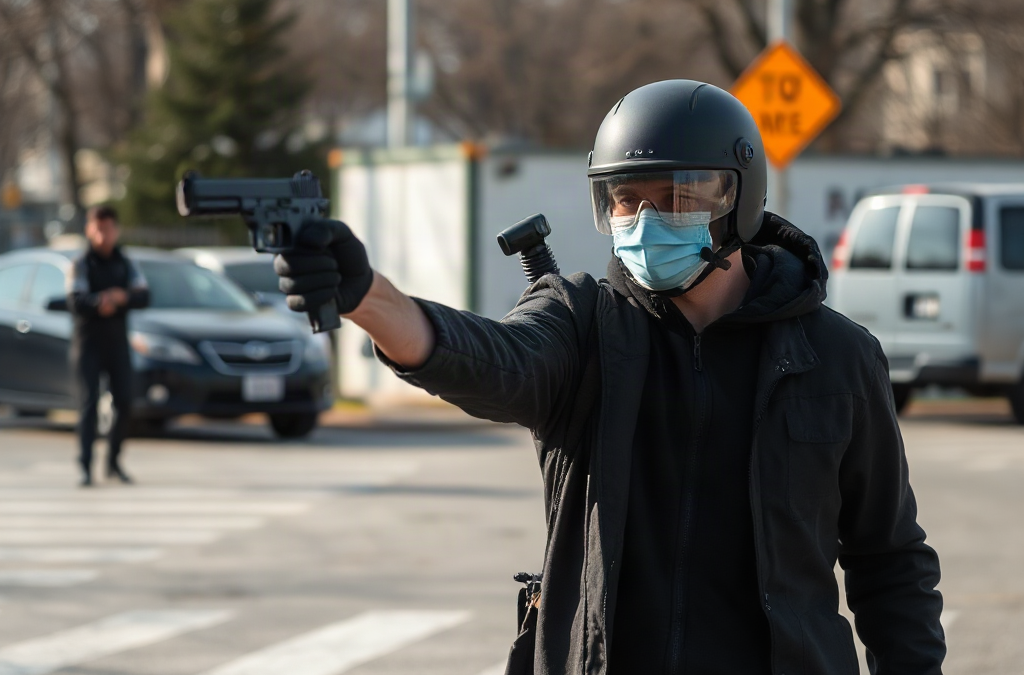
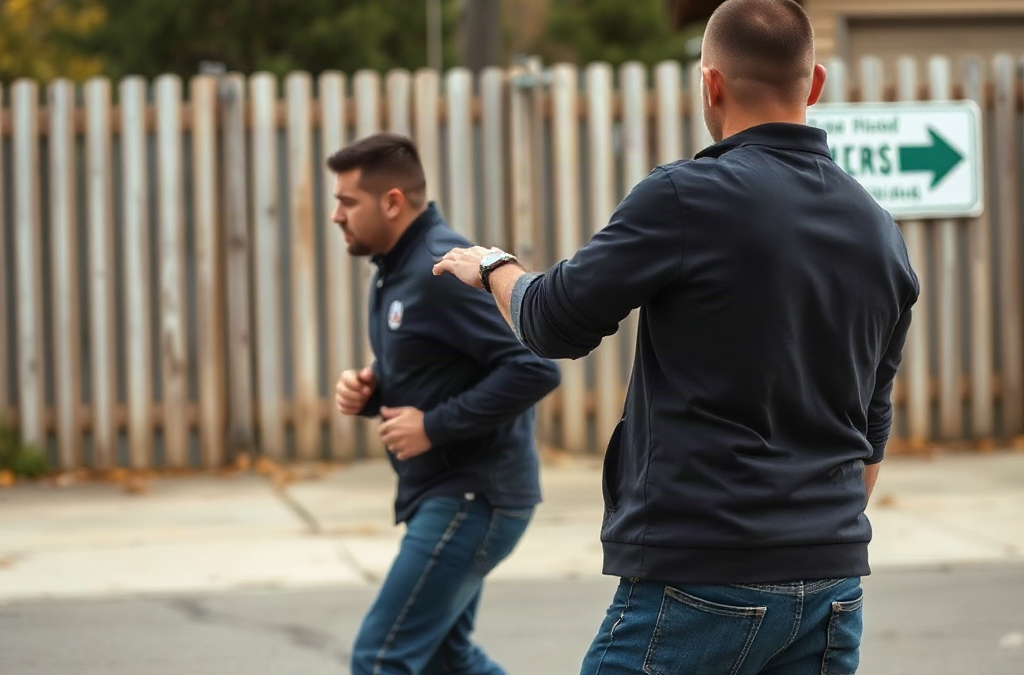
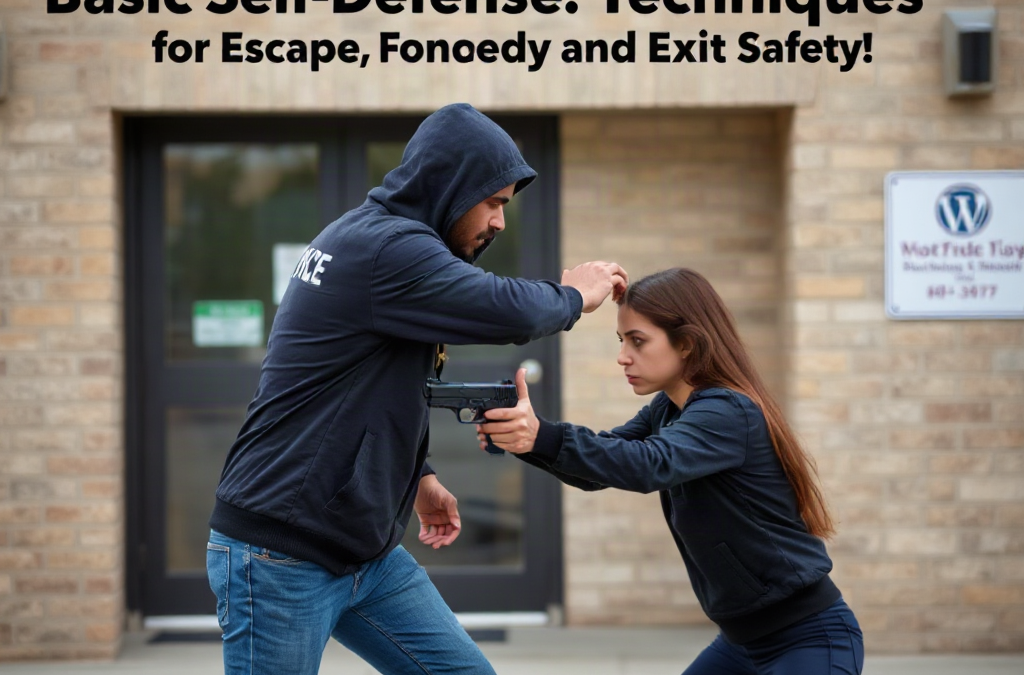
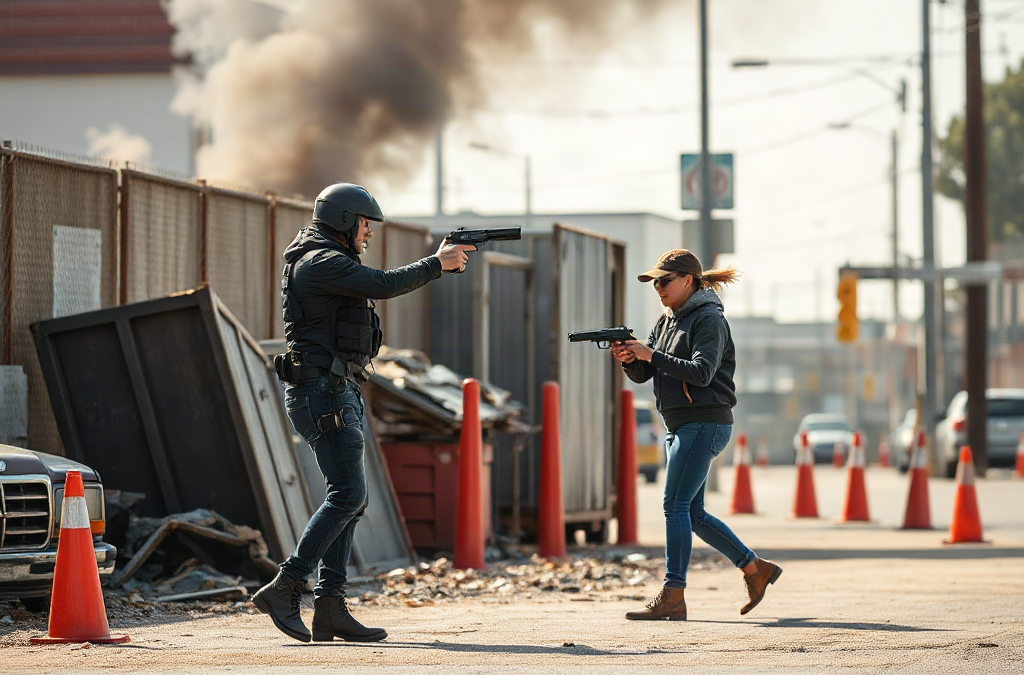
Awareness is the first element because civilians usually have the greatest advantage before a confrontation becomes physical. It means noticing people, exits, obstacles, lighting, crowd movement, and changes in behavior without treating every stranger as a threat. A person who repeatedly closes distance, ignores a polite request for space, follows a change in direction, or positions themselves between you and an exit deserves more attention than someone who is simply nearby.
Good awareness is active but not paranoid. In a parking garage, glance around before unlocking the vehicle, keep one hand free, and avoid becoming absorbed in a phone while walking between cars. In a restaurant or public building, casually identify two ways out and note which areas are staffed. These habits do not predict an assault, but they reduce the chance of being surprised or funneled into a less favorable position.
The practical mechanism is time. Early recognition gives a civilian additional choices: change direction, enter a store, join a group, call someone, or leave an item behind. Waiting for certainty can remove those options. A common mistake is assuming that a person must make an explicit threat before action is justified. You do not need to accuse someone or prove their intent to move toward a safer location.
Awareness also requires distinguishing discomfort from immediate danger. An unusual interaction may have an innocent explanation, while a cluster of behaviors can justify a cautious response. Trusting a feeling does not mean confronting the person. It means increasing distance, seeking witnesses, and choosing an exit. The Five elements of self-defense for civilians work best when awareness leads to a decision before physical contact.
Distance and Positioning
Distance is a protective resource because it creates time to move, speak, observe, and call for help. A person who is several steps away may be easier to avoid than someone standing within grabbing range. Civilians should pay attention to how quickly another person could reach them, whether an object blocks movement, and whether their own position provides a clear path toward safety.
Positioning matters as much as the number of feet between people. Stand at an angle rather than squarely facing a stranger who is acting aggressively, keep your hands visible and available, and avoid allowing yourself to be pressed against a wall, vehicle, counter, or doorway. In an elevator, a lobby, or a narrow sidewalk, moving toward other people may be more useful than trying to maintain a perfect stance.
Consider a transit platform where someone is shouting and walking toward you. Moving behind a barrier, toward a staffed booth, or beside a group can improve your position. Remaining still to appear calm may actually reduce your options if the person continues forward. Conversely, moving abruptly toward someone who is merely upset can escalate the encounter. The goal is not to dominate space; it is to preserve an exit while avoiding unnecessary provocation.
Distance is not a guarantee. A determined person may close it quickly, and crowded settings can make movement difficult. That is why distance should be paired with an early exit and clear communication. A common failure is focusing on a stance or technique while ignoring the open doorway behind you. For most civilians, leaving a dangerous area is a better tradeoff than staying to test physical skill. Use the civilian self-defense elements as connected choices rather than isolated techniques.
Escape, Communication, and Assistance
Escape is the central objective when a situation becomes unsafe. It may mean walking into a business, crossing a street, moving behind a locked door, joining a group, or leaving an event. Escape does not have to look dramatic. A calm explanation such as “I need to go” is often unnecessary; a civilian can simply move toward safety when an interaction feels wrong.
Communication supports escape by making boundaries and needs understandable. Use a firm, brief command such as “Stop,” “Back up,” or “I do not want contact.” Avoid long arguments, insults, or attempts to persuade an agitated person that they are behaving badly. Specific requests to bystanders are more effective than a general cry for help: “You in the blue jacket, call emergency services,” or “Staff member, please come here.” Naming a task gives observers a clear role.
Communication has limits. A person may ignore a boundary, be intoxicated, be unable to hear, or become more aggressive. A verbal response should never be treated as a required script or a test of courage. If speaking increases risk, silence and movement may be wiser. If immediate danger exists, contact local emergency services as soon as it is safe, provide your location, describe the person and behavior, and follow the dispatcher’s instructions.
Consider a confrontation outside a store. Rather than standing in the parking lot to explain yourself, enter the store, tell an employee that someone is following or threatening you, and ask to remain near staff while assistance is contacted. The common mistake is waiting for a perfect moment to leave or assuming witnesses will automatically intervene. Some people may not understand what is happening, so direct communication can convert a passive crowd into useful support without requiring a physical confrontation.
Tools such as alarms, flashlights, or phones may support these actions, but they do not replace awareness and movement. A device that is buried in a bag may be less useful than a practiced plan for reaching a staffed location. Review the five elements with household members so they understand where to go and whom to contact, while avoiding complicated instructions that are difficult to remember under stress.
Recovery, Practice, and Responsible Decisions
Recovery begins after the immediate danger has ended. Move to a secure location, check for injuries, contact emergency services when needed, and preserve relevant information while events are still fresh. If a physical encounter occurred, medical attention may be appropriate even when injuries initially seem minor. Emotional effects can also appear later, and seeking support from a trusted person or qualified professional is a reasonable part of recovery.
Documentation may help with follow-up. Write down the time, location, sequence of events, descriptions, witnesses, messages, and property damage without embellishing uncertain details. Local laws differ regarding self-defense, recording, carrying defensive tools, and the use of force. Legal outcomes depend on facts and jurisdiction, so general internet advice should not be treated as legal counsel. When a serious incident occurs, ask a qualified local professional about next steps.
Practice should make safer decisions more automatic. Walk through ordinary scenarios rather than rehearsing dramatic fights: noticing someone following you, leaving a crowded venue, finding a staffed location, using a clear command, or calling for help while giving an address. Practice with realistic clothing and lighting, but avoid drills that encourage unsafe contact or create false confidence. A martial arts class or defensive skills course can be useful when it emphasizes control, escape, judgment, and instructor-supervised safety.
A compact priority order is useful under pressure:
Notice: identify behavior, exits, and changing distance.
Move: create space and head toward people, light, or a secure location.
Speak: set a brief boundary or direct a specific request for help.
Leave: avoid returning to argue, retrieve property, or prove a point.
Recover: address injuries, contact appropriate authorities, and record facts.
The sequence is not rigid. A person facing immediate physical danger may need to move before speaking, while someone noticing a troubling pattern may have time to call a friend or change plans. The common misconception is that civilian self-defense is mainly about winning a fight. Physical ability can matter, but it is only one part of a larger decision process. The safer outcome is usually the one that ends contact quickly, limits injury, and avoids unnecessary escalation.
For additional preparation, consult local emergency services, community safety programs, and reputable defensive-skills instructors who emphasize avoidance, escape, legal awareness, and supervised practice. Guidance should be adapted to local conditions, personal mobility, household needs, and the specific risks of places you regularly visit.
Frequently Asked Questions
What are the five elements of self-defense for civilians?
The five elements are awareness, distance, escape, communication, and recovery. Together they emphasize recognizing risk early, preserving options, leaving danger, obtaining help, and handling the aftermath responsibly.
Is physical fighting required for civilian self-defense?
No. Avoidance, movement, verbal boundaries, and contacting help are often more appropriate than physical engagement. Physical training should support escape rather than encourage unnecessary confrontation.
How can someone improve situational awareness without becoming paranoid?
Use brief, ordinary checks of exits, people, lighting, and changing behavior. Focus on observable actions and create distance when several warning signs appear instead of assuming every unfamiliar person is dangerous.
What should someone say during a threatening encounter?
Use short, firm language such as “Stop,” “Back up,” or “I do not want contact.” If help is needed, identify a specific person and assign a clear task, such as calling emergency services or notifying staff.
What should happen after a self-defense incident?
Reach a secure location, address urgent injuries, contact appropriate authorities, and record factual details and witnesses. Because laws differ, seek advice from a qualified local professional after a serious incident.
Conclusion
Effective civilian self-defense is a sequence of practical choices rather than a promise to win a physical contest. Notice behavior and exits before a situation closes in, preserve distance, move toward safety, communicate briefly when that helps, and involve other people or emergency services when danger is immediate. Afterward, treat injuries, record facts, and recognize that recovery can include emotional support as well as physical care. Practice these decisions in familiar settings such as parking areas, transit stops, workplaces, and public venues. Choose training that builds judgment and escape skills, not confidence based on unrealistic demonstrations. The most useful preparation is the kind that gives you more options early and makes leaving an unsafe situation easier.
Pressure points are commonly presented as small locations where a precise touch can instantly disable a larger or stronger attacker. That claim is too broad for real-world self-defense. A person may react to pain, but a pain response is not the same as loss of balance, loss of consciousness, or a reliable release from a grip. The result depends on movement, adrenaline, clothing, body angle, access, and whether the other person is committed to violence.
A demonstration can make a technique appear dependable because the participant knows what is coming, controls the pace, and may unconsciously assist the movement. A surprise assault removes those conditions. Hands may be trapped, vision may be obstructed, and the defender may be trying to protect a child, maintain footing, or reach a doorway. A technique requiring a fingertip-sized target is therefore less forgiving than a movement that creates distance with the whole body.
Consider someone grabbing a wrist in a crowded parking area. Searching for a specific point on the forearm may take attention away from the person’s hips, balance, and escape route. A simpler response may be to protect the head, turn toward the opening, use a loud boundary, and move away as soon as contact breaks. That does not make pressure-point knowledge useless; it places it below awareness, movement, barriers, and exit decisions.
Readers comparing online claims with grounded instruction can use pressure points self-defense claims and safety limits as a reminder to test promises against realistic constraints. The useful question is not whether a spot can hurt. It is whether a person can access it safely, under pressure, without increasing the danger.
The Body, Stress, and Unreliable Pain Responses
Pain compliance works only when the other person notices pain and chooses to change behavior. Stress can alter that response. Adrenaline, anger, intoxication, mental distress, medication effects, and commitment to an attack may reduce attention to discomfort. Even without those factors, people differ widely in sensitivity and tolerance. A method that causes a visible reaction in a cooperative classmate may produce little interruption during a fast assault.
Access is another major limitation. The target may be moving, covered by a jacket, protected by the attacker’s arms, or positioned against a wall. Fine motor control also deteriorates when a person is frightened. Trying to pinch, press, or strike a narrow anatomical location can become a contest of precision when the defender needs a quick, gross-motor movement instead.
A practical example is a two-handed push. The defender may be told to press a point near the attacker’s hand or neck, but the pushing person is already using forward force. If the defender remains planted and reaches for a small target, balance may deteriorate. A better training goal is to recognize the force, keep breathing, protect the head, angle away from the line of pressure, and move toward people or an exit. The priority is interruption and escape, not proving that a particular point works.
There is also a difference between a technique that causes discomfort and one that changes structure or position. Pain may fade quickly; a barrier, locked door, vehicle, table, or open distance continues to affect access. That comparison explains why pressure-point information should be treated as supplemental awareness rather than a guaranteed control system.
Warning signs of weak instruction include claims that one point works on everyone, guarantees a knockout, defeats any size difference, or requires no practice. Stronger instruction acknowledges failed attempts, encourages safe partner feedback, and teaches what to do immediately when the first action does not work.
Safety and Legal Limits Around Vulnerable Areas
Some commonly advertised targets are medically fragile areas, including the eyes, throat, front of the neck, head, and certain joints. Contact there can cause serious injury, permanent impairment, or a medical emergency. That risk makes casual experimentation inappropriate. A person should not practice forceful attacks on a partner’s neck, eyes, spine, or head, even when a video describes the action as a harmless pressure technique.
Training also has a legal and ethical dimension. Self-defense law varies by location, but the central practical issue is usually whether the response was reasonable in relation to the perceived threat. A technique marketed as a secret disabling move can lead a learner to use more force than necessary or continue after an opportunity to escape appears. No article can determine how a specific incident would be judged, so local legal advice is more reliable than a broad internet rule.
Suppose an argument outside a store becomes threatening but the other person has not touched anyone. Pressing a sensitive area or striking first may escalate the encounter and create consequences that could have been avoided by leaving, contacting staff, or calling emergency services. If an assault is already underway, the objective remains breaking contact and reaching safety. Once the threat ends, continuing to apply force is unlikely to improve safety.
Medical factors matter as well. Children, older adults, pregnant people, individuals with disabilities, and people with known health conditions may face different risks from falls, joint manipulation, compression, or impact. A technique that seems minor in a demonstration can produce a fracture, airway problem, or head injury when someone falls onto concrete.
Do not test painful techniques on a person’s neck, eyes, spine, or head.
Do not assume a pain response means the threat has stopped.
Stop using force when safe separation has been achieved.
Seek medical help after significant impact, breathing difficulty, confusion, severe pain, or loss of consciousness.
These limits do not require passivity. They require matching the response to the danger and keeping escape, witnesses, communication, and emergency assistance in view.
A Safer Priority Order for Personal Protection
Personal protection is more dependable when it is organized around priorities rather than a catalog of vulnerable points. Awareness can provide early warning, verbal boundaries can clarify intent, movement can prevent a person from being cornered, and barriers can reduce access. Physical action may become necessary, but it should serve the immediate goal of creating an opportunity to leave.
Position: Keep space, avoid being trapped against a wall, and move toward light, staff, companions, or public activity.
Communicate: Use a clear voice such as “Back up” or “Do not touch me,” without relying on a long explanation.
Disengage: If contact occurs, protect vital areas, move toward an opening, and use only the action needed to break contact.
Report and recover: Contact emergency services when appropriate, preserve relevant information, and obtain medical care for injuries.
This sequence is not a promise that every encounter can be controlled. Its value is that it reduces dependence on a tiny target and gives the defender several options before a physical struggle becomes close and chaotic. A person with limited mobility may prioritize a chair, counter, vehicle, or door as a barrier. Someone responsible for a child may need a movement plan that keeps the child on the protected side rather than attempting a complex technique.
A common mistake is practicing only the final physical move. Training should include recognizing when to leave, speaking under stress, moving while looking for help, and recovering after a failed attempt. Signs that training is becoming more realistic include the ability to keep breathing, identify an exit, avoid tunnel vision, and stop when separation is achieved. Signs it is failing include freezing whenever a partner changes angle, relying on a memorized target, or treating compliance as proof of effectiveness.
For broader preparation, pressure-point safety limits belong alongside emergency contacts, charged communication devices, safe transportation choices, and knowledge of nearby public places. Those measures may appear less dramatic than a disabling technique, but they often improve the number of available escape options.
How to Evaluate Training and Online Demonstrations
Evaluate a self-defense claim by asking what must be true for it to work. Does the defender need a clear view of a small target? Must the attacker remain still? Is the response based on pain compliance? Does the technique leave the defender close to the person or facing a second threat? Each requirement is a possible failure point.
Credible instruction should explain limits instead of promising certainty. It should include prevention, de-escalation, balance, escape routes, safe practice methods, and appropriate force. The instructor should be able to describe what happens when the target is missed or the attacker does not cooperate. A demonstration that ends immediately after a perfect application says little about performance under pressure.
Use particular caution with claims involving secret anatomy, effortless control of much larger people, guaranteed unconsciousness, or pressure applied to the neck. Such claims can encourage dangerous testing and unrealistic confidence. A responsible class uses protective equipment and controlled intensity, avoids harmful targets, and makes clear that training partners can be injured even when the technique is performed correctly.
Before enrolling, ask whether the course teaches exit movement, verbal skills, scenario awareness, and first aid. Ask how instructors manage injuries and whether participants can decline unsafe drills. A class focused solely on painful compliance may be less suitable for a beginner than one that develops footing, distance management, awareness, and decision-making.
Online material can be a starting point for questions, not a substitute for qualified supervision. Compare several sources, look for transparent limitations, and avoid treating views, dramatic reactions, or testimonials as evidence that a technique is dependable. The strongest takeaway is modest but useful: knowing that certain areas are vulnerable may help a person recognize danger, yet safe preparation depends more on positioning, escape, judgment, and practiced movement.
Frequently Asked Questions
Can pressure points stop an attacker instantly?
No. Pain responses vary, and a person may continue moving because of stress, intoxication, anger, clothing, or limited access to the target.
Which pressure points are safest to practice?
Do not practice forceful contact with the eyes, throat, neck, spine, or head. Use qualified instruction and controlled, non-injurious drills instead.
Should beginners learn pressure-point techniques?
They may study the claims critically, but beginners should prioritize awareness, verbal boundaries, balance, distance, escape routes, and supervised practice.
What should I do if a pressure-point technique fails?
Protect yourself, create distance, move toward an exit or other people, and call for help. Do not remain close trying repeated fine-motor applications.
Can using a pressure point create legal problems?
It can, especially if force is excessive, used after the threat ends, or applied in a situation where leaving or seeking help was reasonably available. Local law controls.
Further Reading
Authoritative Sources
American Red Cross First Aid redcross.org
Provides recognized first-aid guidance relevant to responding after injuries or medical emergencies
CDC Violence Prevention cdc.gov
Offers evidence-informed information about violence prevention and factors that influence injury risk
Conclusion
Pressure points may produce discomfort, but discomfort is not a dependable substitute for escape, distance, or emergency help. Treat dramatic demonstrations and instant-disable claims cautiously, particularly when they involve the neck, eyes, head, or joints. The practical priority is to recognize escalation early, keep an exit available, use clear boundaries, and move toward safety when contact occurs. If physical action becomes unavoidable, the objective should be to break contact rather than dominate or punish the other person. Choose instruction that tests assumptions, explains failure conditions, protects training partners, and includes communication and recovery skills. That approach builds judgment without encouraging dangerous confidence in a precise target or a guaranteed result.
Build Self-Defense Around Mobility and Exit Options
Effective self-defense for an older adult begins with an honest assessment of movement rather than an idealized fitness level. Consider walking speed, turning ability, stair use, vision, hearing, hand strength, pain, fatigue, and whether standing from a chair is difficult. These details determine which actions are realistic. Someone who can walk steadily on level ground but cannot pivot quickly should not rely on spinning away, chasing an attacker, or recovering from a fall.
The first objective is usually to create time and reach a safer place. A well-lit shop, staffed reception desk, neighbor’s doorway, vehicle with locked doors, or busy waiting area may provide more protection than attempting to overpower someone. Distance matters because a person with limited mobility may need extra seconds to turn, unlock a door, summon assistance, or move around furniture. Keeping a phone accessible and knowing which nearby locations are normally staffed can make an exit strategy more practical.
A useful personal assessment separates capabilities into three groups: movements that are comfortable, movements that are possible but slow, and movements that are unsafe. Comfortable actions might include raising both hands, turning the torso, speaking loudly, or pressing an emergency button. Slow actions might include standing from a low chair or stepping backward. Unsafe actions might include kneeling, running over uneven ground, or striking with a painful shoulder. Training should emphasize the first group, cautiously rehearse the second, and avoid depending on the third.
For example, a resident who uses a rollator may be able to move toward an elevator but not quickly reverse direction. The safer response to a suspicious approach could be turning toward a staffed lobby, placing the rollator between people, and calling a trusted contact before the person gets close. That approach differs from a fitness class built around rapid footwork, but it better matches the actual constraint. The common failure is practicing impressive movements that disappear under stress. A modest action that can be repeated while tired or frightened is more valuable than a complex technique that requires perfect balance.
Use the mobility-focused self-defense checklist to identify one reliable exit route at home, one at a regular destination, and one response for a public encounter. Reassess after surgery, a medication change, a new assistive device, or any fall that affects confidence or balance.
Use Positioning, Verbal Boundaries, and Environmental Barriers
Positioning can reduce the need for physical force. Keep enough space to see a person’s hands and maintain access to an exit rather than allowing yourself to be boxed into a corner, narrow hallway, or vehicle doorway. If someone approaches aggressively, angle your body toward an open path, keep both hands visible at chest height, and use a firm phrase such as “Stop. Stay back.” The purpose is not to win an argument; it is to signal a boundary, attract attention, and buy time.
Furniture and ordinary objects can serve as barriers without becoming weapons. A counter, table, shopping cart, closed door, parked vehicle, or reception desk may slow an approach and give you a route to assistance. Barriers are most useful when placed between you and the person before contact occurs. Trying to retrieve an object after someone has grabbed you may worsen the situation, especially for a person with reduced grip strength or limited reach.
Voice and attention should be specific. Instead of quietly saying “help,” direct the request to a particular person: “You in the blue shirt, call emergency services,” or “Staff member, please come here.” A clear command can help bystanders understand that assistance is needed. It may also discourage a person who is relying on confusion or social politeness. Do not assume that every observer will interpret a tense interaction correctly; concise words and movement toward a populated area reduce ambiguity.
A scenario illustrates the tradeoff. In a parking lot, a senior using a cane may be unable to move backward quickly while holding bags. Dropping the bags, turning toward the nearest open business, raising the free hand, and speaking loudly may be safer than trying to hold the cane in a striking position. The cane may help with balance and distance, but using it aggressively can cause loss of stability, damage, or escalation. Its most dependable role is the one that preserves mobility and supports an exit.
Watch for warning signs that a positioning strategy is failing: the person keeps closing distance despite a clear command, blocks the route, reaches toward you, or follows you after you change direction. At that point, stop negotiating, increase volume, move toward people, and contact emergency services when appropriate. De-escalation is not the same as staying compliant with an unsafe demand. The senior self-defense response plan should include a specific point at which conversation ends and escape or emergency assistance begins.
Adapt Responses for Canes, Walkers, Wheelchairs, and Limited Balance
Assistive devices change the geometry of self-defense. A walker needs turning room, a wheelchair may have limited access through thresholds, and a cane user may depend on one hand for stability. Any response that requires dropping, throwing, or abandoning the device could create a second emergency. Practice should therefore include the device in its normal position rather than treating it as an inconvenience to be removed.
For a wheelchair user, the safest route may depend on door width, ramp access, surface condition, and whether a person can reach the brake controls. Locking the brakes while speaking to a stranger can prevent unwanted rolling, but remaining stationary is not always wise if the person is approaching. The user may need to unlock, turn toward an accessible exit, and call for help before the threat is close. A companion should know whether to move the chair, open a door, or contact emergency services; improvisation can cause injury.
A walker or rollator can provide a stable visual boundary, but it should not be treated as a guaranteed shield. A person who grabs the frame may destabilize the user, and pulling against that force can cause a fall. Releasing a bag, stepping toward a clear route, using a loud command, and asking a specific bystander for assistance may be preferable to a tugging contest. If a fall occurs, protecting the head, creating distance with the voice, and calling for help may be more realistic than attempting to stand immediately.
Balance limitations also affect training intensity. Begin seated or beside a secure support, use a slow pace, and stop when pain, dizziness, breathlessness, or confusion appears. Do not practice grabbing or falling drills with an untrained partner. A physical therapist, occupational therapist, or qualified instructor familiar with older adults may help adapt movements, but instruction should remain focused on escape and personal capability rather than promises of combat effectiveness.
Common assumptions need correction. A stronger device is not automatically safer, and a concealed defensive product may create legal, handling, or access problems that are difficult under stress. The best option depends on local rules, hand function, sensory ability, and whether the user can deploy it without losing balance. Review door locks, lighting, phone placement, and accessible routes alongside any physical technique. Often, improving the environment delivers more usable protection than adding equipment.
Practice a Low-Impact Routine and Review Common Mistakes
Practice should turn a few decisions into familiar actions. A short routine can be performed at home without simulated violence: notice an approach, orient toward an exit, raise the hands, say a boundary phrase, move behind a barrier, and contact help. Rehearse from a chair, beside a walker, or while holding the cane, depending on daily reality. The goal is not speed for its own sake; it is reducing hesitation while preserving balance.
Use several ordinary settings. At home, practice reaching the phone, moving through the main doorway, and identifying a room that can be locked. At a store, identify staffed counters and wide aisles. In a parking area, note lighting, cameras, open businesses, and the safest direction of travel. At a medical appointment or community center, ask about accessible exits before an emergency occurs. These rehearsals expose practical problems, such as a phone placed too low, a door that requires two hands, or a route blocked by a delivery cart.
A compact review can ask:
Can I recognize a concern early enough to change direction?
Can I state a boundary without moving into reach?
Can I reach an exit, phone, alarm, or staffed location with my usual device?
What happens if I drop a bag, lose balance, or cannot use one hand?
Who knows how to assist me, and what exact help should they provide?
Practice should be adjusted when the answer to any question is no. Move the phone, remove a trip hazard, change the meeting point, or choose a different route before adding a complicated technique. A trusted partner can approach slowly from a known distance while the older adult practices speaking and moving away, but the exercise should stop immediately if fear, pain, or instability rises. Realistic practice is controlled and repeatable, not startling or humiliating.
Several mistakes appear repeatedly: waiting for proof before leaving, assuming politeness will calm someone who is already pursuing, backing toward an unseen obstacle, and relying on a tool that has never been handled. Another mistake is copying a standing technique while seated or using a wheelchair without adapting the movement. A better standard is simple: can the response be performed from the person’s normal position, under mild stress, without risking a fall? The mobility-limited safety practice should be reviewed every few months and after any change in health, equipment, or routine.
For individualized mobility questions, readers can consult a licensed physical or occupational therapist and ask local emergency services about accessible communication options. Community senior centers, disability organizations, and recognized personal-safety instructors may also offer low-impact classes; verify that instruction emphasizes consent, escape, balance protection, and realistic use of assistive devices rather than compulsory contact drills.
Frequently Asked Questions
Should older adults learn striking techniques?
Striking should not be the starting point when mobility is limited. Awareness, distance, barriers, verbal boundaries, and escape are usually easier to adapt and less likely to threaten balance; any physical technique should be taught safely by a qualified instructor.
Can a cane or walker be used for self-defense?
An assistive device is primarily for balance and movement. It may create space or act as a visual barrier, but forceful use can cause loss of stability, damage, or escalation. Practice preserving access to the device and moving toward help.
What should someone do if they cannot run?
Move toward people, light, staff, or a lockable location; use a loud, specific command; place a barrier between yourself and the person; and call emergency services or a trusted contact. Dropping bags may make movement easier.
How can wheelchair users practice safely?
Rehearse from the chair with brakes, controls, doors, thresholds, and accessible routes included. Practice turning toward an exit, calling for assistance, and explaining exactly how a helper should move or protect the chair.
How often should mobility-focused self-defense be reviewed?
Review it every few months and whenever balance, vision, strength, medication, living arrangements, or assistive equipment changes. A response that worked before may become unsafe after a fall or new limitation.
Conclusion
Mobility limits do not eliminate self-defense options, but they change the priorities. Build around early recognition, a clear exit, protected balance, firm verbal boundaries, accessible communication, and barriers that create time. Keep a cane, walker, or wheelchair part of practice rather than assuming it can be discarded during danger. Review routes in familiar places, test phones and doors, and rehearse from the positions used in daily life.
Avoid training that depends on running, floor recovery, complicated holds, or physical strength that is not consistently available. The most useful response is one that remains possible when pain, fear, fatigue, or limited reach is present. Update the routine after health or equipment changes, and seek qualified assistance when a physical limitation makes practice uncertain.
Escape First: The Priorities That Shape Safe Decisions
Escape-focused self-defense treats physical force as a means of creating an opening, not as the main objective. The first useful question is not whether you could defeat someone; it is whether you can recognize danger early, avoid being isolated, and reach a safer location. That shift changes how you stand, where you look, and what you practice. A person who notices a blocked doorway, an intoxicated stranger closing distance, or a threatening argument before contact has more choices than someone who waits until a grab becomes unavoidable.
Use a simple priority order: notice, avoid, communicate, move, and physically disrupt only when necessary to break contact. Avoidance might mean crossing a street, entering a staffed business, ending a conversation, or keeping a vehicle between you and another person. Communication should be brief and audible. A firm “Stop,” “Back up,” or “I do not want contact” can establish a boundary and attract attention, although no verbal technique should be treated as guaranteed protection.
Movement matters because staying planted gives an aggressor time to close distance or control your balance. Keep your hands available, maintain a stable stance, and avoid backing blindly into furniture, curbs, vehicles, or walls. Angle toward an exit rather than moving straight backward. If other people are nearby, move toward specific help: a cashier, security desk, transit operator, group of families, or well-lit entrance. General shouting may be ignored; directing one person with a specific request can be more effective.
A common mistake is treating confidence as a substitute for distance and judgment. Posturing, insults, or prolonged eye contact may intensify a confrontation when leaving is already possible. The better tradeoff is sometimes an apparently unsatisfying retreat that preserves mobility. Link your physical skills to broader Basic self-defense techniques for escape-focused safety, including route awareness and practical preparation, rather than training isolated movements without a clear purpose.
Distance, Positioning, and Verbal Boundaries
Distance is a protective resource because it gives you more time to recognize movement and choose an exit. There is no universal safe measurement: crowded spaces, barriers, lighting, mobility limitations, and the other person’s behavior all change the situation. A useful position keeps your feet under you, places your body at an angle, and avoids allowing someone to stand directly between you and the route you need.
When a person approaches aggressively, use early positioning instead of waiting for contact. Turn slightly so both feet can move, keep your hands near chest height in a nonthreatening protective posture, and use a calm but firm boundary. “Stop there” communicates distance more clearly than an apology or a long explanation. If the person continues, shift toward an exit while keeping obstacles, counters, chairs, or parked vehicles between you when possible.
Consider the difference between an ordinary disagreement and behavior that signals a need to leave immediately. Raised voices alone do not establish an attack, but blocking your path, following after you disengage, ignoring repeated boundaries, reaching suddenly, or attempting to isolate you increases the urgency of movement and help-seeking. Avoid trying to diagnose the person’s intentions. You only need to respond to observable behavior and your available options.
A practical example is a confrontation near a building entrance. Standing with your back to the glass door may feel convenient, but it can prevent retreat and expose you to a trapped position. Move so the door, a reception counter, or a group of bystanders remains accessible. If you are with someone else, do not split attention by arguing over who should respond; one person can call for help while the other guides movement toward safety.
The frequent failure mode is confusing a loud voice with an effective boundary. A boundary is useful only when it is paired with action: increasing space, ending the exchange, contacting help, or leaving. If verbal engagement is making the person more agitated, stop explaining and prioritize movement. You can review these choices alongside escape-focused safety techniques to identify which routes and barriers exist in places you visit regularly.
Simple Releases and Movement Under Contact
When contact occurs, simple gross-motor actions are generally easier to recall than elaborate sequences. The goal of a release is to regain movement, protect vulnerable areas, and create a path away. If someone grabs a wrist, turning toward the attacker’s thumb side may offer a less resistant route than pulling directly against the strongest part of the grip. Move your whole body and step toward safety rather than relying on arm strength alone.
If clothing, a bag strap, or an arm is being used to pull you, lower your center of balance and step toward the source of the pull when necessary to avoid being dragged off balance. That movement may feel counterintuitive, but it can reduce the leverage created by a fully extended arm. Once balance returns, disengage and move toward people, light, or a controlled doorway. Do not remain to test whether the release worked a second time.
Protective positioning also matters during close contact. Keep your chin down, use your forearms to shield your head and neck, and avoid reaching blindly around an attacker. If you fall, turn to protect your head, create space with your legs and arms, and get up as soon as the route is clear. These actions are not guarantees, and practicing them safely with a qualified instructor is preferable to learning through uncontrolled force.
Striking may be necessary in an immediate assault, but it carries legal, physical, and escalation risks. A forceful action should be directed toward creating a moment to run, not toward pursuing someone who is leaving or continuing after the threat has ended. Improvised objects also create hazards: a heavy item may be difficult to control in a crowded area and may escalate the encounter. Escape, barriers, and calling for help are usually lower-risk options when they remain available.
A common misconception is that a successful technique should look clean and decisive. Real contact may involve poor footing, darkness, confined space, clothing, fear, or more than one person. Training should therefore include verbal cues, movement, balance recovery, and stopping once an exit appears. A short drill might begin with a boundary statement, add a light grab, practice a release, and finish at a designated safe location rather than with a simulated victory.
Practice, Mistakes, and After-Escape Actions
Effective practice builds recognition and movement rather than theatrical choreography. Start in familiar settings such as a parking area, workplace hallway, transit platform, or home entryway. Identify two exits, locations with staff or witnesses, objects that could obstruct movement, and a person you could contact. Then rehearse walking away while speaking clearly, keeping your hands available, and using your phone without staring at the screen.
Practice with gradually increasing complexity. Begin with distance and verbal boundaries; add a light, consent-based wrist or clothing contact only with a trusted partner; then practice moving around an obstacle and reaching a designated safe point. Stop immediately if anyone experiences pain, panic, or loss of control. Protective equipment and instruction from a reputable self-defense or martial arts program can reduce training injuries, but no class can reproduce every circumstance.
Several mistakes deserve deliberate attention:
Waiting for certainty: you can leave because behavior feels unsafe without proving an attacker’s intent.
Overcommitting to a technique: abandon a release that is failing and return to balance, protection, and movement.
Forgetting the surroundings: a successful escape route may lead into traffic, a dark alley, another aggressor, or a locked area.
Continuing the confrontation: once clear, create distance and seek help rather than returning to argue.
After reaching safety, move to a place with people or controlled access, contact emergency services when there is an immediate threat or injury, and ask a trusted person to stay with you. Preserve relevant details while they are fresh, including location, direction of travel, descriptions, witnesses, and any injuries. Medical attention may be appropriate even when visible harm seems minor, particularly after a fall, head impact, strangulation attempt, or significant breathing difficulty.
Review what happened without blaming yourself. Ask which warning signs appeared, which route was available, what equipment or layout complicated movement, and what support would make the next response easier. The objective is not to create a perfect response; it is to improve earlier recognition, safer positioning, and access to help. Those lessons make Basic self-defense techniques for escape-focused safety more practical than memorizing a long list of moves.
Frequently Asked Questions
What is the main goal of escape-focused self-defense?
The goal is to break contact, reach a safer location, and obtain help. Physical techniques serve that purpose and should not become a contest to overpower another person.
What should I do before someone touches me?
Increase distance, keep an exit available, use a clear verbal boundary, and move toward people, staff, light, or a secure entrance. Leaving early is usually simpler than escaping a grab.
Are wrist-release techniques reliable for everyone?
No technique works in every setting. Grip strength, angle, clothing, balance, pain, lighting, and multiple people can change the result, so practice should emphasize movement and alternatives.
Should self-defense training focus on striking?
Striking may create an opening during an immediate assault, but it carries injury and escalation risks. Training should prioritize awareness, distance, barriers, communication, releases, and escape.
What should I do after getting away?
Reach a controlled, populated location, contact emergency services if needed, address injuries, and record useful details. Do not return to confront or follow the person.
Conclusion
Escape-focused safety depends less on collecting dramatic techniques than on preserving choices. Notice behavior that limits your movement, keep an exit open, communicate a concise boundary, and use distance or barriers before physical contact develops. If a grab or assault occurs, protect your balance, use simple movement to disengage, and stop applying force once you can leave. Practice these actions in realistic but controlled settings, including awkward footing, obstacles, verbal distraction, and the need to reach a specific safe location. Review local resources and choose instruction that respects safety, consent, and realistic limitations. The most useful next step is to walk through the places you use regularly and identify where you would move, whom you would contact, and what would make that route fail.
A self-defense boundary is a clear limit paired with an action you control. It may sound like, “Please step back,” followed by moving toward an open, populated area. The boundary is not a demand that another person behave perfectly; it is a way to communicate your limit while preparing to reduce contact. During a disaster, that distinction matters because shelters, fuel lines, aid stations, apartment hallways, and evacuation vehicles can compress strangers into stressful spaces.
Scarcity and uncertainty can make ordinary disagreements feel urgent. People may be tired, worried about relatives, confused by conflicting information, or angry about delays. Those conditions explain pressure but do not make intimidation acceptable. A person who blocks a doorway, reaches into your belongings, follows you after you move away, or repeatedly ignores a stated limit is giving you information about rising risk. Treat the behavior as a safety problem rather than as a debate to win.
Useful boundaries are brief and observable. “Do not touch my bag” is clearer than an accusation about someone’s character. “I am leaving now” communicates an action without inviting negotiation. Avoid threats, insults, or claims about what you will do to the other person, particularly when witnesses, children, or responders are nearby. A calm statement also gives bystanders and staff a recognizable moment to support you.
Readers preparing for a crisis should write a few phrases in advance and practice saying them without shouting. Link each phrase to a response: create space, bring a companion, notify staff, or leave. The boundary is working when the person backs off, the conversation ends, or you reach a safer location. It is failing when the person closes distance, blocks movement, escalates language, or recruits others into the confrontation. At that point, repeating yourself is usually less useful than changing location.
For related household preparation, Practical self-defense boundaries during disasters should be treated as part of an evacuation and communication routine, not as a separate combat skill.
Distance, Position, and Early Exit Choices
Position often determines whether a boundary remains voluntary. Stand where you can see the person’s hands and keep access to an exit, staffed counter, neighbor, or other visible group. Do not allow yourself to be pressed against a wall, vehicle, stairwell, fence, or shopping cart. A table, counter, parked vehicle, or row of chairs can provide useful separation while you decide what to do next.
Distance should be adjusted to the setting. In a crowded shelter, several feet may be difficult, so place yourself beside an adult companion or near a worker rather than attempting to force a personal space bubble through a dense line. In an empty parking area, distance and lighting become more valuable; cross toward an occupied building or call for assistance before an argument develops. A person who continues approaching after you move away deserves more caution than someone who remains stationary and speaks from a distance.
Movement should be early and ordinary when possible. Leaving a line before tempers peak may cost your place, but staying can expose you to a more serious problem. Tell a worker why you are stepping away and ask how to rejoin later. If a stranger follows, do not lead that person to your room, vehicle, or family members. Move toward staff, security, a reception desk, a group of known neighbors, or a location where emergency services can be contacted.
A common mistake is focusing on the person’s hands while ignoring the environment. Check whether a door opens outward, whether your child can move with you, whether smoke or debris blocks a route, and whether a mobility limitation changes your options. Another mistake is assuming a familiar neighborhood is safe after power or communications fail. Darkness, damaged structures, and reduced staffing can alter normal routes. Walk evacuation paths beforehand when practical, and identify more than one destination.
Physical readiness should support escape rather than encourage engagement. Wear footwear that permits movement, keep essential medication accessible, and avoid carrying loose items that can fall or snag. These choices are modest, but they reduce the chance that a trip, locked door, or forgotten phone turns a manageable encounter into a trapped one. Use the broader disaster self-defense boundary plan to match routes and companions to the actual site.
Verbal De-Escalation Without Surrendering Safety
De-escalation is not the same as appeasement. It means reducing unnecessary friction while preserving your ability to leave. Keep your voice low enough that the other person must listen rather than compete with you. Use short sentences, avoid sudden gestures, and keep your hands visible without pointing or reaching toward the person. A neutral phrase such as “I am not discussing this here; I am moving to the help desk” redirects the interaction toward a concrete action.
Do not argue over motives during an emergency. Statements such as “You are trying to rob me” or “You must be drunk” can provoke denial and anger without improving your safety. Describe the observable behavior and your response: “You are standing in front of the exit. I need a clear path, and I am calling staff.” If the person wants an explanation, repeating the same short limit may be safer than adding details about your supplies, family, or destination.
Companions need assigned roles. One adult can speak while another gathers children or contacts a worker. Several people shouting at once may look like a group confrontation and can increase confusion. A child should not be sent to negotiate with an adult who is acting aggressively. Agree beforehand on a simple meeting point and a phrase that means “leave now,” especially when noise, poor reception, or a damaged power grid makes phone calls unreliable.
Empathy has a narrow but useful role. “I understand the line is frustrating” can acknowledge pressure without agreeing to unsafe conduct. Do not offer your entire supply bag, personal information, or vehicle access merely to end a tense conversation. That may be reasonable when sharing a low-risk item, but it is a poor response to stalking, forced entry, or repeated demands. The tradeoff is situational: cooperation with aid staff may solve a resource dispute, while continued discussion with an unknown person may expose your family to more risk.
Watch for signs that words are no longer controlling the interaction: clenched fists, sudden silence, scanning for witnesses, blocking movement, threats, unwanted touching, or attempts to separate you from companions. These signs do not prove what someone will do, but they justify more distance and faster help-seeking. A boundary is a safety tool, not a test of courage.
Household Rules, Supplies, and Shared Spaces
Many disaster conflicts begin with unclear access rather than deliberate violence. Neighbors may ask for fuel, food, batteries, water, tools, or a place to charge a phone. Decide in advance what your household can share, with whom, and through which method. A small public distribution point is safer than opening your home to an unfamiliar person. Sharing a measured amount through a door, gate, or community coordinator preserves a boundary that informal visits can weaken.
Keep valuable supplies out of casual view and avoid discussing inventory in public lines or online posts. Store essential items so one person cannot remove everything without another adult noticing, but do not create improvised traps or hazardous barriers. Locking doors, improving exterior lighting when power permits, and maintaining working smoke and carbon-monoxide alarms address household safety without turning the home into a confrontation zone.
Shared spaces require rules that are easy to enforce. In a shelter or apartment building, establish who can enter a room, where bags are placed, how children check in, and which staff member handles disputes. A sign, spoken rule, or group message can prevent misunderstandings, but it will not stop someone who intends to trespass. Report repeated violations early, document times and descriptions when safe, and avoid physically guarding property if leaving is the safer choice.
Property protection has limits. A phone, generator, or stored food may be expensive or difficult to replace, yet pursuing a thief into darkness can expose you to unknown companions, damaged ground, or weapons. Prioritize people, escape routes, medication, identification, and communication over objects. A useful household drill is to ask, “If someone enters the yard, where do we go, who calls, and which door remains clear?” The answer should not depend on one adult confronting the intruder.
Use clear household boundaries for disaster situations alongside local shelter rules and emergency instructions. Personal judgment still matters because a rural property, high-rise building, evacuation bus, and crowded relief center present different exits, witnesses, and response times.
When a Threat Becomes Immediate
Immediate danger changes the priority from explaining a boundary to creating survival space and obtaining help. If someone grabs you, attempts to force entry, displays a weapon, or blocks your only route while making a credible threat, use the safest available exit and contact emergency services when possible. Loudly call for specific help—“You in the blue jacket, call emergency services”—rather than relying on a general request that bystanders may ignore.
Use only the force reasonably necessary to break contact and escape, and follow applicable local law. Legal standards vary by location and circumstances, so this article is not legal advice. Do not chase someone who leaves, recover property at personal risk, or keep escalating after you can safely disengage. If a weapon is present, distance, cover, and an unobstructed escape may matter more than trying to control the person.
After reaching safety, account for children and companions, move away from doors and windows if the threat remains nearby, and provide responders with precise observations: location, direction of travel, clothing, vehicle description, injuries, and whether a weapon was seen. Avoid exaggeration or speculation. If you are injured, seek medical attention even when the injury appears minor, and preserve relevant messages or video without returning to the danger area.
A frequent failure mode is waiting for certainty. You do not need to prove that a person intends harm before leaving a vulnerable position. At the same time, suspicion alone does not justify attacking or accusing someone. The practical middle path is early separation, visible help-seeking, and proportionate action. Review what happened later with your household: which route worked, where communication failed, and what change would reduce exposure next time.
Practice a compact priority sequence: notice the behavior, state one limit, create distance, move toward people or staff, call for help, and leave the area. It is not a guarantee of safety, but it is more reliable than improvising a confrontation while frightened, tired, or responsible for children.
Frequently Asked Questions
What is a practical self-defense boundary during a disaster?
It is a clear limit paired with a safety action, such as saying “Do not touch my bag” while moving toward staff or an open exit.
Should I confront someone who is taking supplies?
Prioritize people and escape over property. Notify staff or emergency services, avoid pursuit, and do not enter a dark or isolated area to recover items.
How can I de-escalate without appearing weak?
Use a calm voice, visible hands, short statements, and a clear movement plan. Leaving and seeking help is a safety decision, not a surrender.
Where should I stand during a tense interaction?
Choose a visible position with an unobstructed exit and some separation. Avoid being pinned against walls, vehicles, fences, or blocked doorways.
When should I call emergency services?
Call when there is immediate danger, forced entry, unwanted physical contact, a weapon, credible threats, or a person who prevents you from leaving safely.
Further Reading
Authoritative Sources
Active Shooter Preparedness ready.gov
Provides government guidance on recognizing danger, escaping when possible, and responding during an armed attack
Community Resilience fema.gov
Explains how community coordination and local resources can strengthen disaster response and reduce individual isolation
How to Prepare for Emergencies redcross.org
Offers practical preparation guidance for communication, evacuation, household needs, and emergency contacts
Conclusion
Effective disaster self-defense is built around early recognition, clear limits, distance, and a route away from trouble. Decide before an emergency how your household will share supplies, regroup, contact help, and leave crowded or isolated locations. During an encounter, describe the behavior, state one boundary, avoid arguing about motives, and move toward staff, companions, witnesses, or an open exit. Treat pursuit, blocking, touching, and weapon displays as signals to stop negotiating and seek immediate assistance. Property may be replaceable; a trapped family member or escalating confrontation carries a different cost. Rehearse a few calm phrases and one simple exit sequence so your response remains practical when fatigue, noise, and uncertainty make improvisation difficult.
Find the gaps most families don’t notice until something goes wrong.
Free. Practical. No fear-mongering.
By requesting this resource, you agree to receive practical PREPARE Magazine guides, tools, and email updates. You can unsubscribe anytime. Privacy Policy