
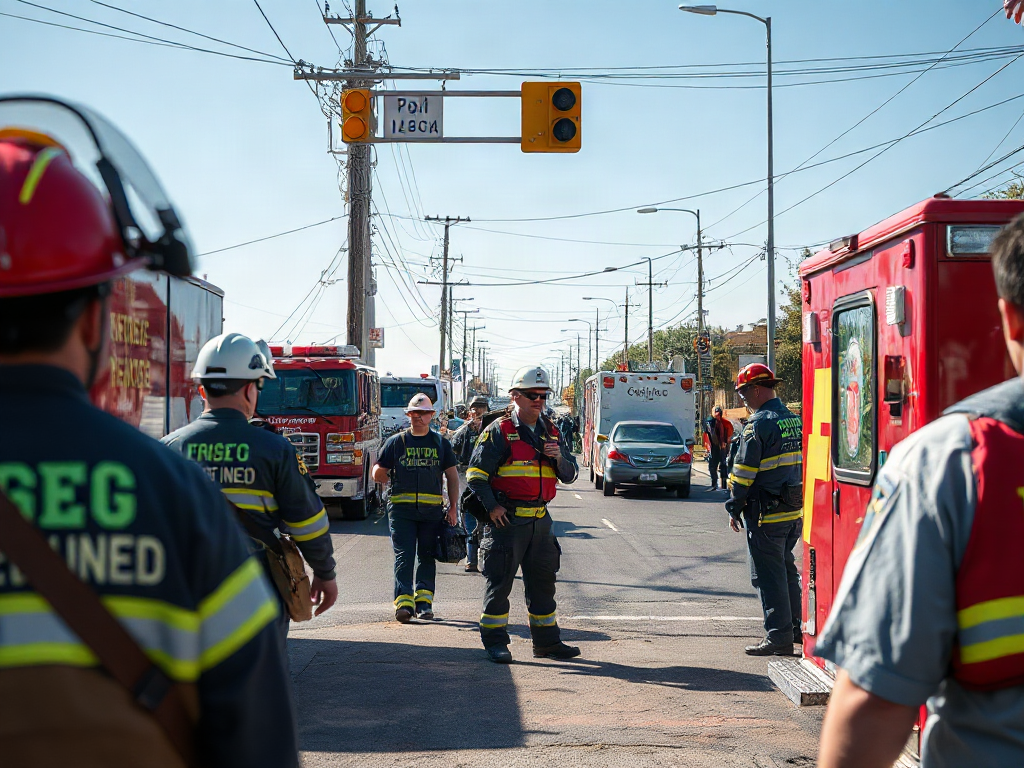
Preparedness and emergency response roles differ mainly by timing, authority, and operational purpose: preparedness personnel assess hazards, develop plans, organize resources, and conduct exercises before an incident, while responders protect life, stabilize hazards, and meet urgent needs during and immediately after it. Emergency managers coordinate across agencies and phases, but firefighters, law enforcement officers, emergency medical personnel, public works crews, public health staff, and trained volunteers retain distinct responsibilities. Effective operations depend on clear decision rights, reliable communications, resource tracking, and planned handoffs. Confusing coordination with command—or assigning untrained people to technical work—can delay action and expose both responders and the public to avoidable danger.
Preparedness Roles Before an Incident
Preparedness work converts foreseeable hazards into decisions that can be made before time pressure, damaged infrastructure, and incomplete information complicate them. Typical responsibilities include identifying likely threats, mapping vulnerable people and facilities, maintaining contact lists, arranging supplies, planning evacuation or shelter procedures, and practicing the plan. The work may be led by an emergency manager, safety officer, continuity coordinator, facility manager, public health planner, or household organizer, depending on the setting.
A preparedness role is not merely an administrative assignment. Its value comes from resolving dependencies before an incident. A planner who designates an evacuation site must also determine whether the site is accessible, who can open it, how people will reach it, and what happens if the route or building is unavailable. A supply coordinator must know where equipment is stored, who may release it, whether it requires inspection, and how depleted stock will be reported. Plans that name a task without addressing these dependencies create the appearance of readiness rather than usable capability.
Preparedness personnel generally recommend arrangements and support readiness; they do not automatically command field operations. For example, a school safety coordinator may write lockdown and family-reunification procedures, but police or fire officers may direct immediate protective actions when they arrive at an active incident. Likewise, a household member may maintain the emergency kit while another person has authority to order an evacuation when official warnings or local conditions justify leaving.
A common failure is assigning every preparatory duty to the person viewed as the most capable. That creates a single point of failure if the person is absent, injured, unreachable, or working elsewhere. Critical duties need a primary owner, an alternate, and an accessible record of what must be done. Readers comparing Emergency preparedness and response roles compared should therefore look beyond job titles and ask whether each person has the information, access, time, and authority needed to complete the assignment.
Useful preparedness assignments produce visible outputs: a reviewed contact roster, an accessible map, a tested warning method, maintained equipment, or a completed exercise report. If nobody can show when a plan was last checked, where the necessary resources are, or who serves as backup, the role exists on paper but is not functioning reliably.
Response Roles During an Emergency
Response roles focus on immediate life safety, incident stabilization, property protection, and urgent human needs. Fire and rescue personnel may suppress fires, perform technical rescue, manage hazardous conditions, or establish safe operating zones. Emergency medical personnel assess and treat patients within their training and transport protocols. Law enforcement may secure dangerous areas, manage traffic, investigate crimes, or support evacuation. Public works crews can isolate damaged utilities, clear routes, inspect infrastructure, and provide equipment that public-safety agencies do not operate.
Other response functions are less visible but equally consequential. Dispatchers receive reports and direct resources. Emergency operations center staff assemble information, coordinate requests, document decisions, and connect field operations with senior officials or partner organizations. Public information personnel issue verified instructions and correct consequential rumors. Shelter teams register occupants, support access and functional needs, manage supplies, and refer medical or safety concerns to qualified personnel. Public health agencies may monitor health threats and coordinate protective measures within their jurisdiction.
Consider a neighborhood affected by a fast-moving wildfire. Firefighters assess fire behavior and defend areas where conditions permit. Law enforcement may control roads and carry out evacuation tasks. Emergency managers coordinate shelter needs, public messaging, transportation requests, and support from neighboring jurisdictions. Utility crews may de-energize threatened lines. Residents are responsible for acting on warnings, using planned routes, assisting dependents when safe, and avoiding blocked areas. These activities are connected, but they are not interchangeable.
The weak assumption is that willingness makes someone a responder. Technical rescue, structural entry, hazardous-material handling, patient care, and traffic control can expose an untrained helper to severe hazards while diverting professionals from their assigned work. Bystanders can often contribute more safely by reporting precise locations, following protective instructions, providing basic care within their competence, checking on household members, or supporting an authorized volunteer organization.
Role boundaries do not prohibit initiative; they channel it. A useful response assignment identifies the task, immediate supervisor or contact, operating area, communications method, safety limits, and completion report. Signs that the structure is working include fewer conflicting instructions, traceable requests, timely status updates, and clear transfer of unfinished work. Repeated duplication, self-deployment, missing personnel, and unrecorded resource requests indicate that coordination is weakening.
How Authority, Coordination, and Command Differ
Command directs incident operations, while coordination aligns organizations, resources, information, and policy support around those operations. The distinction matters because a coordinator may have broad awareness without having legal or organizational authority to direct every participating agency. Similarly, a technical specialist may strongly influence a decision through expertise without serving as the incident commander.
Incident command arrangements provide a scalable way to establish objectives, assign functions, track resources, and maintain accountability. The person in command may change as the incident grows, moves across jurisdictions, or requires different expertise. A small facility incident might initially be managed by an on-site supervisor, then transferred to fire personnel upon arrival. A larger event involving several authorities may require a unified approach in which responsible agencies establish common objectives while retaining their respective authority.
Emergency operations centers usually support rather than replace field command. Their staff may obtain generators, coordinate shelter capacity, assemble situation reports, connect agencies, or elevate policy decisions. Directing a tactical entry into a damaged structure, by contrast, belongs with qualified field command. Confusing these levels can produce two harmful outcomes: remote coordinators may interfere with time-sensitive tactics, or field personnel may become burdened with logistics and policy questions better handled elsewhere.
Households and workplaces need a simpler version of the same clarity. Decide who can order an evacuation, who calls emergency services, who accounts for people, and who communicates with relatives or employees. Avoid giving one person overlapping tasks that must occur simultaneously. Someone calling emergency services should not also be expected to sweep a large building, assist a mobility-limited person, retrieve records, and meet responders at the entrance.
A compact role check can expose ambiguity before an emergency:
- Authority: Who may make the decision, and who acts if that person is unavailable?
- Scope: What may the role holder do, and what must be left to qualified responders?
- Communication: Where are updates sent if phones, internet service, or normal channels fail?
- Handoff: What information must transfer when professional responders or relief staff arrive?
- Accountability: How will people, equipment, and unfinished requests be tracked?
The most useful comparison of Emergency preparedness and response roles compared asks who owns each decision at each stage. A title alone cannot answer that question; the applicable organization, jurisdiction, training level, incident type, and current conditions shape the boundary.
Assigning Household, Workplace, and Volunteer Roles
Role assignments should match capability and availability rather than seniority, confidence, or good intentions. A household member who works far from home may be a poor choice for collecting children during a weekday evacuation. An employee with medical training may be suitable for limited first-aid duties but should not be assigned care beyond that person’s current certification, equipment, or workplace procedures. A volunteer with local knowledge may support outreach while remaining unqualified for search, rescue, or damage inspection.
Start with functions that cannot safely wait: warning others, contacting emergency services, taking protective action, accounting for people, assisting dependents, and bringing essential medication or communication aids when conditions allow. Assign secondary functions—such as documenting damage, contacting insurers, or retrieving replaceable property—only after immediate safety tasks are covered. No plan should direct someone back into an unsafe building to collect supplies or records.
In a household with two adults, a child, and a pet, one adult might guide the child to the meeting location while the other secures the pet and takes the prepared bag, provided doing so does not delay evacuation. If only one adult is home, the plan must collapse into a safer minimum: people first, essential medical needs if immediately accessible, and departure without optional items. The plan is credible only if it works under the more difficult staffing condition.
Workplaces face additional constraints. Visitors may not understand alarms, contractors may lack access credentials, and shift changes can leave designated wardens absent. A roster should therefore identify alternates by location or shift, not merely by name. Staff responsible for accountability need an assembly process that does not encourage anyone to re-enter. Employees should also know that head counts and status reports support responders but do not authorize untrained rescue attempts.
Spontaneous volunteers can create congestion when they arrive without assignment, protective equipment, supervision, or a way to verify their skills. Established volunteer organizations can provide registration, training, task matching, and accountability. The practical choice is to affiliate before a disaster when possible. Anyone using an Emergency preparedness and response roles compared worksheet should include a clear “do not perform” boundary beside each assigned duty, especially for medical, electrical, structural, fire, and hazardous-material risks.
Testing Whether Role Assignments Will Work
Exercises reveal whether assigned roles survive absence, uncertainty, and communication failure. A discussion-based review can test decision logic, while a drill can test movement, alarms, accountability, and equipment access. More complex exercises may involve partner organizations, but even a household can run a useful scenario by assuming that one adult is away, the usual route is blocked, and mobile service is unavailable.
Test the plan in the sequence people would actually experience it. Trigger a simulated warning, ask each person to state the immediate action, use the alternate communication method, move to the meeting location if safe, and account for everyone. Then inspect whether medications, contact details, chargers, keys, mobility equipment, and pet supplies were accessible without searching. The purpose is not theatrical realism; it is to find decisions and dependencies that fail under modest pressure.
Watch for measurable signs of weakness. People waiting for permission when they already have authority, two people assuming the other called for help, inaccessible equipment, conflicting meeting places, and no process for reporting missing occupants all require correction. A fast drill is not necessarily a good drill if participants bypass safety controls or rely on knowledge that substitutes and visitors do not have.
Afterward, record a small number of corrective actions with owners and completion dates. “Improve communications” is too vague. “Print the out-of-area contact card and place copies in both vehicles by Friday” can be verified. Retest the changed element rather than assuming that editing the document fixed the operational problem.
Plans also need review after personnel changes, building modifications, new hazards, equipment replacement, or an actual activation. Success is visible when alternates can perform essential duties, instructions remain consistent across channels, resources can be located quickly, and handoffs include current hazards, missing people, actions already taken, and unmet needs. Failure is visible when the plan depends on memory, one unavailable person, or access to systems likely to be disrupted by the incident itself.
Frequently Asked Questions
Is an emergency manager the person in command at every incident?
No. Emergency managers often coordinate planning, information, resources, and interagency support, while incident command may rest with the agency or official responsible for field operations.
Can the same person hold preparedness and response roles?
Yes, especially in small organizations or households. The assignment still needs realistic priorities, an alternate, and a way to prevent simultaneous duties from overwhelming one person.
What is the difference between a responder and a volunteer?
A responder has an authorized operational assignment and defined supervision. A volunteer may become part of that structure through an established organization, but willingness alone does not authorize technical or hazardous work.
Who should make a household evacuation decision?
Households should identify a primary decision-maker and an alternate while allowing any member to act on an immediate danger or official evacuation instruction rather than waiting for approval.
How often should emergency role assignments be reviewed?
Review them after drills, real incidents, household or staffing changes, facility modifications, and changes to contact details, routes, equipment, or individual support needs.
Conclusion
Reliable emergency organization depends less on impressive titles than on explicit decisions, workable backups, and safe limits. Preparedness personnel should remove predictable obstacles before an incident, while response personnel need authority and resources suited to urgent operational tasks. Coordinators connect agencies and needs without automatically replacing field command, and households or workplaces should use the same principle at a smaller scale.
Map each essential task to a primary person, an alternate, a communication method, and a clear handoff. Then test the arrangement with one person absent and one normal system unavailable. Correct specific failures—such as an inaccessible roster or conflicting assembly points—and retest them. The resulting plan should tell people not only what to do, but when their role ends and trained responders must take over.
Additional Resources
Authoritative Sources
- FEMA National Preparedness
fema.govFederal preparedness, mitigation, response, and community-resilience resources.
- American Red Cross Emergency Preparedness
redcross.orgPractical emergency preparation, safety, and supply guidance for households.