
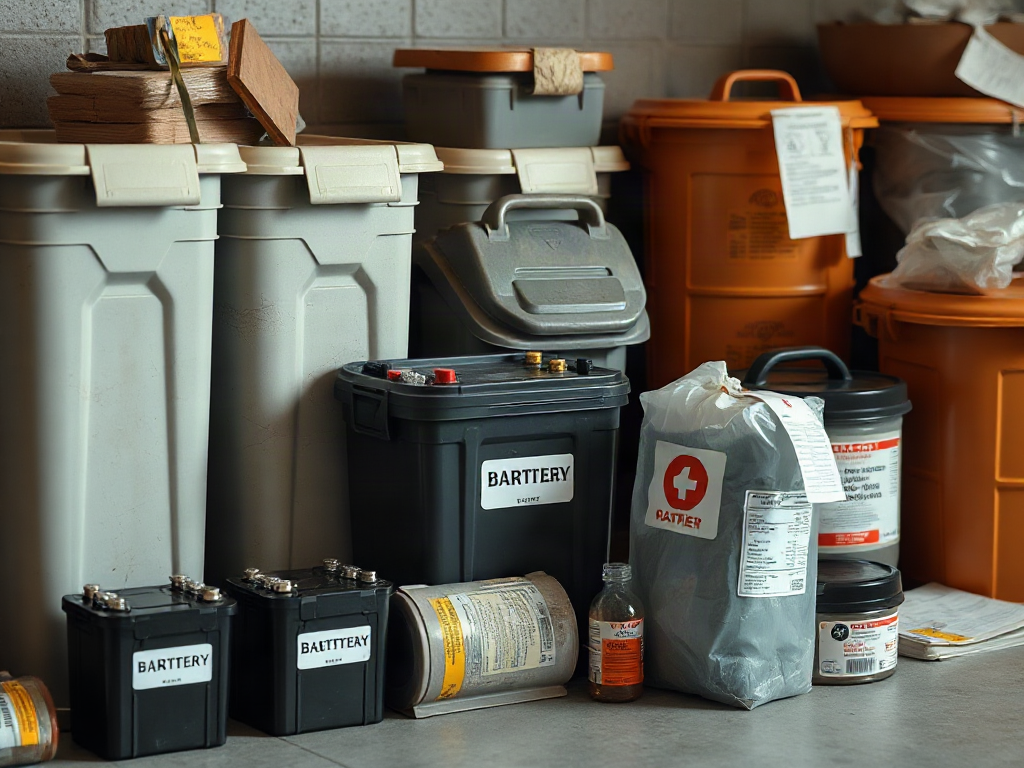
Preparedness supplies become unusable when storage conditions, packaging damage, aging components, neglected maintenance, poor rotation, or changing household needs undermine their reliability. Heat and moisture can degrade food, medicine, batteries, fabrics, and adhesives long before an owner checks them. Leaking cells, broken seals, corrosion, expired prescriptions, missing accessories, and incompatible equipment may then turn a stocked container into a false source of security. Inspect supplies at least seasonally and after moves, leaks, power failures, or temperature extremes. Replace unsafe items, test reusable gear under realistic conditions, and record purchase dates, inspection results, and replacement deadlines.
What you’ll learn
This guide covers the following practical points:
- Storage Conditions That Damage Supplies — Storage location often determines useful life more than the purchase date printed on a package.
- Packaging, Aging, and Component Failure — A supply may fail even when its primary material has not technically expired.
- Inventory Neglect and Changing Needs — Preparedness inventory becomes functionally obsolete when nobody can locate, operate, carry, or safely use it.
- A Practical Inspection and Rotation Process — A useful inspection checks condition, completeness, compatibility, location, and household fit—not merely expiration dates.
Storage Conditions That Damage Supplies
Storage location often determines useful life more than the purchase date printed on a package. Garages, sheds, vehicle trunks, attics, and damp basements expose supplies to temperature swings, condensation, pests, sunlight, or flooding. A sealed tote may keep out splashes while still trapping humid air inside. Items can look protected even as metal corrodes, paper labels separate, and fabric develops mildew.
Heat accelerates deterioration in batteries, adhesives, elastic materials, medicines, and many packaged foods. Freezing can split water containers, damage some liquid products, and weaken containers through repeated expansion and contraction. Moisture rusts tools and can compromise cardboard cartons or paper-wrapped goods. Direct sunlight can embrittle plastics and fade instructions that may be needed during an outage.
Consider two identical roadside kits. One remains in a climate-controlled closet and is transferred to the vehicle for long trips. The other stays in a trunk year-round. The trunk kit faces far harsher conditions, so its adhesive bandages, flashlight batteries, bottled liquids, and plastic components deserve more frequent inspection. Convenience has a cost: supplies stored where they are likely to be needed may require shorter replacement intervals.
Match the location to the item rather than putting every product in one bin. Reserve stable indoor space for temperature-sensitive goods, prescriptions, battery-powered electronics, and important documents. Use elevated shelving where minor flooding is possible, and avoid placing containers against walls that collect condensation. A common mistake is assuming that a waterproof outer container also controls heat and internal humidity; it does not.
Packaging, Aging, and Component Failure
A supply may fail even when its primary material has not technically expired. Packaging, seals, valves, cables, gaskets, lubricants, and batteries can degrade independently. A water filter with a damaged housing, for example, is not dependable merely because its filter element is unused. A stove without the correct connector is similarly incomplete, regardless of its apparent condition.
Printed dates must be interpreted according to the product. A quality date on shelf-stable food is not automatically the same as a safety deadline, while medicines and specialized safety products may carry more consequential expiration information. Follow the manufacturer’s storage and replacement directions, and seek professional guidance about questionable medication rather than assuming appearance proves potency or safety.
Damage indicators deserve more weight than optimistic estimates. Bulging or leaking food containers, broken seals, unusual odors, deep rust, contamination, swollen batteries, cracked plastic, sticky coatings, frayed straps, and missing instructions all justify closer scrutiny or disposal as appropriate. Never taste questionable food to decide whether it is safe. Products contaminated by floodwater, fuel, pests, or leaking chemicals should be isolated from the rest of the inventory.
Compatibility creates another failure point. Charging cables change, household members replace devices, and fuel or cartridge systems may not match newly purchased equipment. Buying a newer radio does not help if the stored charging lead fits the previous model. Test assemblies as complete systems: device, power source, cable, adapter, consumable, and instructions. The frequent error is checking each object separately while overlooking whether the objects work together.
Inventory Neglect and Changing Needs
Preparedness inventory becomes functionally obsolete when nobody can locate, operate, carry, or safely use it. A respirator in the wrong size, food that conflicts with a current allergy, or an evacuation bag that has become too heavy may remain physically intact but no longer serve its intended user. Children grow, prescriptions change, mobility shifts, pets join the household, and emergency contacts move.
Disorganization amplifies these changes. Owners often buy replacements without removing old stock, scatter related parts across several rooms, or bury frequently needed items beneath long-term reserves. During a power outage, a working lantern is of limited value if its batteries are stored elsewhere and cannot be found in the dark. Labels should be readable from the outside, and essential accessories should remain with the equipment they support.
Rotation works best when supplies overlap with ordinary household use. Foods the household already eats can move from reserve storage into normal meals before quality declines. Fresh packages then go to the back of the storage area. This approach is less suitable for specialized gear that cannot be consumed routinely, so those items need scheduled inspection and occasional practice instead.
Training is part of usability. Water treatment equipment, manual can openers, radios, shutoff tools, and cooking devices should be tested without creating a hazard or consuming irreplaceable components. Practice reveals unclear controls, excessive setup time, missing parts, and instructions that are unreadable without glasses or adequate light. Owning unfamiliar equipment and postponing its first use until a disruption is a preventable failure.
A Practical Inspection and Rotation Process
A useful inspection checks condition, completeness, compatibility, location, and household fit—not merely expiration dates. Conduct a full review on a recurring calendar date and add event-driven checks after a move, roof leak, basement seepage, pest problem, extended power loss, or severe temperature exposure. High-stress storage locations such as vehicles deserve attention more often than stable indoor closets.
Use the following compact sequence for each storage area:
- Observe the environment: Look for heat exposure, dampness, sunlight, pests, chemical odors, or damaged shelving.
- Inspect individual items: Check seals, containers, corrosion, swelling, leaks, labels, and manufacturer instructions.
- Test complete systems: Confirm that devices power on and that required cables, adapters, fuel, filters, and manuals are present.
- Reassess users: Verify sizes, dietary needs, prescriptions, mobility requirements, pet supplies, and realistic carrying weight.
- Record the decision: Mark items to keep, rotate, relocate, repair, replace, or discard safely.
For an illustrative example, suppose a closet contains six flashlights, but inspection finds two with corroded battery contacts, one requiring a battery size not in stock, and one too dim for room lighting. The inventory count says six; the usable count is only two until repairs and compatible power supplies are addressed. Counting capability rather than objects produces a more honest assessment.
Keep a simple inventory with the item name, quantity, storage location, purchase or packing date, next inspection, and special replacement instruction. Avoid inventing a single universal lifespan for unrelated products. Manufacturer guidance, observed condition, storage history, and the consequence of failure should shape the decision. When a product protects health or safety and its reliability cannot be verified, replacement is generally more prudent than treating uncertainty as readiness.
Frequently Asked Questions
How often should preparedness supplies be inspected?
A seasonal review is practical for most household storage, with additional checks after leaks, moves, pest activity, power failures, or severe heat and cold. Vehicle kits and other harsh-location caches may need more frequent attention.
Does an expired date always mean stored food is unsafe?
No. Some dates address expected quality rather than safety, but package damage, contamination, improper storage, or spoilage signs can make food unsuitable regardless of the date. Follow product guidance and discard bulging, leaking, or suspicious containers.
Should batteries be stored inside emergency devices?
Removing batteries can reduce damage from leakage during long storage, although the best approach depends on the device and battery type. Keep compatible batteries beside the equipment, protect their terminals, and test the complete setup during inspections.
Can sealed plastic totes stop supplies from deteriorating?
Totes protect against dust, pests, and limited water exposure, but they do not control temperature or automatically remove trapped moisture. The surrounding room still needs suitable conditions, and the tote and its contents still require inspection.
What should be replaced first when the budget is limited?
Prioritize failed items tied to immediate safety, water, essential medication, lighting, communication, and household-specific needs. Repair or rotate lower-consequence goods later, and avoid replacing an item before checking whether relocation or a missing accessory solves the problem.
Conclusion
A reliable reserve is measured by usable capability, not the number of containers on a shelf. Start by correcting damaging storage conditions, then inspect seals, power sources, accessories, and product compatibility. Update food, clothing, medication, and carrying loads as household needs change. A dated inventory and realistic equipment test will expose weak points that visual counting misses, allowing limited replacement funds to go toward the failures with the greatest consequences.