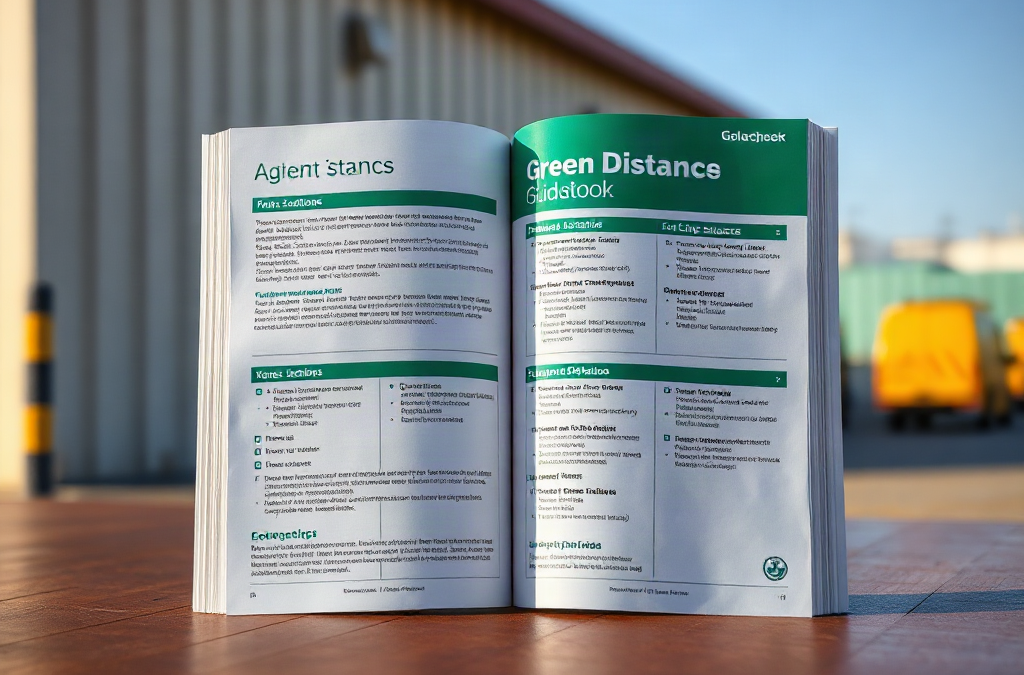
The green section of the Emergency Response Guidebook is a specialized reference for certain toxic inhalation hazards. Unlike the orange section, which provides response guidance for a four-digit identification number or material name, the green pages provide distances for immediate isolation and protective action. Those distances are designed for early incident management when a dangerous release may threaten people downwind.
The section is particularly relevant to materials that can produce toxic concentrations in the air. Some entries involve toxic gases transported as gases or liquids under pressure. Others address substances that can generate a toxic inhalation hazard after contact with water. The practical question is not simply whether a container is labeled hazardous; it is whether the released material could create a dangerous airborne exposure zone.
Each green-page entry normally separates two decisions. Initial isolation identifies the area immediately surrounding the release where people should be kept away. Protective action identifies the downwind area where evacuation or sheltering may need to be considered. The second area is directional, not a perfect circle, because airborne contamination generally follows the wind rather than spreading evenly in every direction.
A common mistake is treating the green section as a complete incident plan. It is not. It does not tell an untrained person to approach a leaking cylinder, select respiratory protection, enter a contaminated building, or perform a technical rescue. It gives an initial distance-based basis for protecting the public while responders identify the substance, assess conditions, establish command, and obtain more specialized support. The Emergency response guidebook green section explained is most useful when read as an early-action tool rather than a substitute for field assessment.
How to Read Isolation and Protective Action Distances
Reading a green-page table begins with identification. Use the shipping label, container markings, transport documents, or a confirmed UN identification number whenever available. The orange section may direct the reader to a green-page table; the green page then supplies the distance information associated with that material. If the identity is uncertain, selecting a similar-looking chemical can create a dangerous false sense of precision.
The table commonly distinguishes between a small spill and a large spill. That distinction reflects the amount of material available to become airborne and the potential duration of the release. A damaged package leaking a limited quantity is not automatically low risk, but it may produce a different initial zone from a ruptured cargo tank or pressurized container. The table also separates daytime and nighttime conditions because atmospheric mixing can differ substantially between those periods.
Look for three pieces of information:
Initial isolation distance: the near-release area that should be cleared or controlled.
Protective action distance: the downwind distance where people may need to evacuate or shelter.
Release category: the table’s small-versus-large-spill and day-versus-night columns.
These values should be applied in the direction of the current wind, with access controlled around the source. For example, a release from a damaged tank truck on a road may require a tight exclusion area around the vehicle and a longer downwind zone extending along the roadway or across nearby properties. A circular perimeter alone could leave people downwind inadequately protected while unnecessarily restricting areas that are crosswind or upwind.
Do not confuse the protective-action distance with a guaranteed boundary between safe and unsafe air. It is an initial planning value, not a measurement of actual concentration at every point. Wind shifts, intermittent leaks, thermal effects, buildings, hills, and drainage corridors can produce uneven movement. A monitored reading, updated weather observation, or specialist assessment may justify expanding or reshaping the area. The green-section reference supplies a starting geometry; incident personnel must keep testing whether that geometry still matches the event.
Why Day, Night, Wind, and Spill Size Matter
Atmospheric conditions control how quickly a released substance disperses and how far a hazardous concentration may travel. During stable conditions, especially at night, released vapors may mix less readily with surrounding air. A smaller release can therefore remain concerning over a longer downwind distance than it might under stronger daytime mixing. The table’s day and night distinctions account for this broad atmospheric difference without pretending that every local weather pattern is identical.
Wind direction is equally important. A protective-action zone should be projected downwind from the release, but the wind must be checked repeatedly. A breeze that changes direction can move the hazard toward a neighborhood, roadway, school, or workplace that was initially outside the zone. Responders should watch for changing wind, visible vapor movement where applicable, weather updates, and reports of irritation or breathing difficulty. Public movement should not be directed into an area merely because it was initially upwind.
Spill size is more than a label on a chart. A small leak may continue for hours, while a large release may produce an intense plume quickly. A small spill near a crowded indoor facility can present a more complicated public-protection problem than a larger outdoor release in an open area. Buildings may offer shelter from moving air in some situations, yet they can also trap a contaminant or draw it through ventilation systems. The correct choice between evacuation and sheltering depends on the substance, release behavior, building conditions, and instructions from authorities.
Consider a nighttime release from a cylinder near a commercial district. The initial instinct may be to clear only the parking lot. The green table may indicate a broader downwind protective-action distance, and nearby buildings may complicate movement if people leave through doors facing the plume. In that situation, responders may need to control traffic, prevent self-evacuation through the affected area, and coordinate building-specific instructions rather than issuing a generic “leave now” message.
The opposite error is using the nighttime value automatically during the day or applying the largest value without identifying the material and release category. Conservative action can be appropriate when information is missing, but arbitrary distances can obstruct emergency access, move people toward the hazard, or overwhelm available shelter. Sound decisions combine the table with current observations instead of treating a printed number as self-executing.
Using the Tables Without Creating New Risk
The green section is intended to support trained emergency response, not encourage public approach or improvised chemical investigation. Anyone outside the response organization should move away from the suspected release, avoid entering vapor or spill areas, keep others from approaching when this can be done safely, and follow official evacuation or shelter instructions. Calling emergency services from a safe location is more useful than trying to identify a placard at close range.
Responders must manage two hazards at once: the material itself and the behavior of people around it. Crowds may gather to watch, drivers may attempt to pass through a closed road, and occupants may open doors or windows without knowing whether the plume is moving toward them. Clear perimeter control and plain-language instructions can reduce secondary exposure. The person giving directions should specify where people should go, which routes are closed, and whether they should remain indoors or evacuate.
Identification uncertainty deserves special attention. A chemical name can be misread, a placard can be obscured, or a shipping document can describe a different load than the damaged container. If two materials have different toxic-inhalation characteristics, choosing the wrong table may produce an unsafe distance. When information conflicts, responders should communicate the uncertainty and seek qualified hazardous-materials support rather than quietly selecting the most convenient entry.
Another failure mode is assuming that an odor is a reliable warning. Some hazardous substances have weak, delayed, or easily fatigued odors, while odor can also be detected at levels unrelated to the table’s protective-action thresholds. Lack of smell does not establish safety, and a strong smell does not by itself define the correct perimeter. Air monitoring and professional assessment are more dependable than personal sensory judgment.
The reference also should not be used to decide whether a contaminated person is safe to touch, whether a building can be reoccupied, or whether cleanup is complete. Those questions require task-specific procedures and appropriate protective equipment. The guidebook’s green tables help with initial public-protection distances; they do not certify an area as cleared.
A Practical Green-Section Decision Checklist
A disciplined sequence reduces errors when time and information are limited. The goal is to obtain a defensible initial zone, communicate it, and update it as conditions change.
Identify the material: confirm the UN number, shipping name, container type, and whether the release involves contact with water.
Locate the correct green-page entry: verify that the table matches the material rather than relying on appearance or an approximate name.
Classify the release: determine whether the table’s small or large spill category is appropriate, while recognizing that uncertainty may require a cautious initial posture.
Apply the day or night value: use the relevant column and record the time and weather conditions used for the decision.
Map the wind: establish the initial isolation area around the source and project the protective-action area downwind.
Control movement: prevent people from walking, driving, or evacuating through the projected plume.
Reassess: update the perimeter when wind shifts, the leak changes, monitoring becomes available, or the material identification improves.
The checklist is not a replacement for an incident command system or hazardous-materials training. It is a way to avoid skipping the basic logic behind the table. A responder who writes down the material, spill category, time, wind direction, and assumptions can explain why an initial boundary was selected and can recognize when that boundary no longer fits.
For households and workplaces, the most useful preparation is familiarity with official alerts, shelter locations, evacuation routes, and access to current emergency information. Keeping an old printed guidebook is not enough if people do not know how to receive local instructions or account for children, mobility limitations, visitors, and pets. Public guidance should come from emergency management or responders during an actual release, because local conditions may override a distance read from the table.
Frequently Asked Questions
What is the green section of the Emergency Response Guidebook?
It contains initial isolation and protective action distances for selected toxic inhalation hazards, including some materials that can create toxic gas when they contact water.
What is the difference between isolation and protective action?
Isolation controls the area immediately around the release. Protective action addresses the larger downwind area where evacuation or sheltering may be needed.
Why does the green table separate day and night?
Atmospheric stability and mixing can differ between day and night, affecting how a hazardous plume disperses and how far it may travel.
Can the green section tell me whether it is safe to enter?
No. It provides initial public-protection distances, not entry clearance, respiratory-protection selection, decontamination instructions, or final site release.
What should a member of the public do after seeing a suspected toxic release?
Move away without entering the plume, avoid blocking responder access, contact emergency services from a safe location, and follow official evacuation or shelter directions.
Further Reading
Authoritative Sources
Emergency Response Guidebook phmsa.dot.gov
The official U.S. Department of Transportation source for the guidebook and its hazardous-materials response information
NIOSH Pocket Guide to Chemical Hazards cdc.gov
Provides occupational hazard information that can supplement, but not replace, the guidebook’s initial incident distances
Conclusion
The green section turns a material identification into an initial distance-based protective decision. Its most important distinctions are the near-release isolation area, the larger downwind protective-action zone, the small-versus-large spill category, and the day-versus-night condition. Those values are starting points, not permanent borders or permission to enter.
Use the correct material entry, map the current wind, keep people out of the projected plume, and expect the boundary to change as weather, leakage, monitoring, and identification change. Members of the public should retreat and follow official instructions rather than attempt chemical identification or rescue. Responders should pair the guidebook with training, monitoring, command coordination, and specialist support. That combination makes the reference useful without giving a printed table more certainty than the incident can support.
Which Travel Documents Deserve an Emergency Backup
Travel documents become most valuable when the original is lost, stolen, damaged, or inaccessible. A backup does not replace an official passport, visa, license, or certificate, but it can help identify you, establish your travel details, and speed communication with an embassy, airline, insurer, medical provider, or family member. The priority is not collecting every piece of paper; it is preserving records that help another organization verify your identity or act on your behalf.
Begin with the documents that are difficult to replace while away from home. A passport identification page, government-issued identification, visa or residence permit, and travel itinerary belong in the first group. Add travel insurance policy information, emergency assistance numbers, and a copy of your health insurance card if you carry one. Medication lists, prescriptions, allergy information, and relevant medical contacts may be especially useful during an unexpected hospitalization or border delay. Families should include custody or consent documents when a child is traveling with only one parent or another responsible adult.
Records should reflect the trip rather than a generic folder. A traveler visiting a country with an entry visa needs that visa and the passport number connected to it. Someone driving across borders may need vehicle registration, rental agreements, roadside assistance details, and proof of insurance. A person carrying controlled or temperature-sensitive medication should retain the prescription information and any documentation supplied by the prescriber or dispensing pharmacy. The useful question is: which missing record would create the longest delay or the greatest confusion?
Do not assume a photograph of every document is automatically adequate. Images may be unreadable, cropped, outdated, or difficult to search. Make sure names, numbers, dates, endorsements, and contact details are visible. Keep copies of both sides of cards when the reverse contains instructions or policy information. Avoid storing unnecessary financial data, such as full payment card numbers, unless a specific need justifies the additional privacy risk. A focused collection is easier to maintain and safer to share than an indiscriminate scan of your entire file cabinet.
A useful companion resource is Emergency travel documents to store safely, particularly when creating a household record system that must work during evacuation or extended travel.
How to Store Paper and Digital Copies Securely
The strongest arrangement uses two formats and more than one location. Paper copies provide a readable fallback when a phone is lost, a battery is empty, or an account cannot be reached. Digital copies are easier to update, search, and transmit, but they depend on devices, passwords, connectivity, and account access. Relying on only one format creates a predictable failure point.
For paper, use a sealed waterproof pouch or document envelope placed in a secure, accessible location. A fire-resistant safe may reduce damage from heat, but it should not be so difficult to open that nobody can retrieve the records during an evacuation. Store a second paper set with a trusted person or in another safe location if the documents are needed by relatives or a traveling partner. Do not put the only backup in the same suitcase as the originals; theft or loss would remove both sets at once.
Digital storage requires more judgment than simply emailing scans to yourself. Use a reputable cloud service with a strong, unique password and multi-factor authentication where available. Encrypt sensitive files before uploading them if your storage system does not provide adequate protection. A clearly named folder can improve access, but filenames should not expose more personal information than necessary. For example, a folder labeled with a trip month and initials is less revealing than one containing a full passport number.
Keep an offline copy on an encrypted device or a password-protected storage medium, but understand the tradeoff. An offline drive avoids dependence on internet access while traveling, yet it can be lost, damaged, or forgotten. A phone gallery is convenient but may expose documents to anyone who unlocks the phone. Screenshots can be useful in a hurry, although they should not replace a properly organized file containing complete pages.
Test the system before departure. Open the files from the device you expect to carry, confirm that scans are legible, and check that the backup account can be reached without relying on a single phone number or authentication device. If a trusted person will hold copies, confirm exactly what they have and how they may send it. The arrangement is working when you can locate the needed page quickly without broadcasting sensitive information to bystanders; it is failing when access depends on an unavailable device, an expired login, or an unclear file name.
Building a Travel Document Access Plan
Storage matters only if the right person can retrieve the information under pressure. Create a short access plan that identifies where the paper set is kept, which digital account contains the files, and who may help if you are injured, detained, separated from your luggage, or unable to use your phone. The plan should contain instructions, not passwords written in plain text. A trusted contact can use an agreed password manager process, recovery method, or separate communication channel.
Separate information by sensitivity. Emergency contacts, itinerary details, and insurance assistance numbers may be appropriate for a travel companion or family member. Passport scans, medical records, and immigration documents require tighter control. Sharing everything with everyone increases the chance of identity misuse and makes it harder to know which copy is current. A traveler may keep a general emergency sheet in a bag while retaining encrypted identity documents in a protected account.
Prepare for common disruptions rather than an ideal trip. If luggage disappears at an airport, the traveler should still have identification evidence and airline details. If a phone is stolen, a companion or trusted contact should be able to reach the itinerary and insurer without needing the stolen device. If a natural disaster interrupts local services, an offline paper copy may be more useful than a cloud folder. These scenarios favor redundancy, but redundancy does not mean placing identical records in every visible location.
A compact access checklist can include:
Original documents kept separate from backup copies.
One paper set protected from water and ordinary luggage loss.
Encrypted digital files available on a phone and through a secure account.
A trusted contact who knows the recovery procedure.
Emergency numbers and itinerary details available without opening the most sensitive files.
Practice the plan with a travel partner before leaving. Ask that person to find the insurer’s number, identify the passport copy, and explain what they would do if you could not respond. This rehearsal often exposes weak assumptions, such as a backup account protected by a phone left in checked baggage or a contact list stored only inside the lost handset. A plan that requires improvisation during a crisis is not yet a reliable plan.
For households coordinating evacuation, Emergency travel documents to store safely can be paired with a broader family contact record, provided each adult understands which information is private and which information may be shared.
Updating Records and Avoiding Common Failures
Outdated copies can create almost as much confusion as no copies. Passport numbers change after renewal, visas may be linked to a particular passport, insurance policies expire, and emergency contacts move or change phone numbers. Review the collection before international travel, after replacing an identity document, and whenever itinerary details or medical needs change. A recurring calendar reminder is more dependable than memory.
Use a simple version system. Put the review date in the folder name or on the paper cover, and remove superseded copies from devices and shared accounts when practical. Retaining old passport scans may be justified for a specific immigration or claims record, but label them clearly so an exhausted traveler does not present the wrong document. The current file should be obvious at a glance.
Several mistakes recur. Some travelers store originals and backups together, defeating the purpose of duplication. Others send unencrypted scans through ordinary messaging apps, where copies may remain in multiple accounts. Some protect files with a password that nobody else knows, making the backup useless if the traveler is incapacitated. Another error is assuming a digital image will satisfy every official requirement; an embassy, border authority, airline, insurer, or local police agency may require the original or a formal replacement process.
Privacy deserves equal attention. Travel documents contain identity numbers, birth dates, signatures, addresses, and sometimes medical information. Share only the page needed for the immediate task, verify the recipient, and avoid public Wi-Fi for sensitive account access when a safer option is available. If a document is no longer needed, delete unnecessary copies from shared devices and accounts rather than leaving a permanent trail.
Choose the system that matches the trip. A short domestic journey may need identification, insurance, medication, contacts, and itinerary records. International travel usually requires a more detailed set because replacement procedures and entry rules can differ by country. Remote travel, group travel, and travel with children justify stronger offline and third-party access arrangements. The best system is not the most elaborate one; it is the one that remains current, protected, and usable when the original documents cannot be reached.
Frequently Asked Questions
Should I carry paper copies of my passport?
Yes. A paper copy can help identify the document and provide its number when the original is lost, although it does not authorize travel or replace the passport.
Where should digital travel documents be stored?
Use encrypted storage or a reputable cloud account protected by a unique password and multi-factor authentication, plus an offline copy for situations without internet access.
Can I email passport and visa copies to myself?
Email may be convenient, but it exposes sensitive information across inboxes and devices. Encrypted storage with controlled sharing is generally a safer primary method.
How often should emergency travel records be updated?
Review them before major trips and whenever a passport, visa, insurance policy, prescription, itinerary, or emergency contact changes.
Do document copies work at a border or airport?
Usually, copies support identification and replacement conversations but do not substitute for required originals. Confirm requirements with the relevant airline, embassy, consulate, or government authority.
Further Reading
Authoritative Sources
U.S. Passports and International Travel travel.state.gov
Official information on passport services, replacement procedures, and international travel documentation for U.S. travelers
CDC Yellow Book: Travel Health cdc.gov
Provides travel-health planning information that can help readers identify medical records and prescriptions worth carrying
U.S. Government Passport Services usa.gov
Explains official passport assistance and replacement pathways when a document is lost or stolen
Conclusion
A dependable travel-document backup combines readable paper copies, protected digital files, separated storage, and a clear recovery procedure. Prioritize identity documents, visas, insurance contacts, medical information, itineraries, and any records tied to children, vehicles, or specialized medication. Keep the backup away from the originals, limit access to sensitive files, and test retrieval before departure rather than assuming the system works. Review dates and contact details after every major change, remove obsolete versions, and confirm that copies are supporting records rather than substitutes for documents an authority requires in original form. A few deliberate checks can turn a lost bag, stolen phone, or disrupted journey from a documentation crisis into a manageable replacement process.
What an Emergency Response Guidebook Must Accomplish
An emergency response guidebook is a decision aid for the period when information is incomplete, time is limited, and normal services may be unavailable. Its value comes from reducing uncertainty: readers should be able to identify the situation, take an immediate protective action, contact the right people, and move to the next decision without searching through long explanations.
A strong guidebook is not necessarily the longest one. A household document might fit in a small binder, while a workplace or community guide may need maps, role assignments, equipment inventories, and facility-specific procedures. Both formats should answer the same practical questions: what happened, what danger is present, what action is required now, and what condition allows the response to change.
For example, a power outage has different implications from a fast-moving wildfire. An outage may require checking medical equipment, refrigeration, lighting, and communications over time. A wildfire warning may require monitoring official instructions, preparing transport, and leaving before routes become congested. A generic paragraph about “staying safe” does not help with either scenario unless it is connected to a trigger and an action.
The guide should also distinguish confirmed information from assumptions. Rumors, delayed alerts, blocked roads, missing family members, and damaged utilities can alter the safest choice. Readers should know which sources to monitor and which decisions do not require waiting for perfect information. Linking this material to a broader Emergency response guidebook sections explained reference can help keep related household planning consistent.
The Core Sections and Their Operational Roles
Most useful guidebooks contain several connected sections rather than one universal template. The opening section identifies hazards, warning signals, local vulnerabilities, and the people or facilities covered by the document. It should mention conditions that change the response, such as mobility limitations, children, pets, medication needs, remote workers, or reliance on electrically powered equipment.
The immediate-action section comes next. It should use short instructions for the first minutes of an event: move away from a visible hazard, shut off equipment only when it is safe, shelter from airborne debris, leave when an evacuation order applies, or call emergency services when someone faces an immediate life threat. These directions should not encourage risky interventions. A homeowner, for instance, may know where a water shutoff is located but should not enter a flooded electrical area to reach it.
Communication and accountability deserve their own section. It can list primary and backup contacts, an out-of-area contact, meeting locations, text-message procedures, and a method for reporting who is safe. A printed list matters when phones are charged but cellular networks are congested. The document should state what to do if a contact cannot be reached rather than assuming every message will be delivered.
Evacuation and shelter instructions solve different problems. Evacuation material should identify more than one route, transportation options, accessible exits, destination details, and a plan for pets or dependents. Shelter guidance should explain which room or facility is suitable for the hazard, how to close off air if directed by authorities, and what supplies must remain within reach. Choosing evacuation simply because it sounds more proactive can be dangerous during a hazard where travel increases exposure; staying put can be equally inappropriate when a building or area is threatened.
Medical, utility, supplies, and recovery sections complete the operational picture. Medical pages can show the location of first-aid materials, emergency health information, and instructions for contacting professional help without pretending that a guidebook replaces trained care. Supply pages should identify actual storage locations and expiration checks. Recovery pages cover damage documentation, re-entry cautions, sanitation, assistance contacts, and the process for restoring normal routines. Each section works best when it is tied to a specific responsibility rather than assigned to “everyone.”
Turning Written Procedures Into Usable Decisions
Writing a procedure is different from writing an explanation. A procedure needs a trigger, an action, an owner, and a follow-up condition. “Monitor the weather” is incomplete; “the designated monitor checks official alerts and announces changes through the agreed contact channel” is more useful. The second version makes responsibility visible and reduces the chance that several people assume someone else is watching.
Use plain language and sequence actions by urgency. A compact decision path might ask: Is anyone in immediate danger? Is the location becoming unsafe? Has an official evacuation or shelter instruction been issued? Which communication method still works? What assistance is needed? The guide should not bury these questions beneath background information, technical terms, or long equipment descriptions.
Specific details improve performance under stress. A floor plan can mark exits, fire extinguishers, utility shutoffs, safe rooms, and the location of the go-bag. A contact page can include the full name, relationship, phone number, and alternative method rather than a first name alone. A transportation page can state who drives, where the keys are kept, and how a person without a vehicle will leave.
Short checklists are valuable when they support a decision instead of replacing judgment. A pre-departure check might include people, medications, identification, essential devices, pets, and current instructions. It should not imply that collecting belongings is worth delaying departure. The guide needs a clear priority rule: life safety and official instructions take precedence over property, convenience, and completing every checklist item.
Common failures are usually structural. A guide may list three meeting places without saying when each applies, provide emergency numbers without noting local limitations, or name a backup generator without explaining ventilation and fuel storage. Another weak assumption is that one plan fits every hazard. Comparing a shelter-in-place procedure with an evacuation procedure exposes these differences and makes the document more reliable. Readers can use the Emergency response guidebook sections explained material as a cross-check for missing triggers, responsibilities, and fallback options.
Reviewing, Testing, and Updating the Guidebook
A guidebook becomes dependable when people can use it without coaching. Review should therefore include a small practical test, not just a proofreading session. Ask a household member or coworker who did not write the document to locate the meeting place, identify the backup contact, find the main shutoff, and explain what happens after the first call. Confusion reveals a design problem rather than a reader failure.
Test the conditions that commonly defeat written plans: a dead phone battery, a blocked preferred route, a missing key, a power outage, a person away from home, or a contact who does not answer. A tabletop discussion may be enough for a low-risk household procedure, while a workplace may need a coordinated drill that accounts for accessibility and accountability. The purpose is not to stage danger; it is to verify that the instructions are understandable and that responsibilities are realistic.
Update the guide after changes to addresses, phone numbers, medications, vehicles, household membership, work schedules, school arrangements, or local facilities. Check printed maps, battery inventories, stored water, first-aid supplies, and device chargers at a defined interval. Digital copies should be available offline, but they should supplement rather than replace a printed version.
Pay attention to signs that an approach is failing. People hesitate over the first action, disagree about who is in charge, cannot find a needed item, or discover that a route depends on a closed bridge. Correct those weaknesses directly. Do not add pages merely to make the document appear comprehensive; remove explanations that delay urgent decisions and retain details that change what someone does.
Official emergency management agencies, local fire departments, public health offices, and utility providers may publish hazard-specific instructions that should inform—not be copied blindly into—a local guidebook. Conditions differ by building, geography, household needs, and available transport. The best document remains specific enough to use while directing readers to current official alerts when circumstances change.
Frequently Asked Questions
What is the most important section of an emergency response guidebook?
The immediate-action section usually deserves priority because it addresses the first protective move, when to call for help, and when to evacuate or shelter. Its instructions should be brief and hazard-specific.
How long should an emergency response guidebook be?
It should be long enough to cover realistic hazards, roles, contacts, routes, supplies, and recovery actions without slowing urgent decisions. A short, tested binder is often more useful than an exhaustive document nobody can navigate.
Should a guidebook include both evacuation and shelter instructions?
Yes. The appropriate response depends on the hazard, official direction, building conditions, and travel safety. The document should state the trigger for each option instead of presenting one as universally safer.
How often should the guidebook be reviewed?
Review it whenever contacts, addresses, household needs, vehicles, routes, or equipment change, and set a regular calendar check so outdated details are found before an incident.
What makes a guidebook fail during a real emergency?
Common failures include unclear responsibility, outdated contacts, inaccessible digital files, vague triggers, dependence on one route or communication channel, and instructions that place property protection ahead of personal safety.
Further Reading
Authoritative Sources
Ready.gov ready.gov
Provides federal preparedness guidance that can help readers compare household response, communication, evacuation, and shelter sections
Federal Emergency Management Agency fema.gov
Offers planning and hazard-specific resources for building locally relevant emergency procedures
American Red Cross Emergency Preparedness redcross.org
Supplies practical guidance on household plans, emergency kits, communication, and evacuation considerations
Conclusion
A useful emergency response guidebook turns uncertainty into a sequence of manageable decisions. Give priority to immediate protective actions, clear triggers, assigned responsibilities, backup communications, and realistic evacuation or shelter choices. Add maps, medical information, supply locations, and recovery steps only when they help someone act or verify a condition. Test the document with the people who will rely on it, including anyone with mobility, medical, language, or transportation needs. Replace outdated contacts and routes promptly, and keep both printed and offline-accessible copies. A guidebook is ready when an unfamiliar reader can find the first action quickly, explain what happens next, and recognize when the original plan no longer fits the hazard.
CDC emergency preparedness recommendations are designed to reduce confusion and protect basic health during disruptions such as severe weather, disease outbreaks, power failures, fires, and other emergencies. The emphasis is not on predicting the exact event. It is on identifying likely hazards, understanding local instructions, and preparing enough practical support to make safe decisions when normal services are interrupted.
A household risk assessment should begin with location and vulnerability. Flooding, hurricanes, winter storms, extreme heat, earthquakes, wildfire smoke, and infectious disease emergencies create different demands. A coastal household may need evacuation routes and medication protection, while a rural household may need a longer transportation plan because stores, shelters, and medical facilities are farther away. The CDC emergency preparedness recommendations summarized here are most useful when adapted to those conditions rather than copied as a fixed shopping list.
Personal circumstances determine the most urgent preparations. Someone who uses refrigerated medicine, oxygen equipment, insulin, mobility aids, or powered communication devices faces risks that a general kit may not address. Children, older adults, pregnant people, people with disabilities, and those with limited English proficiency may need additional planning or assistance. Pets and service animals also require food, medication, carriers, identification, and destination information.
A common mistake is treating preparedness as a one-time purchase. A large container of supplies does little if no one knows where it is, batteries are dead, prescriptions have changed, or the household cannot leave safely. The better approach is to connect each supply to a specific need: water for drinking and sanitation, a flashlight for a power outage, copies of records for replacement services, and a battery-powered or hand-crank communication method when cellular service is unreliable.
Building Supplies Around Real Household Needs
A practical emergency kit should support immediate safety, hydration, food, health, communication, and basic sanitation. The CDC commonly directs households toward several days of essential supplies, but the appropriate quantity depends on household size, local hazards, storage capacity, and access to outside assistance. People should follow current local agency instructions when an emergency creates special requirements.
Water deserves early attention because interruptions can affect drinking, cooking, handwashing, and medication use. Store commercially bottled water or use containers intended for water storage, and account for children, pets, and people with medical needs. Food should be familiar, shelf-stable, and usable without dependable refrigeration or cooking. Ready-to-eat canned foods, nut or seed products when appropriate, shelf-stable milk, dried foods, and manual can-openers may be more useful than supplies that require substantial preparation.
Health items should reflect the household rather than a generic kit. Include prescription medicines according to the prescriber and pharmacy’s guidance, over-the-counter products used regularly, first-aid materials, glasses, hearing-aid supplies, menstrual products, and copies of medication lists. Keep essential documents in a water-resistant container or secure digital location. Useful records may include identification, insurance information, emergency contacts, medical instructions, and proof of prescriptions.
Storage location creates a tradeoff. A basement may be cool but inaccessible during flooding; a garage may be convenient but exposed to heat; a single indoor closet may be easy to find but vulnerable if a damaged room cannot be entered. Dividing supplies between a home kit, vehicle kit, and grab-and-go bag can improve access, but duplication costs money and requires maintenance. A sensible starting priority is:
Water, necessary medicines, and critical medical equipment.
Light, communication tools, batteries, and a way to charge devices.
Food, sanitation supplies, basic first aid, and weather-appropriate clothing.
Important records, cash in small denominations, pet supplies, and mobility-specific items.
The failure mode to avoid is buying specialized equipment before covering fundamentals. A complex generator, for example, cannot replace a plan for fuel storage, safe operation, carbon monoxide prevention, and medical-device compatibility. Test each item in ordinary conditions. If a flashlight is difficult to operate, a radio cannot be tuned, or a packaged meal is unacceptable to the household, the problem is easier to fix before an emergency.
Communication, Evacuation, and Information Plans
A communication plan should answer who contacts whom, where household members meet, and what happens if local phone service is congested. Choose an out-of-area contact who can relay information between separated family members, and record numbers on paper rather than storing them only in a phone. Text messages may work when voice calls do not, but no single method is dependable in every event.
Evacuation planning requires more than identifying a route on a map. Determine at least two ways to leave, account for people who cannot drive, identify likely shelter restrictions, and decide how pets or service animals will travel. A household with a wheelchair user may need to confirm accessible transportation and shelter features in advance. A family with young children may need car seats, comfort items, and a plan for reunification if an emergency occurs at school or work.
Consider the difference between an evacuation order and a shelter-in-place instruction. Leaving too late can expose people to blocked roads, smoke, flooding, or fuel shortages, while leaving when authorities advise staying indoors can create unnecessary risk. Official emergency management agencies, local health departments, weather services, and CDC information channels can provide event-specific direction. Social media may help identify local conditions, but unverified posts should not override official instructions.
Write the plan in plain language and rehearse the parts most likely to fail. A short household drill might involve turning off utilities only if an appropriate authority or utility provider has given safe instructions, gathering the emergency bag, contacting the designated person, and reaching the planned meeting place. Do not practice dangerous actions merely to make the exercise realistic.
One weak assumption is that everyone will remember the plan under stress. Instead, place printed instructions near exits, keep a copy in each vehicle, and tell trusted caregivers what to do. The CDC emergency preparedness recommendations summarized should function as a decision aid: identify the signal, confirm the instruction, choose the safest available action, and communicate the result. If the plan depends on one road, one person, or one charging cable, it needs a backup.
Maintaining a Plan That Works Under Pressure
Preparedness becomes reliable through review, not storage alone. Set a recurring check for water containers, food dates, batteries, medication information, contact numbers, weather clothing, and vehicle supplies. Replace items after use and adjust quantities when household membership, health status, employment, school schedules, or pets change.
Use seasonal reviews to match likely conditions. Before winter, inspect heating alternatives, blankets, weather-appropriate clothing, and safe backup lighting. Before wildfire or hurricane season, verify evacuation destinations, transportation, document protection, and alerts. During periods of infectious disease concern, review hygiene supplies, medication access, telehealth contacts, and the household’s ability to separate a sick person from others if advised by health authorities.
Budget constraints make prioritization necessary. A household does not need to purchase every recommended item at once. Start with water, medicines, light, communication, food, sanitation, and a way to leave or shelter safely. Gradually add redundancy. Buying a large quantity of food while ignoring prescription access, transportation, or medical-device power creates an impressive-looking but unbalanced plan.
Signs that a plan is working include finding supplies quickly, explaining the meeting plan without prompts, knowing which alerts are authoritative, and identifying who needs assistance. Signs of failure include expired items, conflicting instructions, inaccessible storage, missing pet arrangements, and uncertainty about where to go. These checks reveal operational weaknesses that a checklist alone may conceal.
Households should also protect privacy while sharing necessary information. Keep medical and identification records secure, give relevant details to trusted contacts, and avoid posting travel plans or sensitive documents publicly. The CDC emergency preparedness recommendations summarized are a starting point, not a substitute for local emergency management guidance, medical advice, or instructions issued during a specific event.
Frequently Asked Questions
What does the CDC recommend putting in an emergency kit?
Prioritize water, shelf-stable food, medicines, first-aid supplies, sanitation items, flashlights, batteries, chargers, important records, and items needed by children, pets, older adults, or people with disabilities.
How long should a household prepare to manage without normal services?
Many preparedness authorities advise keeping several days of essential supplies, but the practical amount depends on local hazards, household needs, storage space, and access to assistance.
Should emergency supplies be stored in one place?
Keep core supplies accessible, but consider smaller vehicle or grab-and-go kits when evacuation, travel, or blocked access could separate people from the main household kit.
How can families prepare for power outages?
Plan for lighting, device charging, temperature changes, food safety, and medical equipment. Follow manufacturer instructions and never use fuel-burning equipment indoors or near openings.
How often should an emergency plan be updated?
Review it at least periodically and whenever contact details, medications, household members, pets, workplaces, schools, transportation, or local hazards change.
Further Reading
Authoritative Sources
CDC Emergency Preparedness cdc.gov
Provides federal health preparedness information and planning resources for individuals, families, and communities
Ready.gov ready.gov
Offers practical federal guidance on hazard-specific preparation, emergency kits, alerts, and evacuation planning
FEMA National Preparedness fema.gov
Explains preparedness principles and connects household planning with community emergency management
American Red Cross Emergency Preparedness redcross.org
Provides household-oriented planning, kit, communication, and evacuation information
Conclusion
CDC preparedness guidance is most useful when converted into a household system that people can actually use. Identify the hazards most likely in your area, protect water and medicines first, provide for specific health and mobility needs, and record communication and evacuation decisions before an emergency begins. Add redundancy where failure would be dangerous, especially for transportation, contact methods, lighting, and power-dependent medical equipment. Review the supplies and instructions on a regular schedule rather than assuming a stored kit remains ready indefinitely. Use CDC, local health department, emergency management, and official alert sources for event-specific direction. A modest, tested plan tailored to the household is more dependable than a large collection of unmarked supplies no one has practiced using.
Anticipatory self-defense is primarily a decision-making skill, not a license to attack someone before they have created an immediate threat. It involves recognizing developing danger, changing your position, communicating a clear boundary, and seeking an exit while those options are still available. The earlier a person notices risk, the more choices remain open: moving to a staffed area, ending a conversation, bringing another person into the interaction, or calling emergency services.
The distinction between prevention and preemption matters. A person who is loud, awkward, intoxicated, or angry may be unpleasant without presenting a lawful reason for physical force. By contrast, someone who blocks a doorway, follows you after repeated requests to stop, reaches for you, or prevents you from leaving has changed the safety problem. The response should match observable conduct rather than a guess about identity, appearance, or presumed motive.
Consider a parking lot encounter. If a stranger asks an ordinary question from a comfortable distance, staying alert and continuing toward a populated entrance may be enough. If the person mirrors your route, closes distance after you move away, and positions themselves between you and the building, the useful response is not to debate their intention. Walk toward employees or other bystanders, speak loudly enough to attract attention, and contact help. Anticipation creates time; it does not require certainty about what the other person plans.
A common mistake is treating readiness as a performance of toughness. Challenging someone, staring them down, or announcing that you are prepared to fight can remove the very distance that makes escape possible. A better standard is whether your choices preserve options. The internal question is simple: Can I leave, involve support, or create space without making the encounter more intense? That question connects naturally with Anticipatory self-defense and avoiding unnecessary escalation as a broader preparedness habit.
Reading Warning Signs Without Guessing Intent
Warning signs are patterns of behavior that reduce your ability to control distance, movement, or access to help. No single cue proves that violence is coming. A clenched jaw, raised voice, or restless movement may reflect stress, fear, disability, or intoxication. The safer approach is to combine observable actions with context: Is the person respecting space? Can you leave freely? Are they responding to a calm boundary, or testing how much control they can gain?
Several behaviors deserve faster attention than ordinary rudeness. Unwanted following, repeated attempts to isolate you, blocking a path, placing hands on you, damaging property, threats tied to immediate action, and sudden movement toward a weapon or object all narrow your safe options. The concern is not merely the emotion being displayed; it is the mechanism by which the person is limiting escape or increasing access.
A useful comparison is between verbal hostility and physical positioning. Someone may insult you from across a public room while staff and exits remain accessible. That situation may call for disengagement, not confrontation. Someone who speaks quietly but stands in a doorway, tracks your movements, and ignores requests for space may present a more urgent practical problem. Calm behavior does not automatically mean low risk, and loud behavior does not automatically mean immediate danger.
Try a three-part observation check: behavior, access, and response. What exactly is the person doing? What routes, people, or communication tools remain available to you? What happens after you state a boundary or move away? If the person gives space and the interaction ends, the risk may be decreasing. If the person follows, corners, or escalates after you disengage, treat that change as meaningful.
Another failure mode is waiting for absolute proof. Personal safety decisions rarely offer perfect information, but they do allow low-cost protective moves. You can cross a street, enter a store, call someone, or ask a worker to remain nearby without accusing anyone of a crime. Those actions are less provocative than making a threat, yet they improve your position if the concern is legitimate.
Distance, Boundaries, and Early Exit Choices
Distance is useful because it increases reaction time and gives ordinary communication a chance to work. It also protects access to exits, witnesses, and assistance. When a conversation begins to feel unsafe, angle toward an open route rather than allowing yourself to be backed against a wall, vehicle, counter, or dead-end walkway. Keep enough attention on the environment to avoid obstacles while still observing the person’s hands and movement.
Boundaries work best when they are brief, audible, and free of insults. Phrases such as “Stop there,” “I do not want contact,” or “I am leaving now” communicate a decision rather than opening a negotiation. A long explanation can give an aggressive person more material to challenge. The goal is not to win an argument; it is to make your next movement clear and direct.
Imagine a disagreement at a transit stop. A stranger steps closer while demanding an explanation about a minor interaction. Arguing about who is right may keep you engaged. Moving beside other passengers, keeping your hands visible, using a firm refusal, and asking a specific person to contact staff changes the setting. “You in the blue jacket, please call the station attendant” is more actionable than shouting generally for help.
Leaving early can feel socially uncomfortable, especially when the other person accuses you of being afraid or rude. That discomfort is a poor reason to surrender control of the encounter. At the same time, abrupt movements, sarcasm, touching the other person, or displaying a weapon can be interpreted as escalation and may trigger a worse response. The practical tradeoff favors quiet, deliberate movement whenever it remains possible.
A compact exit checklist can help under stress:
Identify the nearest public or staffed location.
Keep a clear route between you and the other person.
Use one boundary statement without debating.
Call for help or alert a named bystander if the behavior continues.
Preserve relevant details after reaching safety, including location, description, direction of travel, and witnesses.
These steps are not guarantees. Crowds may be absent, mobility may be limited, or the person may move faster than expected. The priority is to make the safest available choice early, then reassess as conditions change. Readers building a wider household response can also connect this topic with Anticipatory self-defense and avoiding unnecessary escalation when discussing check-ins and emergency contacts.
When De-Escalation Fails and Safety Takes Priority
De-escalation is not the same as persuading an aggressor to become reasonable. It means reducing unnecessary friction while moving toward safety. A calm voice, nonthreatening posture, physical space, and a clear exit may help when the person is agitated but still responsive. They are less useful when someone has already attacked, restrained you, or blocked every reasonable route out.
Use the person’s response to judge whether the approach is working. If they pause, create distance, accept your refusal, or allow you to leave, continue disengaging rather than returning to the dispute. If they close distance, make threats tied to immediate action, grab you, corner you, or prevent escape, the situation has crossed from uncomfortable interaction into a more urgent safety problem. Move toward help and contact emergency services when appropriate.
Physical self-defense carries serious risks, including injury to everyone involved, escalation by bystanders, mistaken identification, and legal scrutiny. Skills learned in a reputable, safety-focused class may improve balance, movement, and judgment, but no technique guarantees a particular result. Complex maneuvers are especially unreliable under fear, poor lighting, confined space, or multiple people. Simple priorities—protecting vital areas, creating an opening, moving away, and getting help—are easier to remember than elaborate sequences.
One misconception is that acting first is always safer. An anticipatory strike may be justified only in circumstances recognized by applicable law and where an immediate threat makes force reasonably necessary; laws differ by location, and this article is not legal advice. Acting on suspicion alone can injure an innocent person, intensify the encounter, and make escape harder. If there is time to leave, summon help, or create distance, those options generally deserve priority.
After an incident, reach a secure location before collecting details or confronting anyone again. Contact emergency services for immediate danger or serious injury. Write down what you observed while memories are fresh, preserve messages or video lawfully available to you, and identify witnesses without pressuring them. For future readiness, practice verbal boundaries, route awareness, and contacting help rather than rehearsing confrontations. A realistic plan should account for children, disability, hearing limitations, unfamiliar places, and the possibility that a phone is unavailable.
Frequently Asked Questions
Is anticipatory self-defense the same as striking first?
No. It primarily means noticing danger early and using distance, boundaries, escape, and help-seeking before force becomes necessary.
What warning sign should receive the fastest attention?
Behavior that limits your ability to leave—such as blocking a path, following after you disengage, grabbing, or cornering—deserves prompt action.
Should I explain why I am leaving?
A brief statement is enough. Explaining or debating can keep you engaged, so prioritize movement toward people, staff, or an exit.
What if the person is only being rude?
Rudeness alone does not establish an immediate threat. Maintain awareness, create space, and leave without turning an insult into a confrontation.
When should I call emergency services?
Call when there is immediate danger, an assault, a credible immediate threat, serious injury, or no safe way to disengage without assistance.
Further Reading
Authoritative Sources
Ready.gov ready.gov
Provides official emergency-planning guidance that can support communication, evacuation, and help-seeking decisions
FBI Safety Resources fbi.gov
Offers public safety information relevant to recognizing danger, seeking cover, and contacting authorities during violent emergencies
Conclusion
Effective anticipatory self-defense is built around preserving choices. Notice conduct that restricts movement, treat changes in distance or following behavior seriously, and move toward people or staffed locations before the situation becomes harder to control. A short boundary and a deliberate exit usually create less risk than an argument, threat, or attempt to prove confidence. If escape is blocked and an immediate attack is occurring, prioritize survival, create an opportunity to get away, and seek emergency help rather than pursuing the encounter. Review your own constraints—children, mobility, unfamiliar locations, or limited phone access—and practice the decisions you can realistically carry out. The strongest preparation is not eagerness to use force; it is the ability to recognize trouble early and leave with minimal escalation.
Find the gaps most families don’t notice until something goes wrong.
Free. Practical. No fear-mongering.
By requesting this resource, you agree to receive practical PREPARE Magazine guides, tools, and email updates. You can unsubscribe anytime. Privacy Policy