
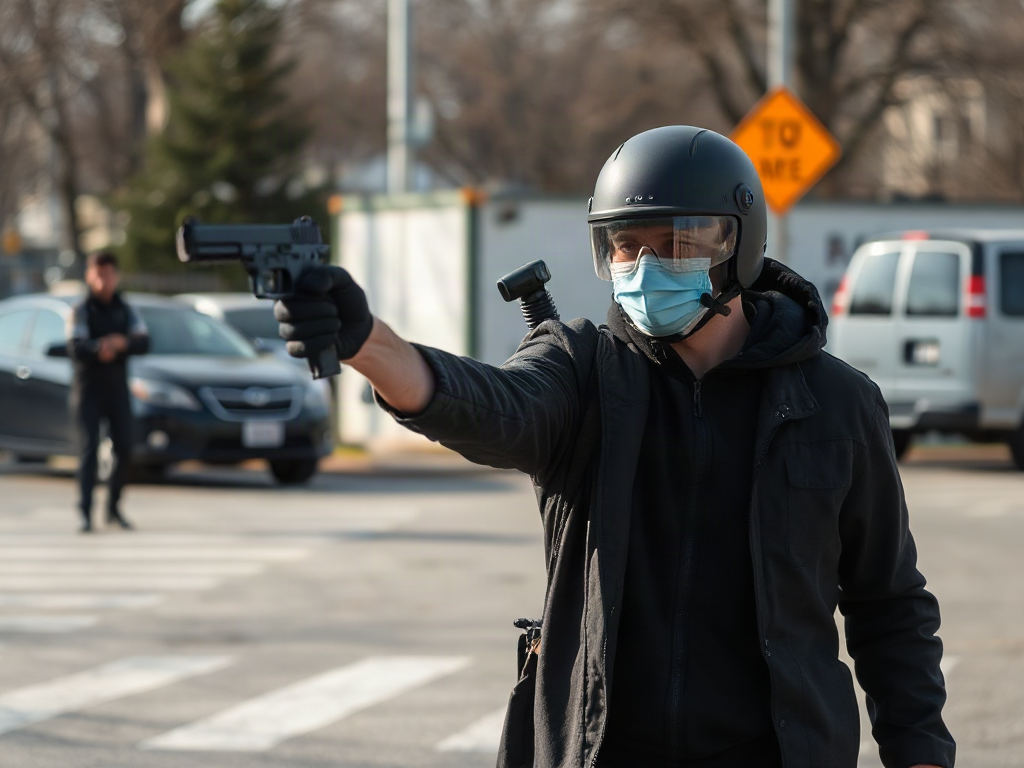
Anticipatory self-defense and avoiding unnecessary escalation means noticing credible warning signs early, creating distance, setting a calm boundary, and leaving before a confrontation becomes physical. Useful signals include blocked exits, unwanted following, sudden changes in tone, invasive proximity, group pressure, and attempts to isolate you. The safest response is usually proportional: move toward people or staff, keep your hands visible, use a brief refusal, and call for help when the behavior continues. Anticipation is not permission to strike based on a vague feeling; acting too soon can intensify a misunderstanding, create legal complications, or remove your chance to disengage. Physical force should remain a last resort when escape is not reasonably available and an immediate threat is present.
What you’ll learn
This guide covers the following practical points:
- What Anticipatory Self-Defense Actually Means — Anticipatory self-defense is primarily a decision-making skill, not a license to attack someone before they have created an immediate threat.
- Reading Warning Signs Without Guessing Intent — Warning signs are patterns of behavior that reduce your ability to control distance, movement, or access to help.
- Distance, Boundaries, and Early Exit Choices — Distance is useful because it increases reaction time and gives ordinary communication a chance to work.
- When De-Escalation Fails and Safety Takes Priority — De-escalation is not the same as persuading an aggressor to become reasonable.
What Anticipatory Self-Defense Actually Means
Anticipatory self-defense is primarily a decision-making skill, not a license to attack someone before they have created an immediate threat. It involves recognizing developing danger, changing your position, communicating a clear boundary, and seeking an exit while those options are still available. The earlier a person notices risk, the more choices remain open: moving to a staffed area, ending a conversation, bringing another person into the interaction, or calling emergency services.
The distinction between prevention and preemption matters. A person who is loud, awkward, intoxicated, or angry may be unpleasant without presenting a lawful reason for physical force. By contrast, someone who blocks a doorway, follows you after repeated requests to stop, reaches for you, or prevents you from leaving has changed the safety problem. The response should match observable conduct rather than a guess about identity, appearance, or presumed motive.
Consider a parking lot encounter. If a stranger asks an ordinary question from a comfortable distance, staying alert and continuing toward a populated entrance may be enough. If the person mirrors your route, closes distance after you move away, and positions themselves between you and the building, the useful response is not to debate their intention. Walk toward employees or other bystanders, speak loudly enough to attract attention, and contact help. Anticipation creates time; it does not require certainty about what the other person plans.
A common mistake is treating readiness as a performance of toughness. Challenging someone, staring them down, or announcing that you are prepared to fight can remove the very distance that makes escape possible. A better standard is whether your choices preserve options. The internal question is simple: Can I leave, involve support, or create space without making the encounter more intense? That question connects naturally with Anticipatory self-defense and avoiding unnecessary escalation as a broader preparedness habit.
Reading Warning Signs Without Guessing Intent
Warning signs are patterns of behavior that reduce your ability to control distance, movement, or access to help. No single cue proves that violence is coming. A clenched jaw, raised voice, or restless movement may reflect stress, fear, disability, or intoxication. The safer approach is to combine observable actions with context: Is the person respecting space? Can you leave freely? Are they responding to a calm boundary, or testing how much control they can gain?
Several behaviors deserve faster attention than ordinary rudeness. Unwanted following, repeated attempts to isolate you, blocking a path, placing hands on you, damaging property, threats tied to immediate action, and sudden movement toward a weapon or object all narrow your safe options. The concern is not merely the emotion being displayed; it is the mechanism by which the person is limiting escape or increasing access.
A useful comparison is between verbal hostility and physical positioning. Someone may insult you from across a public room while staff and exits remain accessible. That situation may call for disengagement, not confrontation. Someone who speaks quietly but stands in a doorway, tracks your movements, and ignores requests for space may present a more urgent practical problem. Calm behavior does not automatically mean low risk, and loud behavior does not automatically mean immediate danger.
Try a three-part observation check: behavior, access, and response. What exactly is the person doing? What routes, people, or communication tools remain available to you? What happens after you state a boundary or move away? If the person gives space and the interaction ends, the risk may be decreasing. If the person follows, corners, or escalates after you disengage, treat that change as meaningful.
Another failure mode is waiting for absolute proof. Personal safety decisions rarely offer perfect information, but they do allow low-cost protective moves. You can cross a street, enter a store, call someone, or ask a worker to remain nearby without accusing anyone of a crime. Those actions are less provocative than making a threat, yet they improve your position if the concern is legitimate.
Distance, Boundaries, and Early Exit Choices
Distance is useful because it increases reaction time and gives ordinary communication a chance to work. It also protects access to exits, witnesses, and assistance. When a conversation begins to feel unsafe, angle toward an open route rather than allowing yourself to be backed against a wall, vehicle, counter, or dead-end walkway. Keep enough attention on the environment to avoid obstacles while still observing the person’s hands and movement.
Boundaries work best when they are brief, audible, and free of insults. Phrases such as “Stop there,” “I do not want contact,” or “I am leaving now” communicate a decision rather than opening a negotiation. A long explanation can give an aggressive person more material to challenge. The goal is not to win an argument; it is to make your next movement clear and direct.
Imagine a disagreement at a transit stop. A stranger steps closer while demanding an explanation about a minor interaction. Arguing about who is right may keep you engaged. Moving beside other passengers, keeping your hands visible, using a firm refusal, and asking a specific person to contact staff changes the setting. “You in the blue jacket, please call the station attendant” is more actionable than shouting generally for help.
Leaving early can feel socially uncomfortable, especially when the other person accuses you of being afraid or rude. That discomfort is a poor reason to surrender control of the encounter. At the same time, abrupt movements, sarcasm, touching the other person, or displaying a weapon can be interpreted as escalation and may trigger a worse response. The practical tradeoff favors quiet, deliberate movement whenever it remains possible.
A compact exit checklist can help under stress:
- Identify the nearest public or staffed location.
- Keep a clear route between you and the other person.
- Use one boundary statement without debating.
- Call for help or alert a named bystander if the behavior continues.
- Preserve relevant details after reaching safety, including location, description, direction of travel, and witnesses.
These steps are not guarantees. Crowds may be absent, mobility may be limited, or the person may move faster than expected. The priority is to make the safest available choice early, then reassess as conditions change. Readers building a wider household response can also connect this topic with Anticipatory self-defense and avoiding unnecessary escalation when discussing check-ins and emergency contacts.
When De-Escalation Fails and Safety Takes Priority
De-escalation is not the same as persuading an aggressor to become reasonable. It means reducing unnecessary friction while moving toward safety. A calm voice, nonthreatening posture, physical space, and a clear exit may help when the person is agitated but still responsive. They are less useful when someone has already attacked, restrained you, or blocked every reasonable route out.
Use the person’s response to judge whether the approach is working. If they pause, create distance, accept your refusal, or allow you to leave, continue disengaging rather than returning to the dispute. If they close distance, make threats tied to immediate action, grab you, corner you, or prevent escape, the situation has crossed from uncomfortable interaction into a more urgent safety problem. Move toward help and contact emergency services when appropriate.
Physical self-defense carries serious risks, including injury to everyone involved, escalation by bystanders, mistaken identification, and legal scrutiny. Skills learned in a reputable, safety-focused class may improve balance, movement, and judgment, but no technique guarantees a particular result. Complex maneuvers are especially unreliable under fear, poor lighting, confined space, or multiple people. Simple priorities—protecting vital areas, creating an opening, moving away, and getting help—are easier to remember than elaborate sequences.
One misconception is that acting first is always safer. An anticipatory strike may be justified only in circumstances recognized by applicable law and where an immediate threat makes force reasonably necessary; laws differ by location, and this article is not legal advice. Acting on suspicion alone can injure an innocent person, intensify the encounter, and make escape harder. If there is time to leave, summon help, or create distance, those options generally deserve priority.
After an incident, reach a secure location before collecting details or confronting anyone again. Contact emergency services for immediate danger or serious injury. Write down what you observed while memories are fresh, preserve messages or video lawfully available to you, and identify witnesses without pressuring them. For future readiness, practice verbal boundaries, route awareness, and contacting help rather than rehearsing confrontations. A realistic plan should account for children, disability, hearing limitations, unfamiliar places, and the possibility that a phone is unavailable.
Frequently Asked Questions
Is anticipatory self-defense the same as striking first?
No. It primarily means noticing danger early and using distance, boundaries, escape, and help-seeking before force becomes necessary.
What warning sign should receive the fastest attention?
Behavior that limits your ability to leave—such as blocking a path, following after you disengage, grabbing, or cornering—deserves prompt action.
Should I explain why I am leaving?
A brief statement is enough. Explaining or debating can keep you engaged, so prioritize movement toward people, staff, or an exit.
What if the person is only being rude?
Rudeness alone does not establish an immediate threat. Maintain awareness, create space, and leave without turning an insult into a confrontation.
When should I call emergency services?
Call when there is immediate danger, an assault, a credible immediate threat, serious injury, or no safe way to disengage without assistance.
Conclusion
Effective anticipatory self-defense is built around preserving choices. Notice conduct that restricts movement, treat changes in distance or following behavior seriously, and move toward people or staffed locations before the situation becomes harder to control. A short boundary and a deliberate exit usually create less risk than an argument, threat, or attempt to prove confidence. If escape is blocked and an immediate attack is occurring, prioritize survival, create an opportunity to get away, and seek emergency help rather than pursuing the encounter. Review your own constraints—children, mobility, unfamiliar locations, or limited phone access—and practice the decisions you can realistically carry out. The strongest preparation is not eagerness to use force; it is the ability to recognize trouble early and leave with minimal escalation.