
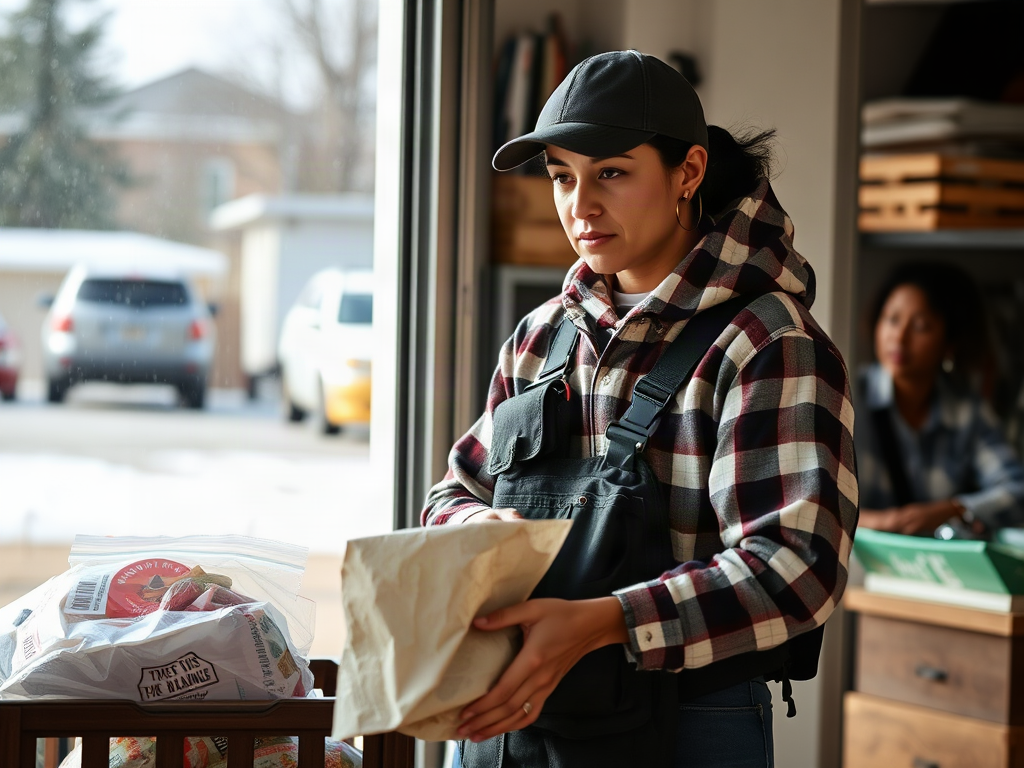
Self-prioritizing when preparedness resources are limited means protecting your own safety, health, and ability to function before extending supplies or assistance to others. Rank needs by immediate danger, replacement difficulty, and the consequences of failure, then secure water, essential medications, communication, shelter, and reliable food before lower-priority equipment. A modest reserve that you can access and manage is more useful than an ambitious stockpile that leaves you without cash, transportation, or basic medical support. Set clear limits for lending and sharing, account for dependents and animals, and review the plan when conditions change. Prioritizing yourself is not selfishness; it preserves the capacity to make sound decisions and provide measured help later.
What you’ll learn
This guide covers the following practical points:
- Why Personal Priorities Come First Under Scarcity — Limited resources change preparedness from a shopping exercise into a sequence of decisions.
- Ranking Supplies by Consequence and Replaceability — Supplies deserve priority according to the harm caused by failure and the difficulty of obtaining a replacement.
- Building a Small Reserve That Protects Function — A limited budget works best when it creates a dependable minimum reserve before adding depth.
- Setting Boundaries While Supporting Others — Sharing becomes safer when your personal minimum is defined before someone asks for help.
Why Personal Priorities Come First Under Scarcity
Limited resources change preparedness from a shopping exercise into a sequence of decisions. Money, storage space, time, transportation, and physical energy may all be constrained at once. A household that tries to cover every possible need can end up with scattered supplies but no dependable water, medication access, communication method, or way to leave an unsafe location.
Self-prioritizing means preserving the conditions that allow you to remain safe and make decisions. It does not mean ignoring neighbors, relatives, or people who need help. It means avoiding a preventable situation in which your assistance leaves you unable to protect yourself or dependents. Someone who gives away necessary medication, fuel reserved for evacuation, or the household’s only working phone battery may create a second emergency.
Think in terms of function rather than comfort. A backup coffee supply may improve morale, but a charged light, clean water, and a way to communicate have more direct consequences during a power outage. Likewise, buying specialized equipment before addressing a known medical need reverses the order of risk. The useful question is not whether an item is valuable in general; it is whether its absence creates immediate danger or removes an important option.
A practical first pass divides needs into three groups: survival, continuity, and convenience. Survival covers water, essential medication, basic shelter, safe food, and urgent sanitation. Continuity includes power for critical devices, transportation, identification, cash access, and contact information. Convenience includes upgrades that make an experience easier but do not materially change safety. This simple separation makes it easier to protect yourself without treating every purchase as equally urgent.
Readers comparing their own situation with broader Self-prioritizing when preparedness resources are limited guidance should account for personal vulnerabilities. A person with mobility limitations, refrigerated medication, a baby, or an indoor animal may place different items at the top of the list. The priority is not a universal kit; it is a functioning household under the conditions most likely to disrupt it.
Ranking Supplies by Consequence and Replaceability
Supplies deserve priority according to the harm caused by failure and the difficulty of obtaining a replacement. This is more reliable than choosing items by popularity or assuming that a large quantity automatically creates resilience. A low-cost item may deserve early attention if it prevents a serious problem, while an expensive item may wait if an ordinary alternative performs the same job.
Use four questions for each need: What happens if it is unavailable? How quickly does the problem become serious? Can another item perform the same function? Can it be replaced locally if stores, roads, or payment systems are disrupted? These questions expose weak assumptions. For example, a portable battery is useful, but it does not replace a communication plan, a charging cable, or a way to conserve power. A large food supply is less useful if it requires cooking fuel that you do not have.
Water usually receives early attention because it serves several functions: drinking, food preparation, medication use, and limited hygiene. Food should then be matched to available preparation methods, dietary needs, and rotation habits. Essential medications and medical supplies require special care because substitutes may not be acceptable, available, or safe. Keep prescriptions within lawful and medically appropriate limits, and ask a pharmacist or clinician about storage and continuity questions rather than improvising.
Use a priority table on paper or in a notes app:
- Immediate consequence: serious harm or loss of function if unavailable.
- Time pressure: the number of hours or days before the shortage matters.
- Substitution: whether a safe household alternative exists.
- Access risk: how likely normal purchasing or services are to be interrupted.
Consider two households. The first owns a compact camping stove but has little drinkable water and no plan for charging a necessary device. The second has basic food, water, a manual can opener, lighting, and written contacts but no specialized stove. The second household may be less comfortable, yet it has protected more essential functions. Equipment becomes a priority when it solves a defined failure, not simply because it appears useful in a preparedness catalog.
One common mistake is buying duplicates of easy-to-replace goods while postponing difficult-to-replace needs. Another is treating “multi-use” as automatically superior. A tool with five claimed functions is a poor choice if it is complicated, fragile, or unfamiliar. Test the items that remain on your shortlist and remove anything that creates more training, storage, or maintenance burden than value.
Building a Small Reserve That Protects Function
A limited budget works best when it creates a dependable minimum reserve before adding depth. Start with what would keep the household operating during a short interruption, then extend the reserve gradually through normal purchases. This approach reduces the risk of spending everything on a dramatic scenario while leaving everyday vulnerabilities untouched.
Begin with an inventory, not a shopping list. Record what is already in the home, where it is stored, how it is used, and whether it depends on electricity, refrigeration, internet access, or a particular person. A pantry item that nobody eats is not a practical reserve. A battery that has not been tested may be only an assumption. Rotate ordinary foods, label expiration-sensitive supplies, and store frequently needed items where the person responsible can reach them.
Build around a few operating capabilities:
- Hydration and food: water containers, familiar shelf-stable foods, and a manual opener or preparation method.
- Light and information: accessible lighting, spare batteries where appropriate, a charged phone, and written contact details.
- Health: routine medications, first-aid basics, sanitation supplies, and documentation of important medical information.
- Movement and shelter: suitable clothing, footwear, keys, transportation options, and a way to leave if staying becomes unsafe.
The best reserve is not necessarily the cheapest item-by-item. A low-cost food can become waste if it conflicts with allergies or digestive needs. A used device may be a good value only if its battery and charging method are dependable. Buying less of a suitable item is often wiser than buying more of an unsuitable one. Cash flow matters too: exhausting funds for supplies can make it harder to pay for fuel, repairs, prescriptions, or temporary lodging.
Test the plan with a deliberately modest exercise. Prepare one meal without the usual appliance, spend an evening using backup lighting, locate documents without internet access, or identify how a dependent would be transported. The exercise should reveal friction, not prove readiness. If the household cannot find the supplies, does not know who carries them, or discovers that a key item needs a missing adapter, revise the arrangement before expanding it.
Use the related Self-prioritizing when preparedness resources are limited principle to protect function first. A compact, tested setup can outperform a larger collection that is disorganized, inaccessible, or built around optimistic assumptions.
Setting Boundaries While Supporting Others
Sharing becomes safer when your personal minimum is defined before someone asks for help. Without a boundary, urgency, guilt, or social pressure can cause decisions that place the household at risk. A clear limit makes assistance more deliberate: you can offer what is genuinely surplus instead of negotiating with supplies required for your own safety.
Separate resources into three categories: protected, shareable, and adaptable. Protected resources include essential medication, the water and food needed for household members, evacuation fuel, and equipment required for a disability or medical condition. Shareable resources may include extra blankets, information, tools, or food beyond the minimum reserve. Adaptable resources are items that could be exchanged or divided after you confirm that doing so will not create a later shortage.
For example, giving a neighbor directions to an open service, helping charge a phone for a limited period, or sharing instructions may preserve more of your reserve than handing over a week of food. A household with spare water containers might lend one, while retaining enough capacity for its own needs. Assistance does not have to be measured only in objects; time, information, transportation coordination, and practical skills can also be useful, provided the activity does not expose you to unreasonable danger.
Boundaries should reflect changing conditions. If a disruption is expected to last longer than first assumed, the shareable category may shrink. If a family member arrives unexpectedly, your protected minimum must be recalculated. Avoid promising specific quantities before checking inventory. A simple response such as “I can spare one container, but not the reserve needed for my household” is clearer than an open-ended commitment.
Do not confuse self-prioritizing with isolation. Trusted cooperation can reduce duplicated effort, but informal agreements need limits. Confirm who has transportation, which tools are available, how communication will work, and what happens if one person cannot contribute. A group plan that assumes every participant will remain healthy, solvent, and reachable may fail precisely when support is most needed.
The failure mode to avoid is generosity without a stopping rule. Decide your minimum reserve, communicate it to household members, and revisit it when the number of people, duration, or hazard changes. That discipline protects both the ability to help and the people who depend on you.
Reviewing the Plan as Conditions Change
Priorities are temporary judgments, not permanent rankings. A forecast, outage, illness, income change, move, or new dependent can alter the order of need. Reviewing the plan prevents old assumptions from controlling current decisions, especially when resources are too limited to replace mistakes quickly.
Schedule a short review whenever a major condition changes and periodically during routine household planning. Check quantities, expiration dates, battery condition, medication arrangements, transportation access, and contact information. Confirm that every adult knows the location and purpose of essential supplies. If a person with special needs cannot use the backup method independently, the plan has a practical gap even when the item is present.
Look for signs that the approach is working: the household can locate essentials quickly, prepare a basic meal, communicate without relying on one service, and identify which resources are protected. Signs of failure include repeated expired items, supplies stored out of reach, purchases that exceed the budget, reliance on one device or route, and disagreement about who may use what. These are management problems, not reasons to buy more immediately.
When money is tight, direct new funds toward the largest unresolved consequence rather than the most interesting upgrade. A repair to a leaking water container, replacement of worn footwear, or replenishment of a necessary prescription may outrank a new gadget. When time is tight, improve organization and written instructions before adding inventory. When storage is tight, favor familiar, compact, frequently used items and remove products that cannot be maintained.
A useful review ends with one concrete next action: label the water supply, test the light, write down contacts, ask about medication continuity, or price the next small purchase. The purpose is not to create a perfect system. It is to reduce the chance that a foreseeable shortage will remove your ability to think, move, communicate, or care for the people in your household.
That practical focus complements Self-prioritizing when preparedness resources are limited by turning scarcity into an ordered plan rather than a reason for paralysis.
For additional planning detail, consult current guidance from local emergency-management offices, public health departments, utility providers, and pharmacists. These sources can provide location-specific information about alerts, medication continuity, evacuation routes, utility disruptions, and community assistance that a household inventory cannot supply on its own.
Frequently Asked Questions
Is self-prioritizing selfish during a crisis?
No. Protecting essential household needs preserves your ability to make decisions and offer sustainable help. Sharing should come from a defined surplus, not from supplies required for immediate safety.
What should receive priority when money is very limited?
Address water, essential medications, basic food, lighting, communication, sanitation, and the ability to move to safety before buying specialized equipment or comfort items.
How can I decide whether to buy an item?
Ask what happens if it is unavailable, how soon the consequence appears, whether a safe substitute exists, and whether replacement access could be interrupted.
Should I prepare for others outside my household?
Plan for household members first, then designate a realistic shareable surplus. Information, transportation coordination, and limited tool use may help others without consuming protected supplies.
When should preparedness priorities be reviewed?
Review them after changes in health, household size, income, location, transportation, or expected disruption, and periodically to catch expired, inaccessible, or untested supplies.
Conclusion
Scarcity rewards order, not accumulation. Protect the needs whose failure would quickly threaten health, mobility, communication, or safe shelter; then strengthen continuity and add convenience only when the foundation works. Inventory what you own, test how it performs without normal services, and keep essential medications, water, food, lighting, and transportation options distinct from supplies you can lend. Set a household minimum before pressure arrives, because improvised generosity can consume resources needed later. Review the ranking whenever the people, hazard, budget, or expected duration changes. Your next step can be small and specific: check water storage, document contacts, test a light, or identify the next unreplaced critical need. A modest reserve that remains accessible and usable gives you more real protection than a larger collection built on assumptions.