
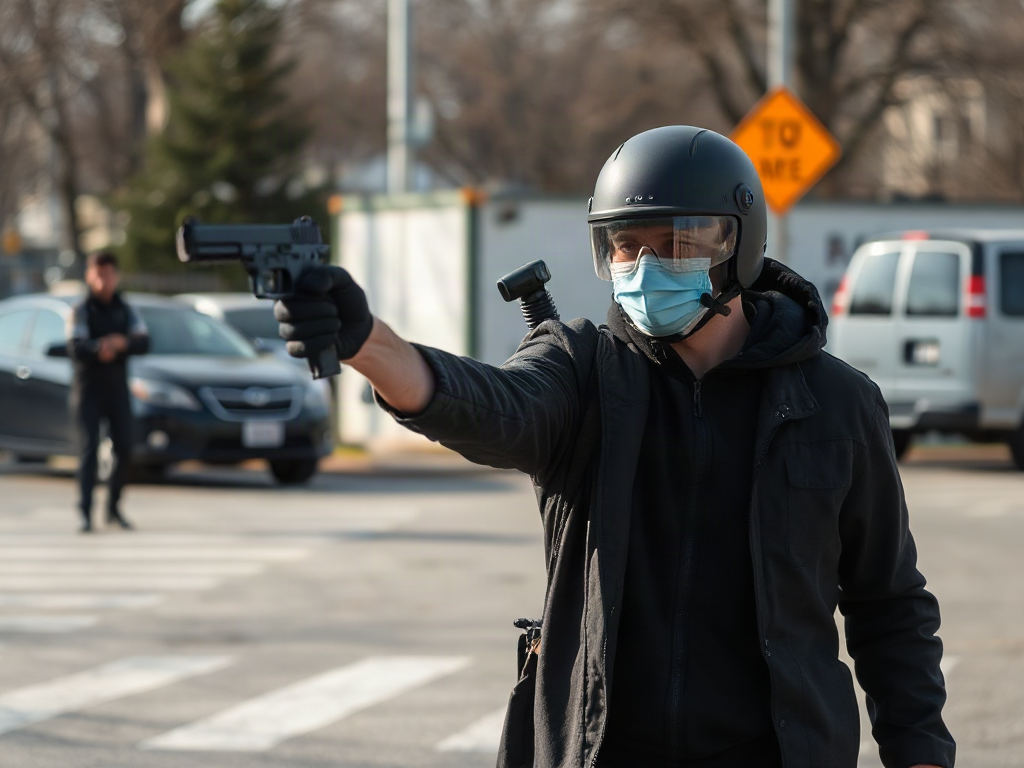
The five elements of self-defense for civilians are awareness, distance, escape, communication, and recovery: notice changing behavior early, create space, leave before a confrontation develops, use clear boundaries and calls for help, and respond appropriately afterward. Civilian defense is primarily an avoidance and escape problem, not a contest of strength or technique. A person who recognizes blocked exits, closes distance, suspicious persistence, or escalating language has more options than someone who waits for physical contact. Practice scanning ordinary environments, moving toward public or staffed areas, using a loud specific command, and contacting emergency services when danger is immediate. Physical skills can help, but they should support escape rather than encourage unnecessary engagement.
What you’ll learn
This guide covers the following practical points:
- Awareness Before Contact — Awareness is the first element because civilians usually have the greatest advantage before a confrontation becomes physical.
- Distance and Positioning — Distance is a protective resource because it creates time to move, speak, observe, and call for help.
- Escape, Communication, and Assistance — Escape is the central objective when a situation becomes unsafe.
- Recovery, Practice, and Responsible Decisions — Recovery begins after the immediate danger has ended.
Awareness Before Contact
Awareness is the first element because civilians usually have the greatest advantage before a confrontation becomes physical. It means noticing people, exits, obstacles, lighting, crowd movement, and changes in behavior without treating every stranger as a threat. A person who repeatedly closes distance, ignores a polite request for space, follows a change in direction, or positions themselves between you and an exit deserves more attention than someone who is simply nearby.
Good awareness is active but not paranoid. In a parking garage, glance around before unlocking the vehicle, keep one hand free, and avoid becoming absorbed in a phone while walking between cars. In a restaurant or public building, casually identify two ways out and note which areas are staffed. These habits do not predict an assault, but they reduce the chance of being surprised or funneled into a less favorable position.
The practical mechanism is time. Early recognition gives a civilian additional choices: change direction, enter a store, join a group, call someone, or leave an item behind. Waiting for certainty can remove those options. A common mistake is assuming that a person must make an explicit threat before action is justified. You do not need to accuse someone or prove their intent to move toward a safer location.
Awareness also requires distinguishing discomfort from immediate danger. An unusual interaction may have an innocent explanation, while a cluster of behaviors can justify a cautious response. Trusting a feeling does not mean confronting the person. It means increasing distance, seeking witnesses, and choosing an exit. The Five elements of self-defense for civilians work best when awareness leads to a decision before physical contact.
Distance and Positioning
Distance is a protective resource because it creates time to move, speak, observe, and call for help. A person who is several steps away may be easier to avoid than someone standing within grabbing range. Civilians should pay attention to how quickly another person could reach them, whether an object blocks movement, and whether their own position provides a clear path toward safety.
Positioning matters as much as the number of feet between people. Stand at an angle rather than squarely facing a stranger who is acting aggressively, keep your hands visible and available, and avoid allowing yourself to be pressed against a wall, vehicle, counter, or doorway. In an elevator, a lobby, or a narrow sidewalk, moving toward other people may be more useful than trying to maintain a perfect stance.
Consider a transit platform where someone is shouting and walking toward you. Moving behind a barrier, toward a staffed booth, or beside a group can improve your position. Remaining still to appear calm may actually reduce your options if the person continues forward. Conversely, moving abruptly toward someone who is merely upset can escalate the encounter. The goal is not to dominate space; it is to preserve an exit while avoiding unnecessary provocation.
Distance is not a guarantee. A determined person may close it quickly, and crowded settings can make movement difficult. That is why distance should be paired with an early exit and clear communication. A common failure is focusing on a stance or technique while ignoring the open doorway behind you. For most civilians, leaving a dangerous area is a better tradeoff than staying to test physical skill. Use the civilian self-defense elements as connected choices rather than isolated techniques.
Escape, Communication, and Assistance
Escape is the central objective when a situation becomes unsafe. It may mean walking into a business, crossing a street, moving behind a locked door, joining a group, or leaving an event. Escape does not have to look dramatic. A calm explanation such as “I need to go” is often unnecessary; a civilian can simply move toward safety when an interaction feels wrong.
Communication supports escape by making boundaries and needs understandable. Use a firm, brief command such as “Stop,” “Back up,” or “I do not want contact.” Avoid long arguments, insults, or attempts to persuade an agitated person that they are behaving badly. Specific requests to bystanders are more effective than a general cry for help: “You in the blue jacket, call emergency services,” or “Staff member, please come here.” Naming a task gives observers a clear role.
Communication has limits. A person may ignore a boundary, be intoxicated, be unable to hear, or become more aggressive. A verbal response should never be treated as a required script or a test of courage. If speaking increases risk, silence and movement may be wiser. If immediate danger exists, contact local emergency services as soon as it is safe, provide your location, describe the person and behavior, and follow the dispatcher’s instructions.
Consider a confrontation outside a store. Rather than standing in the parking lot to explain yourself, enter the store, tell an employee that someone is following or threatening you, and ask to remain near staff while assistance is contacted. The common mistake is waiting for a perfect moment to leave or assuming witnesses will automatically intervene. Some people may not understand what is happening, so direct communication can convert a passive crowd into useful support without requiring a physical confrontation.
Tools such as alarms, flashlights, or phones may support these actions, but they do not replace awareness and movement. A device that is buried in a bag may be less useful than a practiced plan for reaching a staffed location. Review the five elements with household members so they understand where to go and whom to contact, while avoiding complicated instructions that are difficult to remember under stress.
Recovery, Practice, and Responsible Decisions
Recovery begins after the immediate danger has ended. Move to a secure location, check for injuries, contact emergency services when needed, and preserve relevant information while events are still fresh. If a physical encounter occurred, medical attention may be appropriate even when injuries initially seem minor. Emotional effects can also appear later, and seeking support from a trusted person or qualified professional is a reasonable part of recovery.
Documentation may help with follow-up. Write down the time, location, sequence of events, descriptions, witnesses, messages, and property damage without embellishing uncertain details. Local laws differ regarding self-defense, recording, carrying defensive tools, and the use of force. Legal outcomes depend on facts and jurisdiction, so general internet advice should not be treated as legal counsel. When a serious incident occurs, ask a qualified local professional about next steps.
Practice should make safer decisions more automatic. Walk through ordinary scenarios rather than rehearsing dramatic fights: noticing someone following you, leaving a crowded venue, finding a staffed location, using a clear command, or calling for help while giving an address. Practice with realistic clothing and lighting, but avoid drills that encourage unsafe contact or create false confidence. A martial arts class or defensive skills course can be useful when it emphasizes control, escape, judgment, and instructor-supervised safety.
A compact priority order is useful under pressure:
- Notice: identify behavior, exits, and changing distance.
- Move: create space and head toward people, light, or a secure location.
- Speak: set a brief boundary or direct a specific request for help.
- Leave: avoid returning to argue, retrieve property, or prove a point.
- Recover: address injuries, contact appropriate authorities, and record facts.
The sequence is not rigid. A person facing immediate physical danger may need to move before speaking, while someone noticing a troubling pattern may have time to call a friend or change plans. The common misconception is that civilian self-defense is mainly about winning a fight. Physical ability can matter, but it is only one part of a larger decision process. The safer outcome is usually the one that ends contact quickly, limits injury, and avoids unnecessary escalation.
For additional preparation, consult local emergency services, community safety programs, and reputable defensive-skills instructors who emphasize avoidance, escape, legal awareness, and supervised practice. Guidance should be adapted to local conditions, personal mobility, household needs, and the specific risks of places you regularly visit.
Frequently Asked Questions
What are the five elements of self-defense for civilians?
The five elements are awareness, distance, escape, communication, and recovery. Together they emphasize recognizing risk early, preserving options, leaving danger, obtaining help, and handling the aftermath responsibly.
Is physical fighting required for civilian self-defense?
No. Avoidance, movement, verbal boundaries, and contacting help are often more appropriate than physical engagement. Physical training should support escape rather than encourage unnecessary confrontation.
How can someone improve situational awareness without becoming paranoid?
Use brief, ordinary checks of exits, people, lighting, and changing behavior. Focus on observable actions and create distance when several warning signs appear instead of assuming every unfamiliar person is dangerous.
What should someone say during a threatening encounter?
Use short, firm language such as “Stop,” “Back up,” or “I do not want contact.” If help is needed, identify a specific person and assign a clear task, such as calling emergency services or notifying staff.
What should happen after a self-defense incident?
Reach a secure location, address urgent injuries, contact appropriate authorities, and record factual details and witnesses. Because laws differ, seek advice from a qualified local professional after a serious incident.
Conclusion
Effective civilian self-defense is a sequence of practical choices rather than a promise to win a physical contest. Notice behavior and exits before a situation closes in, preserve distance, move toward safety, communicate briefly when that helps, and involve other people or emergency services when danger is immediate. Afterward, treat injuries, record facts, and recognize that recovery can include emotional support as well as physical care. Practice these decisions in familiar settings such as parking areas, transit stops, workplaces, and public venues. Choose training that builds judgment and escape skills, not confidence based on unrealistic demonstrations. The most useful preparation is the kind that gives you more options early and makes leaving an unsafe situation easier.