
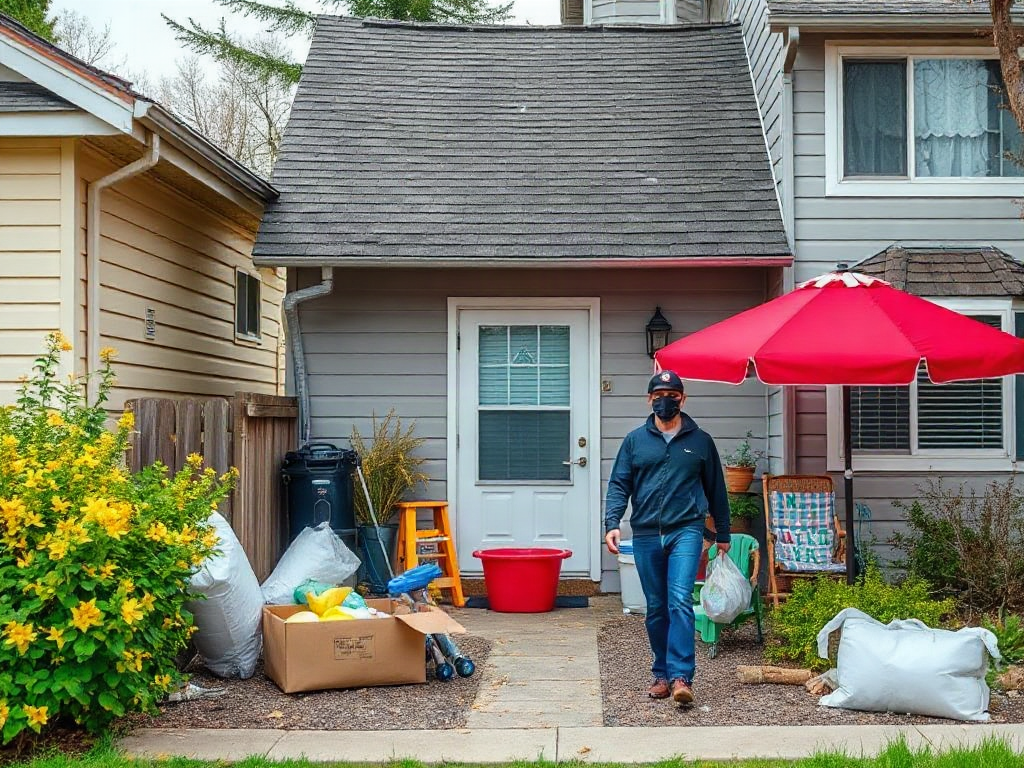
Reliance versus dependence in self-reliance planning comes down to whether outside help remains a controlled resource or becomes a single point of failure. Reliance uses utilities, neighbors, suppliers, public agencies, and technology while maintaining alternatives such as stored water, manual tools, communication backups, and practiced skills. Dependence appears when losing one service, person, device, or delivery prevents essential tasks from continuing. A sound plan ranks critical needs, assigns a primary and secondary method, defines how long each can operate, and tests the transition between them. The goal is not isolation; it is enough capability to make deliberate choices when normal support is delayed, limited, or unavailable.
What you’ll learn
This guide covers the following practical points:
- Reliance and Dependence Are Different Planning Conditions — Self-reliance does not mean refusing every outside service.
- How to Find Hidden Single Points of Failure — Hidden dependence usually sits between categories.
- Building Layered Support Without Chasing Total Independence — A durable plan uses layers: normal services, household capability, trusted local relationships, and a higher-level fallback for problems that exceed the first three.
- Testing the Plan Under Realistic Constraints — Testing converts assumed capability into observed capability.
Reliance and Dependence Are Different Planning Conditions
Self-reliance does not mean refusing every outside service. A household may rely on municipal water, electrical power, grocery stores, medical professionals, fuel suppliers, neighbors, and emergency responders while still retaining meaningful options. Reliance becomes a planning strength when the outside resource is understood, replaceable, and supported by a workable fallback. Dependence is present when the loss of one resource immediately removes the household’s ability to protect health, communicate, move, or maintain basic shelter.
The distinction is best measured by consequence and recovery time. Using a refrigerator that needs grid electricity is reliance if food can be managed with a safe alternative, such as a properly maintained cooler and a plan for consuming vulnerable items first. It becomes dependence when there is no temperature monitoring, no backup power decision, and no way to preserve or discard food safely during a prolonged outage. The appliance is not the problem; the unexamined assumption that electricity will always return is.
A useful self-assessment asks four questions: What service supports this task? How long could the household continue without it? What substitute is available? Can someone actually operate that substitute under stress, darkness, illness, or bad weather? A portable water filter may look like redundancy, but it does not replace stored water if the source is contaminated and the filter’s limits are unknown. Likewise, a battery bank is not a communications plan if it cannot be recharged or if the only phone depends on a damaged network.
People often confuse ownership with resilience. Buying several devices can create clutter without adding capability. A second tool that uses the same fuel, charger, proprietary cartridge, or fragile component may fail alongside the first. Reliance versus dependence in self-reliance planning is therefore a question of function, not inventory. The strongest fallback changes the failure mechanism rather than merely duplicating the same mechanism.
Start by separating essential tasks from convenient ones. Safe drinking water, medication access, sanitation, cooking, temperature control, communication, and transportation deserve more attention than entertainment or productivity devices. This ranking prevents a common mistake: spending heavily on visible equipment while leaving a basic need tied to one hidden service.
How to Find Hidden Single Points of Failure
Hidden dependence usually sits between categories. A household may have food stored but depend on electricity to cook it, clean water to prepare it, and a particular person to manage the equipment. Mapping the chain exposes the weak link. For each essential task, write down the inputs, the person responsible, the energy source, the information required, and the likely duration of disruption.
Consider a plan for a winter power outage. The obvious dependency is the furnace, but the complete chain may include a thermostat, an ignition system, fuel delivery, household knowledge of safe operation, and a carbon monoxide alarm with working batteries. A small generator may support the furnace, yet the plan can still fail if the generator is stored where it cannot be safely moved, if fuel is stale, or if nobody knows which circuits are necessary. The apparent backup has not removed dependence; it has relocated it.
Use a simple failure map rather than a long shopping list. Mark each task as having one method, two methods with the same underlying weakness, or two genuinely different methods. A battery lantern and a rechargeable lamp may both fail after the same charging problem. A lantern plus safely stored candles introduces different hazards and should not automatically be treated as superior, but it does prompt a more honest risk comparison. Redundancy must be judged by safety, operating knowledge, maintenance, and duration.
Pay attention to human dependencies as well. If only one adult knows how to shut off the water, operate the stove, access account information, or use a radio, the household has a personnel single point of failure. Documenting procedures in plain language and practicing them with another household member can reduce that exposure. The substitute operator does not need advanced expertise; they need clear boundaries, the right supplies, and permission to stop when conditions exceed their competence.
Review these areas first:
- Water: storage, treatment, containers, sanitation, and a safe source if stored supplies run short.
- Energy: heating, cooking, lighting, refrigeration, charging, and fuel storage limits.
- Information: local alerts, contact methods, maps, paper records, and service status.
- Health: prescriptions, mobility needs, first-aid supplies, and a plan for professional care.
- Access: transportation, building entry, cash or payment alternatives, and neighborhood routes.
One practical warning: do not label a resource “backup” until its trigger is defined. Decide what condition activates it, who makes that decision, and what signs mean it is failing. That prevents hesitation during a disruption and reduces the temptation to improvise with unsafe substitutes.
Building Layered Support Without Chasing Total Independence
A durable plan uses layers: normal services, household capability, trusted local relationships, and a higher-level fallback for problems that exceed the first three. Each layer has a different role. Normal services provide convenience and scale. Household supplies create time. Neighbors can provide information or specialized equipment. Public agencies and professional providers remain necessary for serious medical, structural, and hazardous situations.
The mistake is treating independence as the removal of every relationship. A person who refuses outside assistance may create greater risk by attempting electrical repairs, medical procedures, or fuel handling beyond their training. Appropriate reliance is a deliberate choice to use qualified help while maintaining enough reserve to wait safely. A household with several days of water, clear contact information, and a transportation option can request help without making an unsafe rush decision.
Layering works when each level covers a different time horizon. Stored supplies may bridge the first interruption; a neighborhood arrangement may help with a longer delay; official services may address restoration, evacuation, or specialized care. The layers should not all depend on the same road, supplier, phone network, or person. If every household in a group plans to obtain fuel after a warning, the group has shared exposure rather than true capacity.
Relationships deserve the same precision as equipment. A neighbor agreement can specify welfare checks, shared tools, communication times, pet needs, and circumstances requiring professional assistance. Vague promises such as “we will help each other” may collapse when people face their own shortages. Clear limits protect trust: one household may provide a hand pump while another offers transportation, but neither should assume unlimited fuel, labor, or medical support.
Budget constraints make prioritization unavoidable. Put money first into items that protect life and buy decision time: dependable water storage, sanitation, necessary medications managed with professional guidance, lighting, basic cooking capacity, and reliable information access. Then improve maintainability and skill. An expensive system that requires specialty parts may be less suitable than a simpler option that can be inspected and repaired locally. A layered self-reliance plan should remain usable after the original purchase, not only on the day it is unpacked.
Ask whether each proposed backup reduces risk or merely increases confidence. A second internet-connected device may add little if the network is down. A paper map, charged radio, and agreed meeting location address different failure modes. The most valuable upgrade is often not another product but a change in process, such as keeping records accessible offline or rotating stored supplies before they become unusable.
Testing the Plan Under Realistic Constraints
Testing converts assumed capability into observed capability. A plan should be exercised in small, controlled steps rather than waiting for a major emergency. Begin with a short service interruption and measure what actually happens: how long lighting lasts, how much water is consumed, which information sources work, and which tasks require a person who is absent.
For example, a household can conduct a no-grid evening without disabling safety systems or critical medical equipment. Use the planned lighting, prepare a meal with the intended method, locate paper contacts, and perform a communication check. The point is not to create discomfort for its own sake. It is to reveal friction, such as a stove that cannot be used indoors, a flashlight with corroded batteries, or a charging cable that fits only one device.
Testing should include transitions. Switch from the primary water source to stored water, from electronic contacts to written records, or from a vehicle route to a walking meeting point. Observe whether the backup can be activated without searching through boxes or guessing at instructions. A method that works only when the most experienced person is present is not yet a household capability.
Record both success and failure. Useful measures include operating time, quantity consumed, physical effort, noise, heat, waste, and maintenance needed afterward. These details reveal tradeoffs that product descriptions cannot. A generator may provide substantial power but require outdoor placement, fuel management, and careful load selection. A smaller battery system may be quieter and simpler but unsuitable for heating or extended high-wattage use.
After each exercise, correct one or two weaknesses instead of redesigning everything. Recheck supplies after seasonal changes, household moves, new medical needs, or changes in employment and transportation. Reviewing reliance and dependence should be a recurring household conversation because a plan can become inaccurate even when the equipment remains intact.
Signs the plan is improving include faster activation, fewer assumptions, shared operating knowledge, and clear stop conditions. Signs it is failing include improvised fuel use, contradictory instructions, inaccessible supplies, untested devices, or a backup that creates greater danger than the original interruption. Treat those findings as design information, not as reasons to conceal weaknesses.
For additional planning detail, consult local emergency management agencies, utility outage guidance, public health departments, and manufacturer instructions for fuel-burning or battery-powered equipment. These sources can provide location-specific alerts, safety limits, and operating procedures that a general household plan cannot supply.
Frequently Asked Questions
Does self-reliance require complete independence?
No. Practical self-reliance means retaining safe choices and enough reserve to manage delays, while still using qualified services and community support when they are appropriate.
What is the clearest sign of dependence?
A single failed service, person, device, or delivery prevents an essential task from continuing and the household has no safe alternative or defined escalation point.
Are two backup devices always better than one?
No. If both require the same fuel, network, charger, or specialized part, they may fail together. Compare the underlying failure modes before counting redundancy.
How should a limited budget be used?
Protect essential needs first: water, sanitation, medication continuity, lighting, cooking, information, and safe temperature control. Add maintenance supplies and practice before buying specialized equipment.
How often should a household test its plan?
Use brief exercises throughout the year and repeat them after major changes in household members, health needs, equipment, housing, transportation, or local risks.
Conclusion
Sound self-reliance planning does not reject outside support; it prevents outside support from becoming an unexamined necessity. Identify which services keep essential tasks functioning, determine how long you can operate without each one, and build alternatives that do not share the same weak point. Give priority to water, sanitation, health needs, energy, communication, and access before convenience items. Include neighbors and professionals with clear roles and limits rather than relying on vague promises. Most importantly, test the handoff from normal service to backup method. A plan becomes dependable when more than one person can use it, its supplies are maintained, and its failure conditions are understood before pressure arrives.