
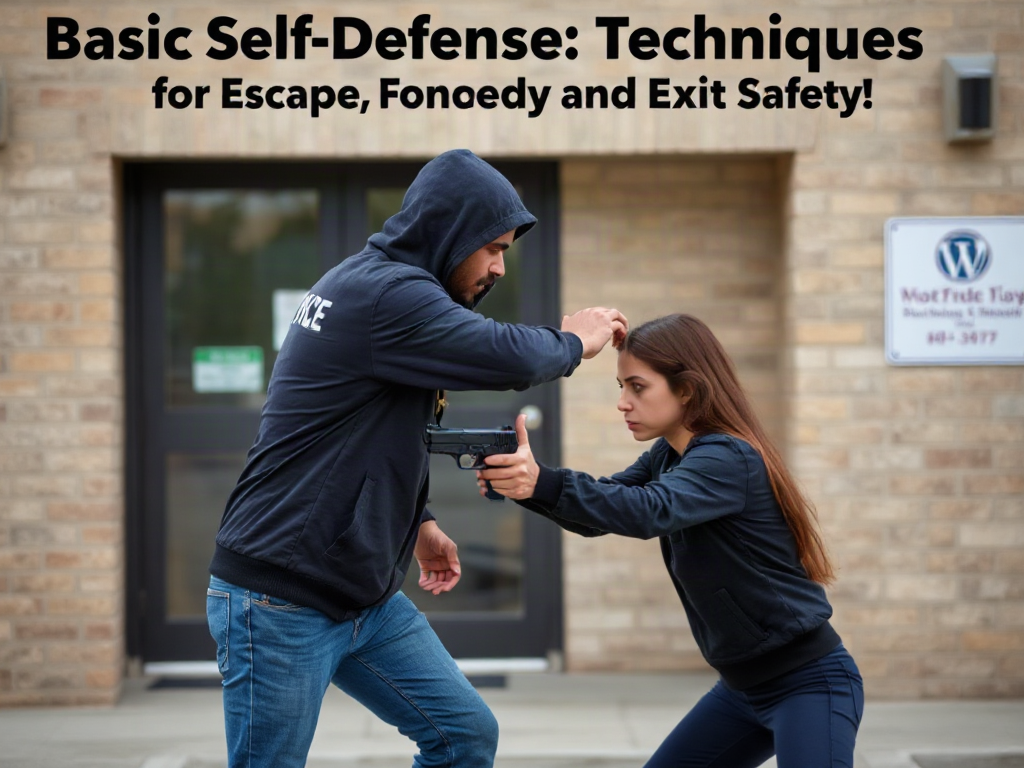
Basic self-defense techniques for escape-focused safety center on creating distance, using a clear voice, disrupting an attacker’s control, and moving toward a safer exit rather than trying to win a fight. Awareness helps you notice blocked routes, isolation, aggressive movement, or unwanted contact early enough to act. A strong stance, protective positioning, simple releases from wrist or clothing grabs, and movement toward people or light can improve your options. Striking should be treated as a last-resort opening to escape, not a contest. Avoid chasing, arguing at close range, or relying on complicated techniques that require precise timing under stress.
Escape First: The Priorities That Shape Safe Decisions
Escape-focused self-defense treats physical force as a means of creating an opening, not as the main objective. The first useful question is not whether you could defeat someone; it is whether you can recognize danger early, avoid being isolated, and reach a safer location. That shift changes how you stand, where you look, and what you practice. A person who notices a blocked doorway, an intoxicated stranger closing distance, or a threatening argument before contact has more choices than someone who waits until a grab becomes unavoidable.
Use a simple priority order: notice, avoid, communicate, move, and physically disrupt only when necessary to break contact. Avoidance might mean crossing a street, entering a staffed business, ending a conversation, or keeping a vehicle between you and another person. Communication should be brief and audible. A firm “Stop,” “Back up,” or “I do not want contact” can establish a boundary and attract attention, although no verbal technique should be treated as guaranteed protection.
Movement matters because staying planted gives an aggressor time to close distance or control your balance. Keep your hands available, maintain a stable stance, and avoid backing blindly into furniture, curbs, vehicles, or walls. Angle toward an exit rather than moving straight backward. If other people are nearby, move toward specific help: a cashier, security desk, transit operator, group of families, or well-lit entrance. General shouting may be ignored; directing one person with a specific request can be more effective.
A common mistake is treating confidence as a substitute for distance and judgment. Posturing, insults, or prolonged eye contact may intensify a confrontation when leaving is already possible. The better tradeoff is sometimes an apparently unsatisfying retreat that preserves mobility. Link your physical skills to broader Basic self-defense techniques for escape-focused safety, including route awareness and practical preparation, rather than training isolated movements without a clear purpose.
Distance, Positioning, and Verbal Boundaries
Distance is a protective resource because it gives you more time to recognize movement and choose an exit. There is no universal safe measurement: crowded spaces, barriers, lighting, mobility limitations, and the other person’s behavior all change the situation. A useful position keeps your feet under you, places your body at an angle, and avoids allowing someone to stand directly between you and the route you need.
When a person approaches aggressively, use early positioning instead of waiting for contact. Turn slightly so both feet can move, keep your hands near chest height in a nonthreatening protective posture, and use a calm but firm boundary. “Stop there” communicates distance more clearly than an apology or a long explanation. If the person continues, shift toward an exit while keeping obstacles, counters, chairs, or parked vehicles between you when possible.
Consider the difference between an ordinary disagreement and behavior that signals a need to leave immediately. Raised voices alone do not establish an attack, but blocking your path, following after you disengage, ignoring repeated boundaries, reaching suddenly, or attempting to isolate you increases the urgency of movement and help-seeking. Avoid trying to diagnose the person’s intentions. You only need to respond to observable behavior and your available options.
A practical example is a confrontation near a building entrance. Standing with your back to the glass door may feel convenient, but it can prevent retreat and expose you to a trapped position. Move so the door, a reception counter, or a group of bystanders remains accessible. If you are with someone else, do not split attention by arguing over who should respond; one person can call for help while the other guides movement toward safety.
The frequent failure mode is confusing a loud voice with an effective boundary. A boundary is useful only when it is paired with action: increasing space, ending the exchange, contacting help, or leaving. If verbal engagement is making the person more agitated, stop explaining and prioritize movement. You can review these choices alongside escape-focused safety techniques to identify which routes and barriers exist in places you visit regularly.
Simple Releases and Movement Under Contact
When contact occurs, simple gross-motor actions are generally easier to recall than elaborate sequences. The goal of a release is to regain movement, protect vulnerable areas, and create a path away. If someone grabs a wrist, turning toward the attacker’s thumb side may offer a less resistant route than pulling directly against the strongest part of the grip. Move your whole body and step toward safety rather than relying on arm strength alone.
If clothing, a bag strap, or an arm is being used to pull you, lower your center of balance and step toward the source of the pull when necessary to avoid being dragged off balance. That movement may feel counterintuitive, but it can reduce the leverage created by a fully extended arm. Once balance returns, disengage and move toward people, light, or a controlled doorway. Do not remain to test whether the release worked a second time.
Protective positioning also matters during close contact. Keep your chin down, use your forearms to shield your head and neck, and avoid reaching blindly around an attacker. If you fall, turn to protect your head, create space with your legs and arms, and get up as soon as the route is clear. These actions are not guarantees, and practicing them safely with a qualified instructor is preferable to learning through uncontrolled force.
Striking may be necessary in an immediate assault, but it carries legal, physical, and escalation risks. A forceful action should be directed toward creating a moment to run, not toward pursuing someone who is leaving or continuing after the threat has ended. Improvised objects also create hazards: a heavy item may be difficult to control in a crowded area and may escalate the encounter. Escape, barriers, and calling for help are usually lower-risk options when they remain available.
A common misconception is that a successful technique should look clean and decisive. Real contact may involve poor footing, darkness, confined space, clothing, fear, or more than one person. Training should therefore include verbal cues, movement, balance recovery, and stopping once an exit appears. A short drill might begin with a boundary statement, add a light grab, practice a release, and finish at a designated safe location rather than with a simulated victory.
Practice, Mistakes, and After-Escape Actions
Effective practice builds recognition and movement rather than theatrical choreography. Start in familiar settings such as a parking area, workplace hallway, transit platform, or home entryway. Identify two exits, locations with staff or witnesses, objects that could obstruct movement, and a person you could contact. Then rehearse walking away while speaking clearly, keeping your hands available, and using your phone without staring at the screen.
Practice with gradually increasing complexity. Begin with distance and verbal boundaries; add a light, consent-based wrist or clothing contact only with a trusted partner; then practice moving around an obstacle and reaching a designated safe point. Stop immediately if anyone experiences pain, panic, or loss of control. Protective equipment and instruction from a reputable self-defense or martial arts program can reduce training injuries, but no class can reproduce every circumstance.
Several mistakes deserve deliberate attention:
- Waiting for certainty: you can leave because behavior feels unsafe without proving an attacker’s intent.
- Overcommitting to a technique: abandon a release that is failing and return to balance, protection, and movement.
- Forgetting the surroundings: a successful escape route may lead into traffic, a dark alley, another aggressor, or a locked area.
- Continuing the confrontation: once clear, create distance and seek help rather than returning to argue.
After reaching safety, move to a place with people or controlled access, contact emergency services when there is an immediate threat or injury, and ask a trusted person to stay with you. Preserve relevant details while they are fresh, including location, direction of travel, descriptions, witnesses, and any injuries. Medical attention may be appropriate even when visible harm seems minor, particularly after a fall, head impact, strangulation attempt, or significant breathing difficulty.
Review what happened without blaming yourself. Ask which warning signs appeared, which route was available, what equipment or layout complicated movement, and what support would make the next response easier. The objective is not to create a perfect response; it is to improve earlier recognition, safer positioning, and access to help. Those lessons make Basic self-defense techniques for escape-focused safety more practical than memorizing a long list of moves.
Frequently Asked Questions
What is the main goal of escape-focused self-defense?
The goal is to break contact, reach a safer location, and obtain help. Physical techniques serve that purpose and should not become a contest to overpower another person.
What should I do before someone touches me?
Increase distance, keep an exit available, use a clear verbal boundary, and move toward people, staff, light, or a secure entrance. Leaving early is usually simpler than escaping a grab.
Are wrist-release techniques reliable for everyone?
No technique works in every setting. Grip strength, angle, clothing, balance, pain, lighting, and multiple people can change the result, so practice should emphasize movement and alternatives.
Should self-defense training focus on striking?
Striking may create an opening during an immediate assault, but it carries injury and escalation risks. Training should prioritize awareness, distance, barriers, communication, releases, and escape.
What should I do after getting away?
Reach a controlled, populated location, contact emergency services if needed, address injuries, and record useful details. Do not return to confront or follow the person.
Conclusion
Escape-focused safety depends less on collecting dramatic techniques than on preserving choices. Notice behavior that limits your movement, keep an exit open, communicate a concise boundary, and use distance or barriers before physical contact develops. If a grab or assault occurs, protect your balance, use simple movement to disengage, and stop applying force once you can leave. Practice these actions in realistic but controlled settings, including awkward footing, obstacles, verbal distraction, and the need to reach a specific safe location. Review local resources and choose instruction that respects safety, consent, and realistic limitations. The most useful next step is to walk through the places you use regularly and identify where you would move, whom you would contact, and what would make that route fail.