
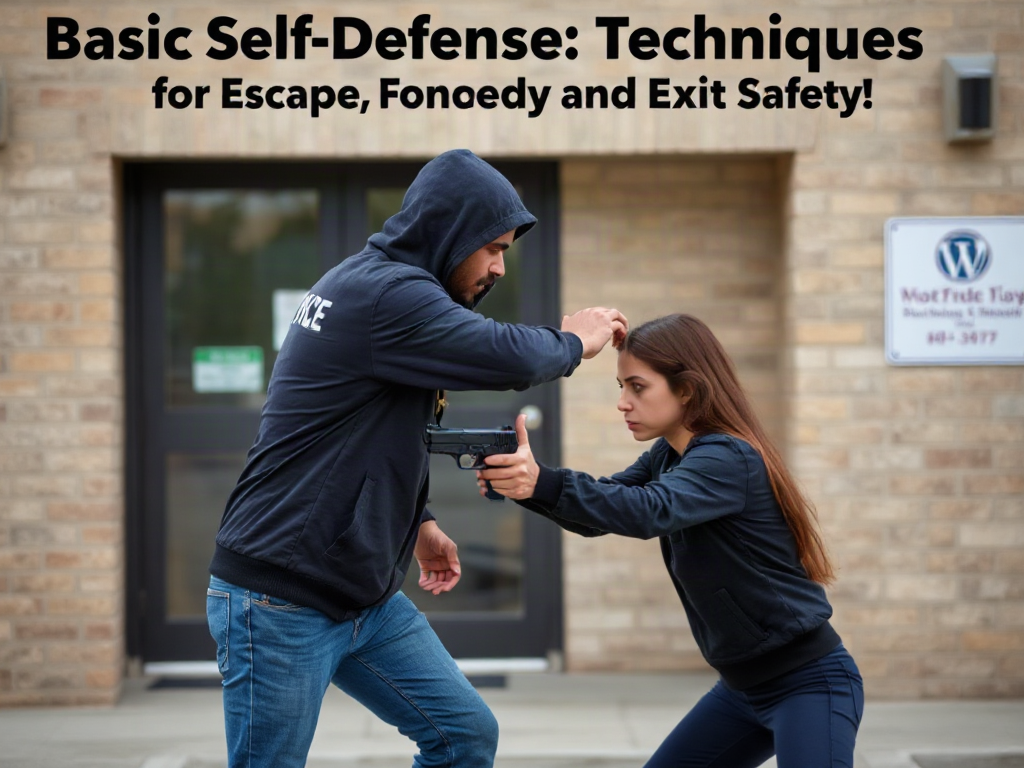
Self-defense for senior citizens emphasizing mobility limits should prioritize awareness, distance, stable positioning, verbal boundaries, and escape methods that do not depend on speed, balance, or floor techniques. A person using a cane, walker, wheelchair, or painful joints may need to keep obstacles between themselves and a threat, move toward populated areas, use a loud clear command, and call for help early. Practicing seated or supported responses can make these actions more realistic than copying athletic martial-arts drills. The main mistake is treating physical confrontation as the first solution; creating time, protecting balance, and reaching a safer location usually offer more reliable options.
Build Self-Defense Around Mobility and Exit Options
Effective self-defense for an older adult begins with an honest assessment of movement rather than an idealized fitness level. Consider walking speed, turning ability, stair use, vision, hearing, hand strength, pain, fatigue, and whether standing from a chair is difficult. These details determine which actions are realistic. Someone who can walk steadily on level ground but cannot pivot quickly should not rely on spinning away, chasing an attacker, or recovering from a fall.
The first objective is usually to create time and reach a safer place. A well-lit shop, staffed reception desk, neighbor’s doorway, vehicle with locked doors, or busy waiting area may provide more protection than attempting to overpower someone. Distance matters because a person with limited mobility may need extra seconds to turn, unlock a door, summon assistance, or move around furniture. Keeping a phone accessible and knowing which nearby locations are normally staffed can make an exit strategy more practical.
A useful personal assessment separates capabilities into three groups: movements that are comfortable, movements that are possible but slow, and movements that are unsafe. Comfortable actions might include raising both hands, turning the torso, speaking loudly, or pressing an emergency button. Slow actions might include standing from a low chair or stepping backward. Unsafe actions might include kneeling, running over uneven ground, or striking with a painful shoulder. Training should emphasize the first group, cautiously rehearse the second, and avoid depending on the third.
For example, a resident who uses a rollator may be able to move toward an elevator but not quickly reverse direction. The safer response to a suspicious approach could be turning toward a staffed lobby, placing the rollator between people, and calling a trusted contact before the person gets close. That approach differs from a fitness class built around rapid footwork, but it better matches the actual constraint. The common failure is practicing impressive movements that disappear under stress. A modest action that can be repeated while tired or frightened is more valuable than a complex technique that requires perfect balance.
Use the mobility-focused self-defense checklist to identify one reliable exit route at home, one at a regular destination, and one response for a public encounter. Reassess after surgery, a medication change, a new assistive device, or any fall that affects confidence or balance.
Use Positioning, Verbal Boundaries, and Environmental Barriers
Positioning can reduce the need for physical force. Keep enough space to see a person’s hands and maintain access to an exit rather than allowing yourself to be boxed into a corner, narrow hallway, or vehicle doorway. If someone approaches aggressively, angle your body toward an open path, keep both hands visible at chest height, and use a firm phrase such as “Stop. Stay back.” The purpose is not to win an argument; it is to signal a boundary, attract attention, and buy time.
Furniture and ordinary objects can serve as barriers without becoming weapons. A counter, table, shopping cart, closed door, parked vehicle, or reception desk may slow an approach and give you a route to assistance. Barriers are most useful when placed between you and the person before contact occurs. Trying to retrieve an object after someone has grabbed you may worsen the situation, especially for a person with reduced grip strength or limited reach.
Voice and attention should be specific. Instead of quietly saying “help,” direct the request to a particular person: “You in the blue shirt, call emergency services,” or “Staff member, please come here.” A clear command can help bystanders understand that assistance is needed. It may also discourage a person who is relying on confusion or social politeness. Do not assume that every observer will interpret a tense interaction correctly; concise words and movement toward a populated area reduce ambiguity.
A scenario illustrates the tradeoff. In a parking lot, a senior using a cane may be unable to move backward quickly while holding bags. Dropping the bags, turning toward the nearest open business, raising the free hand, and speaking loudly may be safer than trying to hold the cane in a striking position. The cane may help with balance and distance, but using it aggressively can cause loss of stability, damage, or escalation. Its most dependable role is the one that preserves mobility and supports an exit.
Watch for warning signs that a positioning strategy is failing: the person keeps closing distance despite a clear command, blocks the route, reaches toward you, or follows you after you change direction. At that point, stop negotiating, increase volume, move toward people, and contact emergency services when appropriate. De-escalation is not the same as staying compliant with an unsafe demand. The senior self-defense response plan should include a specific point at which conversation ends and escape or emergency assistance begins.
Adapt Responses for Canes, Walkers, Wheelchairs, and Limited Balance
Assistive devices change the geometry of self-defense. A walker needs turning room, a wheelchair may have limited access through thresholds, and a cane user may depend on one hand for stability. Any response that requires dropping, throwing, or abandoning the device could create a second emergency. Practice should therefore include the device in its normal position rather than treating it as an inconvenience to be removed.
For a wheelchair user, the safest route may depend on door width, ramp access, surface condition, and whether a person can reach the brake controls. Locking the brakes while speaking to a stranger can prevent unwanted rolling, but remaining stationary is not always wise if the person is approaching. The user may need to unlock, turn toward an accessible exit, and call for help before the threat is close. A companion should know whether to move the chair, open a door, or contact emergency services; improvisation can cause injury.
A walker or rollator can provide a stable visual boundary, but it should not be treated as a guaranteed shield. A person who grabs the frame may destabilize the user, and pulling against that force can cause a fall. Releasing a bag, stepping toward a clear route, using a loud command, and asking a specific bystander for assistance may be preferable to a tugging contest. If a fall occurs, protecting the head, creating distance with the voice, and calling for help may be more realistic than attempting to stand immediately.
Balance limitations also affect training intensity. Begin seated or beside a secure support, use a slow pace, and stop when pain, dizziness, breathlessness, or confusion appears. Do not practice grabbing or falling drills with an untrained partner. A physical therapist, occupational therapist, or qualified instructor familiar with older adults may help adapt movements, but instruction should remain focused on escape and personal capability rather than promises of combat effectiveness.
Common assumptions need correction. A stronger device is not automatically safer, and a concealed defensive product may create legal, handling, or access problems that are difficult under stress. The best option depends on local rules, hand function, sensory ability, and whether the user can deploy it without losing balance. Review door locks, lighting, phone placement, and accessible routes alongside any physical technique. Often, improving the environment delivers more usable protection than adding equipment.
Practice a Low-Impact Routine and Review Common Mistakes
Practice should turn a few decisions into familiar actions. A short routine can be performed at home without simulated violence: notice an approach, orient toward an exit, raise the hands, say a boundary phrase, move behind a barrier, and contact help. Rehearse from a chair, beside a walker, or while holding the cane, depending on daily reality. The goal is not speed for its own sake; it is reducing hesitation while preserving balance.
Use several ordinary settings. At home, practice reaching the phone, moving through the main doorway, and identifying a room that can be locked. At a store, identify staffed counters and wide aisles. In a parking area, note lighting, cameras, open businesses, and the safest direction of travel. At a medical appointment or community center, ask about accessible exits before an emergency occurs. These rehearsals expose practical problems, such as a phone placed too low, a door that requires two hands, or a route blocked by a delivery cart.
A compact review can ask:
- Can I recognize a concern early enough to change direction?
- Can I state a boundary without moving into reach?
- Can I reach an exit, phone, alarm, or staffed location with my usual device?
- What happens if I drop a bag, lose balance, or cannot use one hand?
- Who knows how to assist me, and what exact help should they provide?
Practice should be adjusted when the answer to any question is no. Move the phone, remove a trip hazard, change the meeting point, or choose a different route before adding a complicated technique. A trusted partner can approach slowly from a known distance while the older adult practices speaking and moving away, but the exercise should stop immediately if fear, pain, or instability rises. Realistic practice is controlled and repeatable, not startling or humiliating.
Several mistakes appear repeatedly: waiting for proof before leaving, assuming politeness will calm someone who is already pursuing, backing toward an unseen obstacle, and relying on a tool that has never been handled. Another mistake is copying a standing technique while seated or using a wheelchair without adapting the movement. A better standard is simple: can the response be performed from the person’s normal position, under mild stress, without risking a fall? The mobility-limited safety practice should be reviewed every few months and after any change in health, equipment, or routine.
For individualized mobility questions, readers can consult a licensed physical or occupational therapist and ask local emergency services about accessible communication options. Community senior centers, disability organizations, and recognized personal-safety instructors may also offer low-impact classes; verify that instruction emphasizes consent, escape, balance protection, and realistic use of assistive devices rather than compulsory contact drills.
Frequently Asked Questions
Should older adults learn striking techniques?
Striking should not be the starting point when mobility is limited. Awareness, distance, barriers, verbal boundaries, and escape are usually easier to adapt and less likely to threaten balance; any physical technique should be taught safely by a qualified instructor.
Can a cane or walker be used for self-defense?
An assistive device is primarily for balance and movement. It may create space or act as a visual barrier, but forceful use can cause loss of stability, damage, or escalation. Practice preserving access to the device and moving toward help.
What should someone do if they cannot run?
Move toward people, light, staff, or a lockable location; use a loud, specific command; place a barrier between yourself and the person; and call emergency services or a trusted contact. Dropping bags may make movement easier.
How can wheelchair users practice safely?
Rehearse from the chair with brakes, controls, doors, thresholds, and accessible routes included. Practice turning toward an exit, calling for assistance, and explaining exactly how a helper should move or protect the chair.
How often should mobility-focused self-defense be reviewed?
Review it every few months and whenever balance, vision, strength, medication, living arrangements, or assistive equipment changes. A response that worked before may become unsafe after a fall or new limitation.
Conclusion
Mobility limits do not eliminate self-defense options, but they change the priorities. Build around early recognition, a clear exit, protected balance, firm verbal boundaries, accessible communication, and barriers that create time. Keep a cane, walker, or wheelchair part of practice rather than assuming it can be discarded during danger. Review routes in familiar places, test phones and doors, and rehearse from the positions used in daily life.
Avoid training that depends on running, floor recovery, complicated holds, or physical strength that is not consistently available. The most useful response is one that remains possible when pain, fear, fatigue, or limited reach is present. Update the routine after health or equipment changes, and seek qualified assistance when a physical limitation makes practice uncertain.