
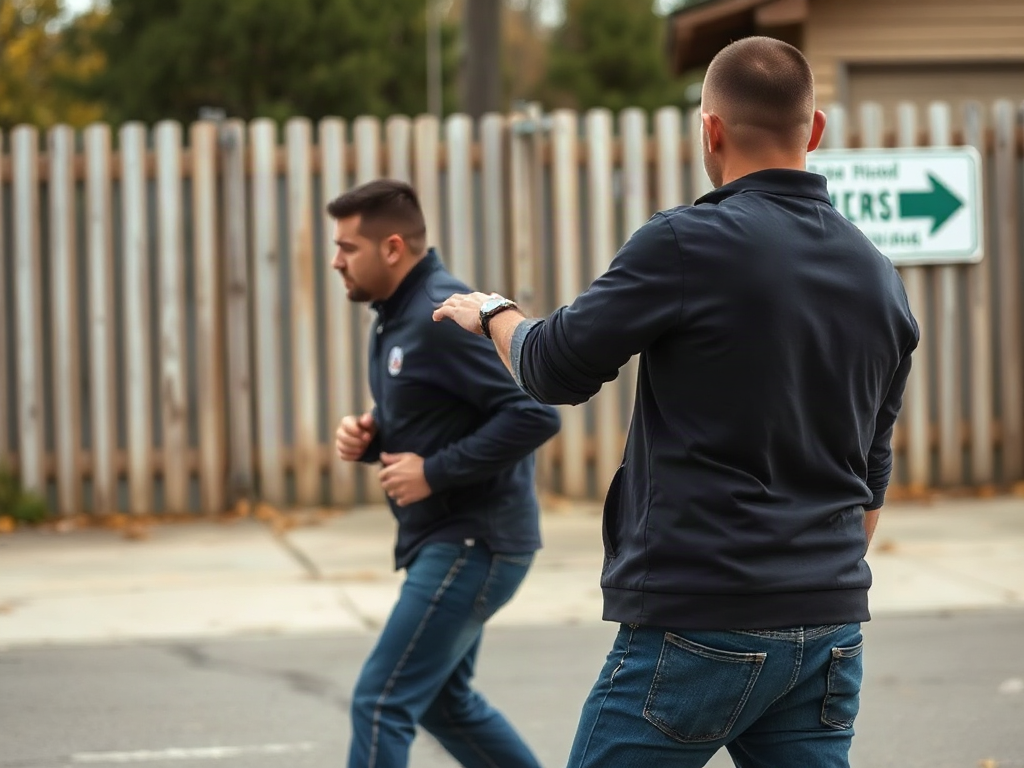
Pressure points in self-defense are unreliable as instant fight-stopping tools, and their safety limits mean escape, distance, and help-seeking should take priority over precise targeting. Pain responses vary with stress, body position, clothing, intoxication, disability, and individual tolerance, while attempts near the eyes, throat, neck, or joints can cause severe injury and legal complications. A safer approach is to recognize danger early, use a firm boundary, create space, move toward an exit, and use only the force reasonably needed to break contact. Pressure-point knowledge may help explain vulnerable areas, but it should not replace supervised training in balance, verbal de-escalation, protective movement, and emergency response.
Why Pressure-Point Claims Often Fail
Pressure points are commonly presented as small locations where a precise touch can instantly disable a larger or stronger attacker. That claim is too broad for real-world self-defense. A person may react to pain, but a pain response is not the same as loss of balance, loss of consciousness, or a reliable release from a grip. The result depends on movement, adrenaline, clothing, body angle, access, and whether the other person is committed to violence.
A demonstration can make a technique appear dependable because the participant knows what is coming, controls the pace, and may unconsciously assist the movement. A surprise assault removes those conditions. Hands may be trapped, vision may be obstructed, and the defender may be trying to protect a child, maintain footing, or reach a doorway. A technique requiring a fingertip-sized target is therefore less forgiving than a movement that creates distance with the whole body.
Consider someone grabbing a wrist in a crowded parking area. Searching for a specific point on the forearm may take attention away from the person’s hips, balance, and escape route. A simpler response may be to protect the head, turn toward the opening, use a loud boundary, and move away as soon as contact breaks. That does not make pressure-point knowledge useless; it places it below awareness, movement, barriers, and exit decisions.
Readers comparing online claims with grounded instruction can use pressure points self-defense claims and safety limits as a reminder to test promises against realistic constraints. The useful question is not whether a spot can hurt. It is whether a person can access it safely, under pressure, without increasing the danger.
The Body, Stress, and Unreliable Pain Responses
Pain compliance works only when the other person notices pain and chooses to change behavior. Stress can alter that response. Adrenaline, anger, intoxication, mental distress, medication effects, and commitment to an attack may reduce attention to discomfort. Even without those factors, people differ widely in sensitivity and tolerance. A method that causes a visible reaction in a cooperative classmate may produce little interruption during a fast assault.
Access is another major limitation. The target may be moving, covered by a jacket, protected by the attacker’s arms, or positioned against a wall. Fine motor control also deteriorates when a person is frightened. Trying to pinch, press, or strike a narrow anatomical location can become a contest of precision when the defender needs a quick, gross-motor movement instead.
A practical example is a two-handed push. The defender may be told to press a point near the attacker’s hand or neck, but the pushing person is already using forward force. If the defender remains planted and reaches for a small target, balance may deteriorate. A better training goal is to recognize the force, keep breathing, protect the head, angle away from the line of pressure, and move toward people or an exit. The priority is interruption and escape, not proving that a particular point works.
There is also a difference between a technique that causes discomfort and one that changes structure or position. Pain may fade quickly; a barrier, locked door, vehicle, table, or open distance continues to affect access. That comparison explains why pressure-point information should be treated as supplemental awareness rather than a guaranteed control system.
Warning signs of weak instruction include claims that one point works on everyone, guarantees a knockout, defeats any size difference, or requires no practice. Stronger instruction acknowledges failed attempts, encourages safe partner feedback, and teaches what to do immediately when the first action does not work.
Safety and Legal Limits Around Vulnerable Areas
Some commonly advertised targets are medically fragile areas, including the eyes, throat, front of the neck, head, and certain joints. Contact there can cause serious injury, permanent impairment, or a medical emergency. That risk makes casual experimentation inappropriate. A person should not practice forceful attacks on a partner’s neck, eyes, spine, or head, even when a video describes the action as a harmless pressure technique.
Training also has a legal and ethical dimension. Self-defense law varies by location, but the central practical issue is usually whether the response was reasonable in relation to the perceived threat. A technique marketed as a secret disabling move can lead a learner to use more force than necessary or continue after an opportunity to escape appears. No article can determine how a specific incident would be judged, so local legal advice is more reliable than a broad internet rule.
Suppose an argument outside a store becomes threatening but the other person has not touched anyone. Pressing a sensitive area or striking first may escalate the encounter and create consequences that could have been avoided by leaving, contacting staff, or calling emergency services. If an assault is already underway, the objective remains breaking contact and reaching safety. Once the threat ends, continuing to apply force is unlikely to improve safety.
Medical factors matter as well. Children, older adults, pregnant people, individuals with disabilities, and people with known health conditions may face different risks from falls, joint manipulation, compression, or impact. A technique that seems minor in a demonstration can produce a fracture, airway problem, or head injury when someone falls onto concrete.
- Do not test painful techniques on a person’s neck, eyes, spine, or head.
- Do not assume a pain response means the threat has stopped.
- Stop using force when safe separation has been achieved.
- Seek medical help after significant impact, breathing difficulty, confusion, severe pain, or loss of consciousness.
These limits do not require passivity. They require matching the response to the danger and keeping escape, witnesses, communication, and emergency assistance in view.
A Safer Priority Order for Personal Protection
Personal protection is more dependable when it is organized around priorities rather than a catalog of vulnerable points. Awareness can provide early warning, verbal boundaries can clarify intent, movement can prevent a person from being cornered, and barriers can reduce access. Physical action may become necessary, but it should serve the immediate goal of creating an opportunity to leave.
A useful sequence is:
- Notice: Identify unusual approach, blocked exits, escalating language, or repeated boundary violations.
- Position: Keep space, avoid being trapped against a wall, and move toward light, staff, companions, or public activity.
- Communicate: Use a clear voice such as “Back up” or “Do not touch me,” without relying on a long explanation.
- Disengage: If contact occurs, protect vital areas, move toward an opening, and use only the action needed to break contact.
- Report and recover: Contact emergency services when appropriate, preserve relevant information, and obtain medical care for injuries.
This sequence is not a promise that every encounter can be controlled. Its value is that it reduces dependence on a tiny target and gives the defender several options before a physical struggle becomes close and chaotic. A person with limited mobility may prioritize a chair, counter, vehicle, or door as a barrier. Someone responsible for a child may need a movement plan that keeps the child on the protected side rather than attempting a complex technique.
A common mistake is practicing only the final physical move. Training should include recognizing when to leave, speaking under stress, moving while looking for help, and recovering after a failed attempt. Signs that training is becoming more realistic include the ability to keep breathing, identify an exit, avoid tunnel vision, and stop when separation is achieved. Signs it is failing include freezing whenever a partner changes angle, relying on a memorized target, or treating compliance as proof of effectiveness.
For broader preparation, pressure-point safety limits belong alongside emergency contacts, charged communication devices, safe transportation choices, and knowledge of nearby public places. Those measures may appear less dramatic than a disabling technique, but they often improve the number of available escape options.
How to Evaluate Training and Online Demonstrations
Evaluate a self-defense claim by asking what must be true for it to work. Does the defender need a clear view of a small target? Must the attacker remain still? Is the response based on pain compliance? Does the technique leave the defender close to the person or facing a second threat? Each requirement is a possible failure point.
Credible instruction should explain limits instead of promising certainty. It should include prevention, de-escalation, balance, escape routes, safe practice methods, and appropriate force. The instructor should be able to describe what happens when the target is missed or the attacker does not cooperate. A demonstration that ends immediately after a perfect application says little about performance under pressure.
Use particular caution with claims involving secret anatomy, effortless control of much larger people, guaranteed unconsciousness, or pressure applied to the neck. Such claims can encourage dangerous testing and unrealistic confidence. A responsible class uses protective equipment and controlled intensity, avoids harmful targets, and makes clear that training partners can be injured even when the technique is performed correctly.
Before enrolling, ask whether the course teaches exit movement, verbal skills, scenario awareness, and first aid. Ask how instructors manage injuries and whether participants can decline unsafe drills. A class focused solely on painful compliance may be less suitable for a beginner than one that develops footing, distance management, awareness, and decision-making.
Online material can be a starting point for questions, not a substitute for qualified supervision. Compare several sources, look for transparent limitations, and avoid treating views, dramatic reactions, or testimonials as evidence that a technique is dependable. The strongest takeaway is modest but useful: knowing that certain areas are vulnerable may help a person recognize danger, yet safe preparation depends more on positioning, escape, judgment, and practiced movement.
Frequently Asked Questions
Can pressure points stop an attacker instantly?
No. Pain responses vary, and a person may continue moving because of stress, intoxication, anger, clothing, or limited access to the target.
Which pressure points are safest to practice?
Do not practice forceful contact with the eyes, throat, neck, spine, or head. Use qualified instruction and controlled, non-injurious drills instead.
Should beginners learn pressure-point techniques?
They may study the claims critically, but beginners should prioritize awareness, verbal boundaries, balance, distance, escape routes, and supervised practice.
What should I do if a pressure-point technique fails?
Protect yourself, create distance, move toward an exit or other people, and call for help. Do not remain close trying repeated fine-motor applications.
Can using a pressure point create legal problems?
It can, especially if force is excessive, used after the threat ends, or applied in a situation where leaving or seeking help was reasonably available. Local law controls.
Conclusion
Pressure points may produce discomfort, but discomfort is not a dependable substitute for escape, distance, or emergency help. Treat dramatic demonstrations and instant-disable claims cautiously, particularly when they involve the neck, eyes, head, or joints. The practical priority is to recognize escalation early, keep an exit available, use clear boundaries, and move toward safety when contact occurs. If physical action becomes unavoidable, the objective should be to break contact rather than dominate or punish the other person. Choose instruction that tests assumptions, explains failure conditions, protects training partners, and includes communication and recovery skills. That approach builds judgment without encouraging dangerous confidence in a precise target or a guaranteed result.