by PREPARE Magazine Editorial Team | Apr 5, 2025 | Blog
It may be cold outside, but this is the perfect time to be thinking about Garden Landscaping Maintenance. Why? Because it is something you’ll need to prepare for. That’s why. In this guest post, you’ll find useful tips and tricks to making the most of your garden landscaping maintenance plan.
 Making sure your garden sees a good amount of work in terms of landscaping is a very important aspect of improving the curb appeal of your home, as well as its aesthetic value and comfort. It will cost you, but this will definitely be money well spent. Improving your home in this manner will have amazing results if you approach the subject with care. You can either hire some gardening professionals or you can get the job done yourself.
Using a landscaping company will be of great use to you, as they will have a lot of practical experience you would not possess in most cases. You can work on hiring professionals for assistance, but on the other hand you can also work on things by yourself, assuming you do a good bit of research as well as being ready to roll up your sleeves and do some hard work.
Having a garden and landscaping expert on your side can be a great advantage, as well as a treasure trove of information and ideas. Most people today are quite busy with their lives and work, so it may be pretty hard to find the time to deal with things on your own. If you work on designing a low maintenance solution for your needs, then you will have far less trouble taking care of everything, but that requires some smart preparations to get it going.
You can use flagstone slabs for flooring and landscape paths, as they will be of low maintenance while at the same time possessing that lovely natural look. You may want to also work on purchasing a lawnmower as well as a string trimmer and other gardening tools of your choice. Although they will set you back initially, you will have great need of them further down the line as your landscaping will need maintenance.
 If you have a more complex design for your landscape, then you may need to have some help in terms of maintenance and other details. Landscaped gardens look absolutely amazing, but they also require a good deal of care to keep that way. Ornamental pergolas, gazebos and other additions can be a wonderful project to add to your already wonderful-looking landscape. A pond will attract a lot of attention, as well as some well-organized flower beds, but they will all need your attention. Make sure you do so regularly and keep things under control with regular trimming, mowing and other smaller work that needs doing.
If you don’t have the time, then you may need to look for professional help in terms of a landscaping company. This will give you the edge you need while at the same time giving you a better chance to enjoy your free time.
Subscribe to PREPARE Magazine
Guest Author Bio: Ella Andrews is blogger and content writer great flair for decoration and interior design. She is always searching for new challenges. Therefore her present article is focused on some outstanding garden landscaping tips ideas. For more helpful tips and hints for your garden visit: Chelsea garden clearance
Popular Questions
What is the fastest way to improve Garden Landscaping Maintenance without making beginner mistakes?
The fastest way to improve Garden Landscaping Maintenance is to simplify the process and control one variable at a time. Start with the most important baseline: define the goal, identify the main failure point, and test one change before making another. Keep short notes so you can connect the outcome to the adjustment you made. This prevents guesswork and helps you build a repeatable method instead of chasing random fixes.
What should you check first when Garden Landscaping Maintenance is not working well?
Check the most immediate bottlenecks first: setup errors, missing inputs, bad timing, or inconsistent follow-through. Before buying anything new or changing the whole system, confirm that the basics are being done correctly and consistently. A small diagnostic checklist usually reveals the real problem faster than broad trial and error. Once the weak point is clear, make one correction and watch the result before adjusting anything else.
What common mistakes make Garden Landscaping Maintenance harder than it needs to be?
The most common mistakes are changing too many variables at once, skipping the basics, and judging results too quickly. Many people also copy generic advice without adapting it to their exact situation, which leads to weak results and confusion. A better approach is to work from a simple baseline, make measured changes, and give each change enough time to show whether it helped. That makes progress easier to track and repeat.
by PREPARE Magazine Editorial Team | Apr 5, 2025 | Blog
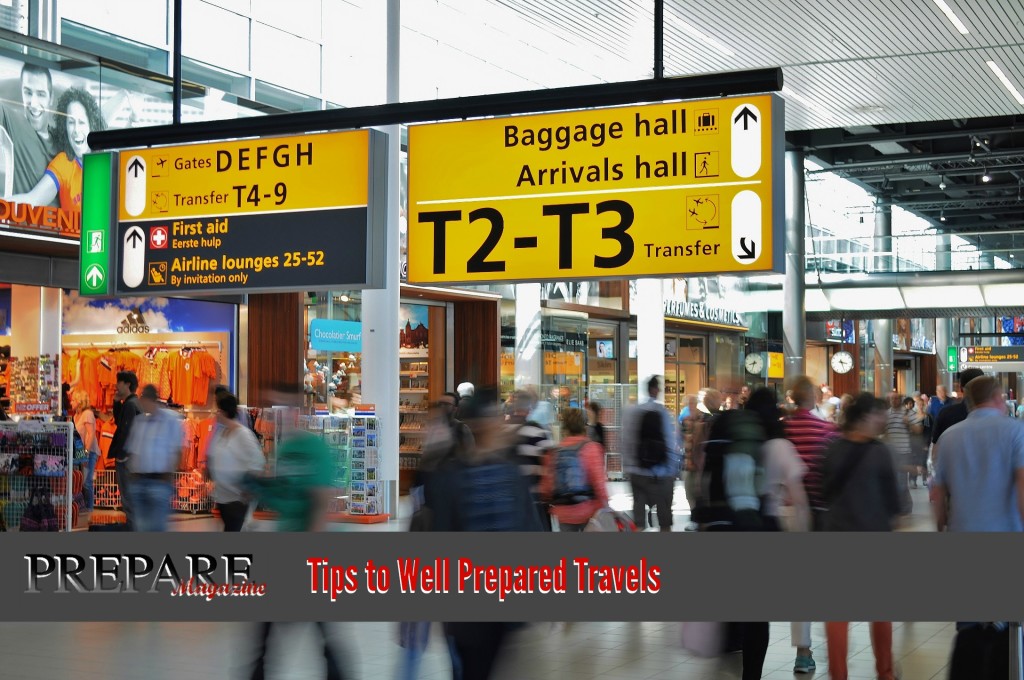
 Perhaps the Holiday Season puts you on the road or in the air to visit family, friends and loved ones. This is a time when situations may strike that are not handled the same as if you were in more familiar surroundings, with more familiar equipment or facilities that you find closer to home.
Whether it’s over the river and through the woods or all the way around the globe, there are several tips to well prepared travels – both domestic and abroad – that are important to take into consideration.
International Travel
Everyone knows that international travel can be a daunting experience, even for the seasoned traveler. A traveler may not know about the information that is made available to them through multiple resources regarding international travel, starting with the traveler’s chosen airline. Depending on where you are going will determine what you need to take and what you should watch out for. Some common items to reference prior to departing on your international flight include (but are not limited to): Travel Maps, Weather, and Currency Calculator. More definitive and required items include: Passport, Foreign Entry Information, Travelers Health, and Travel Warnings. The latter items are extremely important due to increased security threats throughout the world as well as illnesses that may be caught or spread from visiting other parts of the world.
As an international traveler, you may want to make a list of items you are required to take with you. This list will assist you to make sure you limit the speed bumps that can easily occur in international travel. It is also recommended that any traveler have a map, any warnings, and even U.S. Embassy information as electronic sources are not always reliable in other parts of the world. Can you think of the last time you could not pick up a wireless network prohibiting you from gaining needed information? Having this type of situation occur in a foreign country can instantly make the situation more undesirable.
Please do your research before your international travel and remember to be vigilant at all times. Here are some International Travel Resources:
Our friend, Joe Alton, M.D., aka Dr. Bones of DoomandBloom.Net wrote about Traveling & Survival while on a trip abroad as well. Here are some of his tips:
Be the Gray Man: The “Gray Man” is a person who can blend in anywhere without attracting attention; someone you would pass on the street and not remember. This is a highly useful quality to have in a survival setting, and helpful when you’re on the road in an unfamiliar city. You’ll be approached less by street vendors, pickpockets, and other ne’er-do-wells.
In Europe, this means wearing black. Black is “the New Black”, as they say in fashion circles. Hawaiian shirts, shorts, and flip-flops = Tourist (which equals ”target”). When in Rome, do as the Romans do. If you want to know what they’re doing, use technology if it exists. Webcams are a great way to reconnoiter the surroundings.
Be aware, not scared: Be aware of travel alerts that indicate ce rtain areas might not be safe at night. This is pertinent for survival scenarios also. You wouldn’t travel into raider territory without taking precautions. The same goes for dark alleyways. Situational awareness is the key to staying safe on the road and in times of trouble. Know where you’re going, and appear confident as you go there.
Prepare for the environment: In travel, whether while bugging-out, on wilderness outings, or to another country, you must be ready to function in the environment you’re entering. If you haven’t taken the environment into account, you have truly made it your enemy. If you’re underdressed, you’ll expose yourself to hypothermia. If overdressed, you may overheat. Check out expected weather conditions before you head out.
Wear the right shoes for the terrain and make sure they’re broken in, so you can avoid blisters. If you can’t trust the water in a survival setting, have water sterilization tablets available. If you’re traveling on vacation, you might consider bottled water.
Pack light, but pack the right stuff: If you going to be doing a lot of walking, whether it’s foraging for food in an apocalyptic wasteland or visiting museums, you don’t want to carry too much weight. I can tell you something about travel that is different from survival: In leisure travel, you will overpack. Period. You probably need half of what you put in your suitcase. We have traveled for a month in other countries with nothing but a carry-on bag, and you could too. In survival, you’ll need everything you’ve packed at one point or another.
Still, you want to have what’s necessary. You’ll want to carry enough clothes for the weather, but not so much that it’s a burden to carry. You’ll want to have access to food and water and have planned out considerations for shelter, whether it’s in a cave or a Holiday Inn. First aid items come in as handy in travel settings as they would in survival settings. Expect an article in the near future by Amy Alton, A.R.N.P., aka Nurse Amy, on exactly what that kit should contain.
Start off healthy: As I often mention, one of the keys to survival in a disaster is to be in the best medical shape possible BEFORE the event. While traveling, you’ll do a lot of walking and it makes sense to get in decent physical condition before you embark on your journey. Take regular walks and build your stamina.
Know how to deal with simple medical issues: If you’re a regular visitor to our website (DoomandBloom.net), you’ll have learned quite a bit about dealing with medical problems when advanced care is unavailable. In other countries, you will benefit from not just having medications and supplies on hand, but knowing how to use them.
Air Travel
Obviously traveling abroad means the high potential of air travel, but so does domestic travel. There are some things unique to air travel that require your attention for safety.
Your EDC needs an update for Air Travel.
Often if you have an every day carry list of items, many of them may not be allowed on the plane in the cabin iteself, overhead compartment or even in your luggage. You may need to update what you carry and have alternatives that are on the list of allowed items that you can use in different ways. Learning to use some ‘non-leathal’ items in ways to protect yourself is a vital skill when many EDC items are not allowed.
Be very aware in Airports.
Now is not the time to be hunkered into a corner with your nose burried in your cell phone or tablet. Keep your eyes open for any suspicious behavior or sudden changes around you. Keep your carry on items close to your side or attached to you. This is especially important if you are carrying a typical/non-descript bag.
Share your itinarary with loved ones.
Don’t board a plane (train or bus for that matter) without making those you love aware of certain criteria such as flight number, arrival and departure times. Often cell service is not as reliable in airports and they will want to know you are fine. We often use Flight Aware to keep tabs on our loved ones in the air and landing so they are not being called when they cannot answer or having to answere (thus not being fully aware of their surroundings) in a crowded airport while juggling luggage and gates.
All in all we hope these tips will help you to change your surroundings while feeling well prepared in unfamiliar ones. Wherever your journey may take you, we hope that you remain diligent to know that unforseen things can still occur and when you are best prepared, you’ll be the least affected and the most helpful – no matter where you are!




Popular Questions
What are some essential tips for well-prepared travels both domestically and internationally?
When traveling, whether within your country or abroad, it's crucial to have a checklist of essential items. Make sure to carry your passport, any necessary visas, and health documentation, especially when traveling internationally. Additionally, familiarize yourself with local customs, weather conditions, and currency exchange rates to avoid surprises. Always have a backup plan for communication, such as printed maps and emergency contacts, in case technology fails.
How can I ensure my safety while traveling abroad?
To stay safe during international travels, adopt the 'Gray Man' principle by blending in with local attire to avoid drawing attention. Stay informed about travel alerts and avoid areas known for safety concerns, especially at night. It's also wise to maintain situational awareness and appear confident in your movements. Preparing for the environment by dressing appropriately for the weather and terrain can further enhance your safety.
What should I pack for a well-prepared travel experience?
Packing light yet effectively is key for a successful travel experience. Focus on versatile clothing that suits the climate and activities you plan to engage in, ensuring comfort and practicality. Include essential items like a first aid kit, water sterilization tablets, and any necessary medications. Remember, overpacking can lead to unnecessary burdens, so aim to bring only what you truly need.
by PREPARE Magazine Editorial Team | Apr 5, 2025 | Blog, Guest Bloggers
Floods
 While Britain does not suffer from some of the most horrendous weather events experienced elsewhere in the world, we do have our fair share of floods, and they are getting worse!
Flooding in the UK usually comes from 1 or more of 3 sources:
- Exceptional rainfall
- Heavy snowfall followed by a rapid thaw
- Coastal storm surges
Our flooding since the start of the new millennium has mainly been from exceptional rainfall. This has given events such as flash floods and the repeated river overflows in Gloucestershire, Yorkshire, and elsewhere, particularly in 2007, 2010, and 2012, with some towns and cities having areas flooded by overflowing drains and excessive surface water on paved areas.
That latter effect has caught out many people who live miles from the nearest river and have never experience flooding before, nor expected to. Meanwhile some towns and cities like York and Tewksbury that have known occasional flooding many times over the centuries have found it becoming an annual event. And despite the efforts of various agencies in some areas it is becoming increasingly damaging. Those people in flood prone areas in what were once expensive and desirable homes now find that they can neither sell nor get insurance.
Depending on the level, flooding can be anything from an inconvenience to a disaster. If your house or business is affected by deep flooding you will almost certainly have to evacuate and in many cases people have not been able to return to use the buildings for over a year. We have friends in this situation and they initially went to a hotel or local evacuation center and were eventually moved to temporary accommodation; in 1 case a touring caravan (trailer), for almost 18 months before the family could return to their home. In some buildings the foundations or structure have been so badly damaged the only safe alternative was demolition.
Threats
So, what are the threats from flooding? Direct threats include:
- Drowning – people drown in their buildings, in their cars, and on the street when the water catches them unexpectedly or while trying to evacuate, and often, tragically, while trying to rescue another person or animal.
- Electrocution – in a building or outside when power lines are brought down or substations flooded.
- Chemicals – flushed out of their normal storage.
- Sewage and other biological hazards.
- Injury – Flood waters can move heavy objects (e.g. trees, fences, cars, etc) at high speed. If you are struck by one of these objects you might sustain severe injury. The water also covers many sharp and otherwise dangerous items, so moving through even still flood water can pose real hazards.
- Loss of possessions through damage or theft, destruction of cars and other transport, and even loss of your home.
And what can you do to minimize the threat?
Precautions and preparations
- The first thing to do is evaluate your risk of flooding. Go online and research the flood risk and warnings for your area.
- Sign up for the text message and email warnings and find out what other alert measures might be available in your area.
- Take measures to prevent or minimise the damage from flood water. This could include:
- Consider your use of rooms – could you use a higher level room for the living room/study/etc where the greatest number and most expensive, electrical equipment is used and instead use a ground floor room as a bedroom?
- Install non-return valves on water outlet pipes, including from the washing machine and dishwasher.
- Use silicone around doors and windows to reduce the likelihood of water penetration.
- Install fittings for flood gates on all external doors and low level windows, and airbrick covers close to ground level. Keep the gates and covers easily available.
- Consider replacing timber floors and carpets with solid floors and tiles – rugs are easier to move (and are) less expensive to replace than carpets, and even if the tiles have to be reaffixed, the cost of sheet ply base is lower than laminate. Also investigate replacing at least the lower steps of a staircase with concrete instead of wood.
- Replace low level, chipboard and laminate kitchen cupboards with freestanding ones made from plastic or stainless steel.
- Replace wooden internal doors, skirting boards etc with plastic ones.
- Use lime plaster on ground floor walls rather than standard gypsum plaster.
- Paint the outside and internal ground floor walls with waterproof sealant or paint. Consider a 2 level decoration scheme so that you only have to redecorate the lower level.
- Have electrical sockets raised to waist level, or higher if likely water levels require it, rather than near the floor – they’re more convenient there too, especially if you have back problems.
- If you have already been flooded, or believe the risk is high, buy a high-capacity pump that can extract water faster than your extra precautions will allow it to enter.
- Prepare a Flood Plan. This should include:
- Safety plan – Know how to turn off your electricity, gas, and water supplies. Do it before the flood water reaches the switches!
- Protection plan – know what to do to prevent or delay water entering your property. Store the equipment and supplies you will need (e.g. sandbags, floodboards, airbrick covers, etc) in a place you will be able to get them.
- Storage plan – the things you will not take with you if you evacuate but want to protect by moving them upstairs or to some other safe location. Keep this plan easily available! In an emergency you have many things to think about and a list will help you not to forget something you might otherwise mourn the loss of. Think about pets, valuables (monetary and emotional), vehicles, electronics, furnishings, etc. Remember that looting of evacuated buildings is very common. Even if you make things safe from the water you might lose them to thieves.
- Evacuation plan – how will you get out, where will you go, what will you take?
- Contact plan – List numbers for family, relatives, and emergency services, insurance companies, etc. Agree a contact that any family member who is out of the area when flooding occurs should call if they cannot contact people who were at home. Also agree close and more distant meeting places that are not likely to be affected by the flooding for use in case the telephone system is out.
- If you haven’t already got one (??) prepare an evacuation bag. This might be your Bug Out Bag or part of it, but remember that you are more likely to be going to a hotel/evacuation centre/friend than a bivvy site in the backwoods, which if you are being flooded out due to torrential rain is probably the last place you would want to go! Suggestions on what to include are listed in the Annexes.
What to do if it happens
- Keep informed about the situation – if you have online access keep visiting relevant sites. Tune your radio to a local station and listen for news and warnings. Watch the area around you.
- Make sure neighbours and friends you care about also know what is happening and what to do. Make arrangements to help one another where you can.
- Put your Plans into action.
- Put plugs in the sinks and bath and weigh them down with a sandbag or other heavy cover. Put a plug (e.g. sandbag) in the toilet
- If the flooding is so sudden that you cannot get out, move yourself, family, evacuation kit, and emergency supplies to the safest place in the building, then prepare for signalling to potential rescuers.
- If you can escape, secure your property and then get out early – the longer you leave it, the more difficult and dangerous evacuation will be.
- Take great care when moving through water and test to ensure you do not get in too deep. A long stick – even a broom handle is good – can be a great help. Six inches of moving water can knock you over if you are walking and 2 feet can lift and float your car.
- Beware of holes e.g. from displaced manhole covers.
- If you have had to move through flood water, then as soon as you are safe get out of the wet clothes and wash and disinfect yourself and the clothes.
- Put your contact plan into action – let family and friends know you are safe and how they can contact you.
- Contact your insurance company – and landlord if you have one – and employer, to let them know what has happened and how to contact you.
- If you need additional official help contact your council, and for other help any support/survival group you might have.
After the flood
When the waters recede it will be time to take stock and begin recovery action.
- As soon as possible, return home to secure your property.
- Take care as you enter:
Flooring might be damaged or displaced,
Other structures including staircases might be unsafe
There could be an electrical hazard
Anything touched by the floodwater will be contaminated
There might be human or animal intruders
- Make a list and loss-evaluation of any property destroyed or damaged and take photographs or videos. Your insurance company will make arrangements to assess the damage to the building and make arrangements for repair.
- Do NOT switch on any of the mains utilities until they have been checked and approved as safe by a professional.
- Do NOT use any food or drink any water that might have been in contact with flood water. Water under pressure might have been forced into bottles, jars, or packets. Thoroughly clean the outside of sealed tins before opening. Do not drink mains water until it has been declared safe and then not until you have run enough through your water system to thoroughly flush and clean it.
- If you are cleaning up yourself expect:
Outside: fallen walls and fences, all plants other than trees and large bushes washed away, missing rubbish bins, muck and rubbish everywhere.
Inside: destroyed carpets, falling plaster, disgusting smells, ruined cupboards/furniture/kitchen white goods/stuff in the garage/workshop/shed (including preps?).
- If you need to pump out water including from under the floorboards, you can hire a pump or might be able to get help from the fire service. Check with your insurance company first, this might be part of its tasks and only to be done when a nominated contractor decides it is safe to do so.
- If you are cleaning up yourself you can use ordinary cleaning products, a garden hose, etc, but do wear overalls and rubber gloves and boots. You might need a skip (dumpster) or lots of rubbish bags. The local authority might arrange extra collections.
- It will take much longer for the house to dry and be restored than you think: be patient!
- Be aware, especially if you are living close-by, that thieves will be waiting to take any opportunity to steal materials as your home is being repaired. Some of our friends had the new copper piping and other fittings stolen 3 times before the property was repaired enough to be secured!
Floods are bad news, but you can limit their effects and dangers by proper awareness, planning and response, and as in all emergencies many of the preps you make will be as useful for this one as any of the others.
By David E Crossley
David E Crossley is a British Prepper living in Scotland. He has been into prepping for over 40 years and has built his experience through 22 years as a soldier, 4 years as the Training Manager for Scotland for the British Red Cross and many years studying and doing the prepping things so many people just think or talk about. He is also a published author. Learn more about him at his website at: www.tfns.co.uk/index2.html
Popular Questions
What is the fastest way to improve Threats without making beginner mistakes?
The fastest way to improve Threats is to simplify the process and control one variable at a time. Start with the most important baseline: define the goal, identify the main failure point, and test one change before making another. Keep short notes so you can connect the outcome to the adjustment you made. This prevents guesswork and helps you build a repeatable method instead of chasing random fixes.
What should you check first when Threats is not working well?
Check the most immediate bottlenecks first: setup errors, missing inputs, bad timing, or inconsistent follow-through. Before buying anything new or changing the whole system, confirm that the basics are being done correctly and consistently. A small diagnostic checklist usually reveals the real problem faster than broad trial and error. Once the weak point is clear, make one correction and watch the result before adjusting anything else.
What common mistakes make Threats harder than it needs to be?
The most common mistakes are changing too many variables at once, skipping the basics, and judging results too quickly. Many people also copy generic advice without adapting it to their exact situation, which leads to weak results and confusion. A better approach is to work from a simple baseline, make measured changes, and give each change enough time to show whether it helped. That makes progress easier to track and repeat.
by PREPARE Magazine Editorial Team | Apr 5, 2025 | Blog, emergency preparedness, off-grid, preparing for disaster, self-reliant living
The Shadow of ConflictIn the modern world, the thought of a war, particularly in a region as volatile as the Middle East, is a chilling prospect. This area, rich in history, culture, and resources, has often been a flashpoint for tensions that have implications far beyond its geographical boundaries. A conflict here could have a domino effect, leading to a cascade of disasters—economic turmoil, fuel shortages, food scarcity, and in the worst-case scenario, a global nuclear confrontation. As daunting as these possibilities are, understanding and preparing for them is essential. This piece aims to outline what families might expect in such a scenario and underscore the importance of individual and family preparedness.
The Ripple Effects of War
Economic Instability
The first and most immediate impact of a conflict in the Middle East would be economic instability. The region is a vital artery for the world’s oil supply, accounting for a significant portion of global production. Any disruption can lead to skyrocketing fuel prices, affecting everything from transportation costs to the price of goods and services. Families might find their household budgets stretched to breaking points as the cost of living increases sharply.
Fuel Losses
With the Middle East being a cornerstone in the global energy market, a conflict would likely lead to substantial fuel shortages. These shortages could have a two-fold effect: directly, in the difficulty of obtaining fuel for personal use, and indirectly, by hampering the transportation of goods. This scenario could result in limited mobility for individuals and critical delays in the delivery of essential items, including food and medical supplies.
Food Scarcity
Food security would be severely compromised. The Middle East conflict might disrupt agricultural production and supply chains, leading to shortages and soaring prices. Families might face difficulties in accessing affordable, nutritious food, potentially leading to health issues and increased pressure on already strained social services.
Potential Global Nuclear Conflict
The gravest concern would be the escalation into a global nuclear conflict. While this remains the least likely scenario, its possibility cannot be entirely dismissed. The fallout from such an event would be catastrophic, not just in terms of immediate casualties but also in the long-term environmental and health impacts. It underscores the necessity of global diplomacy and conflict prevention.
The Imperative of Preparedness
Given these daunting prospects, preparedness is not just wise; it’s essential. Here’s how families can prepare:
Economic Preparedness
Families should focus on building a financial safety net. This might include saving money, investing in non-perishable goods, and reducing unnecessary expenses. Having a reserve can provide a buffer against economic instability.
Fuel Conservation
In anticipation of fuel shortages, consider reducing dependence on vehicles that require fossil fuels. Exploring alternative modes of transportation, such as bicycles or electric vehicles, can be a step towards mitigating the impact of fuel losses.
Food Security
Invest in a sustainable food supply. This can range from stocking up on non-perishable food items to starting a home garden. Learning about food preservation techniques can also ensure that families have access to nutritious meals even during times of scarcity.
Community Resilience
Building strong community ties is crucial. In times of crisis, communities that work together can better navigate challenges, from sharing resources to providing emotional support. Joining or establishing local preparedness groups can enhance collective resilience.
Staying Informed and Educated
Knowledge is a powerful tool. Stay informed about global and regional politics and understand the basics of emergency preparedness. Educational resources can equip individuals and families with the skills needed to navigate crises effectively.
Conclusion
While the prospect of a conflict in the Middle East and its potential fallout is daunting, it is a reality that cannot be ignored. The interconnectedness of today’s world means that the impacts of such a conflict would ripple across the globe, affecting economic stability, food security, and potentially leading to global military escalations. However, through informed preparedness, individuals and families can mitigate these impacts and contribute to a resilient community. It is through such preparedness that we can hope to navigate the uncertainties of our times, ensuring not just survival but the continuation of our way of life. Let us take action today to safeguard our tomorrow.
by PREPARE Magazine Editorial Team | Apr 5, 2025 | Blog
We are launching our new website!
 Since the release of our first digital issue (May) of PREPARE Magazine, we have been working hard on updating our support and operations systems. Part of those systems include a new website design to help with communication, and to share regular updates on our Magazine.
We look forward to additional improvements as we continue to move forward with this amazing project. In the “updates” section of the website, we will provide regular updates on the status of upcoming releases, as well as the progress toward the release of the hard-copy version of PREPARE Magazine. Please visit the site often, or subscribe to the rss feed to stay informed.
by PREPARE Magazine Editorial Team | Apr 5, 2025 | Blog, Premium Membership Updates
It seemed appropriate that the first webinar help to welcome our Premium Members and help you get acquainted with how to find and use what is offered to you each month. So we give you a short Tour of the Member Area.
We did run in to some scheduling difficulties to make this a LIVE event (which you get the update on what that was as you listen/watch the webinar), but it is up and ready to view!
CLICK ON THIS PAGE to view the webinar. Remember – this is for Premium Members only so you will likely be prompted to log in.
Our next planned upcoming LIVE webinar topics include:
- Home-milling and Grain Storage
- Solar Cooking and Cooker comparisons
Also coming for Premium Members is the special report of Composting 101! So you’ll want to watch the above webinar to find where to get all of these!
If you’ve not yet signed up for your membership – you can do so by clicking THIS PAGE. After signing up, confirming and receiving your log-in and password, you’ll be able to view this webinar and be ready for our upcoming ones.