by PREPARE Magazine Editorial Team | Apr 5, 2025 | Blog
“What is the Best Alcohol to Store for Emergencies?” This question is surprisingly not asked often enough. We see many options and percentages on the sales shelves near the bandages but do you really know what is best to purchase and keep on hand for your home emergency kit?
Selecting the type(s) alcohol is 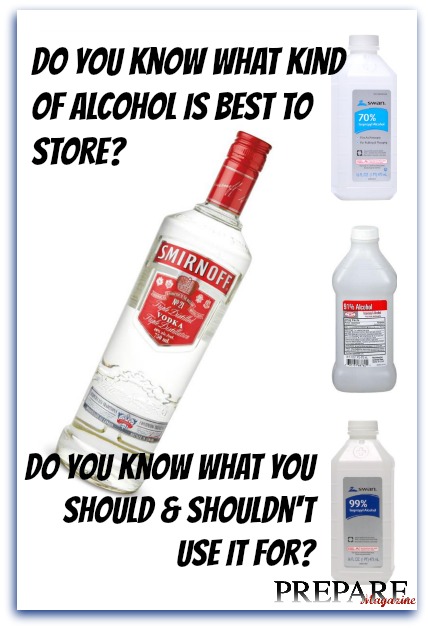 only one part of the process. Knowing what you intend to use it for helps you to make the selection.
We hope to address a few of the things that are rarely thought of when you’re told to have alcohol on hand for an emergency. With the variety to choose from and what each percentage can mean for potency. The more you know, the better you can make an educated choice for your storage and preparation plans.
There are two differing types of Alcohol: Isopropyl & Ethyl
In reference to health care, “alcohol” refers to two water-soluble chemical compounds—ethyl alcohol and isopropyl alcohol—that each have generally underrated germicidal characteristics.
Isopropyl alcohol – Per britannica.com
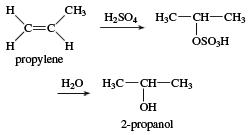
Isopropyl alcohol is one of the most common members of the alcohol family of organic compounds. Isopropyl alcohol was the first commercial synthetic alcohol. It is easily synthesized from the reaction of propylene with sulfuric acid, followed by hydrolysis.
In some cases the hydration of propylene is carried out in one step, using water and a catalyst at high pressure. Isopropyl alcohol is mixed with water for use as a rubbing-alcohol antiseptic.
Isopropyl Alcohol is also called: 2-Propanol; Dimethylcarbinol and Rubbing Alcohol
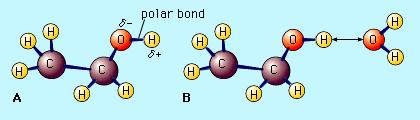
Ethyl Alcohol – Per brittanica.com
Ethyl Alcohol is an important industrial chemical; it is used as a solvent, in the synthesis of other organic chemicals, and as an additive to automotive gasoline (forming a mixture known as a gasohol). Ethyl alcohol is also the intoxicating ingredient of many alcoholic beverages such as beer, wine, and distilled spirits.
Ethyl alcohol, also called ethanol, grain alcohol, or simply alcohol.
Both Ethyl & Isopropyl alcohol are effective but not equally.
Isopropyl Alcohol is effective in as little as 10 seconds. It kills bacteria, viruses, fungus, and tubercles on contact. But depending upon potency must come in contact with these contaminants for at least 10 seconds.
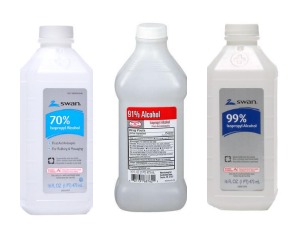
Isopropyl Alcohol is often already diluted in a variety of percentages before being sold. Isopropyl is most commonly sold in 70%, 91% and 99% solutions.
Ethyl Alcohol has the percentage is shown by the ‘proof’ on most grain and distilled spirits.
It can be used straight on a topical area or surface but is significantly weaker than Isopropyl Alcohol. If relegated to using a high proof Ethyl Alcohol such as Vodka for sterilization purposes, carefully check the percentage before diluting – especially since Ethyl Alcohol is already less effective against some contaminants than Isopropyl.
Effectiveness for each alcohol drops significantly when concentration is below 50%. So when searching the bottles at the drugstore for puchase or diluting for use – be careful to keep the percentages as high as possible for maximum potency.
Neither Ethyl nor Isopropyl alcohol are capable of killing spores, therefore cannot be used in “high level sterilization.”
There are Disadvantages & Advantages of both types of alcohol.
The main disadvantage to storing alcohol is that both Ethyl and Isopropyl Alcohol are highly flammable. However, under certain circumstances this may actually be an advantage for fire starting.
Another mix of both advantage and disadvantage is that they can cause damage to rubber (hardening) and destruction of glues. This can work either for or against you, depending upon how it is needed. Either way, being aware is important.
An outright Advantage is that each of these are among the longest shelf-stable disinfectants known. And perfect for long term storage options. With very little breakdown or decomposition, alcohol lasts for a very long time for future use.
Another advantage, unique to the Ethyl Alcohol, is that it can be used to make tinctures and extracts for medicinal herbs. And lastly the advantage of storing Ethyl Alcohol is the opportunity to barter it and offer it up for another person’s consumption or addiction.
Was this helpful information? Do you have more to share?
Please leave a comment!
Popular Questions
What is the fastest way to improve What is the Best Alcohol to Store for Emergencies? without making beginner mistakes?
The fastest way to improve What is the Best Alcohol to Store for Emergencies? is to simplify the process and control one variable at a time. Start with the most important baseline: define the goal, identify the main failure point, and test one change before making another. Keep short notes so you can connect the outcome to the adjustment you made.
What should you check first when What is the Best Alcohol to Store for Emergencies? is not working well?
Check the most immediate bottlenecks first: setup errors, missing inputs, bad timing, or inconsistent follow-through. Before buying anything new or changing the whole system, confirm that the basics are being done correctly and consistently. A small diagnostic checklist usually reveals the real problem faster than broad trial and error. Once the weak point is clear, make one correction and watch the result before adjusting anything else.
What common mistakes make What is the Best Alcohol to Store for Emergencies? harder than it needs to be?
The most common mistakes are changing too many variables at once, skipping the basics, and judging results too quickly. Many people also copy generic advice without adapting it to their exact situation, which leads to weak results and confusion. A better approach is to work from a simple baseline, make measured changes, and give each change enough time to show whether it helped. That makes progress easier to track and repeat.
by PREPARE Magazine Editorial Team | Apr 5, 2025 | Blog, Guest Bloggers
Do you have The Preparedness Mindset?
Maybe you’ve had people say something like this to you:
“You just think everybody is out to get you.”
“You’re all a bunch of camo-wearing kooks.”
“My faith will save me, I don’t need to prepare like that.”
 Regardless of where you are on your preparedness journey, you’ve probably heard phrases like these. I’ve had people look at me askance and use phrases like the above, but I don’t hold it against them. Most of the time, their reaction and fear are a product of bad media influences combined with a lack of knowledge about what the “Preparedness Mindset” is.
Just what do I mean by “Preparedness Mindset”? I mean the attitude towards preparation, in its most elemental form, towards any situation that might occur. There are certain ways in which everyone, or nearly everyone, prepares. Fire safety is a great example. I don’t know the last time I was in a building or home which didn’t have a smoke-detector installed. You also see fire extinguishers prominently located and plainly marked in public buildings. By having a fire extinguisher or smoke detector, no one is saying “This building is definitely going to burn down” but they are acknowledging that there is at least the chance that it could, and should it catch fire, that the occupants will have a better chance of survival than they would have without it. In fact, this preparedness mindset towards fire is such that states and municipalities have fire codes for buildings and would charge the owners with negligence if they disobeyed those mandated preparations. There are other good examples: seat belts/airbags in cars, guard rails on curvy roads, and putting down drop-cloths while painting a room; all of these things are merely an acknowledgement that “bad things could happen” and we want to eliminate or mitigate the severity of those bad things when they do happen. We don’t want to put our head in the sand and ignore what might happen just because it sounds unpleasant.
In our family, our view on preparedness as a mindset is just really nothing more than taking that attitude and purposefully applying it to every situation in our lives. When we see a situation where there could be a problem if something unexpected happens, we put safeguards around it by planning and figuring out alternatives. The specific safeguards and the degree to which we institute them for ourselves is up to our own budget, knowledge, and understanding of the problem, but ultimately, the underlying reason we prepare is because we live in a sinful, broken world.
Speaking of this sinful, broken world, where does faith fit into our preparedness? Psalm 20:7 says, “Some trust in chariots, and some in horses: but we will remember the name of the LORD our God.” We believe that our help comes from the Lord, first and foremost. But at the same time, we know that we live in this world, not unlike Esther or Joshua, who called upon God and called upon their people to take action along with them. Likewise, we do not sit idly by, but we take steps forward as we trust God to supply all our needs. The reality is that faith & preparation are not on opposite ends of the spectrum. You would not make it a policy to ride in your car without seat-belts or airbags, and expect your faith to prevent injury in an accident. Faith does not so much stop bad things from happening as it does give us courage, resolve, hope, and answers when those things happen.
The “Preparedness Mindset” is that purposefulness, and overarching principle, which we use in our day-to-day lives to reinforce the knowledge and skills we are preparing with. When I am acting as a firearms and self-defense instructor, I teach and reiterate many times, “Your mind is your primary weapon”. When I train in Krav Maga, it is quite clear that an unarmed man with an unbreakable drive to live is vastly better prepared when pitted against an armed man who is unable or unwilling to use his weapon. That’s where it all has to start from: in the mind. It’s a decision to be made, “I will be prepared!” And just like a professional athlete, the more you exercise that mindset, the more natural it becomes to use it. It is continuously developed, sharpened, and broadened with every repetition.
Exactly how do we gain that mindset, what are these repetitions? One way to develop this mindset is to routinely, regularly cycle through the things you do, and needs you would face under any number of emergency scenarios. When you get up in the morning, you have a certain “ritual” you go through to get yourself ready for the day. Whatever your “ritual” is, as you get yourself together for the day, ask yourself, “How would this change if I had no heat? No running water? No electricity? Or if there was some natural disaster or terrorist event occurring?” and then follow it with “Would what I am doing be necessary or expected?” Run through this exercise for everything you do in a day. Taking a shower, checking email/social media, watering the garden, making dinner, the work you do, how would any of this be affected by these circumstances? Make a list of everything you do each hour, each day, for a week. Run through your list of activities. How many of these would be immediately eliminated by a loss of power (checking email/social media) and how many could just be done differently by using other sources of power besides what you currently use(cooking dinner)? Now apply these questions and scenarios across the board, to every event in life, to everything you do. Come up with more questions of your own and scenarios you could think of.
But also be on guard against falling into the trap of “I’m prepared for X situation.” Fill in the X with whatever you want, be it a home invasion, loss of power, flood, famine, anything. You don’t know what you may encounter or when, so make your preparations applicable across a wide variety of situations. Think it through, plan it, and then (for most people the hardest of all) DO IT. Be a man or woman of action. Buy the item and store it properly, take the survival training class you need, read the preparedness materials to fuel your learning. Whatever it is, DO IT. There are far too many people who are quite comfortable to talk about being prepared, but have no more than tonight’s meal in the pantry.
Preparedness is a journey on a continuum. It is not a list of supplies, or a list of skills, or a destination of its own. Just like exercise, the first time you do it, it may be feeble and awkward. You may end up sore the next day. But the next time you take steps towards preparedness, you build upon your mistakes from before. As you make mistakes, or as you have successes along the way, you will be making your journey with knowledge that you are picking up as you go, and then when you need to put that preparedness into practice, you again will be doing it with the knowledge that you have done it before.
By Tom Kunz
Tom Kunz has been prepping all his adult life, long before it was popular to do so. He is married to the most wonderful woman on earth, and is a homeschooling father of 8, IT security specialist, software developer, mechanical engineer, firearms instructor, conference speaker, pianist, and composer. He specializes in providing security and communications services & support to Christians and missions agencies that work in countries which censor the internet and are openly hostile to the Gospel. His website is: http://SolidRockTechnologies.com/
Popular Questions
How can I develop a preparedness mindset in my daily life?
To cultivate a preparedness mindset, start by assessing your daily routines and identifying potential disruptions. For instance, consider how your morning rituals would change without electricity or running water. By regularly asking yourself these questions, you can create alternative plans and safeguards for various scenarios. This proactive approach not only enhances your readiness but also instills a sense of confidence in facing unexpected challenges.
What role does faith play in the preparedness mindset?
Faith complements the preparedness mindset by providing strength and courage in uncertain situations. While preparation involves practical steps, faith encourages you to trust in a higher power while taking action. Just as you wouldn’t rely solely on faith to protect you in a car accident, combining faith with preparation allows you to face life's uncertainties with both spiritual and practical readiness. This balance helps you navigate challenges with resilience and hope.
Why is it important to recognize the need for a preparedness mindset?
Recognizing the need for a preparedness mindset is crucial because it acknowledges that unexpected events can occur at any time. This mindset encourages you to take proactive measures, such as installing smoke detectors or having emergency plans in place. By understanding that bad things can happen, you empower yourself to mitigate risks and enhance your safety. Ultimately, this awareness fosters a culture of preparedness that benefits not just you, but those around you as well.
What are some practical steps to implement a preparedness mindset?
Implementing a preparedness mindset involves taking specific actions, such as creating an emergency plan and assembling a disaster supply kit. Regularly practicing drills for various scenarios, like fire evacuations or power outages, can also reinforce your readiness. Additionally, engaging in community preparedness activities can provide valuable resources and support. These steps help ensure that you are not only prepared for emergencies but also capable of responding effectively when they arise.
by PREPARE Magazine Editorial Team | Apr 5, 2025 | Blog, emergency preparedness, preparing for disaster
When disaster strikes, it is often too late to think about how to respond effectively. That is why preparing for disasters is crucial. By taking the necessary steps beforehand, you can minimize the impact of a disaster and ensure the safety and security of yourself, your loved ones, and your community.
In this introductory article, we will explore the importance of preparing for disasters and delve into various related topics that will equip you with the knowledge and skills needed to face any emergency situation. From natural disasters like hurricanes, earthquakes, and floods, to man-made crises such as fires, terrorist attacks, and pandemics, being prepared is the key to survival.
By adopting a proactive approach to disaster preparedness, you can significantly reduce the risks associated with these events. This involves creating an emergency plan, assembling a disaster supply kit, and staying informed about potential hazards in your area. Additionally, understanding evacuation routes, communication strategies, and first aid techniques can make all the difference when faced with a crisis.
In the following sections, we will delve deeper into each of these topics, providing you with practical advice and expert tips on how to prepare for different types of disasters. We will also explore the importance of community resilience and the role that individuals can play in supporting one another during times of crisis.
Remember, disaster preparedness is an ongoing process. It requires regular review and updates to ensure that you are equipped with the most current information and resources. So, join us as we embark on this journey of preparedness, where we will empower you to face any disaster head-on and emerge stronger and more resilient.
Stay tuned for our next installment, where we will delve into the first topic: creating an emergency plan. Together, we can build a safer and more secure future.
Why is it important to prepare for disasters?
 Disasters can strike at any time, without warning. Whether it’s a natural disaster like a hurricane or earthquake, or a man-made disaster such as a terrorist attack or pandemic, being prepared is crucial. In fact, preparing for disasters can mean the difference between life and death.
One of the main reasons why it is important to prepare for disasters is to ensure the safety and well-being of yourself and your loved ones. By having a plan in place and being prepared, you can minimize the risks and potential harm that disasters can cause. This includes having emergency supplies, such as food, water, and medication, readily available, as well as knowing what to do and where to go in case of an emergency.
Another reason to prepare for disasters is to protect your property and belongings. By taking preventive measures, such as securing your home and belongings, you can reduce the risk of damage or loss during a disaster. This can include installing storm shutters, reinforcing doors and windows, and securing important documents and valuables in a safe place.
Furthermore, being prepared for disasters can also help in the recovery process. By having a plan in place, you can quickly assess the situation and take necessary actions to start the recovery process. This can include contacting emergency services, insurance companies, and other relevant authorities to get the help and support needed.
All in all, preparing for disasters is of utmost importance. It ensures the safety and well-being of yourself and your loved ones, protects your property and belongings, and helps in the recovery process. By being proactive and taking the necessary steps to prepare, you can minimize the impact of disasters and increase your chances of survival. Don’t wait until it’s too late – start preparing today.
What are some common natural disasters?
Natural disasters can strike at any time, leaving devastation in their wake. Being prepared is crucial, as it can save lives and minimize damage. In this article, we will explore some of the most common natural disasters and the importance of preparing for them.
One of the most well-known natural disasters is earthquakes. These occur when the Earth’s tectonic plates shift, causing the ground to shake violently. Earthquakes can result in collapsed buildings, landslides, and tsunamis, making preparedness essential.
Another common natural disaster is hurricanes. These powerful storms form over warm ocean waters and can cause widespread destruction. High winds, heavy rainfall, and storm surges can lead to flooding, power outages, and significant property damage. Having a plan in place and stocking up on essential supplies is crucial when facing a hurricane.
Floods are also a frequent occurrence in many parts of the world. Heavy rainfall, melting snow, or dam failures can lead to overflowing rivers and flash floods. Being aware of flood-prone areas and having an evacuation plan can help ensure the safety of individuals and their belongings.
Wildfires are another natural disaster that can have devastating consequences. Dry conditions, strong winds, and human activities can lead to the rapid spread of fires. Preparing for wildfires involves creating defensible space around homes, having emergency kits ready, and being aware of evacuation routes.
Tornadoes, volcanic eruptions, and tsunamis are other natural disasters that can wreak havoc on communities. Each requires specific preparedness measures to ensure the safety and well-being of those affected.
In summary, being aware of the common natural disasters in your area and taking steps to prepare is crucial. By having a plan, stocking up on supplies, and staying informed, you can increase your chances of surviving and recovering from these catastrophic events. Remember, it’s never too early to start preparing for disasters. Stay safe!
How can I create an emergency preparedness plan?
 When it comes to preparing for disasters, having an emergency preparedness plan in place is crucial. Whether you live in an area prone to natural disasters or not, it’s always better to be safe than sorry. So, how can you create an effective emergency preparedness plan? Let’s dive in.
First and foremost, you need to assess the potential risks in your area. Are you prone to hurricanes, earthquakes, or floods? Understanding the specific hazards you may face will help you tailor your plan accordingly. By doing this, you can focus on the necessary steps to mitigate the risks.
Next, gather essential supplies. Stock up on non-perishable food, water, and medication to last you and your family for at least a few days. Don’t forget to include a first aid kit, flashlights, batteries, and a battery-powered radio. These items are crucial in case of power outages or communication disruptions.
Communication is key during emergencies. Make sure you have a designated meeting spot for your family members in case you get separated. Additionally, have a list of emergency contacts, including local authorities, nearby hospitals, and family members who live outside the affected area. This way, you can stay connected and informed.
Creating an evacuation plan is also vital. Identify the safest routes and shelters in your area. Plan multiple evacuation routes in case one becomes inaccessible. Practice these routes with your family members, so everyone knows what to do and where to go in case of an emergency.
Lastly, don’t forget about your pets. Include them in your emergency preparedness plan by having extra food, water, and necessary supplies for them. Research pet-friendly shelters or hotels in case you need to evacuate with your furry friends.
By following these steps, you can create a comprehensive emergency preparedness plan that will help you and your loved ones stay safe during disasters. Remember, preparation is key when it comes to facing unexpected situations. Stay informed, stay prepared, and stay safe.
What should I include in a disaster supply kit?
When it comes to preparing for disasters, having a well-stocked disaster supply kit is essential. Whether you’re facing a natural disaster like a hurricane or an unexpected emergency, having the right supplies can make all the difference. So, what should you include in your disaster supply kit?
First and foremost, water is crucial. Plan on having at least one gallon of water per person per day for at least three days. This will ensure that you have enough water for drinking, cooking, and hygiene purposes. Non-perishable food items are also important to include. Canned goods, granola bars, and dried fruits are great options that have a long shelf life.
In addition to food and water, it’s important to have a supply of essential medications. If you or your family members rely on prescription medications, make sure to have a sufficient amount on hand. Don’t forget about over-the-counter medications like pain relievers, antacids, and allergy medicine.
Other items to include in your disaster supply kit are a flashlight with extra batteries, a first aid kit, a whistle to signal for help, and a manual can opener. It’s also a good idea to have a battery-powered or hand-crank radio to stay updated on the latest news and emergency instructions.
Lastly, don’t forget about personal hygiene items. Include items like toilet paper, hand sanitizer, wet wipes, and feminine hygiene products. It’s also a good idea to have extra clothing and blankets in case of cold weather.
Remember, disasters can happen at any time, so it’s important to be prepared. By having a well-stocked disaster supply kit, you’ll have peace of mind knowing that you have the essentials to weather any storm. Stay safe and be prepared!
How can I protect my home from disasters?
When it comes to protecting your home from disasters, preparation is key. By taking the necessary steps, you can minimize the potential damage and ensure the safety of your loved ones. Here are some important measures you can take to safeguard your home:
1. Create an emergency plan: Develop a detailed plan that outlines what to do in different disaster scenarios. Make sure all family members are aware of the plan and know how to execute it efficiently.
2. Secure important documents: Keep important documents such as insurance policies, identification papers, and medical records in a waterproof and fireproof safe. Consider making digital copies and storing them securely online as well.
3. Install smoke detectors and fire extinguishers: These are essential for early detection and prevention of fires. Place smoke detectors in every room and check them regularly to ensure they are in working condition. Keep fire extinguishers in easily accessible areas, such as the kitchen and garage.
4. Reinforce your home: Strengthen your home’s structure to withstand natural disasters. Install storm shutters, reinforce windows and doors, and secure heavy furniture to prevent them from toppling over during earthquakes or strong winds.
5. Maintain your property: Regularly inspect and maintain your home. Clear gutters and drains to prevent water buildup, trim trees and branches to reduce the risk of falling during storms, and repair any structural damage promptly.
6. Create a disaster supply kit: Stock up on essential supplies such as food, water, first aid kits, flashlights, and batteries. Keep the kit easily accessible and ensure it is regularly updated.
Remember, disasters can strike at any time, so it’s crucial to be prepared. By implementing these measures, you can protect your home and increase your chances of staying safe during emergencies. Stay vigilant and stay prepared!
What are some ways to stay informed during a disaster?
When a disaster strikes, staying informed is crucial for your safety and well-being. In today’s digital age, there are several ways to ensure you have access to the latest information and updates. By utilizing these methods, you can stay informed and make informed decisions during a crisis.
One of the most effective ways to stay informed during a disaster is by monitoring local news sources. Local news outlets often provide up-to-date information on the situation, including evacuation orders, road closures, and emergency contact numbers. By staying tuned to these sources, you can stay informed about the latest developments in your area.
In addition to local news, it is also important to utilize technology to stay informed. Many emergency management agencies have developed mobile apps that provide real-time updates during disasters. These apps often include features such as emergency alerts, evacuation routes, and shelter locations. By downloading and using these apps, you can have vital information at your fingertips, even when you’re on the go.
Social media platforms can also be valuable sources of information during a disaster. Many organizations and government agencies use social media to provide updates and share important information. By following these accounts, you can receive timely updates and stay connected with the community.
Another way to stay informed is by signing up for emergency alerts. Many regions have systems in place that send out alerts via text message or email during emergencies. By registering for these alerts, you can receive important information directly to your phone or inbox.
To wrap up, staying informed during a disaster is crucial for your safety. By utilizing local news sources, technology, social media, and emergency alerts, you can ensure that you have access to the latest information and updates. Remember, being informed is the first step towards being prepared.
How can I help others during a disaster?
When disaster strikes, it is important to come together as a community and support one another. There are several ways you can help others during a disaster, whether it’s a natural calamity or a man-made crisis. By being prepared and taking proactive steps, you can make a significant difference in the lives of those affected.
One of the most crucial ways to help others during a disaster is by volunteering your time and skills. Organizations such as the Red Cross and local disaster relief agencies are always in need of volunteers to assist with various tasks. Whether it’s providing first aid, distributing supplies, or offering emotional support, your contribution can be invaluable.
Another way to help is by donating to reputable disaster relief organizations. Financial contributions can make a significant impact in providing immediate relief to those affected. Look for organizations that have a proven track record in disaster response and ensure that your donation will be used efficiently and effectively.
Additionally, spreading awareness and educating others about disaster preparedness can also be a great help. Encourage your friends, family, and community to create emergency kits, develop evacuation plans, and stay informed about potential hazards. By sharing knowledge and resources, you can empower others to be better prepared for future disasters.
All in all, offering a helping hand to your neighbors and community members can go a long way. Check on your elderly or vulnerable neighbors, offer assistance with cleanup and recovery efforts, and provide support to those who may be struggling emotionally in the aftermath of a disaster. Small acts of kindness can make a big difference in times of crisis.
To wrap up, there are various ways you can help others during a disaster. By volunteering, donating, spreading awareness, and offering support, you can play a vital role in assisting those affected by disasters. Together, we can build resilient communities that are better prepared to face any future challenges.
What should I do after a disaster occurs?
In the aftermath of a disaster, it’s crucial to stay calm and take immediate action to ensure your safety and well-being. While each disaster may require a different approach, there are some general steps you can follow to navigate through this challenging time.
First and foremost, prioritize your safety and the safety of those around you. Check for any injuries and provide first aid if necessary. If you’re in a damaged building, evacuate to a safer location and avoid entering any unstable structures.
Next, assess the damage and contact the relevant authorities. Report any injuries, missing persons, or hazardous situations to the emergency services. They are trained to handle these situations and can provide the necessary assistance.
It’s important to gather essential supplies, such as food, water, and medical supplies. If possible, listen to emergency broadcasts for updates and instructions from local authorities. They will provide information on evacuation routes, emergency shelters, and other resources available to you.
Document the damage by taking photographs or videos, as this can be helpful for insurance claims and disaster relief applications. Keep all receipts for expenses related to the disaster, as you may be eligible for financial assistance.
Reach out to your loved ones to let them know you’re safe. Use text messages or social media platforms, as they may be more reliable than phone calls during this time. Stay connected with your community and offer support to those in need.
Remember to take care of your mental and emotional well-being. Disasters can be traumatic, and it’s important to seek support from friends, family, or professionals if needed.
While the immediate aftermath of a disaster can be overwhelming, staying informed, organized, and connected will help you navigate through this challenging time. By taking these steps, you can begin the process of recovery and rebuilding.
To wrap up, preparing for disasters is of utmost importance in order to ensure the safety and well-being of ourselves and our loved ones. Throughout this post, we have discussed various topics related to disaster preparedness, including the importance of being prepared, common natural disasters, creating an emergency preparedness plan, building a disaster supply kit, protecting our homes, staying informed during a disaster, helping others, and what to do after a disaster occurs.
We have learned that being prepared for disasters can mean the difference between life and death. By having a plan in place and knowing what to do in various scenarios, we can minimize the impact of a disaster on our lives. We have also explored the different types of natural disasters that can occur, such as hurricanes, earthquakes, floods, and wildfires, and the specific steps we can take to prepare for each of them.
Creating an emergency preparedness plan is crucial, as it allows us to have a clear understanding of what needs to be done in case of an emergency. This includes identifying evacuation routes, establishing communication plans with family members, and knowing the location of emergency shelters. Additionally, building a disaster supply kit is essential, as it ensures that we have the necessary food, water, medications, and other essential items to sustain ourselves during and after a disaster.
Protecting our homes from disasters involves taking preventive measures such as reinforcing structures, securing loose objects, and having proper insurance coverage. Staying informed during a disaster is vital, and we have discussed various ways to do so, including listening to emergency alerts, monitoring weather updates, and utilizing mobile apps and social media platforms.
Helping others during a disaster is a compassionate act that can make a significant difference in someone’s life. By volunteering, donating supplies, or offering support to affected individuals and communities, we can contribute to the recovery process. In closing, we have explored the necessary steps to take after a disaster occurs, including assessing the damage, contacting insurance providers, and seeking assistance from local authorities and relief organizations.
Looking ahead, it is important to stay updated on new developments and trends in disaster preparedness. With the increasing frequency and intensity of natural disasters, it is crucial to adapt and improve our preparedness efforts. We must also consider the potential impact of climate change on the frequency and severity of disasters.
Thank you for taking the time to read this post. We hope that the information provided has been helpful in understanding the importance of preparing for disasters. We encourage you to leave any comments or feedback and to share your own experiences and tips on disaster preparedness. Together, we can create safer and more resilient communities.

 Reason 1: Food Insecurity