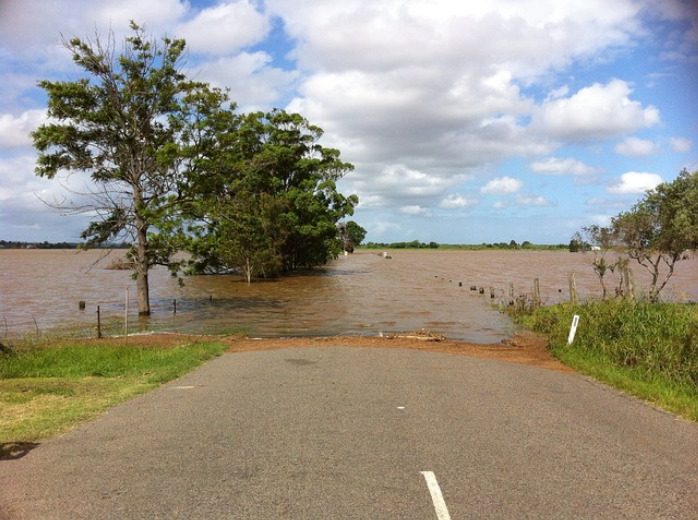
A preparedness measurement is only useful when it is tied to a specific disruption. A household may be well equipped for a short power outage yet poorly positioned for an evacuation, a water interruption, or several days without access to local stores. Define the event, its expected duration, the season, and whether the household stays home or leaves. Those boundaries prevent an inflated score based on supplies that do not match the actual problem.
Choose scenarios that reflect the household’s location and vulnerabilities. A winter outage tests heat, lighting, cooking, and cold-weather clothing; a wildfire evacuation tests transportation, documents, pet arrangements, and departure speed. A regional storm may affect water, fuel, communications, and payment systems at the same time. The purpose is not to predict one exact disaster but to expose which capabilities fail when normal services become unreliable.
Use a defined time window, such as 24 hours, 72 hours, or one week, and write down the assumptions. Does the household have running water? Can adults leave work? Is a dependent person at home during the day? Are prescription refills available? A household with an infant, disability, livestock, or a member who relies on powered medical equipment needs a different measurement than a two-adult household with few dependencies.
A common mistake is assigning a high rating because a storage area looks full. Inventory volume does not show whether food is usable, water is safely stored, batteries fit essential devices, or everyone knows where items are kept. A scenario-based baseline makes the assessment more honest and gives the household a meaningful way to compare progress. For broader context, review How to measure a household’s level of preparedness alongside the scenario that matters most locally.
Score Resources, Skills, and Access
Measure preparedness across separate capability areas rather than combining everything into one impression. A simple scorecard can rate each area from zero to four: absent, partly available, functional with limits, tested, and reliable under the chosen scenario. The scale is less important than applying the same standard to every category and recording the evidence behind each rating.
Assess water, food, medications, sanitation, lighting, power, communication, first aid, transportation, documents, and shelter conditions. Then assess skills such as turning off utilities, using a fire extinguisher, preparing food without normal cooking equipment, receiving emergency information, and caring for a dependent person. A household that owns a radio but cannot power it or identify reliable local information has equipment, not a dependable communication capability.
Access deserves its own rating because stored resources may be unreachable. Supplies in a locked shed may be useless during a nighttime evacuation; a vehicle may be available but nearly empty; important records may exist digitally but be inaccessible during an internet or power failure. Score the item according to the outcome it supports. For example, medication is not fully covered if the quantity is limited, the storage conditions are unsuitable, or no one has considered what happens when pharmacies close.
Use evidence rather than optimism. A category can qualify as functional when the needed item is present, suitable for the household, in working condition, and understood by the people who may need it. A tested category requires a demonstration, such as preparing a meal with the backup stove or locating emergency contacts without a phone’s saved address book.
Do not let abundant low-consequence items compensate for one critical gap. Extra snacks should not offset no drinking water, and camping equipment should not offset an absent evacuation route for a person with limited mobility. A weighted approach is more realistic: assign greater importance to water, medication, sanitation, safe shelter, communication, and transportation than to convenience items. That reflects how a single failure can undermine several other capabilities.
Test the Household Under Realistic Constraints
Testing converts a paper score into evidence about performance. Run a short, safe exercise that removes one normal convenience without creating danger. Turn off selected lights for an evening, prepare a meal without the usual appliance, practice receiving an alert, or pack for departure using only the designated bags. Observe time, confusion, missing items, and tasks that depend on one person.
A useful exercise includes people who might actually be present during an incident. Children may need to know how to contact a relative, older adults may need an accessible route, and guests or caregivers may not know the household’s system. A plan that works only when the most experienced adult is home should receive a lower score for resilience. The test should reveal dependency, not reward a rehearsed performance by one person.
Record measurable observations. How long did it take to find flashlights? Could the household produce safe drinking water without relying on a single appliance? Did everyone know where to meet if phone service failed? Could pets, medications, identification, and mobility aids leave with the family? These observations show whether a weakness comes from missing equipment, poor placement, unclear instructions, or a skill that has never been practiced.
Compare a tabletop discussion with a physical drill. Discussion is faster and useful for identifying decisions, contacts, and alternate routes. A drill exposes friction that conversation misses, including jammed containers, dead batteries, overloaded bags, inaccessible storage, and unrealistic departure times. Neither method replaces the other. Use discussion for complex choices and a small practical exercise for actions that must happen quickly.
Safety limits matter. Do not create a real fire, intentionally consume essential medication, shut down medically necessary equipment, or block exits. Simulate those conditions and document the response instead. A test is successful when it identifies a correction and produces a clearer next action, not when it makes the household feel confident. Revisit How to measure a household’s level of preparedness after each exercise so the score reflects observed performance rather than memory.
Turn the Score Into a Priority List
The measurement becomes valuable when it determines what to fix first. Rank weaknesses by consequence, likelihood within the chosen scenario, time required to correct them, and whether one improvement supports several needs. Water storage, sanitation, medication continuity, and a safe way to receive information often deserve attention before specialized gear because they affect ordinary daily functioning during a disruption.
Separate urgent corrections from gradual upgrades. An urgent correction might be moving supplies away from flood exposure, replacing expired batteries, documenting medication information, or identifying an accessible exit. A gradual upgrade might be adding longer-duration food variety, improving insulation, or purchasing a secondary charging method. This distinction prevents a limited budget from being consumed by impressive but low-impact purchases.
Use a compact action record for every weak category:
Gap: State the failed capability, not merely the missing item.
Consequence: Describe what becomes difficult or unsafe if the gap remains.
Correction: Name the smallest credible action that improves the outcome.
Verification: Set a date or test that proves the correction works.
For example, “no backup power” is too broad. A more useful finding might be “the household cannot keep phones charged during a 48-hour outage.” The correction could involve a charged power bank, compatible cables stored together, and a recharging method that does not depend on the same failed service. Verification means using the setup during a planned test and confirming that everyone knows where it is.
Scores should be reviewed after household changes, seasonal shifts, relocation, new prescriptions, vehicle changes, or a change in local hazards. A high number can mislead if it is not current, while a lower score with documented improvements may represent stronger readiness than an older, untested rating. Track both the category score and the date of its last verification.
Measurement should guide spending and practice, not become a competition. The strongest result is a household that knows its limits, has addressed high-consequence failures, and can demonstrate essential actions without relying on one fragile assumption. A focused reassessment every few months is usually more useful than a large inventory review performed only once.
Frequently Asked Questions
What is the simplest way to measure household readiness?
Choose one realistic scenario, set a duration, score essential capabilities from absent to tested, and verify the lowest-scoring areas with a safe exercise.
Should preparedness be measured by the number of supplies owned?
No. Supplies count only when they are suitable, accessible, maintained, and usable by the people who may depend on them.
Which preparedness categories should receive the highest priority?
Prioritize safe water, sanitation, medications, shelter, communication, transportation, and needs created by disability, age, pets, or medical equipment.
How often should a household reassess its preparedness?
Review the score after major household or seasonal changes and repeat practical checks periodically so batteries, documents, medications, and skills remain current.
What makes a preparedness score unreliable?
Unclear scenarios, untested equipment, inaccessible storage, dependence on one person, and allowing surplus convenience items to hide a critical gap can all distort the result.
Conclusion
A household’s readiness is best measured by demonstrated capability, not by the size of its storage area. Define the disruption and duration first, then examine resources, skills, access, dependencies, and communication as separate categories. Give greater weight to failures that could affect water, medication, sanitation, shelter, or safe movement, and test assumptions with small, controlled exercises. Record what failed, correct the highest-consequence gap, and verify the change rather than treating a purchase as proof of readiness. Reassess when the household, season, vehicle, health needs, or local risks change. The resulting score will be less dramatic than a simple inventory count, but it will provide a far more useful picture of what the household can actually do when ordinary services are interrupted.
The Readiness Ladder: From Awareness to Reliable Action
Household readiness improves in stages because capability develops more slowly than purchasing. A useful progression begins with awareness, advances through basic continuity, adds resilience, and reaches dependable operation when the household can perform under pressure. The stages are not rigid certifications; they are a way to identify the next practical gap without treating preparedness as an all-or-nothing project.
At the awareness level, residents know which disruptions are plausible in their area and which needs are most urgent. They may have noticed flood risk, winter outages, wildfire smoke, transportation interruptions, or extended utility failures, but they have not yet organized a response. The next level appears when the household can remain functional for a short period with drinking water, simple food, lighting, sanitation supplies, basic first aid, and a way to receive information. The supplies matter because they reduce forced travel and rushed decisions during the first hours of an incident.
Higher readiness depends on redundancy and coordination. A family that owns a flashlight but has no spare batteries has less capability than a family with modest lighting stored where everyone can find it. A household that has a written contact plan, backup charging, and an agreed meeting location can coordinate more reliably than one that owns expensive equipment but has never discussed who checks on children, pets, or relatives.
Weak assumptions often distort the ladder. A full pantry is not the same as usable food if nobody knows how to prepare it without normal cooking equipment. A generator is not a complete solution if its fuel, ventilation, transfer method, and operating instructions have not been addressed. The most meaningful sign of progress is reduced dependence on improvisation. Use Preparedness levels that show improving household readiness as a review lens: ask what the household can actually do, not what it owns.
Household Capabilities That Mark Each Level
Readiness levels are best measured by capabilities that remain useful during a specific disruption. Basic capability means the household can meet immediate needs when stores, taps, internet service, or transportation are temporarily unavailable. That usually includes stored water, foods that household members will eat, a manual can opener, sanitation materials, prescription planning, lighting, and a way to obtain reliable alerts. These are practical foundations because they address predictable dependencies rather than dramatic but less likely scenarios.
Intermediate readiness adds household-specific planning. Residents identify who may need extra help, how medications are managed, where utility shutoffs are located, and how important records can be reached if a phone or computer is unavailable. A renter may prioritize evacuation instructions and portable supplies, while a homeowner may also address water shutoffs, fire extinguishers, backup heat, or sump-pump contingencies. The better choice is not the most elaborate one; it is the set of measures that matches the building, climate, health needs, and likely warning time.
Advanced readiness shows up as flexibility. The household can shelter in place for a longer interruption, leave with essential items, communicate through more than one channel, and adapt when the original plan fails. That may involve a small go-bag for each person, alternate routes, cash in appropriate denominations, spare eyeglasses, pet carriers, and a paper list of contacts. These additions are valuable when a disruption changes faster than expected, but they also create maintenance work and storage demands.
A compact assessment can separate ownership from performance:
Access: Can every adult locate critical supplies in darkness or during a hurried departure?
Usability: Can someone operate the lighting, water treatment, cooking, or communication equipment safely?
Coverage: Do the arrangements account for infants, older adults, disabilities, pets, and prescription needs?
Recovery: Can the household document damage, replace essentials, and resume routine responsibilities?
For example, a household may move from basic to intermediate readiness by testing a no-power dinner, locating the water shutoff, and writing down two out-of-area contacts. That may deliver more real-world value than buying another specialized device. The relevant comparison is not beginner versus expert identity; it is untested capacity versus demonstrated capacity.
Testing Supplies, Skills, and Communication
Testing is the clearest evidence that readiness is improving because it exposes friction before an actual disruption does. A household can conduct a short, controlled exercise without creating danger: turn off selected conveniences for an evening, prepare food without the usual appliance, use stored lighting, and practice receiving information from a backup source. The purpose is not to simulate catastrophe. It is to discover missing adapters, dead batteries, inaccessible supplies, confusing instructions, or disagreements about responsibilities.
Supplies should be checked for condition and fit. Rotate foods according to normal household use rather than buying unfamiliar products that may be rejected or wasted. Inspect water containers for leaks, confirm that first-aid items have not been depleted, and verify that batteries match the equipment stored with them. Medications require individual attention; a general stockpile cannot replace advice from a pharmacist or clinician about refills, storage, or travel needs.
Communication deserves its own test because phones can fail for several different reasons. A household may lose power, cellular service, internet access, or simply the ability to charge devices. Write down key numbers, agree on a meeting location, and decide how a person will report status if separated. Children and guests should receive simple instructions rather than being expected to infer the plan. If a message depends on one person remembering every detail, the system is fragile.
Consider a winter outage lasting through one night. A low-readiness household searches for candles, discovers that food requires an electric stove, and debates whether to drive in unsafe conditions. A better-prepared household retrieves headlamps, uses shelf-stable food, protects pipes according to the property’s needs, checks on vulnerable neighbors where appropriate, and monitors official information. Neither household can control the outage, but the second has reduced exposure to preventable mistakes.
After each exercise, record what failed and fix the smallest high-consequence problem first. Do not treat an elaborate drill as automatically superior to a simple one. A five-minute test that reveals inaccessible water may be more useful than a long scenario that nobody repeats. The working sign is not perfect execution; it is a shorter path from problem discovery to correction.
Turning Weak Points Into the Next Readiness Gain
The next level should be chosen by consequence, frequency, and time available for correction. Start with failures that could threaten health or prevent safe movement: inadequate drinking water, no essential medication plan, unsafe heating or cooking, missing evacuation information, and inability to contact household members. Financial limits do not make progress impossible. They make sequencing more important. A modest collection of usable essentials, maintained consistently, is generally more dependable than a large assortment of neglected equipment.
Use a simple improvement cycle. First, list likely disruptions and the household’s first three actions for each. Second, compare those actions with current supplies, knowledge, and physical limitations. Third, correct one gap and test it. Fourth, record an owner and review date. This process turns a broad ambition into observable milestones. A family might first secure drinking water and lighting, then address food preparation, then add communication redundancy, rather than attempting every category in one weekend.
Common failure modes include buying for an imagined scenario while ignoring ordinary outages, storing supplies where heat or moisture damages them, and assigning all knowledge to the most enthusiastic household member. Another mistake is copying a generic list without considering allergies, mobility, pets, work schedules, or apartment rules. A plan that works only when everyone is together is incomplete; include instructions for separation and delayed communication.
Review readiness after moves, new medical needs, seasonal weather changes, vehicle changes, and major household additions. Label storage clearly, keep a paper inventory, and replace what was consumed after a test. If a tool is unsafe, confusing, or legally restricted in the place where it will be used, choose a safer alternative or obtain qualified instruction rather than forcing it into the plan.
Readers comparing Preparedness levels that show improving household readiness should look for evidence of improvement: fewer unanswered questions, faster access to essentials, more people able to perform basic tasks, and better recovery after a disruption. Readiness is not measured by confidence alone. It is demonstrated when ordinary people can carry out the next sensible action with limited power, information, time, or outside assistance.
For location-specific hazards, alert systems, evacuation instructions, and public-health guidance, consult your local emergency management office and relevant government agencies. Their information should take precedence over generalized household lists, especially when an incident creates changing instructions.
Frequently Asked Questions
What is the first sign that a household is becoming more prepared?
The first clear sign is that residents can meet immediate needs without searching or making rushed purchases. Supplies are accessible, responsibilities are discussed, and basic actions have been tested.
Are preparedness levels based on the amount of equipment a family owns?
No. Capability, access, maintenance, and safe use matter more than equipment volume. A smaller set of familiar, maintained items may outperform a larger untested collection.
How often should household readiness be reviewed?
Review it after major household or seasonal changes and after every exercise or real disruption. A brief quarterly check can catch expired food, depleted batteries, changed contacts, and new access needs.
What should a household prioritize with a limited budget?
Prioritize drinking water, ordinary shelf-stable food, lighting, sanitation, essential medications, reliable information, and a communication plan. Add specialized equipment only after these basics are usable and maintained.
Can apartment residents reach advanced readiness?
Yes, although the approach differs. Portable water and food, compact lighting, evacuation information, neighbor coordination, document access, and building-specific fire and utility knowledge may matter more than large fuel-powered equipment.
Conclusion
Improving household readiness is visible in capability, not in the size of a storage area. A household advances when it can identify likely disruptions, cover immediate needs, share responsibilities, communicate through interruptions, and recover from a test or real event with fewer surprises. Prioritize the gaps with the highest consequence: water, essential health needs, safe light and food preparation, information, and movement. Then test one improvement under ordinary conditions and correct what fails. Keep supplies familiar, accessible, and appropriate for the people who will use them. Over time, repeated small reviews create a stronger result than occasional large purchases because they turn preparedness from a collection of objects into a functioning household system.
Delayed preparation usually involves work that is mundane, distributed across several rooms, or difficult to measure. Buying a flashlight feels complete; checking its batteries, placing it where everyone can find it, and using it in a power outage are separate tasks. The same pattern applies to food, water, documents, medications, and household equipment. People often mistake possession for readiness.
Administrative work is especially easy to postpone because it has no visible payoff on an ordinary day. Updating an emergency contact sheet, recording insurance information, or locating the main water shutoff may take less than an hour, but each requires decisions and cooperation. A household with children, older adults, pets, mobility limitations, or prescription needs has more dependencies to account for than a single adult living alone.
A useful way to judge a delayed task is to ask what happens if it remains unfinished during a weekend outage. If the answer involves guessing, driving somewhere, searching through boxes, relying on a charged phone, or waiting for a neighbor, the task deserves a higher place on the list. Before disaster: the preparation tasks people delay is less about buying everything at once than removing these points of uncertainty.
Another misconception is that preparation must begin with a large, expensive purchase. A costly generator does not compensate for unknown fuel requirements, unsafe placement, missing extension cords, or a lack of maintenance. A modest battery lantern that is tested twice a year may be more useful during the first night. The tradeoff is simple: prioritize reliable functions before adding capacity or specialized equipment.
The First Tasks to Finish
Water, basic food, light, and medication access should be addressed before specialized gear because they affect ordinary household functioning immediately. Water storage needs a clean location, containers that are suitable for the purpose, and a rotation or inspection routine. Food should match what the household actually eats and can prepare without normal appliances. Shelf-stable foods that require several cups of water or long cooking may be a poor choice during an outage.
Medication planning requires more care than simply placing bottles in a kit. Record prescription names, doses, prescribing offices, allergies, and pharmacy details, then ask a pharmacist or clinician about appropriate backup arrangements. Do not alter dosing or stockpile medicine in ways that conflict with professional instructions. A printed list is useful when a phone is unavailable, but it must be updated whenever treatment changes.
Lighting and temperature deserve equal attention. Put working lights in sleeping areas, near exits, and where electrical panels or shutoffs can be reached safely. Keep spare batteries matched to the devices that use them rather than collecting loose cells with unknown charge. During cold weather, plan for layered clothing and a safe room arrangement; during heat, identify drinking water, shade, ventilation options, and anyone who may need closer observation.
Consider a household that has a pantry, bottled water, and several flashlights but keeps them in a locked basement. The supplies exist, yet a nighttime flood or damaged stairway may make them inaccessible. Moving a smaller working set to a reachable location can improve performance more than buying another case of supplies. Use this compact priority list:
Water and foods that require little preparation.
Prescription information, necessary medications, and basic first-aid items.
Light, phone charging, and a battery or hand-powered radio if appropriate.
Warmth or cooling measures suited to the season.
Pet food, infant supplies, mobility aids, and other routine necessities.
Check whether each item is accessible, usable without special knowledge, and replaceable within the household budget. The goal is not theoretical completeness. It is a dependable first layer that buys time while larger problems are assessed.
Household Information and Communication Gaps
Contact information and household instructions often fail because they exist only in one person’s phone. Create a printed sheet with names, phone numbers, addresses, medical notes that the household chooses to share, school or care contacts, and an out-of-area contact when that arrangement makes sense. Store copies in more than one practical location, and protect sensitive information from unnecessary exposure.
Communication plans need decisions, not just numbers. Agree on where household members should meet if they cannot return home, who collects children, how pets are handled, and which messages should be sent first. A plan that says “we will call each other” is weak if the network is congested, phones lose power, or one person assumes another has already acted. Text messaging, voice calls, official alerts, and in-person contact may each work differently under pressure.
Important records are another commonly delayed task. Gather copies or secure digital backups of identification, insurance policies, property information, prescriptions, vehicle details, and financial account instructions. A backup should be accessible without the original device and protected with sensible privacy controls. Keep the collection focused; copying every household paper creates clutter and makes urgent information harder to find.
Run a short scenario rather than merely discussing the plan. Imagine that a storm warning arrives while one adult is at work, a child is at school, and the home has no internet. Who receives the first message? Where is the meeting point? Which document proves insurance coverage? Where are leashes, chargers, and medications? The awkward answers reveal more than a polished conversation.
Use Before disaster: the preparation tasks people delay as a prompt to include people who are often left out of planning. An older relative may need transportation rather than extra food. A tenant may not control building utilities. A person with hearing, vision, cognitive, or mobility needs may require a different alert method. The best arrangement reflects actual constraints instead of assuming every household member can improvise.
Testing, Maintenance, and Realistic Tradeoffs
Testing converts stored items into working capability. Turn on every lantern, inspect charging cables, check smoke and carbon monoxide alarms according to manufacturer instructions, and confirm that stored food is still acceptable and familiar. Replace damaged containers, expired batteries, and supplies that have been exposed to heat or moisture. A written inventory is helpful only if someone uses it during inspections.
Utility knowledge requires caution. Locate shutoffs for water and electricity and learn the relevant household procedure from the property owner, utility, or qualified professional. Gas service should not be manipulated casually; follow local guidance and avoid creating a hazard. Marking a valve is useful only when the marking is accurate and the person using it understands when action is appropriate.
Backup power presents a clear comparison between convenience and risk. A small power bank can keep phones available for a limited period, while a generator may support selected appliances but introduces fuel storage, carbon-monoxide, electrical, and weather-related concerns. Never operate fuel-burning equipment indoors, in a garage, or near openings where exhaust can enter. Read the manufacturer’s instructions and determine what the equipment can safely support before an outage.
Maintenance also exposes unrealistic assumptions. A freezer full of food may be valuable but cannot replace drinking water. A solar charger may perform poorly in heavy cloud or behind a window. A paper map is useful, but it does not show every temporary closure. A first-aid kit cannot substitute for medical training. These limitations do not make the items useless; they define where a backup is dependable and where another option is needed.
Schedule small checks rather than a single annual scramble. Link inspections to a recurring household event, such as the start of a season or a routine calendar reminder. Ask a second adult to locate and use the equipment without coaching. If the person cannot find the supplies, interpret the result as a layout or labeling failure, not a personal failure. Before disaster: the preparation tasks people delay should end in systems that work when the usual organizer is absent.
A Simple Order for Completing the Work
The fastest way to reduce delay is to divide the work into visible, finishable actions. Begin with a short household risk conversation: likely hazards, people and animals needing assistance, likely power or water interruptions, and places members may be separated. Then complete the tasks that protect the next day before researching advanced scenarios.
Use a four-pass process. In the first pass, gather immediate necessities and place them where they can be reached. In the second, write contacts, medication information, meeting instructions, and essential records. In the third, inspect equipment and learn safety procedures. In the fourth, run a brief test under realistic conditions, such as finding supplies in darkness or sending a message with the internet unavailable.
Budget and storage space may require choices. Renters may favor portable containers, printed instructions, and building-specific information over permanent modifications. People with limited funds can build gradually, choosing ordinary foods, refillable water containers, spare lighting, and document copies before purchasing expensive equipment. Households with more resources still need prioritization; abundance can hide disorganization.
Signs that the arrangement is working include every adult knowing where core supplies are, food being usable without unfamiliar preparation, contact details remaining current, and equipment passing a real test. Signs of failure include dead batteries, unlabeled containers, a single point of access, expired medication information, or instructions that depend on one person’s memory. Correct those defects before adding another category of gear.
Set one concrete next action for today and one inspection date. For example, gather water and light in one accessible location today, then schedule a document and communication review next month. Small completed tasks reduce the backlog more effectively than repeated research sessions that never change the household’s physical or informational readiness.
For hazard-specific instructions, consult official local emergency-management notices, utility guidance, public-health agencies, and manufacturer manuals for equipment you operate. Those sources can account for regional evacuation rules, weather conditions, building systems, medication questions, and safe use limits that a general article cannot determine.
Frequently Asked Questions
Which delayed task should a household do first?
Secure accessible drinking water, basic food, necessary medication information, and working light first. These needs affect the first hours of an outage and are often difficult to replace after stores close.
Why are printed records still useful?
Phones can lose power, service, or access to stored accounts. A current, privacy-conscious paper record can provide contacts, prescriptions, insurance details, and instructions when digital tools are unavailable.
How often should stored supplies be checked?
Use a recurring schedule suited to the item and the manufacturer’s instructions. Inspect batteries, chargers, food, water containers, medications, and seasonal clothing whenever conditions or household needs change.
Should renters learn utility shutoffs?
Renters should identify which controls they may safely use and obtain building-specific instructions from the landlord or property manager. Do not operate gas or electrical equipment without understanding the hazards and applicable guidance.
Is expensive equipment necessary for useful preparation?
No. Accessible water, familiar food, working lights, printed information, and a tested communication arrangement often provide more immediate value than specialized equipment that is difficult to maintain or use safely.
Conclusion
Delayed preparation becomes costly when a task depends on open stores, reliable power, clear roads, or one person’s memory. Finish the basic layer first: accessible water, familiar food, medication information, lighting, seasonal protection, household contacts, and essential records. Then test the arrangement rather than assuming that purchased items will work. Pay special attention to accessibility, pets, renters, children, and anyone who needs transportation or regular treatment. Expensive equipment can be useful, but only after its operating limits and safety requirements are understood. Choose one physical task and one information task, complete both, and put the next inspection on the calendar. Readiness grows through maintained systems, not through an ever-expanding pile of supplies.
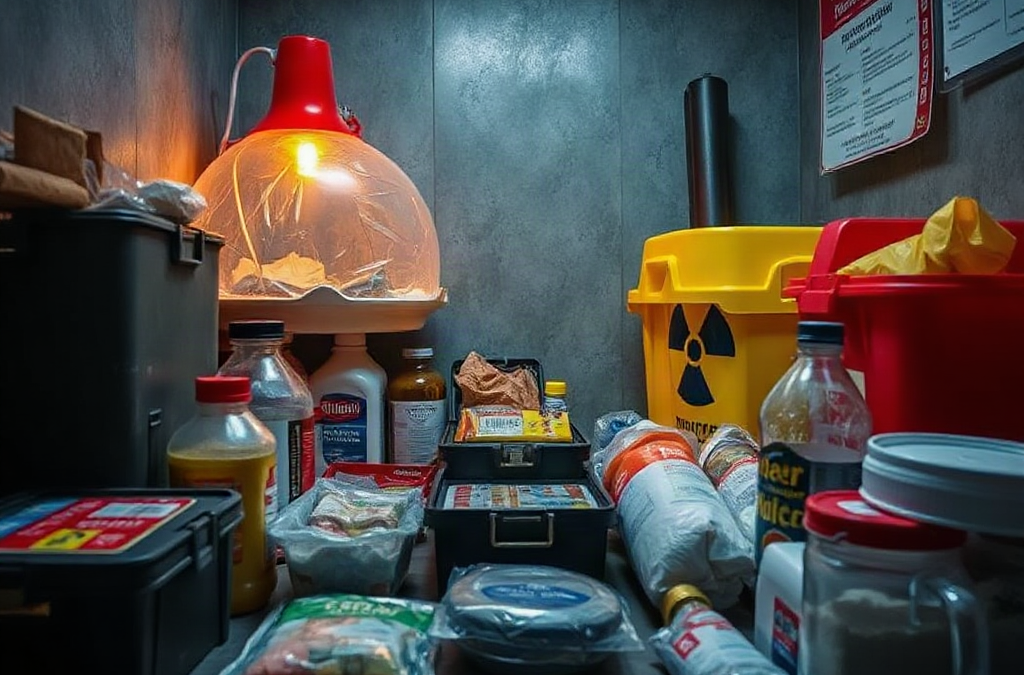
A useful fallout shelter kit supports three immediate needs: staying inside a well-shielded location, meeting basic bodily needs, and receiving reliable instructions. The supplies matter because people may need to remain sheltered while outdoor radiation levels decline and authorities assess roads, buildings, utilities, and food or water safety. A kit is not a substitute for a suitable shelter. A basement, underground area, or central room with substantial walls and few windows generally offers better protection than a vehicle, porch, or room beside exterior glass.
Radiation protection depends on time, distance, and shielding. A kit improves the first factor by reducing the urge to leave for water, food, medication, or information. Dense materials such as concrete, brick, and earth provide more shielding than thin interior partitions. A central basement corner may therefore be preferable to a finished room above ground, although flooding, structural damage, fire, and access to ventilation must be considered.
The most common planning error is buying specialized equipment before solving ordinary logistical problems. A radiation meter may provide information, but it does not create shielding or replace official instructions. Similarly, a disposable mask may limit inhalation of some dust during a brief movement, yet it cannot make an unsafe outdoor trip safe. Prioritize items that remain useful during a power outage and that household members can operate without extensive training.
Use the Nuclear preparedness kit items for fallout sheltering as a household inventory, then adapt quantities to residents, pets, disabilities, climate, and available shelter space. Store the kit where it can be reached quickly, but avoid placing it in a garage or shed if the intended shelter is elsewhere.
Water, Food, and Sanitation Supplies
Water deserves the first storage decision because thirst, medication needs, food preparation, and hygiene quickly compete for the same supply. Keep commercially bottled water or filled, food-safe containers in the shelter area when possible. Containers should be sealed, protected from heat and chemicals, and labeled with storage or replacement dates. A filter can be useful for later water treatment, but it should not be treated as proof that an unknown source is safe from radioactive contamination; filtration capabilities vary, and some contaminants require different treatment.
Choose foods that are shelf-stable, familiar, and ready to eat or simple to prepare. Canned fish, meat, beans, fruit, vegetables, nut butters, crackers, cereal, shelf-stable milk, and energy-dense snack foods can work when rotated through normal meals. Include a manual can opener, disposable or washable utensils, and a small cooking option only if its use is safe and permitted in the shelter. Never burn fuel, charcoal, or candles in an enclosed room because carbon monoxide and fire can create a faster danger than hunger.
Sanitation supplies often determine whether a shelter remains usable. Pack toilet paper, heavy-duty bags, smaller waste bags, absorbent material, soap, hand sanitizer, disinfecting wipes, menstrual products, diapers, gloves, and a sealable container for contaminated or unpleasant waste. A lined bucket with a secure lid can serve as an emergency toilet, but it should be placed away from food and drinking water. Do not assume a functioning toilet, running water, or working sewage system will be available.
A compact priority list is more useful than an oversized shopping cart:
Sealed drinking water and a method for measuring household use.
Foods that require no refrigeration, plus a manual opener.
Toilet and hand-cleaning supplies, including bags and gloves.
Special foods, infant supplies, pet food, and prescription needs.
Food variety is a worthwhile tradeoff, but extra packaging can consume shelter space. Choose items residents already tolerate, especially if stress or limited ventilation may make strong odors, cooking smoke, or unfamiliar textures difficult.
Medical, Light, and Communication Equipment
Medical supplies should keep routine conditions from forcing an unnecessary trip outside. Store prescription medicines according to pharmacy guidance, along with a written medication list, basic first-aid materials, spare eyeglasses, hearing-aid batteries, and commonly used personal-care products. Include bandages, gauze, adhesive tape, antiseptic supplies, tweezers, disposable gloves, and any medically necessary devices. A first-aid kit will not treat radiation injury, but it can address ordinary cuts, blisters, headaches, or minor burns while professional help is limited.
Lighting must be dependable without creating combustion hazards. Battery lanterns and flashlights are preferable to open flames in a crowded enclosed shelter. Pack spare batteries in their original packaging or another way that prevents contact between terminals. Headlamps can free both hands for sanitation or medical tasks, while a small lantern provides shared room lighting. Test switches and batteries periodically; an untested flashlight is a container, not a working tool.
Information is another practical supply. A battery-powered or hand-crank radio can receive public instructions when internet and cellular service are unavailable. Add charging cables, a backup power bank kept charged, paper, pencils, and a battery-operated clock. Write down household contacts, emergency meeting information, medication details, and local authorities’ contact channels. Do not rely exclusively on social media posts or forwarded messages, which may omit shelter orders, water advisories, or changing access restrictions.
Consider a smoke alarm, fire extinguisher, and carbon-monoxide alarm if the shelter space and building layout make them appropriate. These tools address hazards created by damaged utilities or improvised heating. The failure mode to avoid is confusing measurement with protection: a dosimeter or radiation detector may help interpret official information, but an inexpensive unverified device can create false confidence. Choose one only if you understand its limits, battery requirements, and reading units.
The kit inventory should be checked against real household conditions. Someone who uses refrigerated medicine, mobility equipment, oxygen, or powered communication devices needs a power and care plan, not merely extra canned food.
Shelter Placement, Clothing, and Contamination Control
Fallout sheltering works best when supplies are already near the most protected part of the building. Moving through a contaminated outdoor area to retrieve a kit defeats part of its purpose. Place water, food, sanitation materials, and medical supplies inside or immediately beside the selected shelter room, while keeping exits accessible. Avoid blocking doors, vents, stairways, or equipment needed for safe building evacuation if fire or structural damage occurs.
Clothing and cleaning items are intended for limited contamination control, not radiation blocking. Keep sturdy shoes, work gloves, spare clothing, a washable outer layer, soap, towels, and sealable bags available. If someone has been outdoors after fallout arrived, official public-health guidance should determine whether and how to remove an outer layer, bag it, and wash exposed skin. Vigorous scrubbing can irritate skin, and bleach or household chemicals should not be applied to the body.
Plastic sheeting and duct tape are frequently overinterpreted. They may help reduce drafts or keep dust away from selected surfaces, but sealing every opening can interfere with safe ventilation and produce heat or indoor-air problems. Do not cover vents or operate fuel-burning devices in an attempt to create a sealed room. A structurally sound, shielded interior location is usually more valuable than an improvised plastic enclosure.
A realistic scenario illustrates the tradeoff: a family living in a two-story house may choose the basement, but only after checking flood risk, stair access, stored chemicals, and the ability to hear a radio. A household in an apartment may have no basement and instead use an interior room or designated building shelter, adding water containers and sanitation supplies because the building’s facilities could be inaccessible. The best location is not the one with the largest kit; it is the one that combines shielding, safe access, ventilation, and enough room for occupants.
Building and Maintaining a Practical Kit
Build the kit in layers rather than attempting to purchase everything at once. The first layer covers water, ready-to-eat food, medicines, sanitation, lighting, and official information. The second adds comfort and continuity items such as blankets, spare clothing, books or quiet activities, pet supplies, and hygiene products. A third layer can address specialized equipment, but only after the basic supplies are usable and stored in the right location.
Quantity decisions should reflect the number of people and the likely duration of sheltering instructions, not an arbitrary container size. Keep a written inventory showing expiration dates, battery types, medicine replacement dates, and the location of backup items. Rotate foods into ordinary meals and replace them with fresh stock. Check water containers for leaks, inspect bags and gloves for deterioration, and test radios and lights on a schedule that fits household routines.
Practice the movement that matters: reaching the shelter room, bringing only nearby essentials, accounting for children and pets, and turning on the radio. A short household drill may reveal that the kit is too heavy, the flashlight batteries are missing, or the chosen room cannot accommodate a wheelchair. Those findings are more valuable than adding another specialty product. Keep printed instructions simple enough for a guest or older child to follow.
Do not leave the shelter because rumors suggest the danger has passed. Follow instructions from local emergency management, public-health agencies, and other official channels. If authorities direct evacuation, use the route and timing they provide rather than improvising. Conversely, do not remain in a damaged, burning, flooding, or carbon-monoxide-threatened space merely because it offers shielding; immediate building hazards can override the shelter plan.
Review fallout sheltering supplies whenever the household changes, the shelter room changes, or seasonal conditions alter heating, cooling, and water needs. A modest, maintained kit in a reachable location is more dependable than a large collection stored somewhere inaccessible.
Frequently Asked Questions
How much water should a fallout shelter kit contain?
Store as much sealed drinking water as the household can safely maintain, with additional consideration for medicines, children, pets, and sanitation. Official instructions should guide longer-term use.
Do I need a radiation suit or gas mask?
These items are not substitutes for indoor shielding. Ordinary clothing, careful decontamination, and official directions are generally more practical for household planning than relying on unverified protective gear.
What foods work best inside a fallout shelter?
Use familiar shelf-stable foods that need little or no cooking, such as canned meals, beans, fruit, crackers, nut butter, and shelf-stable milk, alongside a manual can opener.
Should windows and vents be sealed with plastic?
Plastic may limit dust on selected surfaces, but fully sealing a room can create ventilation and indoor-air hazards. Do not block required vents or use fuel-burning equipment indoors.
When can people leave the shelter?
Leave when official authorities provide instructions, or immediately if the building has an urgent threat such as fire, collapse, flooding, or carbon monoxide. Do not rely on rumor or visual conditions alone.
Further Reading
Authoritative Sources
Nuclear Explosion ready.gov
Provides federal guidance on getting inside, staying inside, and following official information after a nuclear explosion
Radiation Emergencies cdc.gov
Explains public-health actions, contamination concerns, and protective steps during radiation emergencies
Radiation Protection epa.gov
Offers background on radiation protection and environmental response information
National Household Preparedness Guidance fema.gov
Helps households organize supplies, communication plans, and preparedness actions across hazards
Conclusion
A fallout shelter kit should reduce the reasons to leave a protected location, not encourage risky improvisation. Put sealed water, simple food, sanitation supplies, medicines, lighting, and a reliable radio where occupants can reach them quickly. Then improve the plan with clothing, waste containment, pet or infant supplies, and household-specific medical or power needs. The shelter itself remains the primary protective measure: choose the most shielded safe area available, keep it accessible, and avoid creating fire or ventilation hazards while trying to seal it. Rotate consumables, test equipment, and rehearse the move indoors. After an incident, follow official instructions and treat urgent structural or air-quality dangers seriously. A maintained, location-specific kit gives the household practical staying power while better information becomes available.
The most valuable feature of a home shelter is the material between people and outdoor fallout. Fallout consists of radioactive particles that may settle on roofs, streets, vehicles, clothing, and exposed surfaces after a nuclear detonation. A basement, underground area, or central room surrounded by several walls generally offers more shielding than a perimeter room, vehicle, garage, or lightweight shed.
Concrete, brick, earth, and dense building materials reduce radiation reaching occupants. Distance from exterior walls and the roof also matters because deposited particles outside the building are a major source of exposure. A basement is often useful, but it is not automatically safe if it floods, contains a fuel-burning appliance, or has poor access for a person with mobility limitations. A windowless interior room on a lower floor may be the better option in a particular building.
Before an emergency, inspect two possible shelter locations rather than choosing one based only on convenience. Note stair access, ventilation controls, plumbing hazards, sleeping space, and whether everyone can reach the area quickly. Store a few supplies there, but avoid blocking exits or placing fuel, propane cylinders, or chemicals in the shelter.
A common mistake is treating a car as a dependable radiation shelter. A vehicle can provide temporary protection while someone is traveling, but its thin metal and windows offer limited shielding compared with a substantial building. Another weak assumption is that opening a window for comfort is harmless. During official shelter guidance, outdoor air and settled particles should be managed according to instructions from emergency authorities.
For a household that lives in a high-rise, the best location may be an interior corridor or central room away from windows, often on a lower or middle floor rather than directly beneath the roof. Residents should identify stair routes and avoid elevators if power or building systems become unreliable. The goal is not to create a perfect bunker; it is to reach the strongest practical protection quickly and remain there.
Supplies That Keep A Household Indoors
Home supplies should support sheltering, not encourage unnecessary movement. Water, ready-to-eat food, prescription medicines, sanitation items, lighting, communications equipment, and basic first aid address the problems that make people leave too soon. A stockpile is useful only if it is accessible, rotated, and matched to the household’s actual needs.
Store drinking water in sealed, food-grade containers and include water for medicines, simple hygiene, and pets where applicable. Shelf-stable foods should require little or no cooking: canned meals, nut butters, crackers, dried fruit, cereal, and commercially packaged foods can be easier to use than items that depend on refrigeration or a working stove. Include a manual can opener. Fuel-burning stoves, grills, and generators must never be operated indoors because carbon monoxide can accumulate without an obvious warning.
Medicines deserve a separate review. Keep an up-to-date list of prescriptions, doses, allergies, and essential medical equipment. A person who relies on powered oxygen, refrigerated medication, a CPAP device, or mobility equipment needs a specific continuity plan. Batteries, charging options, backup power, and safe operating instructions may matter more than adding another general-purpose gadget.
Useful shelter supplies include:
Battery-powered or hand-crank radio, spare batteries, and a phone charging method.
Flashlights, glow sticks, work gloves, masks for nuisance dust, and closed-toe footwear.
Toilet bags, absorbent material, soap, disinfecting supplies, and personal hygiene products.
Infant supplies, pet food, eyeglasses, hearing-aid batteries, and comfort items.
Paper copies of contact information, medications, identification, and local emergency instructions.
Food storage is not a substitute for shelter quality. A large pantry in a room with windows may be less useful during the first phase than a modest kit already placed in an interior space. Review the setup every few months: replace expired medicines, test radios and lights, inspect water containers, and confirm that stored items have not been moved behind furniture.
Readers comparing this topic with broader Nuclear preparedness priorities for sheltering at home should separate immediate shelter supplies from long-duration household preparedness. The first supports hours or days of indoor protection; the second may include financial records, repairs, transportation, and rebuilding needs.
Information, Timing, And Household Decisions
Reliable information determines whether a household shelters correctly, relocates later, or exposes itself through unnecessary travel. Keep at least one communication method that does not depend entirely on local cellular service. A battery radio, official alert system, and written contact plan provide different paths to instructions if one channel fails.
Authorities may issue changing guidance about sheltering, evacuation, road restrictions, water safety, schools, and medical services. A rumor shared by text or social media should not override official emergency management, public health, or law-enforcement instructions. Assign one person to monitor updates while another manages children, pets, or medical needs. That division reduces the chance that everyone leaves the shelter to look for information.
Timing creates a difficult tradeoff. Getting indoors immediately is usually more valuable than stopping to collect extra possessions. Once inside, people should move away from windows and exterior walls, close openings, and follow instructions about ventilation systems. Leaving later may be appropriate if authorities order evacuation, the building is unsafe, or a medical emergency cannot be managed indoors. The decision should be based on official direction and the actual condition of the building, not on impatience with the wait.
A household decision card can reduce arguments under stress. Write down the primary shelter, alternate shelter, meeting method, medication needs, pet plan, and the conditions that would trigger a call to emergency services. Include instructions for guests who may not know the building layout. A short, readable plan is more useful than a long document nobody can find.
Consider a family separated at work and school. The safest plan may be for each person to shelter at the location they can reach most quickly rather than attempting a cross-town reunion. Trying to drive across a contaminated area can create traffic exposure and interfere with emergency operations. Families can reconnect when officials indicate that movement is permitted. This principle also applies to Nuclear preparedness priorities for sheltering at home: communication and prearranged choices often outperform improvised travel.
Decontamination, Health Needs, And Common Errors
Fallout on clothing or skin should be handled calmly and according to official instructions. If someone has been outdoors and can safely remove an outer layer, placing contaminated clothing in a sealed bag away from living areas may reduce the spread of particles. Washing exposed skin and hair with soap and water can help remove material; harsh scrubbing, bleach on skin, or abrasive products may cause injury and should be avoided.
Do not confuse contamination with radiation exposure. Removing particles from the body addresses contamination on surfaces, while time, distance, and shielding reduce exposure from external radiation. A person who was near a detonation or has serious injuries needs emergency medical guidance even if washing is possible. Radiation emergencies can involve burns, trauma, and ordinary medical crises at the same time.
Potassium iodide is another area where weak assumptions cause harm. It is not a general anti-radiation medicine and does not protect the whole body from fallout. It may be recommended by public health authorities in specific circumstances involving radioactive iodine, but taking it without appropriate direction can create medical risks and should not replace sheltering.
Food and water decisions also require restraint. Keep containers closed, avoid visibly contaminated outdoor food, and wait for local instructions about tap water, wells, gardens, and animals. Boiling water does not remove radioactive materials, so it should not be treated as a universal solution. Use stored water until officials explain whether the local supply is safe.
Common failures include opening doors repeatedly, shaking dusty clothing indoors, ventilating with outdoor air without guidance, using a generator in a garage, and leaving because the first few hours feel uneventful. A practical check is to ask whether each action reduces exposure, preserves breathable air, protects health, or follows verified instructions. If it does none of those things, postpone it.
A Practical Home Priorities Sequence
Priorities work best as a sequence because the first minutes are different from the following hours. The sequence below is not a substitute for local emergency instructions, but it gives a household a sensible order for preparation and response.
Choose protection. Identify the strongest reachable room, an alternate location, and safe access routes. Keep windows, doors, and vents in mind.
Stage indoor necessities. Place water, food, medicine information, lighting, radio, sanitation supplies, and chargers where they can be reached without crossing the home repeatedly.
Set communication rules. Select official information sources and decide who monitors updates. Write down when family members should shelter separately rather than travel.
Manage exposure. Move indoors promptly, increase distance from exterior surfaces, and avoid bringing outdoor dust into the shelter.
Reassess only with evidence. Check the building for fire, structural damage, carbon monoxide, flooding, or medical danger. Follow evacuation or water-safety orders when issued.
The right balance depends on the home. Someone in a detached house may improve protection by moving from an upstairs bedroom to a basement or central room. Someone in a studio apartment may have fewer options and should prioritize the room farthest from windows, while keeping ventilation and fire safety in view. A rural household may need more stored water and a plan for a private well; an urban household may need stronger communication and stair-access planning.
Test the plan with a quiet household drill: locate the shelter, retrieve the radio and light, account for every person and pet, and identify the source of official updates. Notice what fails. If a child cannot open the supply container, the radio has dead batteries, or a wheelchair route is blocked, the plan needs adjustment. Practical readiness is shown by fast access and clear choices, not by the size of a shopping list.
Frequently Asked Questions
Is a basement always the safest place?
No. A basement often provides strong shielding, but flooding, fire, structural damage, fuel appliances, or difficult access can change the choice. Use the safest intact area with substantial material between occupants and outside fallout.
How long should people stay indoors?
Follow official instructions because conditions vary by location and event. Do not leave simply because the initial noise or alert has passed; wait for verified guidance unless the building itself becomes dangerous.
Does boiling remove radioactive material from water?
Boiling disinfects water but does not reliably remove radioactive materials. Use stored water and wait for public health or emergency officials to provide local water guidance.
Should potassium iodide be stored at home?
It may be useful in limited circumstances if public health authorities recommend it, but it does not protect against all radiation exposure. Do not take it as a replacement for sheltering or on unsupervised assumptions.
What should renters do if their building has no basement?
Identify an interior room or corridor away from windows and the roof, learn stair routes, and keep a compact shelter kit accessible. Ask building management about ventilation controls and emergency communication procedures.
Further Reading
Authoritative Sources
Nuclear Explosion ready.gov
Provides U.S. government guidance on getting inside, staying inside, and receiving official information after a nuclear explosion
Radiation Emergencies cdc.gov
Explains protective actions, contamination concerns, and health information for radiation emergencies
Radiation Emergencies epa.gov
Offers federal information about radiation protection and emergency response considerations
Conclusion
Effective home readiness for a nuclear emergency depends less on collecting unusual equipment than on improving protection, access, and judgment. Select the strongest practical shelter, place water and essential supplies inside or nearby, preserve medicines and communications, and decide in advance how separated household members will respond. During an event, enter a substantial building quickly, move away from exterior surfaces, limit outdoor air and dust according to official guidance, and avoid unnecessary travel. Treat potassium iodide, boiling, vehicles, and improvised decontamination as limited tools rather than universal answers. Walk through the plan once, correct the obstacles you find, and keep official emergency information available. Those steps give a household a clearer path through the uncertain period when sheltering decisions matter most.
Find the gaps most families don’t notice until something goes wrong.
Free. Practical. No fear-mongering.
By requesting this resource, you agree to receive practical PREPARE Magazine guides, tools, and email updates. You can unsubscribe anytime. Privacy Policy