Gardening Accessories Review: The Roo

Gardening Accessories Review: The Roo

When it comes to gardening accessories, I really am a picky, tight-wad. I repair most of the ones that I have used before buying new and spend very very little on new gadgets from year to year.  Mostly because I’ve not found things that work like they say they will or that I cannot create cheaper than purchase.  That was until I was able to review The Roo.

Forever.  I do mean forEVER since I’ve been gardening I have used the ‘shirt tail’ method of harvesting something at any given moment. As an upright human with opposable thumbs, I figured this was my best shot at gathering my goodies from the garden when I ventured out without a basket, which, was often. Boy, was I wrong on so many accounts!

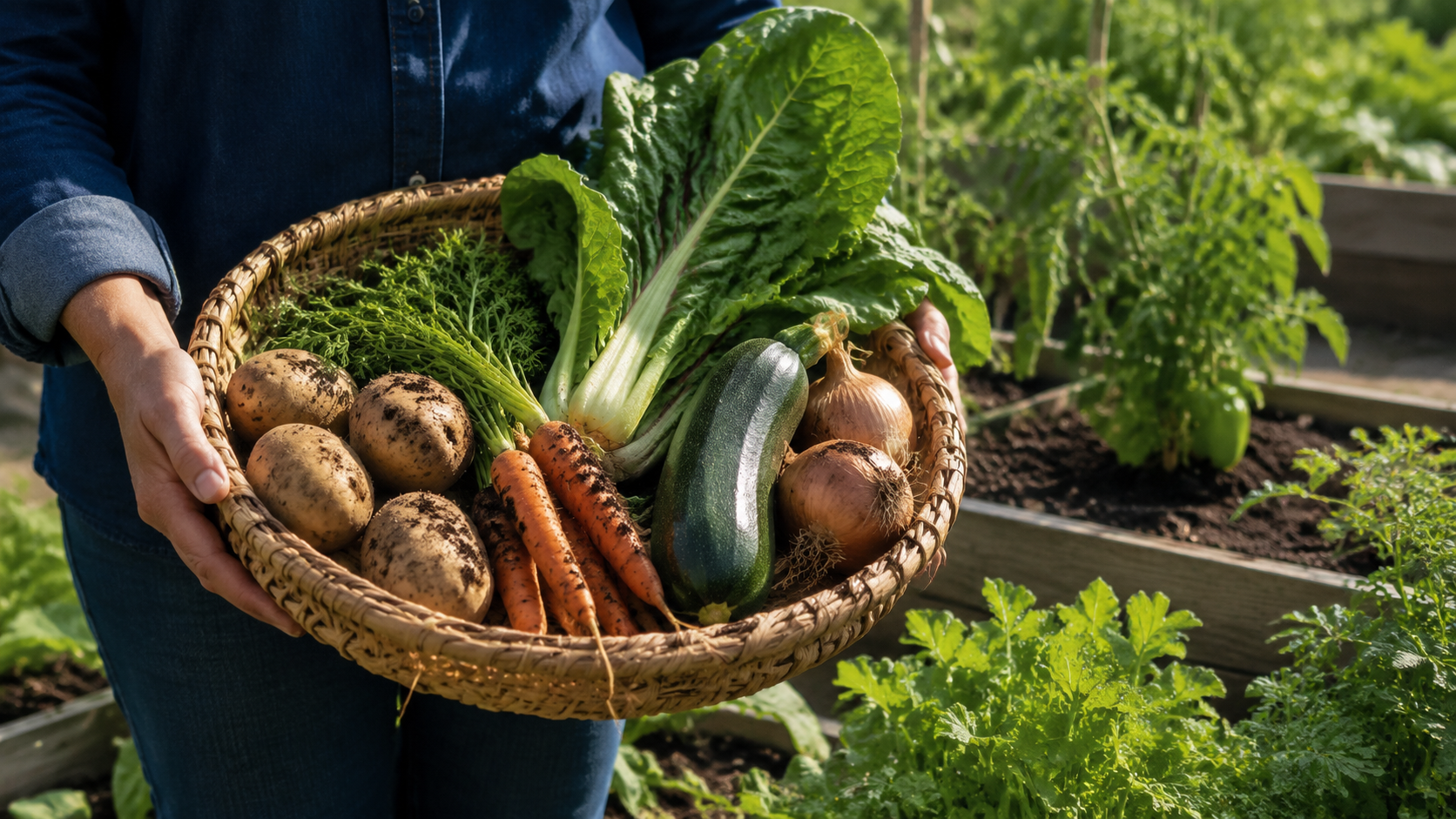
Enter The Roo – as in Kangaroo.  After being given the opportunity to play with this one (yes, the bright pink girly one – don’t worry, it’s not the only color) I’m completely sold on this being the better option for gathering and working in the garden. It’s like the ‘shirt-tails’ method on steroids. You can harvest almost a full bushel without ripping collar or buttonholes! It even surpasses the proverbial harvest basket. 


Here are just a few reasons why:

  • The heavy duty, yet soft and pliable canvas material is lightweight but a very substantial blockade from thorns and dirt.
  • The straps make for very comfortable and even weight distribution of not only the apron itself but the load you may carry.
  • The pockets hold tools, stakes, twin and gloves (I’m a dirt-under-the-nails-gal myself)
  • At the price and my limited skill of stitch-witchery, I could NEVER make one (much less design one) that is this effective.

Wearing it:

  • Putting it on and wearing it about all day long, I hardly even noticed it was there as I moved throughout the garden. It was not in the least bit cumbersome nor did it inhibit my movement like so many other ‘smock’ type aprons I’d tried to use before.
  • It was easy to done all by myself even though there are adjustable straps and hooks.
  • The ability to tie it up and USE the actual Roo Feature (the load and drop pocket) was simple while wearing The Roo.

For me, nothing that is merely well-made or pretty passes the test unless it is actually functional.  The Roo passed this test with flying colors!  The function of its main feature (the easy load and unload pocket) was really what made me take note of how ingenious this is.

The pocket is a simple fold up style that does have a lot of room for carrying fruits and veggies.  But the fact that with a slip of a knot, you can easily unload a bushel of beans onto a table or into a wheelbarrow without bending over or lifting up the heavy load actually made me try it over and over.

The distance to unload is not so far that you’ll bruise your produce and the way The Roo becomes like a gentle ‘chute’ or ‘slide’ makes it a controlable exit.  It is almost second nature to unload without harming the harvest.

I highly recommend that you connect with Pantry Paratus and pick up The Roo (in a color of your choosing, of course)! I think, like me, you’ll find it comfortable, well-made, easy to use and above all of those features, ingeniously functional.

_________________________________________________________________

Donna Miller is a teacher, author, sought-after speaker and trainer.  She has been both a guest and host on internet and broadcast radio talk-shows and in television interviews.  She enjoys teaching online and local classes & ladies retreats.  Donna is happily married and has three adult children, with one daughter-in-law and one son-in-law. She and her husband (Joseph) are the founders Millers Grain House and YourPreparation Station among other leading entities in the current Preparedness movement.

Popular Questions

What makes The Roo a standout gardening accessory?

The Roo is a unique gardening accessory that enhances the harvesting experience. Its heavy-duty yet soft canvas material protects against thorns and dirt while being lightweight. The design allows for comfortable weight distribution, making it easy to carry a significant load without strain.

How does The Roo improve the harvesting process?

The Roo features an innovative load and drop pocket that simplifies the harvesting process. You can easily unload your produce without bending over, thanks to its gentle chute design. This functionality allows for a controlled and efficient way to transfer your harvest to a table or wheelbarrow.

Can The Roo accommodate various gardening tools?

Yes, The Roo is designed with multiple pockets that can hold essential gardening tools, stakes, and gloves. This feature keeps everything organized and within reach while you work in the garden. The thoughtful design ensures that you have what you need at your fingertips, enhancing your gardening efficiency.

Is The Roo comfortable to wear during long gardening sessions?

Absolutely! The Roo is crafted to be worn comfortably throughout the day, with adjustable straps that allow for a customized fit. Many users find it non-intrusive, enabling them to move freely without feeling weighed down by traditional aprons.

Where can I purchase The Roo for my gardening needs?

You can find The Roo available for purchase through Pantry Paratus, where you can choose from various colors. This gardening accessory is not only functional but also stylish, making it a great addition to your gardening gear. Investing in The Roo will enhance your gardening experience significantly.

Ready or Not, the New Year Begins

Ready or Not, the New Year Begins

Ready or Not, the New Year Begins… 

Get this exact Digital Issue by clicking and subscribing before February 15, 2017 – You’ll also get each new digital after that! FREE!

The list is virtually endless when it comes to what area of life preparedness planning touches.  Each month we attempt to focus on a main theme, yet inevitably the theme expands and other areas of necessity come to mind.

PREPARE Magazine is designed to give an overview of preparedness options in multiple areas of our lives. As with any topic, there will always more to be studied, more to be tried, more to be practiced and perhaps even a better way to do something that suits your needs specifically. But the fact of the matter remains; in every area of life if we are oblivious to the need to prepare for a contingency we are doing a disservice to ourselves, our loved ones and our community.

Preparedness living isn’t quite compartmentalized into bunkers or food storage. It is a mindset, a practiced skill of looking at contingencies. And as we all know, a potential contingency can change at any moment, in any area of life.


Just think of the many roles you may have in your own life.  You likely wear many hats. You are not merely an employee or entrepreneur, you are not the job you hold, you’re not merely your education, you’re not merely a father, mother, husband, wife, brother, son, sister, or daughter. Each role you have has its responsibilities, it’s joys, its struggles and it’s rewards. And preparedness looks different from each and every angle of each and every role you or I have in this life.

Our goal here at PREPARE Magazine is to help you be encouraged in whatever role you have in life to enjoy the preparedness journey of your own choosing.  The authors, designers, founders and support team all want to inspire you to think for yourself and be spurred on to prepare in areas that you feel are important.  And yes, we know…there are many.

Here’s to a Happy New Year of Preparedness – Your Way!


Do you feel like you’re missing something?    You don’t have to… Take a look below…

For those who are new to our PREPARE Magazine Family who want to see what you’ve missed, you can! We have over 40 Digital Issues archived (plus more material and downloading, printing capabilities) all available for PREPARE Premium Members.

Popular Questions

How can I prepare for the New Year effectively?

To prepare effectively for the New Year, start by assessing your current preparedness levels in various areas of your life. Identify specific roles you play, such as a parent, employee, or community member, and consider what contingencies might arise in each. Create a plan that addresses these potential challenges, ensuring you have the necessary resources and skills to respond. This proactive approach will help you enter the New Year with confidence and readiness.

What are some key areas of life to focus on as the New Year begins?

As the New Year begins, it's essential to focus on areas such as financial preparedness, emergency planning, and personal health. Each of these aspects plays a crucial role in your overall readiness for unforeseen events. Take time to evaluate your current situation in these areas and set specific goals for improvement. This holistic approach will enhance your preparedness journey throughout the year.

Why is a preparedness mindset important as the New Year starts?

A preparedness mindset is vital as the New Year starts because it encourages proactive thinking about potential challenges. By adopting this mindset, you can better anticipate and plan for various contingencies that may arise in your personal and professional life. This approach not only benefits you but also positively impacts your loved ones and community. Embracing this mindset can lead to a more resilient and fulfilling year ahead.

How can I inspire others to be prepared in the New Year?

To inspire others to be prepared in the New Year, share your own preparedness journey and the lessons you've learned along the way. Encourage open discussions about the importance of planning for contingencies and the benefits of being proactive. You can also provide resources, such as articles or workshops, that help others understand the various aspects of preparedness. By leading by example, you can motivate those around you to take their preparedness seriously.

Prepping for Winter – The Shelter on Your Back

Prepping for Winter – The Shelter on Your Back

Prepping for Winter – The Shelter on Your Back

By Mike Douglas – The Maine Primitive Skills School

Each season brings unique beauty, great bounty and a special set of challenges. Between the time of the maple sap and ice out in Spring, to the insect hatches and movement of fish through our waterways in Summer, to the legendary hunting of Autumn, the three friendlier seasons offer sportsmen the bounty and beauty of the outdoors with risks that are worthy of respect, but often more forgiving than the harsh, often life threatening conditions that come wrapped in the beauty and solitude of our Maine Winter.
In 1998 my young family enjoyed a rare vacation together due to an ice storm. The beauty of bent and popping trees laden with ice and enshrouded in bitter cold created a magical landscape. The lack of power was a blessing, insulating us from the noise of the world and allowing us to enjoy in each other’s company.  We explored the trails, ate meals around the wood stove under the light of candle and oil lamp, split wood, and thawed snow in to drinking water. It was a dream come true . . . until the fourth day.  That was when my wife decided to start the car and check the radio.  The sudden realization that people were in trouble, lives were being lost, and community was coming together over the air waves to assist those in need remains one of the most sobering moments of my life.

Here are some techniques that might help you enjoy the rugged and pristine beauty that our winter landscape provides and to do so in a fashion that will improve your comfort and minimize your chances of running into real trouble.

Dressing in layers is good advice. There is one thing to remember with this advice. In cold weather survival one of the rules is to remain “comfortably cool and dry”. Anyone who has spent a winter day in the North Woods knows that this can be a tricky, and sometimes near impossible, proposition. Unlike Alaska and other regions of the far north, our snow is rarely dry and powdery. If it is, it won’t be for long. In a twelve-hour period we can have rain, freezing rain, wet snow, and clearing skies at night where the temperatures can plummet well below zero. For this reason, personal shelter and the ability to make a warm fire are a priority when venturing out.  This article will focus on clothing as our primary shelter.

Adequate shelter begins with the clothing on your back. As with any effective shelter, you should start with good materials and a solid foundation. The layer that makes contact with your skin should be hydrophobic. This means that it will not hold your body’s sweat or any other moisture close to your skin. Essentially, your radiant body heat acts to drive away the dampness keeping you dry and warm. Nylon, polypropylene, and silk are great materials for this first layer. It is called the “wicking layer” because it wicks moisture away from your body. The next layer is the insulation layer. This layer traps radiant body heat in a bubble of “dead air space” around you to keep you warm. Fiber pile is popular and effective. Goose down is available, but not only is it expensive, it is useless at creating a dead air space once it gets wet.  My all-time favorite for insulation, as well as wicking layer, is wool. Merino wool close to the body and a heavy wool insulation layer have been my preferred cold weather choice since 1979. The reason is quite simply that wool will retain your body heat even when wet. The last layer is the protective shell that repels weather. A good shell is either breathable or has ventilation in the form of a main zipper and “pit zips”. Really good ones have both.

To prevent conduction, pay special attention to your feet. Thick liners or insulated inserts and socks nestled in a weather tight shell will not only keep your feet protected and dry from cold wet snow, it will also protect you from losing your core temperature through the active transfer of your body heat into the frozen ground. A good technique to remember is to keep a pair of wool socks on your feet and one tucked into the waistband of your pants.  When your feet get wet or cold, you always have a warm and dry pair of socks to switch to.  Even if you already switched into your dry pair, while your wrung out pair is drying in your waistband, the other pair is keeping your feet warm and dry.  An inexpensive trick that helps keep your feet dry is to put on a pair of nylon dress socks before your wool socks. The nylon makes an inexpensive and effective wicking layer.

Outer garments and how you use them is important as well. A good thick cap beneath a hood adds extra protection and versatility to match our ever-changing weather. Having overmitts and two pairs of glove “liners” (one to go one your hands inside the mittens and the other tucked in your waist line next to your extra socks) is also a great combination that affords you protection from the cold as well as the ability to use your fingers.

The old saying, “If your feet are cold , put on a hat” has some truth to it. Any time your blood flow is near the surface, such is in the arteries in your neck, or near the surface and away from your heart, like the capillaries in your feet, fingers, and scalp, extra insulation can be used to keep you warm.

In our next article we will explore the strategies used to stay warm beyond the clothes on your back to include habits that will increase your comfort and prolong your time outdoors during Winter in Maine.


___________________________________________________________________________

Mike Douglas has taught survival since 1983.  He’s studied with Paul Rezendes, Tom Brown Jr., Jon Young, and others.  After the Marines he began The Maine Primitive Skills School. Mike’s run programs for the military, schools, camps, and businesses.  He’s advised for Discovery Channels’ “Dual Survivor” and was featured on National Geographic’s “Doomsday Preppers”, receiving the highest “Survivability Score” of the shows first season.  His programs draw people from around the world to participate in Tracking, Survival, Awareness, and more.

Popular Questions

What are the best clothing layers for prepping for winter conditions?

When prepping for winter, it's essential to wear clothing in layers to maintain warmth and dryness. Start with a hydrophobic base layer that wicks moisture away from your skin, such as nylon or merino wool. Next, add an insulation layer, like fiber pile or wool, to trap body heat. All in all, a breathable protective shell will shield you from the elements while allowing moisture to escape.

How can I keep my feet warm while prepping for winter outdoor activities?

To keep your feet warm during winter outings, wear thick liners or insulated inserts inside a weather-tight shell. A great technique is to keep an extra pair of wool socks tucked into your waistband, ensuring you have a dry pair ready if your feet get wet. Additionally, consider wearing a nylon dress sock as a wicking layer beneath your wool socks for added moisture management.

What should I consider when choosing outer garments for winter prepping?

When selecting outer garments for winter prepping, prioritize thickness and versatility to adapt to changing weather conditions. A good thick cap under a hood can provide extra warmth, while overmitts and glove liners allow for finger dexterity without sacrificing protection. Ensure your outer layer is breathable or has ventilation features to keep you comfortable during physical activity.

Why is it important to dress in layers for winter survival?

Dressing in layers is crucial for winter survival as it helps regulate body temperature and manage moisture. The base layer keeps sweat away from your skin, while the insulation layer traps heat, and the outer shell protects against wind and precipitation. This system allows you to adjust your clothing based on activity level and changing weather, reducing the risk of hypothermia.

Preparedness Product Review: WonderMix Heavy Duty Mixer

Preparedness Product Review: WonderMix Heavy Duty Mixer

A Product for Preparedness: WonderMix Heavy Duty Mixer Review

By Vickilynn Haycraft, http://www.RealFoodLiving.com

When considering products to purchase for their journey of preparation, many choose non-electrical products that can be used off-grid. Others may add some products that can be used while power and fuel are available, to increase their preparedness efforts.

Since we know that there are many situations and scenarios where our preparations may be needed, and not all of them will be off-grid, choosing products to assist us is always a good thing. For us, we choose to be assisted by products that allow us to put food into storage, freeze, dehydrate, can etc. One of these beneficial products for our family is a large, heavy-duty mixer / kitchen machine for home use. We use it to make big batches of bread, batters, mix, knead, whip, whisk, shred and more. We consider it an essential tool for our food storage preparations.

As a Product Reviewer for almost 30 years, I have tested and reviewed several mixers for home use including differentproduct-review-wondermix models of the Bosch Universal, Kitchen Aid, Dimension 2000 and Ankersrum mixers and now I have been testing the WonderMix. I was able to compare function to function against other brands and put the WonderMix through many different tasks and the WonderMix performed brilliantly.

In my list of requirements for Product Testing of mixers, I especially look for a heavy duty mixer that is well-made and sturdy, one that can handle large batches of stiff 100% whole grain doughs with ease without straining the motor, without jumping all over the counter and most of all, that will effectively develop the gluten in whole grain bread. On the other end of the spectrum, this heavy duty workhorse must be gentle when whipping delicate items and be able to mix and knead very small batches of bread effectively and as well as the large batches. The mixer must be durable and easy to use as well as accommodate accessories for expanding its functions, making it multi-purpose.


Testing of the Basic Package:
My initial observations of the WonderMix Revolution were that it had a smaller footprint than other mixers and looked like it could not handle my extra-large batch requirements. Boy, was I ever wrong! I packed up the WonderMix with my biggest batches of 100% whole wheat bread, triple batches of sprouted whole wheat bagels and stiff whole grain doughs. The smaller size of the WonderMix disguises the power and engineering efficiency contained inside. I am extremely impressed with the performance of beautifully developing gluten structure without overmixing the dough on large and small batches of yeast doughs. Also, as required, the WonderMix was able to delicately whip, mix and shred even the lightest batters, meats, and doughs.

I compared the WonderMix function to function against the Kitchen Aid stand mixer, Bosch Universal, Ankarsrum Kitchen Assistant, and in all the tests, the WonderMix performed much better than the KitchenAid and Ankersrum and matched the Bosch in some functions and outperformed the Bosch in others.

Some of my favorite features of the WonderMix are the locking 2-part lid (and it really locks, keeping the dough inside the bowl while kneading those big batches!), the unique dough hook and dough divider that facilitate large and small bread batches, and of course, the 900 watts of power. A huge feature is:

It. Did. Not. Walk. Across. The. Counter. (Even with mega-batches of stiff bread and bagel dough.)

In addition to checking off my Product Testing and Performance criteria check sheet, comparing the WonderMix to other mixers, I simply used it for everyday mixing, kneading, shredding, whipping, blending and had immense fun with it. I have to say that I am in love with this new mixer!

Features:
From the same established company that brings us the Wondermill and Wonder Jr. grain mills with proven quality, workmanship, and excellent Customer Service.

  • CSA and UL listed
  • Lifetime Warranty on many parts (no other heavy duty mixer offers this)
  • 900 Watt Motor
  • Direct Drive High Torque Transmission
  • 3 Speeds + Pulse
  • Large 22 Cup Mixing Bowl (5.5 quart)
  • Heavy Duty Tru-Mix Dough Hook
  • Convenient bowl handle
  • BPA Free
  • Cord Storage Compartment
  • No Walking Base
  • Overload Protection
  • Dishwasher Safe Bowl
  • Safety Bowl Locking System
  • Double Beating Whisks
  • For a limited time: comes with Cookie Whips and Blender
  • Designed, Engineered and Licensed in Germany
  • Accessories available
  • Less expensive than other heavy duty mixers


Dimensions:
13 inches wide, 9 inches deep and 12 inches tall
Weight:
11 pounds


Conclusion: Based on testing, comparison and performance, I highly recommend the WonderMix Revolution Mixer as a heavy duty mixer. I use it for a wide variety of applications in my own kitchen.

wondermix-mixer

__________________________________________

Vickilynn’s 7-loaf 100% Whole Wheat and Honey Challah

7 cups water, warm, about 120 degrees
2 Tablespoons apple cider vinegar
1/3 cup softened butter (or use all olive oil for dairy free)
1/3 cup extra virgin olive oil
3 Tablespoons instant yeast
18-20 freshly ground whole wheat or sprouted whole wheat flour, divided
1 cup honey
6 large whole eggs +
3 large egg whites (1 2/3 cup eggs) *reserve the yolks for the glaze
1 Tablespoon salt
2 cups vital gluten
Glaze
3 egg yolks
3 Tablespoons water

Place hot water and apple cider vinegar in WonderMix mixing bowl fitted with the dough hook. Add softened butter and mix to dissolve butter. Add 3 cups of flour and yeast. Mix well, cover and let sponge for 15 minutes.

Stir down sponge and add olive oil, salt, honey, eggs and 8 cups whole wheat flour. Mix well until everything is incorporated.

Add in flour, one cup at a time, until a dough is formed that pulls away from the sides of the mixing bowl and clings to itself. The dough should not be very sticky, but still moist and supple. Do not add all the flour if not necessary and add more if needed. The amount of flour needed will vary.

Let dough knead until very supple and springy and gluten is developed. *By hand, 20+ minutes, by large mixer 10 minutes.*

Let rise, covered, until doubled. Punch dough down and divide into 7 equal portions. Shape into desired shapes* and let rise about 30 minutes. Mix egg yolks and water until completely mixed. Brush breads with glaze before baking.

  • To braid, divide each loaf’s dough into 4 portions. Roll each fourth into long snakes. Braid by starting with the left portion and running it over, under over under the other portions. Pinch each end of the loaf to seal. Roll loaf slightly long-wise on the counter before placing on the baking sheet.
  • For shaped rolls; bake in a preheated 425 oven for 10-12 minutes, or until just lightly browned. Do not overbake, they will be hard. I bake mine for 10 minutes.
  • For loaves, bake in a preheated 350 oven for 30-35 minutes, or until done.
  • To make butterhorns (or crescents): divide each loaf portion into 2 equal parts. Roll each part into a circle 6-8 inches. Cut into 6 equal triangles. (I use a pizza cutter). Starting with the wide end, roll up the triangle and place on a lightly greased cookie sheet, with the point underneath. I turn the edges down slightly as well so the rolls look like an upside down “u”.
  • To make cloverleaf rolls: divide each loaf portion into 12 balls. Divide each ball into 3 smaller balls. Place 3 balls in each tin of a 12 muffin pan. The balls will join together as they rise and look like a “crown”.


__________________________________________

Vickilynn’s 8-loaf 100% Whole Wheat and Honey Raisin Bread

8 cup water, warm, about 120 degrees
2 Tablespoons apple cider vinegar
20-22 cups freshly ground whole wheat or sprouted whole wheat flour
3 Tablespoons instant yeast
2 cups vital gluten
1 cup oil
1 cup honey
1 Tablespoon salt
2 Tablespoons cinnamon
2 Tablespoons vanilla extract
3 cups raisins
Place hot water and apple cider vinegar in Wonder Mix mixing bowl fitting with the dough hook. Add 8 cups of flour and yeast. Mix well, cover and let sponge for 15 minutes.

Stir down sponge and add vital gluten, olive oil, honey, salt, cinnamon, vanilla extract and raisins. Mix well until everything is incorporated.

Add in flour, one cup at a time, until a dough is formed that pulls away from the sides of the mixing bowl and clings to itself.  The dough should not be very sticky, but still moist and supple. Do not add all the flour if not necessary and add more if needed. The amount of flour needed will vary.

Let dough knead until very supple and springy and gluten is developed. *By hand, 20+ minutes, by large mixer 10 minutes.*

Let rise, covered, until doubled. Punch dough down and divide into 8 equal portions. Shape into desired shapes and let rise about 30 minutes. Bake at 350 in a preheated oven for 30 minutes, or until bread is done. Let cool before slicing.


Egg-Free, Vegan Marshmallow Fluff (made with aquafaba)

1 teaspoon pure lemon juice (no oil!) or apple cider vinegar
1/2 cup aquafaba, unwhipped (about what is in a can of cooked garbanzo beans)
1/4 teaspoon cream of tartar
1/2 teaspoon guar gum (optional, but makes a more firm consistency)
Pinch of salt (optional, and only if using unsalted bean aquafaba)
1/2 cup powdered granular sweetener, sugar or xylitol
1 teaspoon vanilla extract

Wash the WonderMix bowl very well and make sure it is completely dry. Wipe the lemon juice or vinegar all over the inside of the bowl, to remove any oil residue.
Pour in the aquafaba, cream of tartar, guar gum and salt if using. Place the beaters in the Wondermix and cover the bowl. Beat on #3 for 10 minutes. Remove the small lid and start adding the powdered sweetener in VERY slowly, 1 Tablespoon at a time, and let the sweetener incorporate before adding more. When all the sweetener is in, add in the vanilla and taste the fluff. If it is sweet enough, use immediately. Add more sweetener as needed.

You can use this recipe to make baked meringue cookies, whipped toppings, vegan ice cream and more. For additional recipes, visit the Facebook group, Aquafaba Everything.

Vickilynn Haycraft is the author of: “Wrapping It Up!” and co-author of “Naturally Healthy Cuisine, Real Food for Real Families”. Vickilynn is a sought-after independent product tester and book reviewer delivering accurate, honest, and trustworthy reviews on products and books for the whole family. Subscribe to Vickilynn at: RealFoodLiving.com, National Product Review Examiner, National Family Preparedness Examiner.

Disclaimer: There are NO affiliate links within Vickilynn Haycraft’s review. She is an independent Product Reviewer. She does not sell products or accept payment for reviews. The products reviewed are either purchased by Vickilynn Haycraft or provided for review and all reviews are unbiased regardless of how the item was obtained. This product was provided for testing and review.

Contact The Wondermill Company Directly here

____________________________________________

Here at PREPARE Magazine, we are delighted for Vickilynn’s unbiased review of fine products such as this and the many she has shared with us throughout our years of publication.

By way of full disclosure: If you are interested in purchasing the WonderMix Deluxe Mixer, please consider purchasing through Millers Grain House, an Authorized Dealer of all WonderMill Products. Our Founder would greatly appreciate your support.

NOTE: The warranties are only applied when you purchase the WonderMix through authorized dealers. Do not purchase from Ebay or Amazon dealers unless they are authorized.

Click here for more of Vickilynn’s recipes

Popular Questions

What makes the WonderMix Heavy Duty Mixer a good choice for food storage preparations?

The WonderMix Heavy Duty Mixer is designed to handle large batches of dough, making it ideal for food storage preparations. Its powerful 900-watt motor and unique dough hook allow it to mix and knead stiff whole grain doughs without straining. Additionally, it features a locking lid that keeps ingredients contained during mixing, ensuring a mess-free experience. This mixer is versatile enough to whip delicate batters while also managing heavy-duty tasks, making it a valuable tool for anyone focused on preparedness.

How does the performance of the WonderMix compare to other mixers?

In testing, the WonderMix outperformed several well-known brands, including KitchenAid and Ankarsrum, particularly in developing gluten in whole grain bread. It matched the Bosch Universal in some functions while excelling in others, showcasing its superior engineering. Users have noted that it does not walk across the counter, even with heavy batches, which is a common issue with other mixers. This reliability makes it a strong contender for those looking for a heavy-duty mixer.

What features of the WonderMix Heavy Duty Mixer enhance its usability?

The WonderMix Heavy Duty Mixer includes several features that enhance its usability, such as a large 22-cup mixing bowl and a convenient bowl handle. Its BPA-free construction and dishwasher-safe bowl make cleanup easy, while the overload protection ensures safe operation during heavy use. The mixer also comes with double beating whisks and additional accessories, allowing for a variety of culinary tasks. These thoughtful design elements make it a practical choice for both everyday cooking and emergency preparedness.

Can the WonderMix Heavy Duty Mixer handle small batches effectively?

Yes, the WonderMix Heavy Duty Mixer is designed to be versatile, effectively mixing and kneading both large and small batches. Its unique dough hook and divider facilitate the preparation of smaller quantities without compromising performance. Users have reported excellent results when whipping delicate items or mixing light batters, proving its adaptability. This feature makes it suitable for a wide range of cooking and baking needs.

How vulnerable are you to cyber threats?

How vulnerable are you to cyber threats?

How vulnerable are you to cyber threats?

cyber-home network security_BillJanetLLove it or hate it, the vast majority of us are constantly connected to the Internet using some type of handheld device or computer to communicate with others and conduct business. Improved battery, chip and wireless technologies combined with reasonably priced smart phones, tablets, readers and gaming devices have allowed the digital world to permeate into almost every facet of our lives.

And, as more people migrate to mobile and cloud services for communication and commerce, cybercriminals will continue to evolve and increase their attacks and threats.

Did you know…

  • there are over 2.7 billion active Internet users and 6.8 billion mobile subscribers worldwide;
  • 55% of American adult cell owners use the internet on their mobile phones;
  • 75 Million Scam emails are sent every day claiming 2,000 victims;
  • 8,200 new unique threats are found every hour according to Trend Micro;
  • 73% of Americans have experienced some form of cyber crime?

We will try to keep our “geek speak” to a minimum, but the goal here is to mention some things you should be aware of and steps you can take to help protect devices and systems from various types of cyber threats.

Secure and protect your devices

  • Make sure computers and all wireless devices have current anti-virus software and firewalls, schedule them to scan daily or weekly, and update virus patterns often. If you own or manage a business, encourage employees to protect their personal home devices too.
  • If you use a wireless router to access the Internet, secure it. Change the name of your router from the default ID (usually SSID or ESSID) to a name that is unique to you and won’t be easily guessed by others. Change the pre-set password on your router to a long and strong password using a combination of letters, numbers and symbols.

Also, set your router’s level of security to either WPA2 (if available) or WPA since they are more secure than the WEP option. And Ultimately, some routers allow for guests to use the network via a separate (or guest) password. If you have kids or many visitors in your home, it is a good idea to set up a guest network. Your provider should have instructions on all (or most) of these procedures.

  • Set security preferences as high as possible on Internet browsers and anti-virus packages.
  • Although it is best to not open emails or attachments from unknown sources, that’s not always feasible – especially in the business world. But consider saving the attached files into a temporary directory and scan them before opening.
  • Create long passwords using a combination of letters, numbers and special characters; change them often and don’t share them with others. And don’t use the same password for all your accounts!
  • Don’t access financial institutions from mobile devices using apps or email links. Instead, visit banking and credit card sites directly using a browser window. And limit the use of apps on social networking sites too since they can have security weaknesses and flaws.
  • Speaking of credit cards, check the backs of your cards to see if they have radio-frequency identification chips (RFID) or Near Field Communication (NFC) chips that are embedded in credit and debit cards. (Visa calls its technology payWave, MasterCard is PayPass, Discover brands it Zip, and American Express calls it ExpressPay.) If any of your cards have a phrase, symbol or chip, consider using RFID-blocking shields or wallets, which generally use aluminum or steel to keep out prying eyes. There are even instructions on the Web about how to give your existing wallet RFID-inhibiting protection using duct tape and aluminum foil.
  • Be aware there are lots of “scareware” scams online! Do NOT download or click on a screen that says it found “X number of viruses or spyware on your system” suggesting you download their package — it will most likely be a virus.
  • Beware of “ransomware” (malware that prevents you from using your computer until you pay a fine) and “madware” (mobile adware – esp. apps – that can potentially expose location details, contact data, and device identifiers to cybercriminals) since they are predicted to be major issues going forward.
  • Also beware of “smishing”(a combination of SMS texting and phishing) and “vishing” (voice and phishing) scams. Typically these involve you receiving a text message or an automated phone call on your cell phone saying there’s a problem with your bank account. You are given a phone number to call or a website to log into and asked to provide personal identifiable information—like a bank account number, PIN, or credit card number—to fix the problem. Do not respond to unsolicited e-mails, texts or phone calls requesting personal data, and never click on links or attachments contained within unsolicited e-mails or messages.
  • Backup data often and keep a daily or weekly backup off-site. And keep in mind, if you back up data using the cloud (rather than using an external drive or other local device) you may not be able to access your data if there is a disaster or emergency limiting access to the web.
  • Make sure someone knows how to download patches or fixes in case a computer or system gets infected.
  • If your business or employer is hacked, file a complaint with the Internet Crime Complaint Center at ic3.gov

by Bill & Janet Liebsch


Bill & Janet Liebsch  are the founders of FedHealth, a publishing and marketing company formed in 1999 to help the public focus on preparedness and health-related issues. They also are the authors and publishers of “IT’S A DISASTER! …and what are YOU gonna do about it?” and are dedicated to developing programs that primarily benefit First Responders, schools and volunteers. Get a sample of the content with this free mini-ebook  HERE

Popular Questions

How can I assess my vulnerability to cyber threats?

To assess your vulnerability to cyber threats, start by evaluating your current security measures, such as antivirus software and firewalls. Ensure that these tools are up-to-date and configured correctly. Additionally, consider conducting regular security audits and vulnerability assessments to identify potential weaknesses in your systems. This proactive approach can help you understand where you stand and what improvements are necessary.

What steps can I take to reduce my vulnerability to cyber threats?

Reducing your vulnerability to cyber threats involves implementing strong security practices. Make sure to use complex passwords and change them regularly, and avoid using the same password across multiple accounts. Regularly update your software and operating systems to patch any security flaws. Educating yourself and your employees about phishing scams and other common threats can also significantly enhance your defenses.

How does using public Wi-Fi increase my vulnerability to cyber threats?

Using public Wi-Fi can greatly increase your vulnerability to cyber threats because these networks are often unsecured and easily accessible to cybercriminals. When connected to public Wi-Fi, your data can be intercepted, making it crucial to avoid accessing sensitive information like banking details. To mitigate this risk, consider using a virtual private network (VPN) when connecting to public networks. This adds an extra layer of security by encrypting your internet traffic.

What role does employee training play in reducing vulnerability to cyber threats?

Employee training is essential in reducing vulnerability to cyber threats, as human error is often a significant factor in security breaches. Regular training sessions can help employees recognize phishing attempts and understand the importance of following security protocols. By fostering a culture of cybersecurity awareness, businesses can significantly lower their risk of falling victim to cyber attacks. Encourage employees to report suspicious activities and provide them with the tools they need to protect themselves.