by PREPARE | Apr 5, 2025 | Blog, Guest Bloggers
Floods
While Britain does not suffer from some of the most horrendous weather events experienced elsewhere in the world, we do have our fair share of floods, and they are getting worse!
Flooding in the UK usually comes from 1 or more of 3 sources:
- Exceptional rainfall
- Heavy snowfall followed by a rapid thaw
- Coastal storm surges
Our flooding since the start of the new millennium has mainly been from exceptional rainfall. This has given events such as flash floods and the repeated river overflows in Gloucestershire, Yorkshire, and elsewhere, particularly in 2007, 2010, and 2012, with some towns and cities having areas flooded by overflowing drains and excessive surface water on paved areas.
That latter effect has caught out many people who live miles from the nearest river and have never experience flooding before, nor expected to. Meanwhile some towns and cities like York and Tewksbury that have known occasional flooding many times over the centuries have found it becoming an annual event. And despite the efforts of various agencies in some areas it is becoming increasingly damaging. Those people in flood prone areas in what were once expensive and desirable homes now find that they can neither sell nor get insurance.
Depending on the level, flooding can be anything from an inconvenience to a disaster. If your house or business is affected by deep flooding you will almost certainly have to evacuate and in many cases people have not been able to return to use the buildings for over a year. We have friends in this situation and they initially went to a hotel or local evacuation center and were eventually moved to temporary accommodation; in 1 case a touring caravan (trailer), for almost 18 months before the family could return to their home. In some buildings the foundations or structure have been so badly damaged the only safe alternative was demolition.
Threats
So, what are the threats from flooding? Direct threats include:
- Drowning – people drown in their buildings, in their cars, and on the street when the water catches them unexpectedly or while trying to evacuate, and often, tragically, while trying to rescue another person or animal.
- Electrocution – in a building or outside when power lines are brought down or substations flooded.
- Chemicals – flushed out of their normal storage.
- Sewage and other biological hazards.
- Injury – Flood waters can move heavy objects (e.g. trees, fences, cars, etc) at high speed. If you are struck by one of these objects you might sustain severe injury. The water also covers many sharp and otherwise dangerous items, so moving through even still flood water can pose real hazards.
- Loss of possessions through damage or theft, destruction of cars and other transport, and even loss of your home.
And what can you do to minimize the threat?
Precautions and preparations
- The first thing to do is evaluate your risk of flooding. Go online and research the flood risk and warnings for your area.
- Sign up for the text message and email warnings and find out what other alert measures might be available in your area.
- Take measures to prevent or minimise the damage from flood water. This could include:
- Consider your use of rooms – could you use a higher level room for the living room/study/etc where the greatest number and most expensive, electrical equipment is used and instead use a ground floor room as a bedroom?
- Install non-return valves on water outlet pipes, including from the washing machine and dishwasher.
- Use silicone around doors and windows to reduce the likelihood of water penetration.
- Install fittings for flood gates on all external doors and low level windows, and airbrick covers close to ground level. Keep the gates and covers easily available.
- Consider replacing timber floors and carpets with solid floors and tiles – rugs are easier to move (and are) less expensive to replace than carpets, and even if the tiles have to be reaffixed, the cost of sheet ply base is lower than laminate. Also investigate replacing at least the lower steps of a staircase with concrete instead of wood.
- Replace low level, chipboard and laminate kitchen cupboards with freestanding ones made from plastic or stainless steel.
- Replace wooden internal doors, skirting boards etc with plastic ones.
- Use lime plaster on ground floor walls rather than standard gypsum plaster.
- Paint the outside and internal ground floor walls with waterproof sealant or paint. Consider a 2 level decoration scheme so that you only have to redecorate the lower level.
- Have electrical sockets raised to waist level, or higher if likely water levels require it, rather than near the floor – they’re more convenient there too, especially if you have back problems.
- If you have already been flooded, or believe the risk is high, buy a high-capacity pump that can extract water faster than your extra precautions will allow it to enter.
- Prepare a Flood Plan. This should include:
- Safety plan – Know how to turn off your electricity, gas, and water supplies. Do it before the flood water reaches the switches!
- Protection plan – know what to do to prevent or delay water entering your property. Store the equipment and supplies you will need (e.g. sandbags, floodboards, airbrick covers, etc) in a place you will be able to get them.
- Storage plan – the things you will not take with you if you evacuate but want to protect by moving them upstairs or to some other safe location. Keep this plan easily available! In an emergency you have many things to think about and a list will help you not to forget something you might otherwise mourn the loss of. Think about pets, valuables (monetary and emotional), vehicles, electronics, furnishings, etc. Remember that looting of evacuated buildings is very common. Even if you make things safe from the water you might lose them to thieves.
- Evacuation plan – how will you get out, where will you go, what will you take?
- Contact plan – List numbers for family, relatives, and emergency services, insurance companies, etc. Agree a contact that any family member who is out of the area when flooding occurs should call if they cannot contact people who were at home. Also agree close and more distant meeting places that are not likely to be affected by the flooding for use in case the telephone system is out.
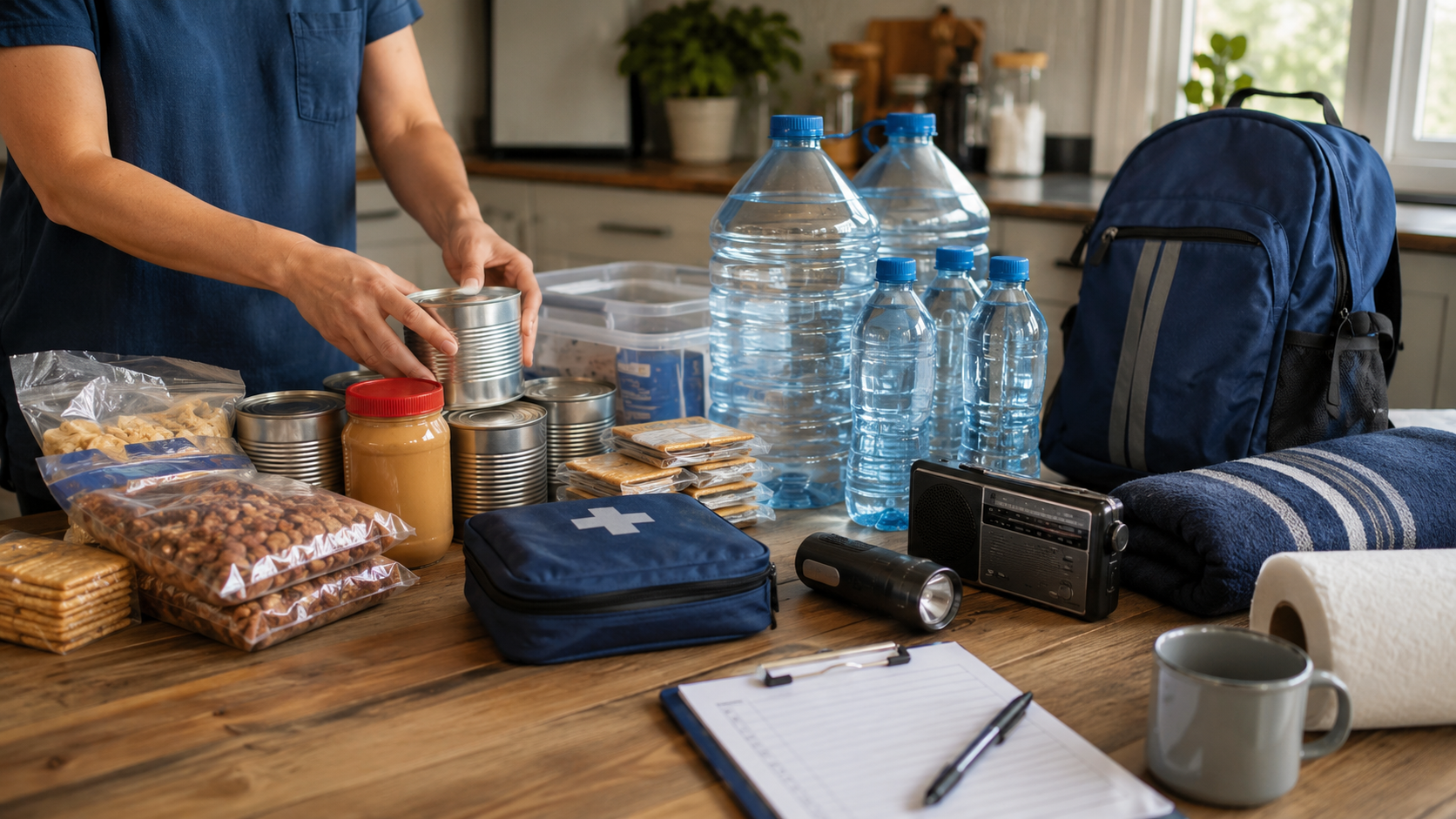
- If you haven’t already got one (??) prepare an evacuation bag. This might be your Bug Out Bag or part of it, but remember that you are more likely to be going to a hotel/evacuation centre/friend than a bivvy site in the backwoods, which if you are being flooded out due to torrential rain is probably the last place you would want to go! Suggestions on what to include are listed in the Annexes.
What to do if it happens
- Keep informed about the situation – if you have online access keep visiting relevant sites. Tune your radio to a local station and listen for news and warnings. Watch the area around you.
- Make sure neighbours and friends you care about also know what is happening and what to do. Make arrangements to help one another where you can.
- Put your Plans into action.
- Put plugs in the sinks and bath and weigh them down with a sandbag or other heavy cover. Put a plug (e.g. sandbag) in the toilet
- If the flooding is so sudden that you cannot get out, move yourself, family, evacuation kit, and emergency supplies to the safest place in the building, then prepare for signalling to potential rescuers.
- If you can escape, secure your property and then get out early – the longer you leave it, the more difficult and dangerous evacuation will be.
- Take great care when moving through water and test to ensure you do not get in too deep. A long stick – even a broom handle is good – can be a great help. Six inches of moving water can knock you over if you are walking and 2 feet can lift and float your car.
- Beware of holes e.g. from displaced manhole covers.
- If you have had to move through flood water, then as soon as you are safe get out of the wet clothes and wash and disinfect yourself and the clothes.
- Put your contact plan into action – let family and friends know you are safe and how they can contact you.
- Contact your insurance company – and landlord if you have one – and employer, to let them know what has happened and how to contact you.
- If you need additional official help contact your council, and for other help any support/survival group you might have.
After the flood
When the waters recede it will be time to take stock and begin recovery action.
- As soon as possible, return home to secure your property.
- Take care as you enter:
Flooring might be damaged or displaced,
Other structures including staircases might be unsafe
There could be an electrical hazard
Anything touched by the floodwater will be contaminated
There might be human or animal intruders
- Make a list and loss-evaluation of any property destroyed or damaged and take photographs or videos. Your insurance company will make arrangements to assess the damage to the building and make arrangements for repair.
- Do NOT switch on any of the mains utilities until they have been checked and approved as safe by a professional.
- Do NOT use any food or drink any water that might have been in contact with flood water. Water under pressure might have been forced into bottles, jars, or packets. Thoroughly clean the outside of sealed tins before opening. Do not drink mains water until it has been declared safe and then not until you have run enough through your water system to thoroughly flush and clean it.
- If you are cleaning up yourself expect:
Outside: fallen walls and fences, all plants other than trees and large bushes washed away, missing rubbish bins, muck and rubbish everywhere.
Inside: destroyed carpets, falling plaster, disgusting smells, ruined cupboards/furniture/kitchen white goods/stuff in the garage/workshop/shed (including preps?).
- If you need to pump out water including from under the floorboards, you can hire a pump or might be able to get help from the fire service. Check with your insurance company first, this might be part of its tasks and only to be done when a nominated contractor decides it is safe to do so.
- If you are cleaning up yourself you can use ordinary cleaning products, a garden hose, etc, but do wear overalls and rubber gloves and boots. You might need a skip (dumpster) or lots of rubbish bags. The local authority might arrange extra collections.
- It will take much longer for the house to dry and be restored than you think: be patient!
- Be aware, especially if you are living close-by, that thieves will be waiting to take any opportunity to steal materials as your home is being repaired. Some of our friends had the new copper piping and other fittings stolen 3 times before the property was repaired enough to be secured!
Floods are bad news, but you can limit their effects and dangers by proper awareness, planning and response, and as in all emergencies many of the preps you make will be as useful for this one as any of the others.
By David E Crossley
David E Crossley is a British Prepper living in Scotland. He has been into prepping for over 40 years and has built his experience through 22 years as a soldier, 4 years as the Training Manager for Scotland for the British Red Cross and many years studying and doing the prepping things so many people just think or talk about. He is also a published author. Learn more about him at his website at: www.tfns.co.uk/index2.html
Popular Questions
What is the fastest way to improve Threats without making beginner mistakes?
The fastest way to improve Threats is to simplify the process and control one variable at a time. Start with the most important baseline: define the goal, identify the main failure point, and test one change before making another. Keep short notes so you can connect the outcome to the adjustment you made. This prevents guesswork and helps you build a repeatable method instead of chasing random fixes.
What should you check first when Threats is not working well?
Check the most immediate bottlenecks first: setup errors, missing inputs, bad timing, or inconsistent follow-through. Before buying anything new or changing the whole system, confirm that the basics are being done correctly and consistently. A small diagnostic checklist usually reveals the real problem faster than broad trial and error. Once the weak point is clear, make one correction and watch the result before adjusting anything else.
What common mistakes make Threats harder than it needs to be?
The most common mistakes are changing too many variables at once, skipping the basics, and judging results too quickly. Many people also copy generic advice without adapting it to their exact situation, which leads to weak results and confusion. A better approach is to work from a simple baseline, make measured changes, and give each change enough time to show whether it helped. That makes progress easier to track and repeat.
by PREPARE | Apr 5, 2025 | Blog, Guest Bloggers
Preparedness Medicine, Part I: Local Volunteers
In the preparedness domain, no subject has any more importance than caring for and optimizing the human body. Aside from a warm and safe place to stay, nothing will be more important than the recovery and maintenance of health in any kind of difficult time. In this article, in this series and in pretty much anything this author writes, there is an emphasis on natural health now and in any sort of pinch. No one has spent any more emphasis on this subject. Further, it is through healing ourselves naturally that our own psychological sovereignty is preserved. In this article we shall specifically introduce the idea of local volunteers and tell a little about a few of them to introduce the power of this preparedness strategy.
Local volunteers are plants that grow freely, sometimes in spite of us, which are also quite useful as food and medicine. While every area has many of these plants unique to that area, there is quite a list of plants like this that either grow almost everywhere around the globe or that can be grown with ease almost anywhere.
The first plant that is on our list today is plantain. This should not be confused with plantain bananas, but rather is any one of over 100 Plantago species growing around the world. One can easily find pictures of the many species on the internet and can probably walk through disturbed areas, lawns or parks and find plantain to identify it. It is best to gather it somewhere that is not saturated with chemicals, pesticides and fertilizers.
Medicinally, this plant has a drawing effect when applied as a fresh leaf (or ointment or tincture made from the fresh leaf) to a bite, sting or puncture wound. Recently one of the author’s clients made up the tincture for a friend who was having terrible reactions to mosquito bites. She followed instructions and used Everclear with the fresh leaf. She put the liquid in a spray bottle and had her friend spray on and cover all exposed skin whenever she went out. As usual, she got many bites, but none of them ever appeared afterward! None showed up as an itch or bump or anything. The beauty of plantain leaf is its power to draw out venom, infection and contamination while simultaneously calming and improving immune/inflammatory response. The implications of this should be clear that virtually every bite can be rendered harmless this way. More than one case exists in literature where plantain leaf was used for severe immune reactions to bee stings and the topical application over the sting pulled out the poison and saved the person.
When ingested as tea it is quite nourishing and is also diuretic and drying to the body. It strengthens the kidneys, spleen and immune system in relatively small doses (1/2 cup of the tea 2 x daily or two leaves eaten as often). It is dense with nutrition and has been used also for weak or lost blood. The drying, astringent property makes it one of our best herbs for injuries and burns where there might be infection. Plantain is also quite cell proliferant. This property speeds healing of any kind, anywhere.
Long-term infection, or people prone to such, may benefit from plantain leaf tea when consumed regularly. It dries out the congested lymph and phlegm. It thereby creates conditions in the body where infection is not welcome. This effect, as well as the tonifying effect on the kidneys, makes plantain leaf a wonderful aid for the diabetic.
All in all, the seeds of plantain have long been used for calming and bulking the bowel for better elimination. Probably the name most known is “psyllium” which is a species of plantain. The seeds of any plantain can be used, but it is quickly noted that the small seeds of most species make this less fun to gather than buying the psyllium.
The next herb on our list is chickweed. This herb moistens instead of dries, but both plantain and chickweed are cooling and calming to the tissues they reach. Chickweed is useful as a food since it is delicate and sweet. Like many wild foods, chickweed is quite nutrient dense, especially in minerals and carbohydrates. The medicinal use for which chickweed is most famous is for various dermatoses, such as dermatitis, psoriasis and eczema. The tea is drunk internally and also applied topically to the affected area. It cools the affected area and is thought to cause the liver to cool and push its heat out through bile instead of out through the skin. It certainly works very well and is especially useful for small children and infants.
In closing, chickweed got immortalized by Dr. John R. Christopher as an aid for obesity. He apparently understood what has escaped most modern natural healers: obesity has nothing to do with metabolic rate and everything to do with inflammation and irritation in the gut. While chickweed probably calms and slows metabolism, it has a gradual, steady healing effect on obesity via healing the inflamed gut. The thyroid and adrenal glands have a chance to return to normal when the systemic inflammation (coming from antibody-antigen complexes that escape the gut) is reduced. Of course, an exclusively whole, mostly raw food diet is recommended in any case of need to heal.
Other herbs on the list that are easily found around the globe will have to be put in a list in the interest of space for this article. These are: nettle, various mallow species, lamb‘s quarter, roots of any grass, various wild mustard species, various pigweed species, pines and spruces, purselane, raspberry leaves, mullein, poplar buds, oak bark and comfrey. In later articles, various herbs of these will be discussed in self-healing. This list is a good intro to herbs that either grow wild just about everywhere or could be grown in any garden, yard or planter box quite easily.
In this article, we introduced in some detail two very common herbs: chickweed and plantain. We discussed how they are useful in medicine in a pinch and why we might want to know what they look like. We also gave a list of herbs that commonly grow wild in any area or could be easily grown in almost any situation, anywhere in the world. In coming articles in this series, we will discuss wide uses of herbs for the preparedness enthusiast.
By Dr. Kal Sellers
Dr. Kal Sellers has been researching natural options for healing literally since childhood. He grew up practicing reflexology, CRA, applied trophology, herbal medicine and massage. Today he is a Doctor of Chiropractic, a Master Herbalist and has taught herbal medicine and natural healing in Europe, Asia, South America and all over the U.S. He maintains an on-line presence for teaching herbal medicine excellence to the novice and clinical practitioner alike. He also has a passion for off-grid living and independence from central resources. He lives in the mountains of Wyoming with his wife, 6 daughters and 1 son. http://www.rawherbalist.com
Popular Questions
What role does local volunteer medicine play in important preparedness medicine?
Local volunteer medicine emphasizes the use of naturally occurring plants that can be found in your environment. These plants, such as plantain and chickweed, can serve as effective remedies for various health issues during emergencies. By understanding and utilizing these local resources, individuals can maintain their health and well-being without relying solely on commercial medications.
How can plantain be used in important preparedness medicine?
Plantain is a versatile herb that can be applied topically to bites and stings to draw out venom and reduce inflammation. It can also be consumed as a tea to strengthen the immune system and support kidney health. Knowing how to identify and use plantain can be crucial in a preparedness situation where access to conventional medicine may be limited.
Why is chickweed significant in the context of important preparedness medicine?
Chickweed is known for its soothing properties and is particularly effective for skin conditions like eczema and psoriasis. It can be used both internally as a tea and externally as a topical application to cool and heal affected areas. Incorporating chickweed into your preparedness medicine toolkit can provide natural relief for various ailments.
What are some other common herbs to consider for important preparedness medicine?
In addition to plantain and chickweed, other easily accessible herbs include nettle, lamb's quarter, and comfrey. These plants can be grown in gardens or found in the wild, offering a range of medicinal benefits. Familiarizing yourself with these herbs can enhance your preparedness strategy and provide natural health solutions when needed.
by PREPARE | Apr 5, 2025 | Blog, Guest Bloggers
“One of the things I’d like to do is to show people how to start “positive” epidemics of their own.
The virtue of an epidemic, after all, is that just a little input is enough to get it started, and
it can spread very, very quickly.” ~ Malcolm Gladwell, The Tipping Point
Growing a Sustainable Garden – The “Vital Few” or the “Trivial Many”? Which are you: one of the “Vital Few” or the “Trivial Many”?
I submit that your knowledge of the Mittleider Method of sustainable gardening makes you one of the “vital few.” With that knowledge, comes both opportunity and responsibility.
In his book, The Tipping Point, Malcolm Gladwell describes how the few can make a tremendous positive difference for everyone else, which he compares to an epidemic, or that point before which not much seems to be happening, and after which effects begin to explode.
We Need to Start An Epidemic … And You Can Help!
Family gardening can, and should, become as common and important again as the family car.
Why?
Because your garden can FEED you — even when:
• Your car won’t run because there’s no gasoline (or you can’t afford to buy it) …
• There’s no food to buy in the stores … or
• There’s no money (or not enough) to buy food – for whatever reason.
This is the context, or the overriding reason why the message YOU carry is so vital for everyone.
Gardening should be sustainable, using true, proven principles and the best methods and techniques, so it will yield the “most bang for the buck,” and be worthwhile and enjoyable for the long term.
The Mittleider Method will feed your family! It will give you “the garden you’d want if your life depended on it.” And it very well may.
Today truly effective family vegetable gardening is done by only about 1% of the people who may soon desperately need it.
The best growing principles, methods and procedures are the closely guarded secrets of the large field and hydroponic growers. Meanwhile, the large majority of gardening families are back in the 19th century mentality, using only manure and compost, scared into believing that ANY use of “chemicals” will threaten their health, or even their lives.
What makes the Mittleider Method so unique – and so vitally important – is that it teaches the best principles, procedures, and techniques used by large commercial and hydroponic growers, but adapted to the small family garden. It works in any soil, and in almost any climate. The procedures are easy to learn; simple and straightforward.
In addition, the Mittleider Method eliminates the problems so often associated with large-scale commercial food production, such as overuse of fertilizers, pesticides and herbicides, high cost, and lack of freshness and flavor.
Now here’s our opportunity … and my challenge to you!
Great changes have always been initiated by just a few people who knew what they wanted, were focused, and were willing to share their knowledge with everyone they could influence.
I challenge every person reading this article to be among the “vital few” who help people around you improve their lives while preparing for the uncertainties of the future.
How?
First, by learning how to grow your own food using the best system available as demonstrated and taught by The Food For Everyone Foundation, and then by promoting, teaching, and demonstrating what you’ve learned about sustainable gardening, and getting others to do the same.
Choose a group of people with whom you have a genuine, social relationship. Your church group, email list, gardening club, voting district, family, or neighborhood association are all good places to start.
Show them your own garden. Tell them of your own success. Loan them a book or CD. Offer to teach a seminar. Point out the benefits of learning and doing it NOW, before their need is urgent and it’s too late to learn or prepare.
Show and Tell!
Share articles, tips and advice from the Food for Everyone Foundation Website. Share important posts from the archives of the MittleiderGardeningMethod@yahoo.groups.com and encourage people to subscribe. And invite friends to add Mittleider Gardening to their Friends on Facebook.
Even if you do nothing more than persuade them to buy a can of vegetable seeds and a couple bags of fertilizer, you’ve done tremendous good. A triple-sealed #10 can of 22 heirloom vegetable varieties that can be stored for many years can be purchased at the Foundation website or at www.mvseeds.com.
Do something NOW! Make your voice heard, and your influence felt. You CAN make a difference for good in the world around you.
It’s time to spread an epidemic … (Not bird flu. The gardening “bug!”)
We can do it. Malcolm Gladwell says we can do it. And remember: “out of small things proceedeth that which is great.”
Thanks for your interest in gardening, your willingness to do it right, and your courage to share.
By Jim Kenard
Jim Kennard is the President of Food For Everyone Foundation (501)(c)(3) Charitable Foundation. Mission – “Teach the world to grow food one family at a time” with the world-renowned Mittleider Method.
Popular Questions
How can I start a growing epidemic of sustainable gardening in my community?
To initiate a growing epidemic of sustainable gardening, begin by sharing your own gardening experiences with friends and family. Organize small gatherings or workshops where you can teach others about the Mittleider Method and its benefits. Encourage participants to start their own gardens and provide them with resources, such as books or seed packets, to help them get started. By fostering a supportive environment, you can inspire others to join in and create a ripple effect of positive change.
What are the key principles of the Mittleider Method for creating a gardening epidemic?
The Mittleider Method emphasizes using proven techniques that maximize yield while minimizing resource use. It teaches gardeners how to adapt commercial growing practices to small family gardens, making it accessible for everyone. By focusing on soil health and efficient nutrient management, this method can help families grow food sustainably, even in challenging conditions. Sharing these principles can empower others to embrace gardening as a vital skill.
Why is it important to promote family gardening as a growing epidemic?
Promoting family gardening is crucial because it equips individuals with the ability to produce their own food, especially in uncertain times. As reliance on grocery stores can be risky, having a personal garden ensures access to fresh produce regardless of external circumstances. By encouraging others to garden, you help build a community that values self-sufficiency and resilience. This collective effort can lead to a significant shift in how families approach food security.
What steps can I take to encourage others to join the gardening epidemic?
Start by demonstrating your own gardening success and sharing the results with your social circles. Offer to host informational sessions or hands-on workshops where you can teach others about sustainable gardening practices. Provide resources and support, such as seed exchanges or gardening clubs, to foster a sense of community. By actively engaging with others and sharing your knowledge, you can inspire them to take action and join the gardening movement.
by PREPARE | Apr 5, 2025 | Blog, Guest Bloggers
This is the perfect time of year to share information on Composting For the Home Gardener
Let me begin by saying that, I do not generally recommend composting because of the equipment, time, space, and effort required, and because few people have the time, knowledge, or inclination to really do it right. In addition, even the best compost is a great unknown, so far as what actual nutrition it provides. And no one can tell you either, because every batch is different!
Rather than composting, I recommend putting grass clippings, clean and disease-free plant parts, etc. into the ground immediately, so that mixed with the soil they can compost naturally and there will be no flies, rodents, smells, etc. To read about my experience in composting, see the Zoo-Doo Man article, which I will discuss later in this article. And to feed your plants exactly what they need without the investment, time, and hassle of composting pay attention to the final 3 paragraphs of the article for what WE do!
If you still want to compost, we will now describe what it takes to compost correctly.
There are two types of composting: aerobic (with oxygen) and anaerobic (without oxygen). Compost includes 4 basic elements including air, water, carbon, and nitrogen.
For Aerobic composting, a carbon-to-nitrogen ratio close to 30 is ideal. Moisture content is generally best between 50 and 60%. The material must not become soggy or compacted, but must be moist. A thermometer measuring 100 to 200 degrees, with a long probe, is essential.
Anaerobic composting is a cold process; it can take as long as two years to produce usable compost, and DOES NOT remove soil pathogens, bugs, and weed seeds. This method is NOT recommended for the family garden for the reasons stated above, plus the fact that it creates an unsightly, smelly mess in your yard that attracts rodents, etc. and often occupies usable space that could otherwise be growing plants.
Regrettably, anaerobic composting is what 99% of family gardeners usually end up with, because of lack of education and/or consistent effort.
Aerobic composting must sustain temperatures of at least 140 degrees Fahrenheit (150 is better) for three weeks, which kills most soil pathogens, bugs, and weed seeds. It requires a constant supply of air throughout the pile in order to provide oxygen to the microbes that digest the raw materials and thus decompose them into usable compost.
Foul odors are from anaerobic activity and indicate a lack of oxygen. Increase turning frequency and/or fibrous content of the mix to reduce the moisture content and increase oxygen.
The pile should be thoroughly turned daily, and if all other elements are present in the right proportions good compost can be created in as little as one month.
Water, as mentioned above, is also necessary, but not too much at one time. The pile should be moist – like a wrung-out sponge – but not wet.
Carbon is used as the energy source, and most of the pile should consist of material high in carbon. Common high-carbon ingredients include dry leaves, straw, and corn stalks. High-carbon ingredients will contain more than 30 times as much carbon as nitrogen – sometimes MUCH more – and are often called “browns”.
Nitrogen is needed for the proteins that build the microbes bodies. Ingredients with the most nitrogen are usually green, moist plant matter such as leaves, or an animal by-product like manure. Nitrogen-rich materials – often called “greens” – usually will contain carbon and nitrogen in a ratio close to 20:1.
NEVER use manure from carnivores, and even cow manure sometimes contains e-coli, which can cause sickness and even death. Therefore, any manure should be used with caution.
For efficient decomposition you need a carbon/nitrogen (C/N) ratio of no more than 30:1. If you have too much nitrogen your pile will smell because the excess nitrogen converts into an ammonia gas. If there’s too little nitrogen you will not sustain the necessary heat, plus the pile will break down very slowly.
Green, fresh materials have a much higher nitrogen content than dry materials. Fresh grass clippings are ideal for composting, having a carbon to nitrogen (C/N) ratio of 19:1. Food scraps vary, but can be as low as 15:1. So, mixing grass clippings and old leaves, in the ratio of one part clippings and two parts old leaves, will generally give you a good C/N ratio.
Experiment with the materials that are available to you, and remember that success can be fleeting – with constant adjustments being necessary to maintain the ideal conditions. If temperatures are below the target range and the mix is loose and friable, add high-nitrogen materials and/or water until the temperature rises. Remember, too dry is as bad as too wet.
Some additional common materials with their carbon/nitrogen ratios, which I have copied from an article in the Urban Garden Center source are:
Leaves – 35:1 – – 85:1, Peat moss – 58:1, Corn stalks – 60:1, Straw – 80:1, Pine needles 60:1 – – 110:1, Farm manure – 90:1, Sawdust – 130:1 – – 490:1, Newspaper – 170:1.
Unless it’s contained in a Compost Tumbler or other container in which it can be turned easily while retaining the heat, you should start with a compost pile of at least 1 cubic yard, in order to have sufficient material to retain the necessary 140 degree heat for 3+ weeks.
Do it right, and you can have material that will improve your soil tilth, and even provide some (unknown) amount of nutrition for your plants.
Read how I learned to make “the best compost in the world” by using the materials from the zoo animals at Utah’s Hogle Zoo. I did it for 2 years, and even sold the compost as “Zoo-Doo” quite successfully. I tell about it in the article titled “The Zoo-Doo Man”, which can be found in the FAQ section of the Foundation’s website, or in the Files section of the MittleiderMethodGardening@yahoogroups.com.
On the other hand, consider saving yourself the time and effort of composting altogether, and accurately feed your plants a balanced diet of natural mineral nutrients, as contained in the Mittleider Pre-Plant and Weekly Feed mixes. Learn about them in the Learn section of the website at www.growfood.com. You can mix them yourself from materials purchased at your nursery or farm supply store, or if you live in the Mountain West you can buy them pre-mixed from farm supply stores.
The Pre-Plant Mix is simple. Just combine calcium from either lime or gypsum (lime if you receive more than 20” of annual rainfall) with magnesium and boron (20 mule team borax) in a ratio of 80-4-1. Apply and mix with the soil before planting at the rate of 1 ounce per running foot of 18”-wide soil-bed.
You can also mix your own Weekly Feed Mix quite easily by getting the Micro-Nutrients from the Foundation website www.foodforeveryone.org – look under Materials – and then mixing each small packet of Micro’s with 25# of 16-16-16 (or similar) and 4# of magnesium (Epsom Salt works). The Weekly Feed is applied ½ ounce per running foot of soil-bed and mixing with the soil before planting, and after the plants have emerged apply that same amount each week down the center of the soil-bed – until 3 weeks before plant maturity for single-crop varieties, and until 8 weeks before frost for ever-bearing crops.
By Jim Kennard
Jim Kennard is the President of Food For Everyone Foundation (501)(c)(3) Charitable Foundation. Mission – “Teach the world to grow food one family at a time” with the world-renowned Mittleider Method.
Popular Questions
What are the best practices for composting at home?
To successfully compost at home, focus on maintaining a proper carbon-to-nitrogen ratio, ideally around 30:1. Use a mix of high-carbon materials like dry leaves and straw with nitrogen-rich greens such as fresh grass clippings. Ensure the compost pile is kept moist, similar to a wrung-out sponge, and turn it regularly to provide adequate air circulation. Monitoring temperature is crucial; aim for 140 degrees Fahrenheit to effectively kill pathogens and weed seeds.
How can I avoid common composting mistakes in my home garden?
Many home gardeners struggle with anaerobic composting, which leads to foul odors and pests. To prevent this, ensure your compost pile has enough air by turning it frequently and incorporating fibrous materials. Additionally, avoid overloading your pile with nitrogen-rich ingredients, as this can create an ammonia smell. Regularly check moisture levels to keep the pile from becoming too wet or too dry.
Is it better to compost or to incorporate organic waste directly into the soil?
Incorporating organic waste directly into the soil can be a more efficient method than traditional composting for many gardeners. This approach eliminates the need for composting equipment and reduces the risk of attracting pests. By mixing grass clippings and clean plant parts into the soil, you allow them to decompose naturally, enriching the soil without the hassle of maintaining a compost pile. This method also minimizes odors and mess associated with composting.
What materials should I avoid when composting at home?
Avoid using meat, dairy, and oils in your compost pile, as these can attract pests and create unpleasant odors. Additionally, steer clear of diseased plants and weeds that may introduce pathogens into your compost. Be cautious with manure; only use herbivore manure and ensure it is well-composted to reduce health risks. Lastly, avoid using glossy or colored paper, as these may contain harmful chemicals.
by PREPARE | Apr 5, 2025 | Blog, Guest Bloggers
The Sacred Giant Bear and the Mosquitoes
An Apache tribe had the last of the great giant bears living near their summer camp. The giant bear lived in the cliffs near their village. The Apaches all had a high level of respect for this sacred giant bear. They would give it plenty of privacy and would thank The Creator for blessing their tribe with the giant bear’s spirit. One day a rebellious Apache boy was out hunting and spotted a rabbit in the berry bushes. He pulled his arrow back and aimed, but at that moment, the rabbit ran away. The rabbit was running because the sacred giant bear came by to eat the berries. The boy decided to just shoot one arrow at the great bear, and thought it would just bounce off its thick fur. Just as the boy released the arrow, the giant bear stood up to face the boy and the arrow went straight into the bear’s heart. The giant bear slumped to the ground and died. Great fear came over the boy and he dropped his bow and ran back to the village.
The next day, the other Apache hunters came to the same location and saw the sacred giant bear motionless. They spotted the bow nearby and knew the owner was the rebellious boy. For respect, the warriors prayed for forgiveness and left the bear where it laid. The boy was whipped by the village for his crime and selfish ways. The boy was never allowed in the warrior class society the rest of his days.
The next season when summer came the Apaches were out hunting again and they came across the location where the giant bear had died. They saw his black silhouette, but as they drew near, the silhouette was merely a swarm of millions of mosquitoes in the shape of the great bear. Next the swarm of mosquitoes flew towards the Apaches. As the Apache ran back to the village, the mosquitoes followed and continued to bite into the Apaches’ skin. The Apaches knew it was the curse of the sacred bear. The sacred bear had turned into mosquitoes. The mosquitoes sucked the blood from the Apaches to take back the blood they took from the sacred bear. The Apaches accepted this fate, and to this day, some Apaches do not smack mosquitoes when they attack.
The battle application attributed to this story is called the Mosquitoes tactic. The Apache warriors would take a knife or other weapons and strike quickly at the opponent, when the opponent would attempt to defend, the Apache warrior would draw back and quickly strike at another location on the opponent. This action emulates the mosquitoes; for as you try to swat mosquitoes, they simply fly away and attack you on a different part of the body. Mosquitoes leave multiple bite marks, as do the Apache warrior.
By Snake Blocker, Lipan Apache Tribe of Texas
Snake Blocker is a member of the Lipan Apache Tribe of Texas, is an accomplished martial artists and Apache Historian. He has served in the U.S. Navy since June 2001 and did tours in Kuwait, Iraq and Afghanistan. He is the featured instructor in several videos and promotes his signature line of survival products and knives. Snake has been featured on Deadliest Warrior “Apaches versus Gladiators” and Doomsday Preppers “In the Hurt Locker”. He hosts “Snake Blocker Survival” on Preparedness Radio Network.