
Prepping for Winter – The Shelter on Your Back
By Mike Douglas – The Maine Primitive Skills School
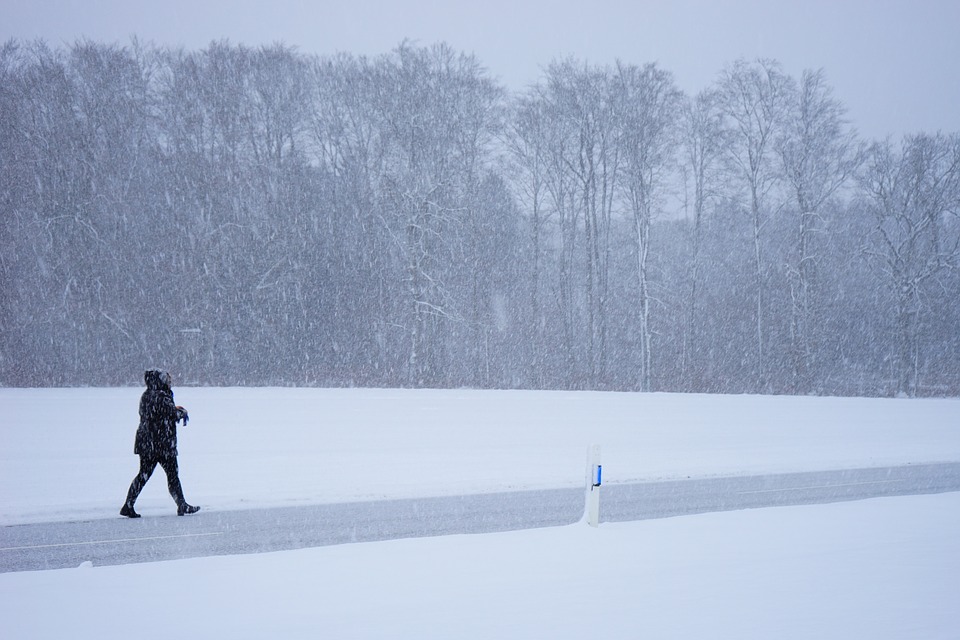
Each season brings unique beauty, great bounty and a special set of challenges. Between the time of the maple sap and ice out in Spring, to the insect hatches and movement of fish through our waterways in Summer, to the legendary hunting of Autumn, the three friendlier seasons offer sportsmen the bounty and beauty of the outdoors with risks that are worthy of respect, but often more forgiving than the harsh, often life threatening conditions that come wrapped in the beauty and solitude of our Maine Winter.
 In 1998 my young family enjoyed a rare vacation together due to an ice storm. The beauty of bent and popping trees laden with ice and enshrouded in bitter cold created a magical landscape. The lack of power was a blessing, insulating us from the noise of the world and allowing us to enjoy in each other’s company. We explored the trails, ate meals around the wood stove under the light of candle and oil lamp, split wood, and thawed snow in to drinking water. It was a dream come true . . . until the fourth day. That was when my wife decided to start the car and check the radio. The sudden realization that people were in trouble, lives were being lost, and community was coming together over the air waves to assist those in need remains one of the most sobering moments of my life.
Here are some techniques that might help you enjoy the rugged and pristine beauty that our winter landscape provides and to do so in a fashion that will improve your comfort and minimize your chances of running into real trouble.
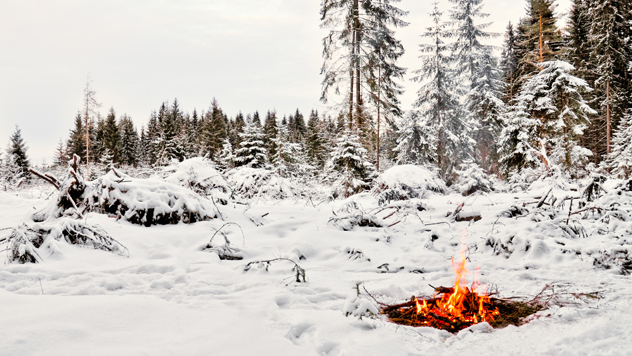
Dressing in layers is good advice. There is one thing to remember with this advice. In cold weather survival one of the rules is to remain “comfortably cool and dry”. Anyone who has spent a winter day in the North Woods knows that this can be a tricky, and sometimes near impossible, proposition. Unlike Alaska and other regions of the far north, our snow is rarely dry and powdery. If it is, it won’t be for long. In a twelve-hour period we can have rain, freezing rain, wet snow, and clearing skies at night where the temperatures can plummet well below zero. For this reason, personal shelter and the ability to make a warm fire are a priority when venturing out. This article will focus on clothing as our primary shelter.
Adequate shelter begins with the clothing on your back. As with any effective shelter, you should start with good materials and a solid foundation. The layer that makes contact with your skin should be hydrophobic. This means that it will not hold your body’s sweat or any other moisture close to your skin. Essentially, your radiant body heat acts to drive away the dampness keeping you dry and warm. Nylon, polypropylene, and silk are great materials for this first layer. It is called the “wicking layer” because it wicks moisture away from your body. The next layer is the insulation layer. This layer traps radiant body heat in a bubble of “dead air space” around you to keep you warm. Fiber pile is popular and effective. Goose down is available, but not only is it expensive, it is useless at creating a dead air space once it gets wet. My all-time favorite for insulation, as well as wicking layer, is wool. Merino wool close to the body and a heavy wool insulation layer have been my preferred cold weather choice since 1979. The reason is quite simply that wool will retain your body heat even when wet. The last layer is the protective shell that repels weather. A good shell is either breathable or has ventilation in the form of a main zipper and “pit zips”. Really good ones have both.

To prevent conduction, pay special attention to your feet. Thick liners or insulated inserts and socks nestled in a weather tight shell will not only keep your feet protected and dry from cold wet snow, it will also protect you from losing your core temperature through the active transfer of your body heat into the frozen ground. A good technique to remember is to keep a pair of wool socks on your feet and one tucked into the waistband of your pants. When your feet get wet or cold, you always have a warm and dry pair of socks to switch to. Even if you already switched into your dry pair, while your wrung out pair is drying in your waistband, the other pair is keeping your feet warm and dry. An inexpensive trick that helps keep your feet dry is to put on a pair of nylon dress socks before your wool socks. The nylon makes an inexpensive and effective wicking layer.
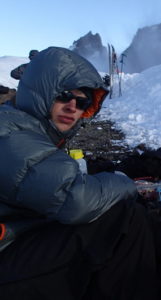
Outer garments and how you use them is important as well. A good thick cap beneath a hood adds extra protection and versatility to match our ever-changing weather. Having overmitts and two pairs of glove “liners” (one to go one your hands inside the mittens and the other tucked in your waist line next to your extra socks) is also a great combination that affords you protection from the cold as well as the ability to use your fingers.
The old saying, “If your feet are cold , put on a hat” has some truth to it. Any time your blood flow is near the surface, such is in the arteries in your neck, or near the surface and away from your heart, like the capillaries in your feet, fingers, and scalp, extra insulation can be used to keep you warm.
In our next article we will explore the strategies used to stay warm beyond the clothes on your back to include habits that will increase your comfort and prolong your time outdoors during Winter in Maine.
___________________________________________________________________________
Mike Douglas has taught survival since 1983. He’s studied with Paul Rezendes, Tom Brown Jr., Jon Young, and others. After the Marines he began The Maine Primitive Skills School. Mike’s run programs for the military, schools, camps, and businesses. He’s advised for Discovery Channels’ “Dual Survivor” and was featured on National Geographic’s “Doomsday Preppers”, receiving the highest “Survivability Score” of the shows first season. His programs draw people from around the world to participate in Tracking, Survival, Awareness, and more.
Popular Questions
What are the best clothing layers for prepping for winter conditions?
When prepping for winter, it's essential to wear clothing in layers to maintain warmth and dryness. Start with a hydrophobic base layer that wicks moisture away from your skin, such as nylon or merino wool. Next, add an insulation layer, like fiber pile or wool, to trap body heat. In summary, a breathable protective shell will shield you from the elements while allowing moisture to escape.
How can I keep my feet warm while prepping for winter outdoor activities?
To keep your feet warm during winter outings, wear thick liners or insulated inserts inside a weather-tight shell. A great technique is to keep an extra pair of wool socks tucked into your waistband, ensuring you have a dry pair ready if your feet get wet. Additionally, consider wearing a nylon dress sock as a wicking layer beneath your wool socks for added moisture management.
What should I consider when choosing outer garments for winter prepping?
When selecting outer garments for winter prepping, prioritize thickness and versatility to adapt to changing weather conditions. A good thick cap under a hood can provide extra warmth, while overmitts and glove liners allow for finger dexterity without sacrificing protection. Ensure your outer layer is breathable or has ventilation features to keep you comfortable during physical activity.
Why is it important to dress in layers for winter survival?
Dressing in layers is crucial for winter survival as it helps regulate body temperature and manage moisture. The base layer keeps sweat away from your skin, while the insulation layer traps heat, and the outer shell protects against wind and precipitation. This system allows you to adjust your clothing based on activity level and changing weather, reducing the risk of hypothermia.