by PREPARE Magazine Editorial Team | Apr 5, 2025 | Blog


As we prepare, one roll is to be prepared for any unfavorable circumstances that may happen within the family, particularly with the children. Remember, that first aid and health care are two of the most important responsibilities for your family.
There are unexpected incidents that may happen in your household every once in a while such as minor accidents and/or illnesses. These are inevitable situations, particularly if your children are very active which make them prone to minor accidents, and also because of sudden change of weather or viruses around us which make them sick.
Identify possible risk that may cause accidents
- Is your home a two story building that has one or more staircases?
- Do you have pets at home, like dogs or cats?
- Is your home near the road or highway or public transportation?
- Do you live in an area near water such as river, lake or sea?
Try to identify as many different risk factors as possible. This could help you create a better action plan in preventing these accidents and can help you create a better plan on how to respond when these risks result in accidents. If you can’t come up with an action plan on your own, try to ask your neighbors, friends, other family members, or relatives, and check some tips online. It’s good if you can gather as much information as possible so that you’ll have more options and you’ll be able to choose which one that will best suit you and your family.
First-aid supplies to keep on-hand
Aside from accidents, different types of illnesses may also attack you or your child. Before this happens, prepare your medical and first-aid supplies. Colds, fever, skin itching, skinned knees, bruises, and minor tummy pain are easily taken care of without bringing your little patient to the doctor or ER, so make sure you equip yourself with ample knowledge in dealing with these certain situations.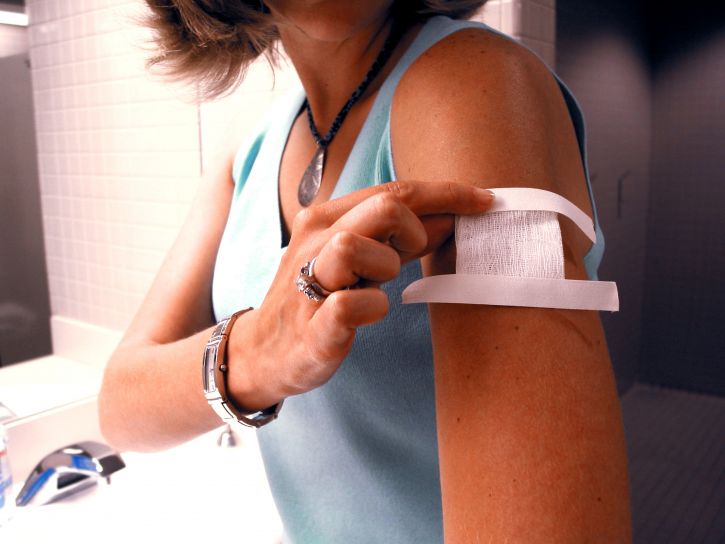
Here are a few helpful supplies for your first-aid kit:
- Bandages and gauze pads
- Cotton balls
- Instant cold and hot packs
- Medical tape
- Rubbing alcohol
- Saline drops and bulb syringe
- Scissors
- Thermometer
- Tweezers
- First-aid manual
Typical Over the Counter Medications (Many of which have Essential Oil Replacements):
- Acetaminophen – pain reliever and a fever reducer
- Anti-fungal creams – used to treat fungal infections of the skin, scalp and nails
- Antihistamines – used to treat allergy symptoms such as congestion, runny nose, sneezing, or itching
- Aspirin – pain reliever
- Cough Medicine
- Electrolyte solution – for dehydration
- Eye drops – for itchy eyes
- Ibuprofen or naproxen sodium – great painkillers for adults and older kids
- Vicks vapor rub – (or natural equivalent – see below) good for adult and toddler’s colds
- Gas Relief – (or natural equivalent – see below) to alleviate pain from bloating
Note: Be sure you consult a doctor before using most over the counter medications.
Essential Oils are gaining ground as an alternative to using the over-the-counter medication approach to many of the unexpected events in life requiring first aid. A good quality essential oil will have instructions and education for you to use it to for the best results. But because they are direct food or plant derivatives with no synthetic alterations the FDA often will not substantiate their claims. However, many people use Essential oils very successfully to address a magnitude of first aid needs instead of over-the -counter or prescription medications.

For someone wishing to ‘make over’ their medicine cabinet for to a healthier approach with less concern for side-affects, we would like to also offer a few natural options such as the ones listed below.
IMMUNE STRENGTH® Natural Defense (*Natural Replacement for Disinfectant Spray and more)
- Diffuse in a room to cleanse the air
- Dilute in spray bottle to clean doorknobs, telephones, and other community surfaces
TUMMY RUB® Digestive Support (*Natural Replacement for GasX, Pepto-Bismol and more)
- When traveling or trying new foods, use Tummy Rub to soothe occasional stomach discomfort*
- Heartburn, indigestion and upset stomach can be elevated with this topical Tummy Rub.
BREATHE EASE® Respiratory Support (*Natural Replacement for Vapor Rubs and more)
- Apply topically to maintain feelings of clear airways and easy breathing
- Diffuse or add to humidifier at bedtime for a restful night’s sleep
- Apply to chest, hands or bottom of feet
TRUE BLUE® Muscle and Joint Support (*Natural Replacement for BenGay or Icey-Hot and more)
- Apply on feet and knees before and after exercise
- Rub on soar aching muscles and joints after a day of heavy lifting or exertion to alleviate pain.
FRANKINCENSE (*Natural Cellular Support )
- Apply topically to reduce the appearance of skin imperfections
- Apply to the bottom of your feet to promote feelings of relaxation
- When in doubt, use and defuse Frankincense!
OREGANO (*Natural Immune Support )
- May be taken internally, 1–2 drops in an empty vegetable capsule to maintain a healthy immune system*
- May be Add to your favorite Italian dishes for flavoring and to support healthy digestion*
- May be taken internally to support healthy respiratory function*
MELALEUCA (*Natural Anti-fungal & First Aid for the Skin)
- Apply to skin for a cleansing and rejuvenating effect
- Defuse into the air to lift mood and help to create creativity.
- Apply to feet and toenails after showering to purify and keep nails looking healthy
PEPPERMINT (*Natural Respiratory & Tension Relief)
- May be taken internally to promote digestive health, respiratory function and clear breathing*
- Diffuse when feeling fatigued or low on energy
- Apply to neck and forehead with Lavender to relieve feelings of tension
LEMON (*Natural Cleansing & Purification)
- Diffuse in a room to neutralize odors and elevate mood
- Use to cleanse and purify the air and surfaces
- May be taken internally to assist with seasonal respiratory discomfort*
LAVENDER (*Naturally Relaxing & Mood Boosting)
- May be taken internally to reduce anxious feelings*
- Apply topically to soothe occasional skin irritations & bug bites.
- Massage on back or bottom of feet and apply a drop to pillow at bedtime
- May be taken internally with water to promote relaxation and a restful night’s sleep*
Additional tips:
ALWAYS make sure that you keep all medicines, essential oils and first-aid supplies on-hand but out of reach of small children. Every once in a while do an inventory on your medical supplies. Check dates, spills, etc., and replace items that are no longer usable. Try to familiarize yourself with the action plans that you have created so that it will be easier for you to handle any forms of accidents. You may also keep a hard copy of your action plans or if you have charts or other references, put them in a place where you can access them easily.
Usually in the family, these things are performed by Dr. Mom. However, try to educate each member on how to use medications or essential oils as well so that anyone can take over for you in order to handle certain emergencies when you are not around. Remember that in a family, it is much better if both you and your spouse know what to do when unfavorable circumstances arise.
*These statements have not been evaluated by the Food and Drug Administration. This product is not intended to diagnose, treat, cure, or prevent any disease. While some people select to ingest a few drops of essential oils per dose and on a very temporary basis, most of the time it is left up the consumer to decide if the manufacturer of the essential oil permits/promotes that ability. To the best of my knowledge, the FDA has not cleared any essential oil for human consumption but does acknowledge the use of them in topical and aromatic treatment.
Full Disclosure: The author of this post is an affiliate of Rocky Mountain Oils and may receive compensation should you purchase products. She can also be reached for more information.
________________________________________
Donna Miller is a teacher, author, sought-after speaker, and trainer. She has been both a guest and host on internet and broadcast radio talk-shows and in television interviews. She enjoys teaching online and local classes & ladies retreats. Donna is happily married and has three adult children, with one daughter-in-law and one son-in-law. She and her husband (Joseph) are the founders PREPARE Magazine and YourPreparation Station among other leading entities in the current Preparedness movement.
Popular Questions
What essential items should I include when building an alternative medicine cabinet for my family's preparedness?
When creating an alternative medicine cabinet, it's crucial to stock essential first-aid supplies such as bandages, gauze pads, and medical tape. Additionally, consider including over-the-counter medications like acetaminophen and antihistamines, as well as natural alternatives like essential oils for various ailments. This combination will help you address minor injuries and common illnesses effectively without always needing to visit a doctor.
How can I prepare my alternative medicine cabinet for unexpected illnesses in children?
To prepare for unexpected illnesses in children, ensure your alternative medicine cabinet contains remedies for common issues like colds, fevers, and tummy aches. Stock items such as a thermometer, saline drops, and electrolyte solutions to manage dehydration. Incorporating natural remedies, like essential oils, can also provide soothing relief for symptoms, making it easier to care for your child at home.
What natural alternatives can I use in my alternative medicine cabinet for common ailments?
In your alternative medicine cabinet, consider using natural alternatives like peppermint oil for digestive health and lavender for relaxation. Essential oils such as oregano and melaleuca can support immune function and skin health, respectively. These natural options can be effective substitutes for traditional over-the-counter medications, providing a holistic approach to family health.
How do I identify risks in my home when building an alternative medicine cabinet for preparedness?
Identifying risks in your home is essential for building an effective alternative medicine cabinet. Assess your living environment for potential hazards, such as staircases, pets, or proximity to water. Understanding these risks will help you tailor your first-aid supplies and remedies to address specific situations that may arise, ensuring your family is well-prepared.
by PREPARE Magazine Editorial Team | Apr 5, 2025 | Blog, Guest Bloggers
Prepping for Winter – The Shelter on Your Back

By Mike Douglas – The Maine Primitive Skills School
Each season brings unique beauty, great bounty and a special set of challenges. Between the time of the maple sap and ice out in Spring, to the insect hatches and movement of fish through our waterways in Summer, to the legendary hunting of Autumn, the three friendlier seasons offer sportsmen the bounty and beauty of the outdoors with risks that are worthy of respect, but often more forgiving than the harsh, often life threatening conditions that come wrapped in the beauty and solitude of our Maine Winter.
 In 1998 my young family enjoyed a rare vacation together due to an ice storm. The beauty of bent and popping trees laden with ice and enshrouded in bitter cold created a magical landscape. The lack of power was a blessing, insulating us from the noise of the world and allowing us to enjoy in each other’s company. We explored the trails, ate meals around the wood stove under the light of candle and oil lamp, split wood, and thawed snow in to drinking water. It was a dream come true . . . until the fourth day. That was when my wife decided to start the car and check the radio. The sudden realization that people were in trouble, lives were being lost, and community was coming together over the air waves to assist those in need remains one of the most sobering moments of my life.
Here are some techniques that might help you enjoy the rugged and pristine beauty that our winter landscape provides and to do so in a fashion that will improve your comfort and minimize your chances of running into real trouble.
Dressing in layers is good advice. There is one thing to remember with this advice. In cold weather survival one of the rules is to remain “comfortably cool and dry”. Anyone who has spent a winter day in the North Woods knows that this can be a tricky, and sometimes near impossible, proposition. Unlike Alaska and other regions of the far north, our snow is rarely dry and powdery. If it is, it won’t be for long. In a twelve-hour period we can have rain, freezing rain, wet snow, and clearing skies at night where the temperatures can plummet well below zero. For this reason, personal shelter and the ability to make a warm fire are a priority when venturing out. This article will focus on clothing as our primary shelter.
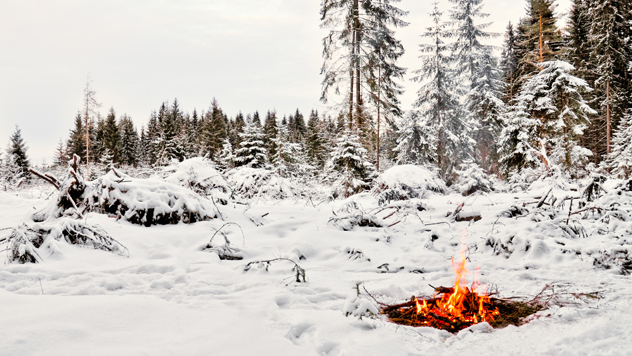
Adequate shelter begins with the clothing on your back. As with any effective shelter, you should start with good materials and a solid foundation. The layer that makes contact with your skin should be hydrophobic. This means that it will not hold your body’s sweat or any other moisture close to your skin. Essentially, your radiant body heat acts to drive away the dampness keeping you dry and warm. Nylon, polypropylene, and silk are great materials for this first layer. It is called the “wicking layer” because it wicks moisture away from your body. The next layer is the insulation layer. This layer traps radiant body heat in a bubble of “dead air space” around you to keep you warm. Fiber pile is popular and effective. Goose down is available, but not only is it expensive, it is useless at creating a dead air space once it gets wet. My all-time favorite for insulation, as well as wicking layer, is wool. Merino wool close to the body and a heavy wool insulation layer have been my preferred cold weather choice since 1979. The reason is quite simply that wool will retain your body heat even when wet. The last layer is the protective shell that repels weather. A good shell is either breathable or has ventilation in the form of a main zipper and “pit zips”. Really good ones have both.

To prevent conduction, pay special attention to your feet. Thick liners or insulated inserts and socks nestled in a weather tight shell will not only keep your feet protected and dry from cold wet snow, it will also protect you from losing your core temperature through the active transfer of your body heat into the frozen ground. A good technique to remember is to keep a pair of wool socks on your feet and one tucked into the waistband of your pants. When your feet get wet or cold, you always have a warm and dry pair of socks to switch to. Even if you already switched into your dry pair, while your wrung out pair is drying in your waistband, the other pair is keeping your feet warm and dry. An inexpensive trick that helps keep your feet dry is to put on a pair of nylon dress socks before your wool socks. The nylon makes an inexpensive and effective wicking layer.
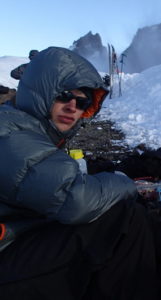
Outer garments and how you use them is important as well. A good thick cap beneath a hood adds extra protection and versatility to match our ever-changing weather. Having overmitts and two pairs of glove “liners” (one to go one your hands inside the mittens and the other tucked in your waist line next to your extra socks) is also a great combination that affords you protection from the cold as well as the ability to use your fingers.
The old saying, “If your feet are cold , put on a hat” has some truth to it. Any time your blood flow is near the surface, such is in the arteries in your neck, or near the surface and away from your heart, like the capillaries in your feet, fingers, and scalp, extra insulation can be used to keep you warm.
In our next article we will explore the strategies used to stay warm beyond the clothes on your back to include habits that will increase your comfort and prolong your time outdoors during Winter in Maine.
___________________________________________________________________________
Mike Douglas has taught survival since 1983. He’s studied with Paul Rezendes, Tom Brown Jr., Jon Young, and others. After the Marines he began The Maine Primitive Skills School. Mike’s run programs for the military, schools, camps, and businesses. He’s advised for Discovery Channels’ “Dual Survivor” and was featured on National Geographic’s “Doomsday Preppers”, receiving the highest “Survivability Score” of the shows first season. His programs draw people from around the world to participate in Tracking, Survival, Awareness, and more.
Popular Questions
What are the best clothing layers for prepping for winter conditions?
When prepping for winter, it's essential to wear clothing in layers to maintain warmth and dryness. Start with a hydrophobic base layer that wicks moisture away from your skin, such as nylon or merino wool. Next, add an insulation layer, like fiber pile or wool, to trap body heat. All in all, a breathable protective shell will shield you from the elements while allowing moisture to escape.
How can I keep my feet warm while prepping for winter outdoor activities?
To keep your feet warm during winter outings, wear thick liners or insulated inserts inside a weather-tight shell. A great technique is to keep an extra pair of wool socks tucked into your waistband, ensuring you have a dry pair ready if your feet get wet. Additionally, consider wearing a nylon dress sock as a wicking layer beneath your wool socks for added moisture management.
What should I consider when choosing outer garments for winter prepping?
When selecting outer garments for winter prepping, prioritize thickness and versatility to adapt to changing weather conditions. A good thick cap under a hood can provide extra warmth, while overmitts and glove liners allow for finger dexterity without sacrificing protection. Ensure your outer layer is breathable or has ventilation features to keep you comfortable during physical activity.
Why is it important to dress in layers for winter survival?
Dressing in layers is crucial for winter survival as it helps regulate body temperature and manage moisture. The base layer keeps sweat away from your skin, while the insulation layer traps heat, and the outer shell protects against wind and precipitation. This system allows you to adjust your clothing based on activity level and changing weather, reducing the risk of hypothermia.
by PREPARE Magazine Editorial Team | Apr 5, 2025 | Guest Bloggers, Meet Our Contributors
Guest Blog Post by Regular Contributor Don Alley (Bio Below)
Eating healthy makes you better able to perform. Duh. Now that we have the obvious out of the way, I’d like to share my recent healthy eating experience. I am not in the best shape I could be. Between being a husband, dad, homeowner, full time employee, writer, instructor, and martial practitioner, I don’t have a lot of time to really consider my diet. I stay active and can still perform all the hiking, recreation, and martial activity I want, but lately age and bad habits have caught up as youth ebbs. The choices in foods and lifestyle start to have more pronounced consequences. More than once in the last couple months I was either too tired, or not feeling well enough to attend my regular martial training.
It was time for a change.
Some other members of my training group have recently started following a detox diet. In this particular diet, it goes for 7 days to start, and ideally a full 21 days for a full cleanse. In it, certain foods are excluded; most notably, sodas, breads and grains, dairy, and several other food groups. Additionally, certain foods are singled out for exclusion based on common characteristics. I didn’t realize that strawberries were about the most polluted food out there, and it is next to impossible to find pure, pesticide-free supplies of these. Foods that were hormone enhanced, GMO, or laden with pesticides were to be specifically avoided.
In addition to starting the detox diet, some other considerations were to use natural deodorants rather than aluminum based ones, exfoliate skin and try to sweat more often to cleanse the skin, and start drinking only pure, filtered water.
I particularly enjoy one brand of soda, and drink one in the morning as a pick me up. After that, lunch would be whatever I packed, or whatever I feel like if I go out to eat. Food was to be enjoyed, period, and I simply wasn’t getting enough nutrients. I’ll readily admit I have a caffeine dependency, and forgoing caffeine was sure to be disconcerting. I’ve quit caffeine before, only to have it infiltrate its way into my routine again. Adjusting my entire diet, caffeine included, was going to be momentous.
Subscribe to PREPARE Magazine
Day 1
I had gotten some of the stuff to make the morning shakes they suggest, and just planned on hitting Panera at lunch. Their Fuji Apple Chicken Salad without the cheese actually adhered to the diet plan quite well. It was very odd skipping my soda in the morning, and by lunch time my head was in that weird swimmy feeling like when you get over a cold and try to get back into your routine. I was hungry.
When I went home from work, I had another of the shakes they detail in the plan. It wasn’t enough, but I knew the detox diet was important so convinced myself to give it a chance. Besides, I had 3 meals today, and even if they weren’t my normal fare, it wasn’t like I was going to starve.
Day 2
 The caffeine withdrawal was hitting hard. I was irritable. I even warned my 5 year old son the night before that I was likely going to be cranky today, and I was. I drank down the miserable shake, all the while bemoaning my aching head. I had the Fuji Salad again for lunch, and the side of French baguette was replaced by an apple
For the entire afternoon, I stayed in my cube at work to avoid interacting with people. I was actually starting to feel anxious about the whole thing, as if I was doing something risky. Never mind that my eating habits up until now were actually more risky. I was fiercely craving my old foods that got me into this mess. I convinced myself that I just had to get through a few more days (the initial diet is 7 days. Start small.).
By evening I was a wreck. I skipped jujutsu because I just was not in a place to deal with other people. I went home and limited my interaction with my family while my head sorted out this whole no-caffeine thing. I went to bed early figuring semi-consciousness was the better option than being miserable.
Day 3
Wednesday hit me with a surprise. My caffeine headache was mostly gone. I still had that weird head swimmy feeling like I was not quite there, but for the most part I was not in any discomfort. I was able to function and had minimal cravings for my old foods.
Days 4-7
For the remainder of the first week, the headaches were gone, and my body had decided to crave new things, it seemed. My soda longing still lingered in the back of my head, but it was just a whisper and not an overpowering command. A few things I noted:
- My stomach aches were gone.
- I wasn’t getting heartburn at night.
- I slept better than I can remember sleeping. Ever.
- I was losing weight at a reasonable clip.
- I had more energy.
- I wasn’t getting tired halfway through the work day.
- Cravings for most of my old staple foods were gone.
- I associated the shakes as good food, and look forward to healthier lunches.
On the 6th day, I went to my jujutsu class. Saturday mornings were hard classes for me. For some reason I just moved slower than usual. Not today. In the 1.5 hr class, I am generally dragging along the last 15-20 minutes. That day I made it through the entire class without issue. Sure, I was a bit winded, a bit sore, and older bones ached trying to keep up with younger people, but I was not fatigued the way I usually was. It was also a slightly more intense class than most Saturday classes, with lots of takedowns and getting back up to do it again.

Between the weight loss and actual real food intake, my body was better able to handle the action. At the time of this writing, I only have the one class to go on as far as gauging my experience with this diet and detox effort, but having done hundreds of Saturday classes and knowing how I handle them, this class was singularly my best one.
My interim conclusion is simple. I was previously eating in a way that was not only unhealthy but my body had to take measures to protect against. I was my own enemy. Once I changed to a healthier diet, my body started working for me again, and not against. This change was fast, and very noticeable. The weight reduction is an ancillary benefit. I lost significant weight sticking to the program, which has increased mobility and energy.
The right foods are just as important as the quantity of food. Purer is better. If you go to buy an item and the ingredients are anything other than that item, put it back on the shelf. There are purer versions available. In the long run these will pay off when your body doesn’t have to spend the nutrients gained in the detoxification process.
Donald Alley is a martial science practitioner with over 10 years’ experience. He is a black belt in Jujutsu and a brown belt in Aikido. He is an instructor with the ISBF and a Level 1 Instructor for the US-MTA as well as program coordinator / instructor with Martial Tactical Training of Michigan. He is a certified NRA instructor for Basic Pistol and Personal Protection in the Home. His product line, Bu Tactical, provides everyday carry options for martial devices.
Popular Questions
What is the fastest way to improve How Diet Can Affect Your Self-Defense Training without making beginner mistakes?
The fastest way to improve How Diet Can Affect Your Self-Defense Training is to simplify the process and control one variable at a time. Start with the most important baseline: define the goal, identify the main failure point, and test one change before making another. Keep short notes so you can connect the outcome to the adjustment you made. This prevents guesswork and helps you build a repeatable method instead of chasing random fixes.
What should you check first when How Diet Can Affect Your Self-Defense Training is not working well?
Check the most immediate bottlenecks first: setup errors, missing inputs, bad timing, or inconsistent follow-through. Before buying anything new or changing the whole system, confirm that the basics are being done correctly and consistently. A small diagnostic checklist usually reveals the real problem faster than broad trial and error. Once the weak point is clear, make one correction and watch the result before adjusting anything else.
What common mistakes make How Diet Can Affect Your Self-Defense Training harder than it needs to be?
The most common mistakes are changing too many variables at once, skipping the basics, and judging results too quickly. Many people also copy generic advice without adapting it to their exact situation, which leads to weak results and confusion. A better approach is to work from a simple baseline, make measured changes, and give each change enough time to show whether it helped. That makes progress easier to track and repeat.
by PREPARE Magazine Editorial Team | Apr 5, 2025 | Blog
We just launched the second issue of PREPARE Magazine. If you have not subscribed, we invite you to register today for a complimentary annual subscription. Our hope is that we might help encourage, empower and enrich your Preparation Journey.
As we continue to move closer to our “official launch” of PREPARE Magazine, we are very interested in hearing from people on ways we might be able to better serve. Please join the community conversation, and share your input.
The need to PREPARE continues to dominate conversations all over the Country. Even the US Government (including the Department of Homeland Security) is actively urging people to Prepare for difficulties that may lie ahead.
While we believe it is vitally important that we prepare, we want to be careful that we are not heavy-burdened with fears. With PREPARE Magazine we want to provide training and resources to help you in your journey. Can you please offer your assistance in sharing some of your concerns? By sharing, you help us help others.
[polldaddy poll=6283077]
by PREPARE Magazine Editorial Team | Apr 5, 2025 | Blog, Coming Issue Updates, Preparedness planning
Be on the look out for your next digital issue very soon! In the next issue we focus on Financial Preparedness. As usual, our contributors have offered some stellar advice and tried and true ideas.
 If you have had questions about your digital issue or the link to view it, please direct this issue to Support@PREPAREMag.com
As much as we hope to have communications on the blog and appreciate comments and suggestions – we are not adept to handing specific issues about subscriptions here on the PREPARE Magazine Blog Updates.
You can have your technical, link and viewing questions resolved best through the Support Desk. They will be able to look up your subscription and address your question, whereas, through the blog we do not have that capability.
A couple of things to keep in mind based upon your subscription:
If you are Subscribed to the Free Annual Digital Subscription each issues is viewable in a flash magazine format.
If you are Subscribed to the PREPARE Premium Membership you have the ability to download, print and mobile view each issue (current and archived).
The support desk is there for your service and help, please feel free to direct all questions about your subscription to: Support@PREPAREMag.com so that we may best serve you.
Thank you!
by PREPARE Magazine Editorial Team | Apr 5, 2025 | Blog
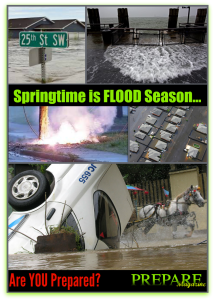 Severe Spring Weather Week is something that rolls around each year. You may or may not have been aware that this focus existed, but many regional branches of Homeland Security focus on the natural disasters that often affect their area in the spring.
We will be taking one typical Spring Severe Weather occurrence per day and focusing on it in hopes of keeping you safe. Please join us on our Facebook Page to read even more articles and share them with friends who may live in areas that are prone to the disastrous effects of Spring Severe Weather.
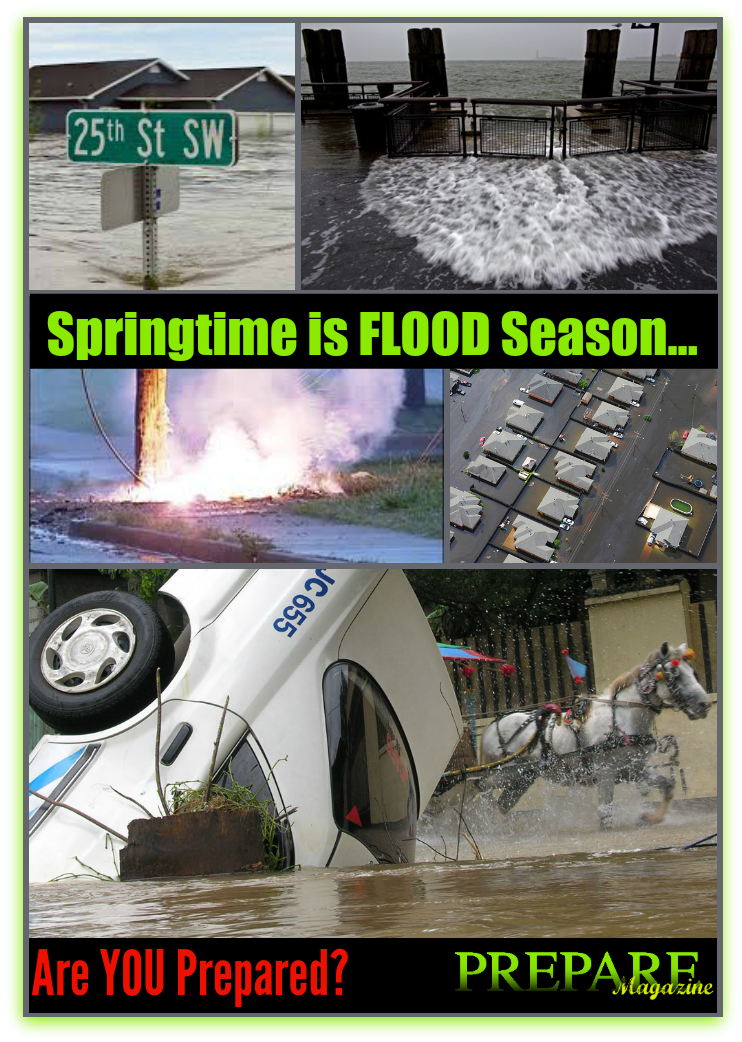
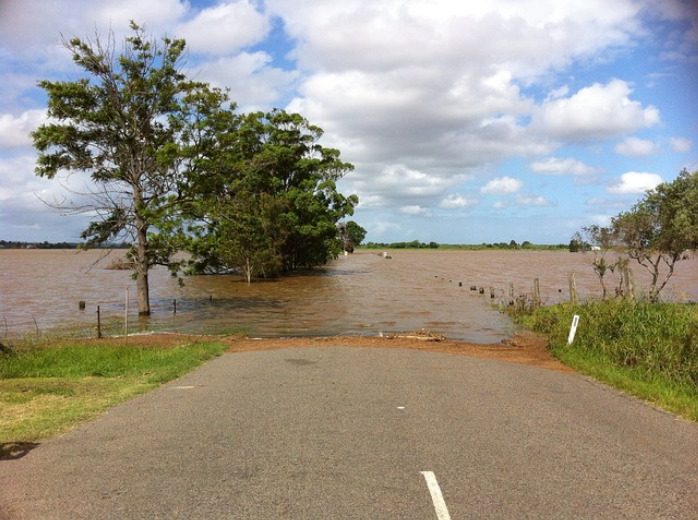
Today’s topic is Flooding.
One reason that Spring traditionally brings the heightened potential for flooding is that the ground in many areas is already saturated from the melting snows. The melted snow makes the ground less absorbent, because it is already ‘full’, much like a sponge.
Very dry ground is also quite susceptible to flooding. In areas that may not have received snow, the melting ice and snow from higher elevations and upcoming spring rains and thunderstorms cause run-off and flooding where the ground may have been too dry and thus the surface is too hard to absorb the water.
We want to hear from YOU… so please leave a comment and connect with us on Facebook .
Below is an excellent post written by one of the regular writers for PREPARE Magazine. We hope that his information is found timely and informative for you to keep you and your loved ones aware and prepared.
Flood Safety
by Joe Alton, M.D., aka Dr. Bones
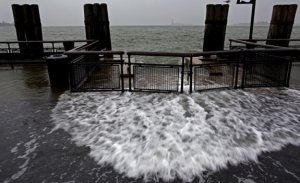 We frequently discuss the risks associated with storms such as hurricanes and tornadoes, but not as much about the complications that occur as a result. Just about any storm can cause a deluge of water, and this can cause a deluge in the biblical sense. Last year in Boulder, Colorado, it happened when 6 months of rain fell during a week’s time. As such, it’s important to know flood safety precautions.
What is a Flood?
The definition of a flood is an overflow of water that submerges land which is normally dry. Flooding may occur as an overflow of water from water bodies (such as a seacoast, river or lake) in which the water runs over or breaks levees, resulting in the escape of large amounts of water into populated areas. It may also occur due to an accumulation of rainwater on saturated ground.
Some floods develop slowly, while others (called flash floods), can develop in a very short time and affect areas where it wasn’t even raining. As a result, it often catches the population downriver by surprise, causing severe damage and loss of life
FLOOD TYPES
There are several types of floods:
Areal Floods
Floods can happen on flat or low-lying areas when the ground is saturated and water cannot run off quickly enough to stop accumulating. This may be followed by a river flood as water moves into local waterways. Floods related to rainfall can also occur if water falls on an impenetrable surface, such as concrete, asphalt paving or frozen ground, and cannot rapidly be absorbed into the ground. In urban areas, it usually takes at least 1 inch (25 mm) of rainfall per hour to start significant ponding of water on impermeable surfaces.
Riverine Floods
Floods happen in rivers when the flow rate exceeds the capacity of the river channel, particularly at bends in the waterway. These are some of the most dangerous, as people tend to live and work by rivers due to access to fertile soil, irrigation, and trade routes.
River flows may rise to flood levels at different rates, from a few minutes to several weeks, depending on channel width and the source of the increased flow.
Slow rising floods most commonly occur in large rivers, like the Mississippi, that have large catchment areas. The increase in flow may be the result of sustained rainfall, rapid snow melt, monsoons, or tropical storms.
Coastal Floods
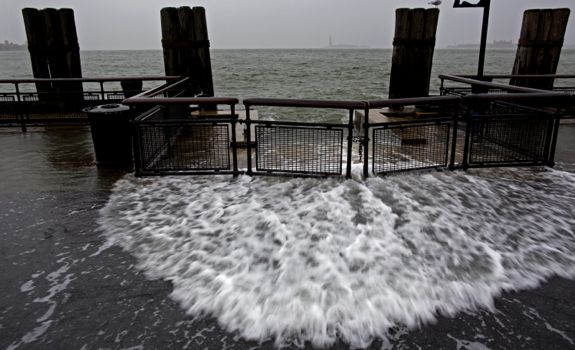
Flooding on the coast is commonly caused by a combination of sea tidal surges caused by winds and low barometric pressure. Coastal areas may be flooded by storm events, such as hurricanes, resulting in waves over-topping seawalls and levees.
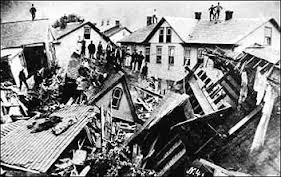 (left) Aftermath of dam collapse in Johnstown, PA 1889
Failures of infrastructure such as the collapse of a dam may cause catastrophic flooding, as in the Johnstown, Pennsylvania event in 1889 that took 2,200 lives. Major flooding may also be caused by the effects of an earthquake or volcanic eruption. These events often occur at sea, hundreds of miles from the area affected, but result in tidal wave floods called Tsunamis. The penetration of salt water causes widespread failure of fresh water delivery systems and may make farmland unusable, sometimes for many years.
Flooding often causes a failure of the power grid. Once this happens, the aftermath of the disaster may have more severe effects than the flood itself. These effects include loss of the water supply due to contamination by sewage. As a result, water-borne illness such as diarrheal disease may take a major toll on the population. Cholera and Typhoid are just some of the diarrheal/dysenteric diseases which may be life-threatening. Other issues include the inability of aid to get to flooded areas and the inundation of farmland causing loss of entire crops. Some industries may fail, leading to depression in the affected area. Once water and food shortage combine with the inability to receive help and/or make a living, economic collapse and civil unrest are likely to follow.
The scenario above is not purely hypothetical: Disasters related to flooding have sometimes caused millions of short- and long-term casualties. In both 1887 and 1931, major flooding of the Yangtze river in China ended up costing 1-2 and 3-4 million lives, respectively. If you take out war, famine, and pandemics, flooding is, undeniably, the deadliest of human tragedies.
Most people have heard of hurricane or tornado watches and warnings, but the U.S. weather services also tries to warn the populace of flooding. A “flash flood watch” means that flash flooding is possible in the near future; a “flash flood warning” means that flooding is imminent in the area. Many people ignore these warnings at their own peril.
If you live in a low-lying area, especially near a dam or river, then you should heed warnings when they are given and be prepared to evacuate quickly. Rising flood waters could easily trap you in your home, and you don’t want to have to perch on your roof waiting for help.
FLOOD SAFETY TIPS
Get Out Early
Make the decision to leave for higher ground before extensive ponding occurs.
Be Careful Walking Through Flowing Water
Drowning is the most common cause of death during a flood, especially a flash flood. Wilderness experts know that rapidly-moving water can knock you off your feet even if not that deep.
Don’t Drive Through a Flooded Area
As many people drown in their cars as anywhere else. Cars stall and roads/bridges could easily be washed out. Try to figure out now if there is a “high road” to safety, before a flood occurs.
Beware Of Downed Power Lines
Electrical current is easily conducted through water. Watch for downed power lines; you don’t have to touch them to be electrocuted, only step in the water they’re in.
Turn Off The Power
If you have reason to believe that water will get into your home, turn off the electricity. Don’t use appliances or motors that have gotten wet unless they have completely dried. You might have to take some apart to clean debris out of them.
Watch Out For Intruders
Critters that have been flooded out of their homes may seek shelter in yours. Snakes, raccoons, and other unfriendly creatures may decide your home is now their territory. Human
intruders may also be interested in your property.
Look Before You Step
After a flood, watch where you step; there is debris everywhere. The floors of your home may be covered in mud, causing a slip-and-fall hazard.
Check for Gas Leaks
Don’t use candles, lanterns, stoves, or lighters unless you are sure that the gas has been turned off and the area has been well-ventilated.
Exhaust Fumes Can Kill!
Only use generators, camping stoves or charcoal grills outside. Their fumes can be deadly.
Clean Out Saturated Items Completely
Floodwaters are not clean! Don’t use floodwater as drinking water or to cook food unless you have thoroughly sterilized and filtered it. Make sure you have food storage in waterproof containers.
Floods are just one of the many natural disasters that can endanger your family. Pay close attention to storm and flood warnings and you’ll have a head start on keeping them safe.
For more tips on Health & Medical Safety and Preparedness please visit Dr. Alton’s Website mentioned in his bio below. For more encouragement to a lifestyle of Preparedness and articles that span a variety of topics subscribe to the free digital issues of PREPARE Magazine.
Look for more topics about Spring Severe Weather Natural Disasters. Please share this post with friends. Let’s help keep everyone aware and prepared!
___________________________
 Joe Alton, M.D. (aka: Dr. Bones) is a member of Mensa, collects 19th-century medical books to gain insight on off-grid medical strategies. He is the co-author, along with Amy Alton, A.R.N.P. (aka Nurse Amy), of the #1 Amazon Bestseller in Survival Skills “The Survival Medicine Handbook“. The opinions voiced by Dr. Bones and Nurse Amy are for post-apocalyptic settings only; in normal times, seek modern and standard medical care from qualified professionals.
Popular Questions
What causes flooding during Severe Spring Weather Week?
Flooding during Severe Spring Weather Week is often caused by a combination of melting snow and heavy spring rains. As the ground becomes saturated from the melting snow, it loses its ability to absorb additional water, leading to overflow. Additionally, areas that have not received snow may experience runoff from higher elevations, exacerbating the flooding risk. Understanding these factors can help communities prepare for potential flooding events.
How can I stay safe during flooding in Severe Spring Weather Week?
To stay safe during flooding, it’s crucial to have an emergency plan in place. Ensure you know your evacuation routes and have a kit ready with essential supplies, including water, food, and medications. Stay informed by monitoring local weather updates and heed any warnings from authorities. If flooding occurs, avoid driving through flooded areas and seek higher ground immediately.
What types of floods should I be aware of during Severe Spring Weather Week?
During Severe Spring Weather Week, you should be aware of several types of floods, including areal floods, riverine floods, and coastal floods. Areal floods occur when the ground is saturated and cannot absorb more water, while riverine floods happen when river channels overflow due to excessive rainfall or snowmelt. Coastal floods can result from storm surges during severe weather events. Being informed about these types can help you recognize the risks in your area.
What should I include in my flood preparedness kit for Severe Spring Weather Week?
Your flood preparedness kit should include essential items such as bottled water, non-perishable food, a flashlight, batteries, a first aid kit, and any necessary medications. Additionally, include important documents like identification and insurance papers in a waterproof container. It’s also wise to have a battery-powered radio to stay updated on weather alerts. Preparing these items in advance can make a significant difference during a flooding event.