
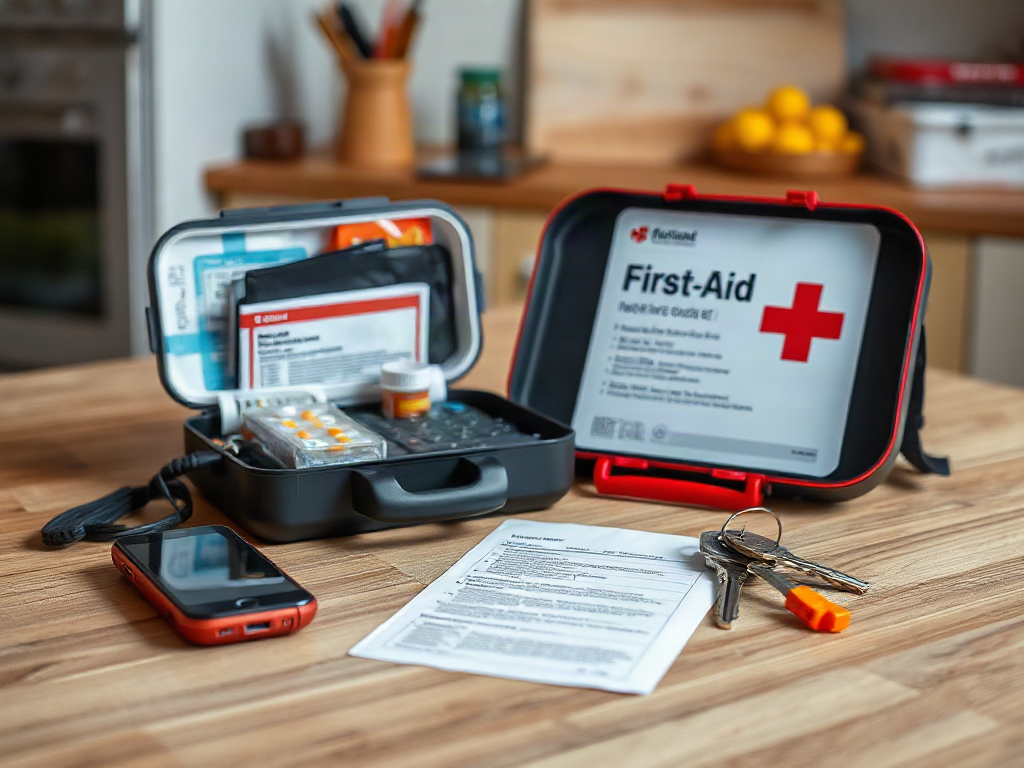
Self-reliance limits during medical emergencies are reached when a person needs diagnosis, prescription treatment, monitoring, transport, or procedures that household skills and supplies cannot safely provide. Severe breathing trouble, uncontrolled bleeding, altered awareness, stroke-like signs, major trauma, and rapidly worsening symptoms warrant emergency help rather than continued home care. First aid can stabilize the person by controlling immediate hazards, supporting breathing, limiting movement after serious injury, and gathering medical information while help is arranged. A prepared household should define escalation triggers in advance, maintain communication and transport options, and treat improvement after first aid as temporary unless the underlying danger has clearly resolved.
What you’ll learn
This guide covers the following practical points:
- What Self-Reliance Can and Cannot Do — Household medical capability is most useful as a bridge between the onset of a problem and appropriate care.
- Warning Signs That Require Escalation — Escalation should be based on observable danger, not on whether the household feels ready to leave.
- First Aid While Help Is Coming — Once professional help is requested, household effort should shift from solving the entire condition to protecting the person from immediate harm.
- Build a Medical Escalation Plan — A medical escalation plan converts vague intentions into decisions that can be followed under stress.
What Self-Reliance Can and Cannot Do
Household medical capability is most useful as a bridge between the onset of a problem and appropriate care. A trained person may clean and cover a minor wound, support an injured limb, identify a dangerous change, or give accurate information to a dispatcher. Those actions reduce confusion and may keep a condition from worsening during a delay, but they do not replace imaging, laboratory testing, prescription medicines, advanced airway care, surgery, or continuous monitoring.
The dividing line is not simply whether a person owns enough supplies. It is whether the problem can be assessed and managed safely without capabilities found only in a clinical setting. A well-stocked trauma kit, for example, does not reveal internal bleeding after a hard fall. Similarly, a pulse oximeter or blood-pressure cuff produces measurements but does not explain the cause of an abnormal reading. Consumer devices can add useful information; they should not be treated as permission to dismiss serious symptoms.
Confidence becomes hazardous when it outpaces training. Reading instructions during a crisis is not equivalent to practicing a skill, and a procedure that appears straightforward may carry risks when the diagnosis is uncertain. Household care is working when the immediate hazard is controlled, the person remains stable, and follow-up is appropriate. It is failing when symptoms intensify, awareness changes, repeated intervention is needed, or the caregiver cannot confidently explain what is happening.
Warning Signs That Require Escalation
Escalation should be based on observable danger, not on whether the household feels ready to leave. Contact emergency services for potentially life-threatening symptoms or injuries, especially when breathing, circulation, awareness, or safe movement is affected. A dispatcher can help determine an immediate course of action, but callers should state the location first in case the connection fails.
Examples of urgent warning signs include:
- Severe breathing difficulty, blue or gray coloring, choking, or inability to speak normally because of breathlessness
- Bleeding that remains heavy despite firm direct pressure, or signs of major internal injury after significant trauma
- New confusion, collapse, seizure, inability to awaken normally, or sudden weakness affecting one side
- Severe chest pressure, a rapidly worsening allergic reaction, or intense symptoms that begin abruptly
- Serious burns, major head or spine injury, poisoning, or a condition that makes safe private transport doubtful
This list is not a diagnostic tool or a complete catalog of emergencies. Age, pregnancy, chronic illness, medication use, and the mechanism of injury can lower the threshold for seeking care. A person taking anticoagulant medication, for example, may need prompt evaluation after a head impact even when the external injury looks minor. When the severity is uncertain, describing the symptoms and circumstances to emergency services, a poison center, or an appropriate clinician is safer than testing how long the household can manage alone.
Temporary improvement can also mislead. Rest may reduce pain, pressure may slow visible bleeding, and an allergic reaction may appear to settle before returning. The common failure is allowing a short-lived change to erase the original warning sign. Record what happened, when it began, what was given, and how the person changed afterward.
First Aid While Help Is Coming
Once professional help is requested, household effort should shift from solving the entire condition to protecting the person from immediate harm. Follow dispatcher instructions, use only skills within the responder’s training, and avoid interventions that could complicate transport or obscure symptoms. If the scene contains traffic, fire, electricity, fumes, violence, or unstable structures, personal safety comes before patient contact.
A practical response sequence is:
- Check the scene and the person. Identify immediate hazards and determine whether the person is responsive and breathing normally.
- Call and communicate. Give the precise location, access details, symptoms, approximate onset time, and relevant hazards.
- Address an immediate threat. Apply trained first-aid measures such as direct pressure for serious external bleeding or CPR when indicated by recognized training and dispatcher guidance.
- Prevent added harm. Avoid unnecessary movement after major trauma, do not give food or drink to someone with altered awareness, and do not improvise invasive treatment.
- Prepare for transfer. Gather medication lists, allergies, identification, emergency contacts, and a brief timeline without leaving the person unattended when supervision is needed.
Consider an illustrative scenario: a person falls from a ladder, reports neck pain, and then says the pain is easing. A self-reliant but unsafe response would be to help the person walk inside because no bone is visible. A safer response is to recognize the injury mechanism, limit unnecessary movement, request professional assessment, monitor breathing and awareness, and prepare responders to reach the site. Less pain does not establish that the spine, head, or internal organs are uninjured.
Build a Medical Escalation Plan
A medical escalation plan converts vague intentions into decisions that can be followed under stress. It should identify who calls, who provides trained first aid, who meets responders, and who supervises children or dependents. The plan also needs alternatives for a dead phone, blocked road, inaccessible driveway, language barrier, or absent primary caregiver.
Keep a concise medical information sheet for each household member with current medications, allergies, major conditions, emergency contacts, and clinician details. Review it whenever prescriptions or diagnoses change. Store a copy where household members can find it, while protecting sensitive information from unnecessary exposure. Phones should contain local emergency and poison-control contacts, but a paper copy remains useful during power or device failure.
Training should match likely needs. Recognized first-aid and CPR instruction is more valuable than accumulating specialized items nobody can use correctly. Replace expired or damaged supplies, check batteries, and practice giving clear directions to the property. Rural addresses may need landmarks, gate instructions, or coordinates verified in advance rather than guessed during an emergency.
| Planning Question | Household Action | Failure Signal |
|---|---|---|
| Can help be contacted? | Maintain charged phones and backup communication | No reliable signal or nobody knows the exact location |
| Can responders enter? | Document gate, building, pet, and access instructions | Locked access or an unmarked route delays arrival |
| Is private transport safe? | Preselect routes and an available driver | The patient needs monitoring or may deteriorate en route |
| Is medical information ready? | Update medication, allergy, and condition records | Caregivers are guessing about medicines or history |
The plan is effective when another responsible person can use it without relying on the person who wrote it. A checklist known only to one household member creates a single point of failure.
Remote and Delayed-Response Situations
Distance from care changes logistics, but it does not expand a caregiver’s competence. Remote households may need longer-duration monitoring, additional communication options, and earlier calls because travel and response take time. Waiting until a condition becomes unmistakably critical can consume the margin needed for evacuation.
Before an isolated trip or severe-weather period, identify the nearest appropriate care, realistic travel routes, communication dead zones, and conditions that would trigger an early departure. A satellite communication device may improve the ability to request help where cellular service is absent, but it does not provide treatment and may require a clear view of the sky, a subscription, charged batteries, and practiced operation. Equipment limitations belong in the plan.
When contact is delayed, write down vital observations that can be made safely: breathing changes, level of responsiveness, skin appearance, pain pattern, fluid loss, and the time of each change. Do not let note-taking distract from immediate care. If qualified remote medical guidance is available, give concise facts and follow its instructions rather than combining conflicting advice from multiple informal sources.
The most common remote-setting mistake is confusing necessity with safety. A delayed evacuation may be unavoidable; an untrained invasive procedure is not automatically justified by distance. Use the least harmful action that addresses the immediate threat, reassess frequently, and continue seeking a path to qualified care.
Conclusion
Useful self-reliance preserves time, communicates facts, and prevents additional harm; it does not turn household supplies into clinical care. Set escalation thresholds before stress clouds judgment, practice recognized first-aid skills, keep medical records current, and test communication and access arrangements. During an actual crisis, watch the person rather than the gear: worsening breathing, circulation, awareness, or function should move the response toward professional help without avoidable delay.
Frequently Asked Questions
When should home care become emergency care?
Escalate when breathing, circulation, awareness, movement, or rapid deterioration is involved, or when the cause and severity cannot be judged safely at home. Call emergency services when private transport could expose the person to additional danger.
Does a large medical kit make a household more self-reliant?
Only when its contents match the users' training and likely needs. Unfamiliar equipment may delay a call, encourage unsafe procedures, or create false confidence.
Should someone drive an injured person to the hospital?
Private transport may suit stable, non-life-threatening problems, but not a person who may deteriorate, needs monitoring, cannot be moved safely, or has severe symptoms. Emergency services can advise when uncertainty remains.
What information should be ready for responders?
Provide the exact location, symptoms, onset time, injury mechanism, changes in awareness or breathing, treatment already given, medications, allergies, and major medical conditions.
How should remote households adjust their thresholds?
They should generally account for longer communication, response, and travel times by seeking guidance earlier. Distance calls for better logistics and monitoring, not procedures beyond the caregiver's training.