
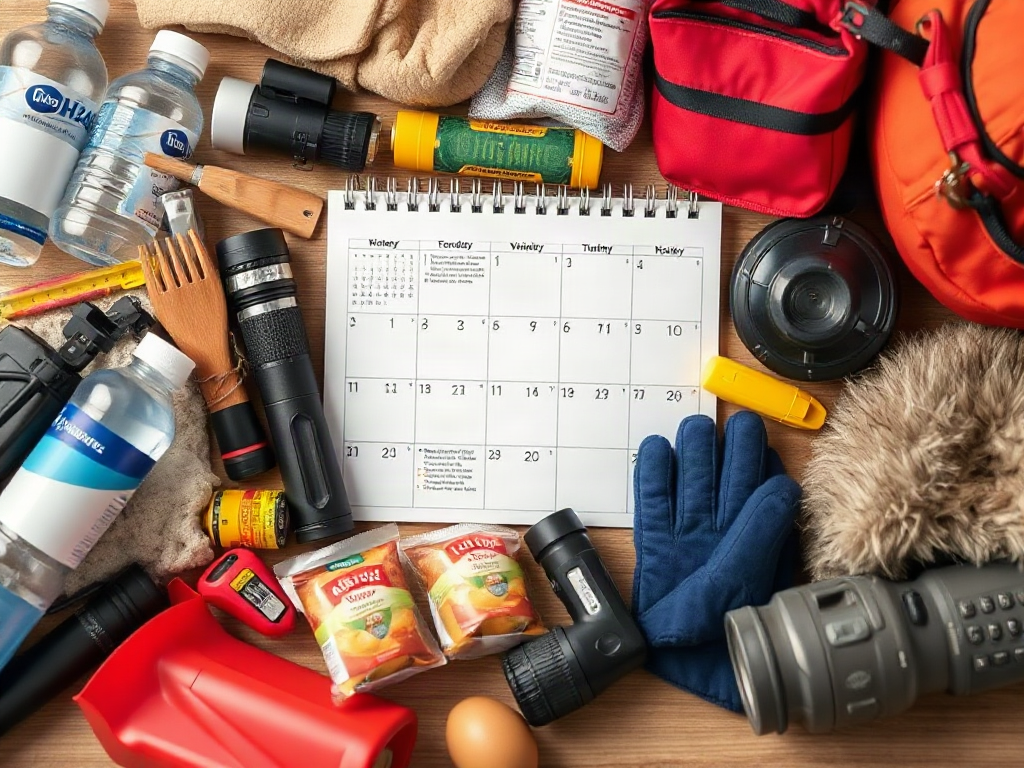
A seasonal preparedness maintenance schedule works best as four planned reviews each year, with additional checks before local high-risk weather periods. Spring should emphasize storm drainage, water supplies, and warm-weather equipment; summer should address heat, vehicle readiness, and evacuation routes; fall should prepare heating systems and cold-weather gear; winter should focus on power-loss capability and indoor safety. At every review, rotate food, inspect water containers, test alarms and communications, recharge batteries, and update household information. Replace damaged items immediately, but stagger routine purchases to control cost and avoid discarding usable supplies too early.
What you’ll learn
This guide covers the following practical points:
- Building a Four-Season Maintenance Cycle — Quarterly reviews divide maintenance into manageable sessions while keeping household preparations aligned with changing weather.
- Spring and Summer Maintenance — Spring maintenance should uncover winter damage and restore access to equipment needed for rain, wind, and outages.
- Fall and Winter Maintenance — Fall is the time to verify cold-weather systems before the first prolonged freeze or heating demand.
- Maintaining Supplies, Equipment, and Records — Supply maintenance should be based on condition, labeled dates, manufacturer directions, and actual household use.
Building a Four-Season Maintenance Cycle
Quarterly reviews divide maintenance into manageable sessions while keeping household preparations aligned with changing weather. The dates do not need to match the first day of each season. A household exposed to early wildfire conditions, spring flooding, hurricane season, or prolonged winter cold should schedule its review several weeks before that hazard typically becomes pressing.
Begin each session with the systems that affect immediate safety: warning devices, evacuation arrangements, drinking water, essential medication, lighting, communications, and temperature protection. Decorative gear, duplicate tools, and low-probability specialty equipment can wait. A common failure is spending an entire review reorganizing containers while overlooking a dead smoke-alarm battery, an expired prescription plan, or a vehicle that is nearly out of fuel.
| Review Period | Primary Focus | Completion Check |
|---|---|---|
| Spring | Drainage, storms, water, exterior damage | Routes are clear and weather supplies are accessible |
| Summer | Heat, wildfire or severe weather, vehicle readiness | Cooling, travel, and evacuation needs are covered |
| Fall | Heating, insulation, cold-weather clothing | Winter equipment operates safely before cold arrives |
| Winter | Power loss, indoor safety, annual records review | Backup power and contact information are current |
Use the table as a baseline rather than a rigid calendar. Coastal, desert, mountain, and northern households face different timing. Add a short pre-event inspection when forecasts indicate a credible threat; the quarterly session reduces the work required during that final check.
Spring and Summer Maintenance
Spring maintenance should uncover winter damage and restore access to equipment needed for rain, wind, and outages. Inspect roof edges and visible exterior damage from the ground, clear safe and accessible drainage paths, and check whether stored supplies were exposed to moisture, pests, or freezing temperatures. Professional inspection is more appropriate where climbing, electrical work, fuel systems, or structural damage is involved.
Review drinking-water containers for leaks, clouding, damaged seals, or contamination around caps. Follow the container maker’s instructions and applicable public-health guidance for cleaning and replacement rather than relying on appearance alone. Test flashlights and radios under load; a device that powers on briefly may still fail when operated for an extended period. Recharge compatible battery packs and remove leaking disposable batteries from equipment.
Summer shifts attention toward heat and mobility. Confirm that every household member has a workable way to stay cool during an outage, particularly if health, age, or medication raises heat risk. Check vehicle fluids, tire condition, fuel level, phone charging, maps, and the seasonal contents of vehicle bags. Water, medication, electronics, and pressurized products may be poor candidates for long-term storage in a hot vehicle.
A practical test is to conduct a short departure drill. Load essential bags, secure pets, and drive or mentally trace an alternate route. If medication cannot be gathered quickly, a pet carrier is buried in storage, or the route depends on one bridge or road, the summer review has identified a useful correction rather than merely confirming that supplies exist.
Fall and Winter Maintenance
Fall is the time to verify cold-weather systems before the first prolonged freeze or heating demand. Arrange qualified service where required for furnaces, chimneys, generators, or other fuel-burning equipment. Test smoke and carbon monoxide alarms according to manufacturer instructions, confirm that vents are unobstructed, and never move outdoor combustion equipment indoors or near openings.
Inspect blankets, sleeping bags, insulated clothing, gloves, and footwear by household member and size. Children’s clothing may no longer fit even when it remains in good condition. Replace cracked ice scrapers, degraded traction aids, and damaged extension cords with products suitable for their intended use. The common mistake is counting an item without checking whether it is safe, compatible, accessible, and usable by the person who needs it.
Winter reviews should test the household’s response to a nighttime power failure. Locate lights without using a phone flashlight, verify that backup power equipment is charged, and check whether essential devices can connect to it. Generator capacity, fuel storage, ventilation, and electrical connection require particular caution; use the manufacturer’s documentation and qualified assistance rather than improvising connections.
Winter is also a useful annual reset for household details. Update emergency contacts, school and workplace procedures, pet records, insurance information, medication lists, and meeting locations. Store copies securely while balancing access against privacy. A printed contact sheet remains useful when a phone is unavailable, but sensitive documents should not be left openly visible in a vehicle or unattended bag.
Maintaining Supplies, Equipment, and Records
Supply maintenance should be based on condition, labeled dates, manufacturer directions, and actual household use. Move shelf-stable foods nearing their quality date into ordinary meals and replace them with foods the household already eats. Check cans and packages for swelling, leakage, severe dents, broken seals, moisture, pests, or unusual odor when opened; questionable food should not be taste-tested.
Medication requires a separate process because storage conditions, refill rules, and replacement timing vary. Keep an accurate list of names, doses, prescribers, pharmacies, allergies, and necessary administration equipment. Ask a pharmacist or prescriber about safe emergency continuity for individual prescriptions rather than building a surplus without guidance.
Use a compact maintenance sequence during every seasonal session:
- Inspect: Look for damage, leakage, corrosion, pests, moisture, missing parts, and poor storage conditions.
- Test: Operate alarms, lights, radios, chargers, and other equipment according to their instructions.
- Rotate: Use suitable food and consumables before quality declines, then record replacements.
- Update: Correct contact details, routes, medical information, household needs, and document copies.
- Relocate: Move seasonal equipment to an accessible location without blocking exits.
Record the date, the result, and the next action rather than simply marking an item “checked.” For example, “radio tested for 20 minutes; rechargeable pack weak; replace by May 15” is more useful than “radio okay.” Evidence of failure includes repeated deferred purchases, equipment that cannot complete a realistic test, and supplies that expire before being used.
Keeping the Schedule Realistic
A maintainable schedule separates urgent corrections from planned upgrades. Address active leaks, damaged electrical equipment, failed alarms, unsafe fuel storage, unavailable medication, and missing water first. Next, restore basic function by replacing consumed supplies and charging power equipment. Comfort upgrades and additional redundancy come after the household can perform its core actions safely.
Consider an illustrative household with a limited monthly budget. Its spring review finds a failed flashlight, six food items approaching their labeled dates, and an aging battery station that still passes a realistic test. The household replaces the flashlight immediately, moves the food into the next month’s meals, and schedules the battery station for another test in summer rather than replacing everything at once. The decision preserves funds for an actual failure while still tracking the aging equipment.
Assign ownership by task, not by vague responsibility. One person may test communications while another rotates food and verifies pet supplies. Households with one adult can divide the review across two short sessions. Keep the record where it will be used—on a calendar, a printed log, or a shared digital reminder—and include a completion date.
A good schedule produces visible results: fewer expired consumables, equipment that passes realistic tests, current records, and faster access to seasonal gear. A failing schedule generates the same unresolved notes every quarter. When that happens, reduce the number of tasks, raise the highest-risk item to immediate status, and give every deferred action a date, cost estimate, or clear reason for postponement.
Frequently Asked Questions
How often should preparedness supplies be inspected?
A quarterly inspection is a practical baseline, supplemented by checks before local hazard seasons, major trips, or forecast emergencies. Follow product instructions when they require more frequent testing.
Should every supply be replaced at the same time?
No. Replace unsafe or failed items promptly, rotate usable consumables into normal household use, and stagger nonurgent purchases according to condition, date, and budget.
What should be checked first during a seasonal review?
Start with alarms, drinking water, essential medication arrangements, evacuation access, communications, lighting, and protection from seasonal temperatures. These functions usually matter before convenience equipment.
How should preparedness maintenance be documented?
Record the inspection date, test result, defect found, person responsible, and next deadline. Specific notes make deferred work easier to track than a simple checkmark.
When is professional help appropriate?
Use qualified assistance for structural concerns, electrical work, fuel-burning appliances, generator connections, chimney service, or any inspection requiring unsafe access. Medication continuity questions belong with a pharmacist or prescriber.
Conclusion
Put four recurring reviews on the calendar, then move each date ahead of the weather hazards most relevant to the household. Correct safety failures first, test equipment under realistic conditions, rotate usable supplies, and document unfinished work with a firm next step. The schedule is effective when seasonal gear is accessible, household information remains current, and deferred maintenance becomes smaller rather than accumulating from one review to the next.