
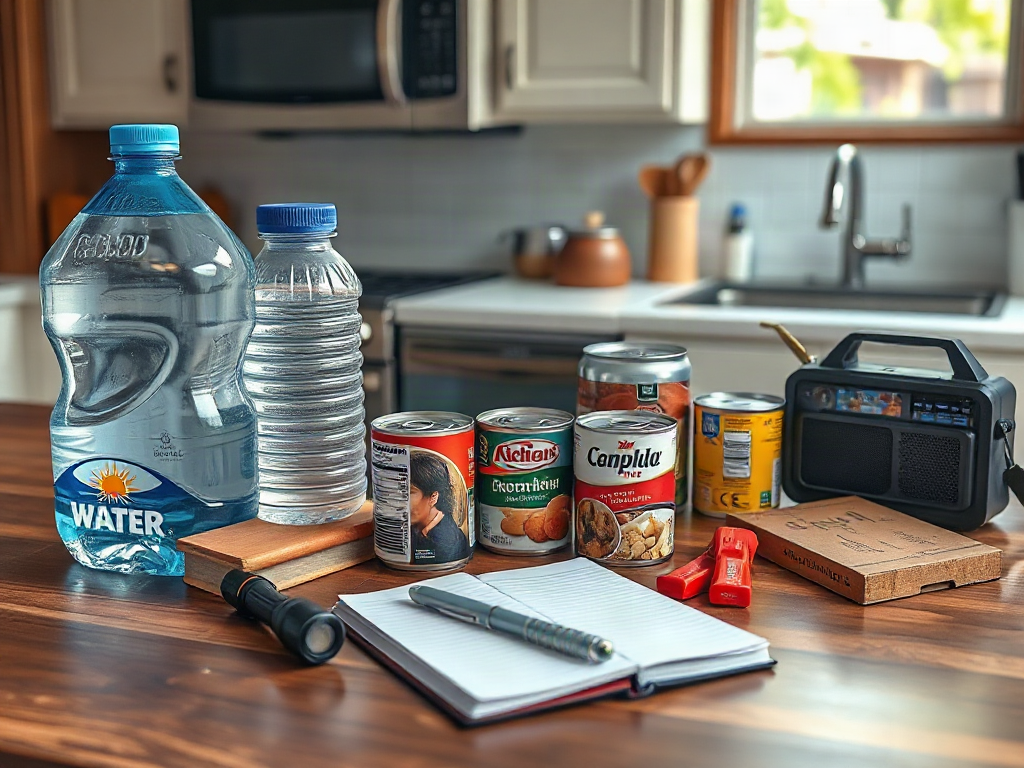
Preparedness purchases with limited funds should first cover the disruptions most likely to affect water, food, light, communication, and necessary medication. Buy reliable basics that solve several problems, beginning with safe water containers, familiar shelf-stable meals, flashlights, batteries, and a practical way to receive local alerts. Match every purchase to household size, existing supplies, climate, and likely evacuation needs rather than copying a commercial kit. Favor items that can be tested, rotated, and used during ordinary life; specialty tools and large bundles can wait. A written inventory prevents duplicate spending and reveals whether each new purchase closes a meaningful gap.
What you’ll learn
This guide covers the following practical points:
- Rank Household Needs Before Shopping — A useful shopping list begins with household consequences, not products.
- Buy High-Value Basics First — Early purchases should protect basic functions and remain useful across several disruptions.
- Compare Total Cost and Reliability — The lowest shelf price is not always the lowest preparedness cost.
- Build Supplies in Affordable Stages — Staged buying keeps essential gaps visible while preventing one shopping trip from consuming the entire budget.
Rank Household Needs Before Shopping
A useful shopping list begins with household consequences, not products. Consider what would become difficult during a power outage, water interruption, short evacuation, severe storm, or temporary loss of transportation. The answers vary: an apartment resident may need compact water storage and stair-safe evacuation bags, while a rural household may place more value on backup lighting, weather information, and supplies for a well pump outage.
Inventory what is already available before spending. Count usable water containers, shelf-stable meals, flashlights, charged power banks, batteries, hygiene items, and essential personal supplies. Check condition and expiration dates rather than treating every item in a closet as dependable. A flashlight with corroded batteries or a container that cannot safely hold drinking water does not close the gap shown on paper.
Rank uncovered needs by consequence, likelihood, and cost to correct. A simple worksheet can use three columns: the disruption, the household effect, and the least expensive workable response. For example, a renter who loses electric lighting several times a year may rank two tested LED flashlights above a camp stove intended for rare outdoor use.
The common mistake is buying around an imagined dramatic event while leaving routine vulnerabilities unresolved. Specialized protective gear has limited value when the household lacks accessible water, necessary prescriptions, or a dependable light beside each sleeping area. Local hazards still matter, but they should refine the list rather than replace basic household analysis.
Buy High-Value Basics First
Early purchases should protect basic functions and remain useful across several disruptions. Water handling, food that requires little preparation, lighting, information, hygiene, and personal medical needs usually provide broader utility than scenario-specific gadgets. Buy only containers intended for potable water, and follow their cleaning and storage instructions. Stored water also needs a planned location that can bear the weight and remain accessible.
Food purchases are more efficient when they extend the household’s normal pantry. Canned beans, fruit, fish, vegetables, soups, nut or seed butters, crackers, oats, and other familiar shelf-stable foods may fit, depending on dietary needs. Select foods household members will actually eat, include a manual can opener where needed, and rotate supplies into ordinary meals. Buying unfamiliar bulk food solely for a distant emergency often leads to waste.
Lighting should be distributed rather than concentrated in one expensive device. Two modest flashlights in known locations can be more useful than a high-output model that nobody can find. Keep compatible spare batteries outside the devices when manufacturer instructions permit, inspect them periodically, and avoid mixing battery types or ages. Candles introduce open-flame risk and should not be treated as the default budget option.
Communication deserves a defined purpose. A battery-powered or hand-crank radio may be useful where power and cellular service are unreliable, while a power bank may better address short local outages. Neither is automatically the first purchase. Confirm which alert channels local authorities use, enable relevant phone alerts, and choose backup equipment for the failure most plausible where you live.
Compare Total Cost and Reliability
The lowest shelf price is not always the lowest preparedness cost. Replacement batteries, proprietary fuel, filters, adapters, maintenance, and short storage life can make a cheap product expensive to keep ready. Before buying, ask what else the item requires, whether those consumables are locally available, and whether the device can be tested without using scarce supplies.
| Purchase Type | Budget Advantage | Hidden Cost or Limitation | Best Use |
|---|---|---|---|
| Pantry food | Rotates into normal meals | Requires date and diet management | Short disruptions and delayed shopping |
| Basic LED flashlight | Low entry cost and simple operation | Needs compatible batteries | Room lighting and safe movement |
| Power bank | Supports existing mobile devices | Loses usefulness if left uncharged | Brief outages and communication |
| Preassembled supply bundle | Fast to acquire | May include weak, redundant, or unsuitable items | Only after checking every component |
Durability matters most where failure would create an immediate problem. Water containers need secure closures and materials suited to drinking water. A manual can opener should work with the cans in storage. Lighting controls should be easy to operate in darkness. Reviews can reveal recurring defects, but a household test is still necessary because hand strength, vision, storage conditions, and device compatibility differ.
Used goods can stretch a budget when condition is readily inspected. Shelving, blankets, tools, and some cooking equipment may be reasonable secondhand purchases. Avoid gambling on degraded batteries, damaged electrical equipment, questionable water vessels, opened medical goods, or safety equipment with an unknown history. The savings disappear if an item cannot be trusted for its intended function.
Build Supplies in Affordable Stages
Staged buying keeps essential gaps visible while preventing one shopping trip from consuming the entire budget. Set a fixed amount that does not displace rent, utilities, food, medication, debt obligations, or other immediate needs. Preparedness spending that creates a current financial crisis defeats its purpose.
Consider an illustrative household with $20 available this month and no dedicated supplies. Its inventory shows one working flashlight, several pantry meals, no suitable water containers, and no spare batteries. Rather than buying a discounted multipiece survival bundle, the household could direct the first amount toward potable-water containers and batteries compatible with the existing light. The next purchase cycle could add pantry foods chosen during routine grocery shopping, followed by a second light or power bank after checking local outage patterns and charging access.
A compact sequence keeps the plan accountable:
- Inventory: Record usable items, quantities, locations, condition, and dates.
- Close one serious gap: Choose the least costly dependable solution for a specific household need.
- Test: Open, operate, carry, charge, or prepare the item as appropriate.
- Store and label: Keep supplies accessible to the people expected to use them.
- Review: Rotate consumables and redirect the next purchase toward the largest remaining gap.
Progress is visible when the household can locate and use supplies without improvisation, routine food is rotating before expiration, and fewer high-consequence gaps remain on the inventory. Warning signs include unopened devices, scattered batteries, repeated purchases, food nobody eats, and a growing list of accessories needed to make earlier purchases function.
Avoid Purchases That Waste a Tight Budget
Bundles and novelty tools often consume limited funds without matching household needs. A high item count can disguise tiny portions, duplicate functions, poor-quality components, or products that require training. Evaluate a bundle by listing the components you would independently choose and pricing only those. If most contents would remain unused, convenience does not make the package economical.
Capability claims also need practical scrutiny. A tool marketed for many tasks may perform each one poorly, while a simple dedicated item may be easier to test and replace. Likewise, advanced water treatment equipment is not a substitute for understanding its limitations, maintenance, and the types of contamination it is designed to address. When safe water is uncertain, follow instructions from local public health or water authorities rather than assuming any portable filter solves every problem.
Do not create unnecessary incompatibility. Standardizing a few battery sizes, charging cables, or fuel types may reduce spare-parts costs, provided the equipment still meets the need. Label chargers and test devices on a calendar. Equipment that depends on memory, rare consumables, or a proprietary part is vulnerable to neglect.
Sales are useful only when they advance the ranked list. Unit pricing can help with food and consumables, but bulk buying is not a saving when storage conditions are poor or the household cannot rotate the quantity. The disciplined question is not whether an item is inexpensive; it is whether the purchase reliably reduces a specific risk at a lower total cost than the alternatives.
Conclusion
Limited funds produce better results when each purchase answers a documented household need. Inventory first, protect basic functions, and compare the full cost of owning and maintaining an item. Add supplies in affordable stages, test them promptly, and rotate anything perishable. Before the next shopping trip, update the gap list and choose one dependable purchase that reduces a meaningful consequence without undermining current financial obligations.
Frequently Asked Questions
What should I buy first on a very small preparedness budget?
Check existing supplies, then address the most consequential uncovered need. Safe water storage, necessary personal medication, familiar shelf-stable food, reliable lighting, or access to local alerts commonly outrank specialty equipment, but household circumstances determine the order.
Are preassembled emergency supply kits worth the cost?
They may save shopping time, but inspect every component, quantity, expiration date, and quality level. A customized set often delivers better value because it avoids duplicates and accommodates household size, climate, diet, medication, and evacuation needs.
Should I buy food in bulk to save money?
Only when the food fits normal meals, dietary requirements, available storage, and realistic rotation. Compare unit prices and avoid quantities likely to expire, attract pests, or exceed the space available for safe storage.
Is used preparedness equipment safe to buy?
Used shelving, blankets, and inspectable hand tools may offer good value. Be cautious with batteries, damaged electrical devices, opened medical supplies, questionable drinking-water containers, and protective equipment whose age or treatment history cannot be verified.
How can I tell whether my spending plan is working?
Your inventory should show fewer critical gaps, and household members should be able to locate and operate what you bought. Regular use, testing, charging, and food rotation are stronger signs of readiness than a growing pile of unopened products.