
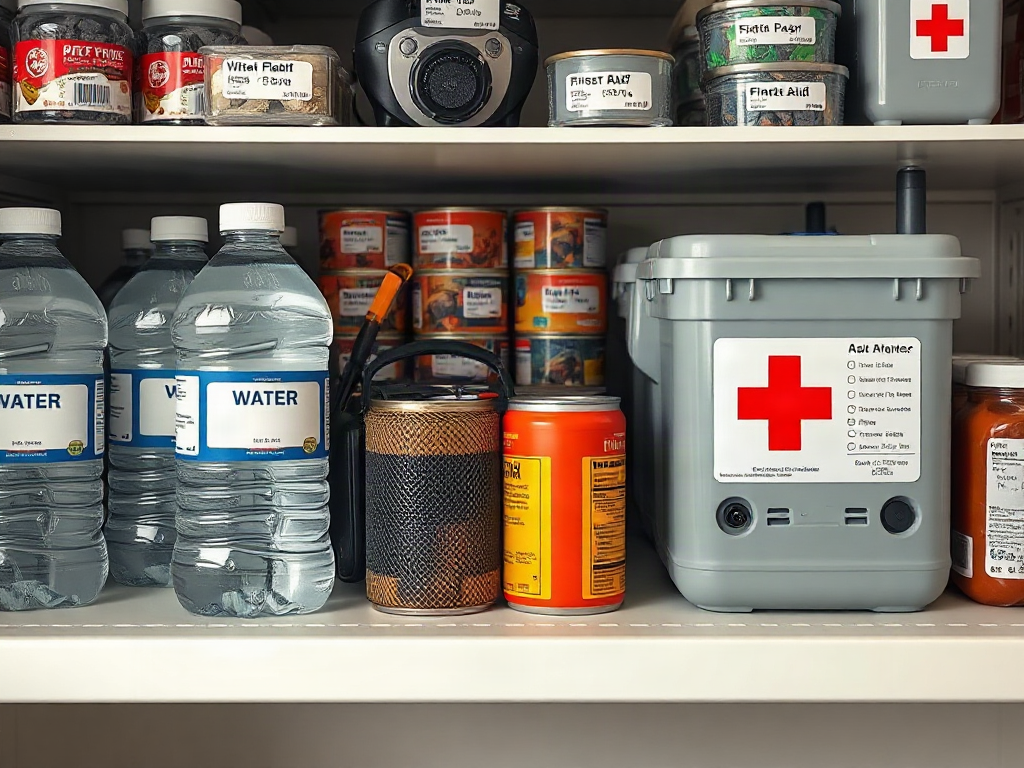
A preparedness inventory of minimum viable supplies is the smallest dependable collection that can sustain essential household functions during a short disruption. It should cover safe water, familiar shelf-stable food, necessary medications, lighting, communication, sanitation, first aid, and any needs tied to climate, mobility, infants, or pets. Build it around people and likely conditions rather than a generic shopping list, and favor items the household can use without electricity or special training. Record quantities, expiration dates, and storage locations so shortages are visible. A compact, maintained inventory is more useful than a larger cache filled with untested gear or inaccessible supplies.
What you’ll learn
This guide covers the following practical points:
- Define the Minimum Around Household Needs — “Minimum viable” means enough to preserve critical functions through a plausible interruption, not the fewest objects that can fit in a container.
- Minimum Viable Supply Categories — A workable core inventory covers several connected needs, because losing one function can make the rest unusable.
- Calculate Quantities Without Overbuying — Quantities should come from duration and actual consumption rather than package counts.
- Organize, Test, and Rotate the Inventory — An inventory becomes operational when each item has a quantity, location, condition, and review date.
Define the Minimum Around Household Needs
“Minimum viable” means enough to preserve critical functions through a plausible interruption, not the fewest objects that can fit in a container. The useful unit of planning is the household: its occupants, health requirements, building systems, local weather, transportation options, and likely hazards. A supply is viable only if someone can access and use it under the conditions expected.
Begin with a short scenario rather than a shopping catalog. Consider a multiday power outage in which stores are closed, tap water may be unavailable, indoor temperatures may change, and mobile service is unreliable. Identify what the household would need to drink, eat, take prescribed medication, receive information, see after dark, maintain hygiene, and leave safely if conditions deteriorate.
Personal constraints change the baseline. An apartment resident may need compact water containers that can be carried upstairs, while a rural household with a private well must account for the pump stopping during an outage. Prescription users need a refill strategy that respects medical and insurance limits. Parents, caregivers, and pet owners should inventory supplies by actual daily consumption rather than guessing.
A common failure is buying survival-themed equipment before covering ordinary necessities. A specialized tool has little value when the household lacks drinking water, a manual can opener, spare prescription glasses, or food that family members will eat. Establish the functional baseline first; add specialized capability only after those gaps are closed.
Minimum Viable Supply Categories
A workable core inventory covers several connected needs, because losing one function can make the rest unusable. Shelf-stable food, for example, does not solve a meal problem if it requires more water, fuel, or cookware than the household has available. Select items as systems rather than isolated purchases.
| Function | Minimum inventory | Critical check |
|---|---|---|
| Water | Stored drinking water, durable containers, and a suitable backup treatment method | Can everyone open, lift, and dispense it? |
| Food | Familiar shelf-stable meals and snacks requiring little preparation | Are dietary needs and a manual opener covered? |
| Health | Prescriptions, first-aid materials, hygiene products, and medical-device supplies | Do any items require refrigeration or power? |
| Light and power | Flashlights or lanterns, compatible batteries, and charged power banks | Have the devices been tested together? |
| Information | Battery-powered or hand-crank radio, contact details, and local maps | Are frequencies and contacts recorded offline? |
| Sanitation | Soap, waste bags, toilet supplies, disinfecting products, and gloves | Is there a plan if water service stops? |
| Evacuation | Identification copies, essential documents, payment options, keys, and basic clothing | Can critical items be collected quickly? |
Water deserves separate attention because it affects drinking, cooking, medication, hygiene, and cleaning. Store it in food-grade containers and follow the container manufacturer’s handling instructions. A filter or treatment product is a backup, not permission to store too little water; treatment methods have limits and may not address every contaminant.
For food, choose items already used at home: canned beans, fish or poultry, fruit, vegetables, nut or seed butter, crackers, shelf-stable milk, cereal, and ready-to-eat meals are possible components. Match selections to allergies, cultural preferences, chewing ability, and medical dietary restrictions. Avoid building the minimum around foods that require lengthy cooking unless a safe, appropriate cooking method is also available. Never use grills or outdoor combustion appliances indoors.
Calculate Quantities Without Overbuying
Quantities should come from duration and actual consumption rather than package counts. Choose an initial planning window suited to the household and local risks, then calculate each consumable using the same basic relationship: people or animals multiplied by daily use multiplied by the number of days. Treat published emergency recommendations as starting points and increase amounts when heat, illness, exertion, pregnancy, or medical needs require more.
Consider an illustrative household of two adults planning for three days. If each adult normally uses one ready-to-eat breakfast, one simple meal, and two snacks per day, the food inventory begins with six breakfasts, six meals, and twelve snacks. The household should then add food for any children or pets, check whether each meal needs water or heat, and verify that portions are adequate. This is an inventory method, not a nutrition prescription.
Apply the same calculation to medication doses, incontinence products, infant feeding supplies, pet food, batteries, and waste bags. Some categories are not consumed at a fixed daily rate, so test them instead. Run the planned lantern for an evening, charge a phone from the power bank, and note the battery use. A label claiming a certain capacity is less informative than observing how the device performs with the household’s actual equipment.
Do not confuse a three-day quantity with a universal target. It is a manageable first milestone, but restoration times and access constraints vary. Households exposed to severe weather, remote travel, fragile utilities, or medically necessary powered equipment may need a longer duration, redundant options, or professional contingency planning. Expand the inventory only after the first tier is complete and usable.
Organize, Test, and Rotate the Inventory
An inventory becomes operational when each item has a quantity, location, condition, and review date. A spreadsheet, notebook, or printed sheet can work; the format matters less than whether another household member can understand it during a stressful event. Group entries by function and record special dependencies such as batteries, fuel, water, adapters, or refrigeration.
Use a compact inspection routine:
- Count what is physically present rather than relying on receipts or memory.
- Test lights, radios, chargers, openers, and medical-device backups.
- Check packaging for leaks, corrosion, swelling, moisture, pests, or heat damage.
- Move regularly used food and hygiene products into normal household rotation.
- Replace expired, damaged, depleted, or no-longer-suitable items.
- Update the list after a move, medication change, new pet, or household change.
Storage conditions can quietly defeat an otherwise complete inventory. Heat, freezing, humidity, sunlight, pests, and flooding may damage food, batteries, documents, and medical supplies. Avoid putting the entire reserve in one vulnerable location. Keep daily shelter-in-place supplies accessible at home, while essential evacuation items should be consolidated enough to move quickly. Secure dangerous products away from children and separate incompatible materials according to their labels.
Rotation works best when inventory overlaps with normal life. Eat stocked foods before their quality declines, use and replace batteries, and recharge power banks on a calendar. Signs of a healthy system include accurate counts, equipment that works during tests, and household members who know where supplies are. Repeatedly expired food, dead batteries, missing accessories, and containers too heavy to move indicate that the minimum is failing.
Recognize When the Minimum Is Not Enough
The minimum should expand when the consequences of running short are high or resupply is likely to be slow. Medical dependence on electricity, extreme temperatures, wildfire evacuation potential, isolation, limited mobility, and unreliable transportation all justify more redundancy than a low-risk urban household may need. More supplies are not automatically safer, however; fuel, medicines, batteries, and treatment chemicals bring storage and handling responsibilities.
Prioritize depth before variety. Extra days of usable water and familiar food generally add more resilience than multiple untested gadgets serving the same purpose. Next, strengthen single points of failure: add a second lighting method, retain information on paper, keep more than one way to charge essential communication devices, and establish an evacuation destination. Redundancy should use genuinely different methods when possible, not several identical devices dependent on the same battery.
Review the plan after practice or a real disruption. If meals required too much water, revise the food mix. If stored containers were difficult to carry, divide the supply into manageable sizes. If no one could locate the radio or important phone numbers, improve labeling and placement. The inventory is mature when tests produce small adjustments rather than reveal missing basic functions.
Frequently Asked Questions
How many days should a minimum viable inventory cover?
Three days is a practical first milestone for many households, not a universal endpoint. Increase the duration when local outages may last longer, travel is difficult, or household members have medical or mobility needs.
Should water or food be purchased first?
Address safe drinking water first because it supports hydration, medication, and some food preparation. Then choose shelf-stable foods that require little additional water, cooking, or refrigeration.
Does a portable water filter replace stored water?
No. A filter requires an available source and may not remove every type of contamination. Stored water provides an immediate supply, while an appropriate treatment method adds a backup option.
Where should preparedness supplies be stored?
Use a cool, dry, accessible location protected from pests, flooding, and temperature extremes. Avoid concentrating every item in one vulnerable place, and keep evacuation necessities easy to collect.
How often should the inventory be reviewed?
Review it on a recurring calendar and after any household change or use. Check consumables before their expiration dates, recharge power banks, test equipment, and update quantities whenever items are removed.
Conclusion
Build the first inventory around functions that cannot be deferred: drinking, eating, medication, safe lighting, information, sanitation, and evacuation. Calculate consumables from household size and duration, then test every device and dependency under realistic conditions. Once the baseline works, extend its duration and remove single points of failure. The next useful action is a physical count of current supplies, followed by one short purchase list ordered by consequence rather than convenience.