
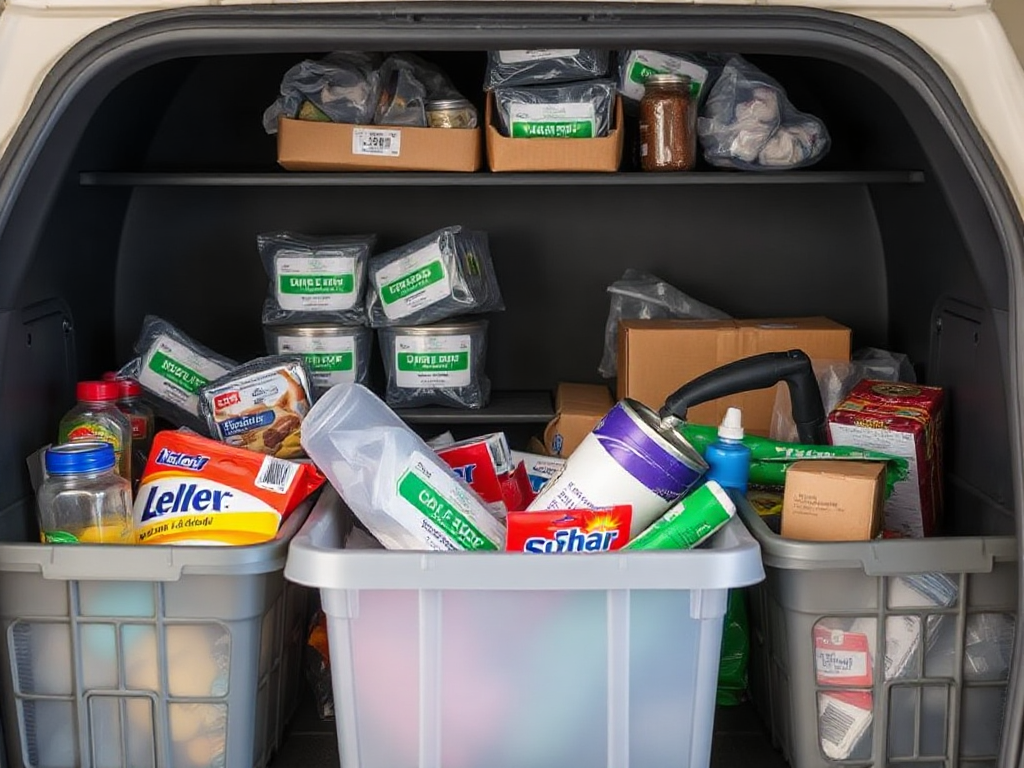
Preparedness plans fail despite full supply bins when supplies are not matched to household needs, tested under realistic conditions, or connected to clear decisions for power loss, evacuation, communication, and care. A shelf of food and equipment cannot compensate for expired medications, unfamiliar water-treatment methods, inaccessible storage, dead batteries, or family members who do not know their roles. Review the plan by scenario, practice the tasks it requires, rotate consumables, and record alternatives for likely failures. The goal is not maximum inventory; it is a workable sequence of actions that people can perform under stress, with limited time, disrupted services, and incomplete information.
Why Inventory Creates False Confidence
A full bin measures possession, not readiness. It may show that a household bought canned food, flashlights, batteries, first-aid items, and water containers, but it does not show whether those items are usable, accessible, or appropriate for the disruption being considered. Preparedness becomes fragile when storage volume is treated as proof that the rest of the system works.
Many households build supplies by category rather than by task. A box labeled “lighting” may contain batteries for devices that use different sizes, while a cooking kit may require fuel, ventilation, a lighter, and cookware that has never been used together. A water container may be full but too heavy for the person expected to move it. These are not minor details: they determine whether an item changes the outcome during a power outage, evacuation, or water-service interruption.
Expiration and condition create another blind spot. Food can remain technically present while labels are unreadable, packaging is damaged, or nobody knows which items should be eaten first. Medical supplies may be unsuitable for a household member’s current needs. Rechargeable devices can lose charge in storage, and mechanical equipment can seize after long periods without inspection. A smaller, rotated collection may be more useful than a larger cache that has quietly deteriorated.
The practical correction is to connect every major supply group to a specific action. Ask: Who uses it? Under what conditions? What must happen before it works? What replaces it if the first option fails? A household reviewing Why preparedness plans fail despite full supply bins should count completed tasks, not containers. That shift reveals gaps that shopping alone cannot fix.
The Tests That Expose Weak Plans
Realistic testing reveals failures that an inventory check hides. A plan should be exercised in short, controlled trials rather than waiting for a crisis. Turn off the main lights briefly and locate essential equipment without opening every cabinet. Try preparing a simple meal using the stored method. Have each household member explain where to meet and how to contact the others if the usual route is unavailable.
These tests matter because stress reduces attention and makes unfamiliar steps harder to remember. A person who has never operated a camping stove may waste fuel, use it in an unsafe location, or abandon the meal entirely. Someone who has only stored a hand-crank radio may discover that the tuning, charging, or volume controls are confusing. Practice converts equipment from an object into a known procedure.
Testing should include the constraints most likely to affect the household. Families with young children may need a slower departure routine, while a person with limited mobility may require supplies stored at reachable height and a transportation option that can accommodate equipment. Apartment residents face different limits from people in detached homes: elevators may be unavailable, outdoor cooking may be restricted, and storage space may be distant from the living area.
A useful review records both success and friction. Note how long a task takes, which instructions are missing, what requires two people, and what becomes impossible without internet access. Do not confuse a smooth demonstration in daylight with full readiness. Repeat the exercise at a less convenient time, with one person temporarily unavailable, and with a substitute item. The objective is not to create a dramatic simulation; it is to find the first point where the sequence breaks.
- Confirm that essential tools work together and have the required accessories.
- Check whether the intended user can lift, open, operate, or carry each item.
- Practice communication without relying on one phone, charger, or contact route.
- Write down the next action after a failed step instead of assuming improvisation will be easy.
Matching Supplies to People and Scenarios
Preparedness supplies work only when they reflect the actual household. Generic kits often overlook prescription schedules, infant feeding, pet care, dietary restrictions, sensory needs, work locations, and transportation limits. A bin designed for an imaginary average family may look complete while leaving one person unable to eat, move, communicate, or manage a daily treatment routine.
Scenario matching also prevents overbuying the wrong things. A short power interruption may require lighting, device charging, safe food handling, and a way to maintain indoor temperature—not a large collection of specialized survival gear. An evacuation requires documents, medications, clothing, transport arrangements, and a destination plan. A stay-at-home water interruption creates different priorities from a wildfire evacuation, where weight and speed matter more than bulk.
Consider two households with identical supply shelves. One lives near relatives and has a reliable vehicle; the other has no car and includes a person who needs refrigerated medication. The same inventory has different value because the decision environment is different. The second household may need a prearranged ride, a medication-storage discussion with a pharmacist or clinician, and a plan for leaving before transportation becomes scarce. Those decisions cannot be solved by adding more canned goods.
Separate immediate needs from extended disruption needs. A compact, accessible set should cover the first actions: illumination, communication, essential medication access, water, food that requires little preparation, and basic sanitation. Deeper storage can support longer interruptions, but it should not be allowed to make the first set difficult to find or carry. Readers can use the supply-bin review to identify what is duplicated, what is missing, and what is too specialized to justify its space.
A common mistake is planning for supplies while ignoring consumption. Count how much water, food, fuel, and medication-related material the household actually uses during an ordinary day. Then account for storage conditions, rotation, and any professional guidance relevant to medications or medical equipment. Estimates should be treated as working assumptions and updated after practice, not preserved because they appeared precise.
Building Decisions, Communication, and Recovery Into the Plan
A functional preparedness plan tells people what decision to make, who makes it, and what information changes that decision. “Evacuate if necessary” is too vague to guide a tired family facing uncertain conditions. A more useful plan identifies warning sources, transportation options, meeting places, pet arrangements, and the point at which waiting creates more risk than leaving.
Communication plans fail when they depend on a single device or a single person. Record important numbers on paper, identify an out-of-area contact if appropriate, and specify how family members confirm that they are safe. Include a method for people who may be at work, school, or elsewhere when an incident begins. A group chat is convenient, but it should not be the only repository for addresses, instructions, or meeting details.
Recovery is another missing layer. After supplies are used, someone must replace them, dispose of damaged food, recharge equipment, wash containers, document expenses, and revise the plan based on what actually happened. Without a recovery step, the household may appear prepared while gradually losing its usable stock. Rotation is more reliable when attached to ordinary events such as seasonal cleaning, a birthday, or a recurring household maintenance date.
Use a simple priority order when time or money is limited: protect people with immediate medical or mobility needs, secure dependable water and basic sanitation, establish light and communication, then add food variety, comfort items, and specialized equipment. This does not make comfort unimportant; it recognizes that a complicated kit is a poor first investment if the household cannot locate medication, leave safely, or receive credible information.
Check whether the plan is working by looking for observable results: people can explain their roles, equipment operates without a tutorial, supplies are reachable, and the household can name an alternative when its preferred option fails. Warning signs include unopened gear, unlabeled containers, contradictory instructions, and plans that require one unusually knowledgeable person. A final readiness check should correct one such weakness at a time rather than trigger another unfocused shopping trip.
Frequently Asked Questions
What is the biggest weakness in a well-stocked preparedness setup?
The largest weakness is often a gap between ownership and use. Equipment may be inaccessible, untested, incompatible, expired, or assigned to someone who cannot operate it.
How often should preparedness supplies be checked?
Review supplies on a recurring household schedule and after every use. Check expiration dates, battery condition, packaging, accessibility, and whether the items still match current household needs.
Should a household buy more food or practice first?
Practice first when existing equipment is untested or poorly organized. A short trial often identifies missing fuel, cookware, instructions, or dietary needs more accurately than another shopping list.
Why do communication plans break down?
They commonly rely on one phone, one application, or one person. Paper contacts, alternate meeting places, and instructions for family members who are away from home make the plan less dependent on a single failure point.
What should be prioritized when the budget is limited?
Prioritize immediate medical and mobility needs, water, sanitation, lighting, communication, and easy-to-use food. Add specialized gear only after the core tasks work reliably.
Conclusion
Full bins are useful only when they support decisions that people can carry out under pressure. Review each item against a real household member and a plausible scenario, then test the complete task rather than inspecting the packaging. Pay particular attention to medication access, water handling, lighting, communication, transport, and the limits created by age, mobility, pets, housing, or work locations.
After each test, fix the first broken link: label a container, move a heavy item, add a missing accessory, write down an alternate contact, or replace an unsuitable food. Rotate supplies through ordinary use and schedule a recovery review after every disruption. A smaller system that is understood, reachable, maintained, and backed by clear alternatives will usually serve a household better than a larger collection that has never left the shelf.