
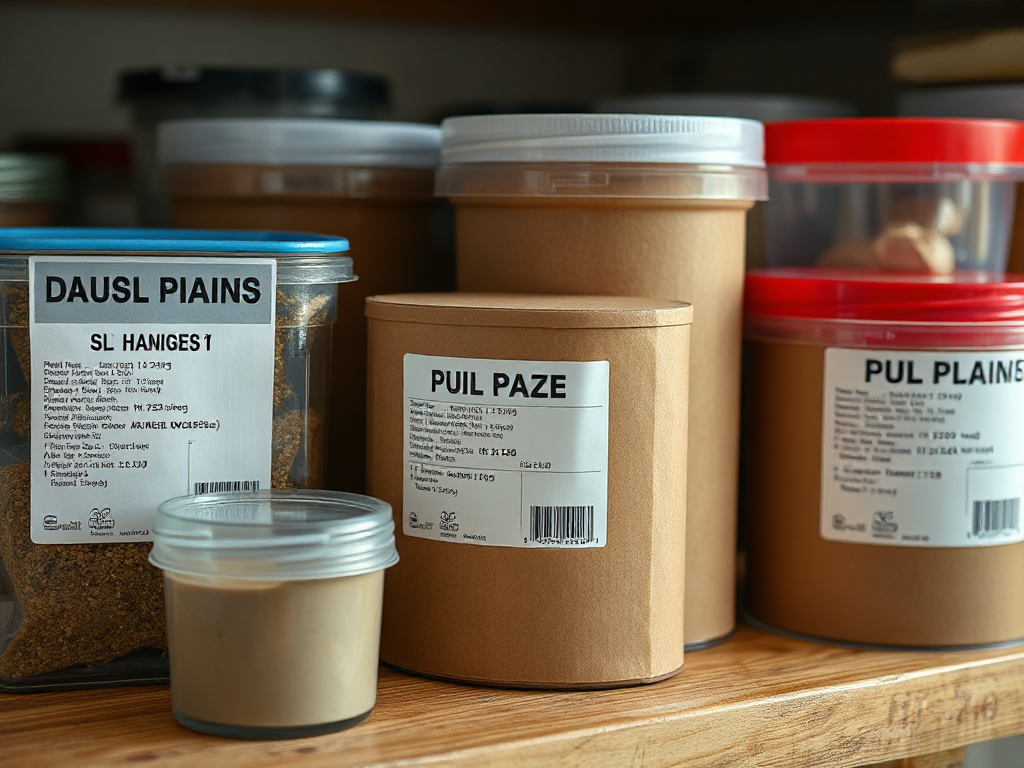
What labels matter on stored preparedness supplies are the ones that identify contents, packing or expiration dates, water-treatment directions, allergens, and required storage conditions. A readable date tells you when to rotate food, medicine, batteries, and chemical products before performance or safety becomes uncertain. Ingredient and allergen information prevents a relief meal from creating a health problem, while dosage, dilution, and handling instructions reduce misuse when people are tired or working in poor light. Add your own opening date, inspection date, and intended user when the original package leaves important information unclear.
The Information a Storage Label Must Preserve
Stored supplies become harder to manage when packaging is separated from its instructions, several similar containers are stacked together, or a household forgets why an item was purchased. A useful label restores the information needed to identify, use, inspect, and replace that item. The priority is not decorative organization; it is preventing a person from making a wrong decision when time, lighting, or attention is limited.
For most supplies, the label should answer four questions: What is it? Who is it for? When should it be checked or replaced? What restriction or instruction affects safe use? “Emergency supplies” is too broad to answer those questions. “Water purification tablets—20 tablets—follow package dosage—check by March 2027” is much more useful, provided it agrees with the original manufacturer label.
Keep the manufacturer’s label whenever possible. It may contain batch information, warnings, ingredients, dosage, compatibility notes, or storage limits that a homemade sticker cannot reproduce. An added label should supplement—not obscure—the original package. If an item is moved into a secondary container, record the product name, strength or concentration, quantity, original lot or date information when available, and any use restriction.
A common failure is labeling only the outside of a tote. The tote may identify “medical supplies,” but individual bottles can still be confused. Another failure is using abbreviations that only the person who packed the box understands. Write for a tired neighbor or family member who has never handled the supply. The labeling details that matter most are the ones another person can interpret correctly without a verbal explanation.
Dates, Rotation, and Changing Product Condition
Date information deserves separate attention because not every date means the same thing. A manufacturer’s expiration date may relate to safety, potency, quality, or warranty performance, depending on the product. A “best by” date generally concerns expected quality rather than serving as a universal safety deadline, but it should not be ignored. A purchase date, opening date, or next inspection date is a different record with a different purpose.
Write dates in an unambiguous format, such as “2027-03-15” or “15 Mar 2027.” Avoid a bare number like “3/15,” which can become meaningless after a few months. For food, record the package date and use a rotation note. For opened disinfectant, adhesive, fuel-related products, or personal-care items, add the opening date if the instructions indicate that use after opening may differ from unopened storage. For rechargeable batteries, note the last charge or inspection date when that information helps maintain readiness.
Temperature, moisture, sunlight, and repeated handling can change a supply even before its printed date. Cans with swelling, leaking, severe rust, or broken seals should be isolated rather than treated as usable because the date looks acceptable. Damp labels can conceal damage, and heat can affect products that appear visually normal. Storage conditions therefore belong on the container or shelf when they are not obvious: “keep dry,” “protect from freezing,” or “store away from direct sunlight.”
Rotation works better when it is tied to a physical arrangement. Put older, sound items in front and newly purchased items behind them. During a quarterly inspection, compare the label with the actual contents, look for damaged seals, and update the next review date. A calendar reminder is useful, but it does not replace checking the package. The weak assumption to avoid is that a printed date automatically proves condition; it does not account for improper storage or contamination.
Food, Water, Medicine, and Chemical Labels
Different supply categories require different label priorities. Food labels should preserve the product name, ingredients, allergens, preparation method, added water requirement, and date information. A pouch marked only “dinner” may be unsuitable for someone with a food allergy or impossible to prepare when fuel is scarce. Keep instructions that specify whether water must be boiled, whether the package can be heated, and how much food it contains.
Water containers need an identity and an inspection record. Mark the fill date, source or treatment method when relevant, and the next review date used by your household. Never assume that a clean-looking container proves the water is safe. The container material, seal, treatment instructions, and storage environment all matter. If water is transferred, retain any treatment directions and identify whether it is for drinking, sanitation, or another purpose.
Medicine labels require the strongest resistance to guesswork. Preserve the exact product name, active ingredient, strength, dosage directions, expiration date, and warnings. Children’s and adult formulations may use different concentrations, and two products may share an active ingredient even when their brand names differ. A household list can note allergies and regular prescriptions, but it should not replace the package directions or advice from a pharmacist. Do not repackage pills into an unidentified bag for convenience.
Cleaning products, fuel-related items, water-treatment chemicals, and other hazardous supplies need labels that communicate hazards as well as identity. Record dilution ratios, ventilation requirements, incompatibilities, and protective equipment specified by the product documentation. Never combine cleaners because a homemade label suggests they are interchangeable. A mislabeled bottle can turn a routine sanitation task into a hazardous exposure, particularly during a power outage when ventilation and visibility may be poor.
A practical comparison is speed versus completeness. A large category label helps someone find a tote quickly; a full product label helps someone use one item safely. Use both: broad location labels on shelves, detailed identity and instruction labels on individual packages. That layered approach is more reliable than either a crowded inventory sheet or a box marked with a single vague word.
A Labeling System That Works Under Stress
Build labels around the decisions a person will make, not around the way the supplies were purchased. A box may contain food, a can opener, water, and a small stove because those items support one task, while another box may hold personal medications and copies of instructions. Grouping by use can shorten retrieval time, but every item still needs its own identity and date information.
Use durable, high-contrast labels and place a second copy where the primary label is likely to be hidden. For a sealed bin, put the category and review date on the lid and one side. For small items, use a label large enough to read without opening the container. Waterproof marker, printed labels covered with clear protection, or purpose-made storage tags may work better than ordinary paper in a damp basement. Test the label after storage, not only when it is applied.
A compact inspection sequence prevents the system from becoming paperwork:
- Match the item to its name, quantity, and intended use.
- Read the printed date and compare it with the household rotation record.
- Check seals, leaks, swelling, corrosion, odor, moisture, and legibility.
- Confirm that instructions, warnings, allergens, and dosage information remain visible.
- Replace, relabel, or relocate anything that another person could misidentify.
Test the system with someone who did not pack the supplies. Ask that person to find a water-treatment product, identify its directions, and locate food suitable for a specified allergy. If the answer depends on opening several boxes or remembering an abbreviation, the labeling system is failing even if the inventory is technically complete. This simple test exposes a common misconception: organization is not the same as usability.
Digital inventories can support the physical labels by recording quantities, purchases, and review dates. They should remain optional rather than essential. A dead phone, lost password, or weak signal should not prevent safe identification of a stored item. Keep a printed household inventory in a known location, but treat it as a supplement because the container itself must still carry the information needed at the point of use.
Prioritize labels according to consequence. Items with dosing, chemical, allergy, treatment, or contamination risks deserve detailed individual markings first. Next label foods and water by date and preparation requirements. General tools and comfort items can use simpler descriptions unless a specialized operating instruction is easy to forget. The related stored-supply review process should focus attention where a mistaken choice could cause harm, waste scarce resources, or delay care.
Common Labeling Mistakes and Better Corrections
The most frequent mistake is recording only when an item was bought. Purchase date helps with household records, but it does not tell you whether a product was opened, rotated, damaged, or used beyond its labeled life. Add the date that answers the actual management question. A second mistake is copying a date without recording what it refers to; write “expiration,” “opened,” “filled,” or “inspect by” beside the date.
Another problem occurs when labels promise more than the product documentation supports. Do not write “safe indefinitely,” “purifies all water,” or “works for everyone.” Such wording can hide limits involving source water, dosage, temperature, age, allergies, or equipment. Use the manufacturer’s language where possible and preserve the instructions with the product. If the package is missing critical information, replacement is usually safer than confident improvisation.
Labels also fail when they are technically present but physically unusable. Tiny print, low contrast, glossy surfaces, fading ink, and labels placed under a stack all create access problems. A simple correction is to make the primary identity large and reserve a smaller section for dates and warnings. Use consistent placement, such as the upper right corner for review dates, so inspection becomes faster without turning the system into a rigid code.
Review labels after a household change. A new medication, allergy, infant, pet, mobility limitation, or change in storage location can alter what information matters. A product that was obvious to one adult may become confusing to a child, guest, or relief worker. Rechecking after repacking, moving, or opening a package keeps the label connected to actual use rather than to the original shopping trip.
Frequently Asked Questions
Should every stored item have an individual label?
High-risk items, transferred products, medicines, food, water, and chemicals should have individual labels. Simple tools may only need a clear container or shelf description.
Which date should be written on emergency food?
Record the manufacturer’s printed date and identify what it means. Add a household rotation or inspection date rather than treating the purchase date as a substitute.
Is a “best by” date the same as an expiration date?
No. Date terminology varies by product and may refer to quality, safety, or expected performance. Follow the package wording and inspect storage condition before deciding whether to retain an item.
What should be included on a transferred chemical label?
Include the exact product identity, concentration or dilution information, hazards, handling instructions, and storage warnings from the original documentation. Never use an unmarked container.
Can a digital inventory replace physical labels?
No. A digital list can track quantities and review dates, but the item itself needs enough information for safe identification if power, connectivity, or device access is unavailable.
Conclusion
Good labels turn a pile of stored supplies into resources that can be found and used correctly. Preserve the original product identity, printed dates, ingredients or active ingredients, warnings, preparation or dosage directions, and storage limits. Add opening, filling, or inspection dates when they change how the item should be managed. Give the most detailed labels to medicines, chemicals, treated water, allergen-sensitive food, and anything transferred from its original packaging.
Inspect the physical condition as well as the date, because heat, moisture, broken seals, and fading can make a dated product unreliable. Then test the system with someone unfamiliar with the packing process. If that person can identify the contents, restrictions, and next action without guessing, the labels are doing their job.