
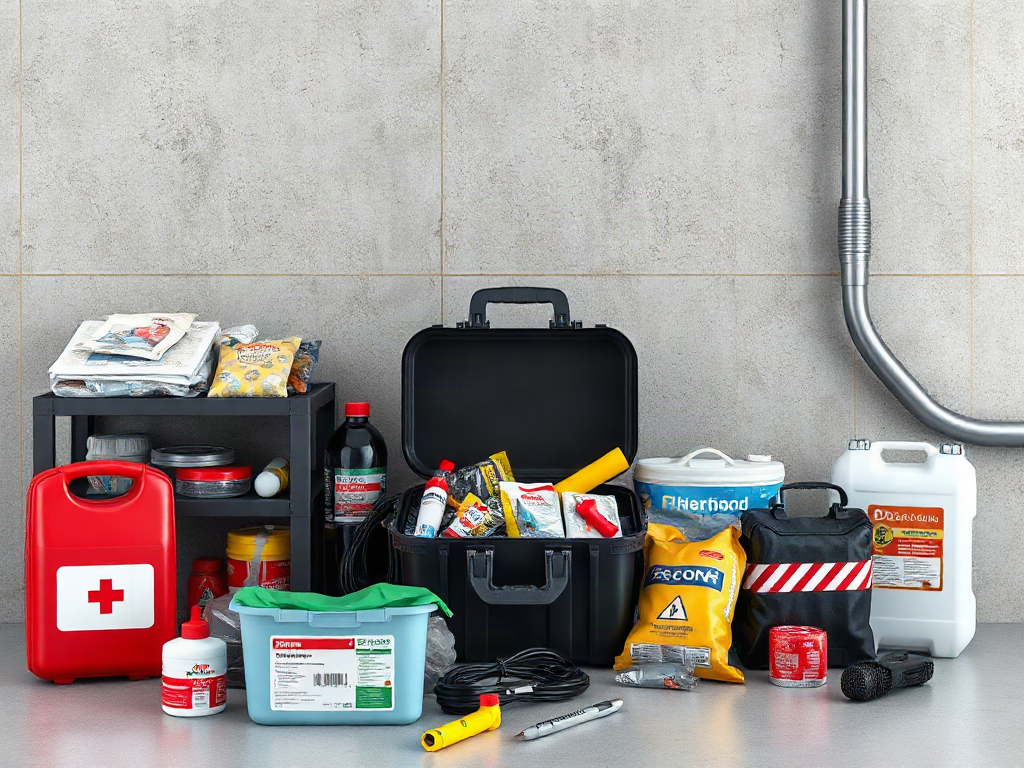
Emergency preparedness kit storage locations should be selected by hazard, access route, temperature, and the type of supplies being stored. Keep a primary home kit near a dependable exit, smaller kits in vehicles and workplaces, and specialized supplies where sheltering is most likely. Avoid attics, damp basements, locked rooms, and containers hidden behind seasonal belongings because heat, moisture, structural damage, or blocked access can make equipment unusable. Divide critical items such as water, medication, lights, documents, and communication tools among more than one location so a single fire, flood, evacuation, or building failure does not remove every option.
How Do Hazards Change Storage Decisions?
The best storage point is the place likely to remain reachable during the hazards that affect the property. Convenience during an ordinary day is not enough. A basement shelf may offer stable temperatures, for example, but it is a poor sole location where flooding or a collapsed stairway could cut off access. An attached garage may support a quick evacuation, yet temperature extremes can shorten the useful life of food, batteries, adhesive products, and some medical supplies.
Start by identifying whether the kit is meant for evacuation, sheltering in place, or both. An evacuation kit belongs near the route people would actually use to leave, without sitting in plain view or obstructing the exit. Shelter supplies should be close to the safest usable part of the building. In a tornado-prone area, that might mean an interior room on the lowest practical level. In a flood-prone property, supplies placed above expected water intrusion are generally more useful than supplies stored on the basement floor.
Fire creates a different constraint because residents may have only one safe exit route and should not delay leaving to retrieve gear. A kit beside the front door offers little value if smoke or flames block that door. A modest secondary cache near another normal exit can preserve options, but it should never encourage anyone to move toward danger. Life safety and immediate evacuation take priority over retrieving supplies.
Use a simple location test before committing to a shelf or closet:
- Reachability: Can household members reach it without keys, ladders, heavy lifting, or moving furniture?
- Hazard exposure: Could water, heat, smoke, falling objects, or structural damage affect it early?
- Exit compatibility: Is it near a realistic departure route without narrowing that route?
- Environmental stability: Is the area reasonably cool, dry, and protected from pests?
- Household access: Can capable family members find and open it under stress?
A common mistake is choosing a single location because it appears tidy and spacious. Storage efficiency does not equal emergency reliability. Compare the chosen spot against at least one plausible shelter scenario and one evacuation scenario. If either event could isolate the entire supply, move part of the kit or establish a smaller backup elsewhere.
Where Should You Store a Primary Home Kit?
A primary home kit usually works best in a ground-level closet, utility area, or sturdy cabinet positioned near a commonly used exit and within the conditioned part of the home. The location should be familiar, quickly opened, and large enough for organized containers. A hall closet near an exterior door often performs better than an attic, detached shed, or deep storage room because it combines routine visibility with faster departure access.
No room is automatically suitable. A laundry area may be convenient but can expose supplies to leaks, humidity, detergents, or heat-producing appliances. A kitchen pantry offers climate control and regular visibility, although emergency supplies can become mixed with ordinary groceries and consumed without replacement. A bedroom closet may be accessible at night but poorly positioned if household members must cross the building to retrieve the kit before leaving.
Storage should reflect who needs to use the equipment. Heavy water containers belong low enough to lift safely, but not directly on a floor that may become wet. Frequently needed evacuation items—flashlights, footwear, copies of key contacts, protective gloves, and a compact first-aid kit—should sit where adults can reach them quickly. Hazardous tools, ignition sources, and medications require storage appropriate to children, pets, and manufacturer instructions. Accessibility does not mean unrestricted access to every item.
Consider a family awakened by a nighttime power outage followed by an evacuation notice. A labeled container on a reachable closet shelf can be collected while someone checks on children or pets. The same supplies packed in several unmarked boxes behind holiday decorations will take longer to find and may be abandoned. The difference is not the quality of the equipment; it is whether the storage arrangement supports action under limited light and time pressure.
Attics and outdoor sheds are generally better for durable, non-sensitive equipment than for the entire kit. Blankets sealed against pests, an empty water carrier, or basic cleanup tools may tolerate those spaces better than batteries, food, medication, or electronic devices. Garages can hold a departure bag if temperatures remain suitable for its contents, but consumables should be inspected more often or kept indoors until needed.
The arrangement is working when household members can identify the location, remove the kit without shifting other possessions, and carry the evacuation portion through the intended exit. It is failing when the area becomes crowded, the label is hidden, the container is too heavy, or supplies migrate into unrelated household storage.
When Should You Split Supplies Across Locations?
Supplies should be divided when household members spend substantial time apart, when one hazard could block the primary cache, or when a full kit is too heavy to move quickly. Distribution reduces dependence on one room, vehicle, or person. It does not mean buying several identical collections; each location should support the likely needs and constraints of that setting.
A practical arrangement uses one substantial home supply, one portable evacuation bag, and smaller location-specific kits. The home supply can hold bulk water, food, sanitation materials, lighting, and shelter equipment. The evacuation bag should emphasize portability, immediate necessities, contact information, and items that are difficult to replace. A vehicle kit may include weather protection, visibility equipment, water appropriate for current conditions, and basic tools. Workplace supplies should fit under a desk or in a designated area permitted by the employer.
| Location | Primary purpose | Main constraint | What to review |
|---|---|---|---|
| Home interior | Shelter and household support | Blocked rooms or utility leaks | Access, moisture, container weight |
| Evacuation bag | Rapid departure | Limited carrying capacity | Weight, fit, essential documents |
| Vehicle | Travel disruption | Heat, cold, theft, vibration | Seasonal contents and expiration dates |
| Workplace | Delayed travel or local evacuation | Space and workplace rules | Personal needs and permitted items |
Duplication should focus on items whose absence creates an immediate problem. Lighting, basic communication, necessary personal care items, sturdy footwear, and copies of essential information may justify placement in more than one kit. Bulky cookware or extensive tools usually do not. Prescription medication requires special judgment because storage conditions, refill timing, security, and legal limits may apply; follow pharmacy and clinician guidance rather than leaving medication indefinitely in a hot vehicle.
People who commute with household members in different vehicles should not assume the family vehicle will always be nearby. Likewise, a child’s school bag is not an appropriate substitute for understanding the school’s emergency procedures. Location-specific kits supplement institutional plans and household communication; they do not override evacuation instructions or site rules.
The main failure mode is uncontrolled scattering. Supplies placed in many locations without an inventory become difficult to inspect and easy to forget. Keep a short record listing each cache, its purpose, and the date it was checked. The aim is resilient distribution, not random duplication.
How Do You Protect and Maintain Stored Supplies?
Storage conditions determine whether packed supplies remain dependable. Use durable containers that match the location: a portable backpack for evacuation, a lidded bin for organized indoor storage, and weather-resistant containment where dust or incidental moisture is possible. A sealed container can limit exposure, but it does not make heat-sensitive products safe in an attic or stop floodwater from carrying the entire bin away.
Place containers off bare concrete and away from water heaters, plumbing connections, floor drains, solvents, fuels, and pest activity. Shelving should be stable and suited to the load. Heavy water belongs on a low, reinforced level rather than overhead, where a falling container could injure someone. Electronics and paper records benefit from inner moisture-resistant pouches even when stored inside a larger bin.
Labels should identify purpose without advertising valuable contents to anyone who can see the storage area. Inside the container, group items by function so they can be retrieved without emptying everything onto the floor. Keep a flashlight or headlamp where it can be reached before opening the main kit. If the container uses latches, straps, or combination locks, every intended adult user should be able to operate them in darkness or while wearing gloves.
Review the storage arrangement on a recurring household schedule and after a leak, pest problem, move, major temperature event, or change in family needs. Inspection should cover more than printed expiration dates. Look for battery corrosion, swollen packaging, rust, damaged seals, unusual odors, damp fabric, outdated documents, clothing that no longer fits, and equipment that household members no longer know how to use. Follow product labels for storage limits and replacement instructions.
A useful check is a timed retrieval without treating it as a race. Ask a household member who did not pack the kit to locate it, switch on the light, identify the evacuation bag, and find the contact information. Confusion reveals labeling and organization problems that a visual inspection misses. If the bin cannot be lifted safely, divide the load rather than assuming two people will always be available.
Maintenance fails when a kit becomes a sealed time capsule. Food is consumed and not replaced, spare clothing becomes unsuitable, phone cables no longer match devices, and batteries age unnoticed. Integrating selected consumables into normal household rotation can reduce waste, while a dated inventory keeps specialized items visible. The storage location remains suitable only while its access, environment, and contents continue to match the household’s actual risks.
Conclusion
Choose storage locations by testing them against the events most likely to block access, damage contents, or force a quick departure. A reachable indoor area near a normal exit is a strong primary option, provided it stays dry, reasonably temperature-stable, and free of obstructions. Then place smaller, purpose-built supplies in a vehicle, workplace, alternate exit area, or shelter location where they address a distinct gap.
Walk through the arrangement rather than judging it by appearance. Confirm that the containers can be found in darkness, lifted safely, opened by intended users, and removed without rearranging stored belongings. Check environmental damage, labels, personal needs, and product storage instructions on a regular schedule. If one hazard could eliminate every supply at once, redistribute the most important items before adding more equipment.
Frequently Asked Questions
Is the garage a good place for an emergency kit?
A garage can hold durable gear or a portable departure bag, but heat, freezing temperatures, moisture, pests, and vehicle fumes may damage some contents. Keep sensitive food, batteries, electronics, and medication indoors unless their labels support those conditions.
Should an emergency kit be stored by the front door?
Near a normal exit is useful when the kit does not block the route or attract unwanted attention. Maintain another small cache if fire, debris, or another hazard could make that doorway inaccessible.
Can emergency supplies be kept in a basement?
A dry basement may suit some bulk supplies, but it should not be the only location where flooding, utility leaks, or damaged stairs are plausible. Elevate containers and keep portable essentials on an accessible level.
How often should stored kits be checked?
Use a recurring schedule that fits the contents, and inspect the kit after leaks, pest activity, severe temperature exposure, or household changes. Product labels and expiration dates should determine replacement timing.
Should everyone in the household have a separate kit?
Separate portable bags may help when people travel independently or have different medical, mobility, clothing, or caregiving needs. Bulk shelter supplies can remain shared if everyone knows where they are and can reach them.