
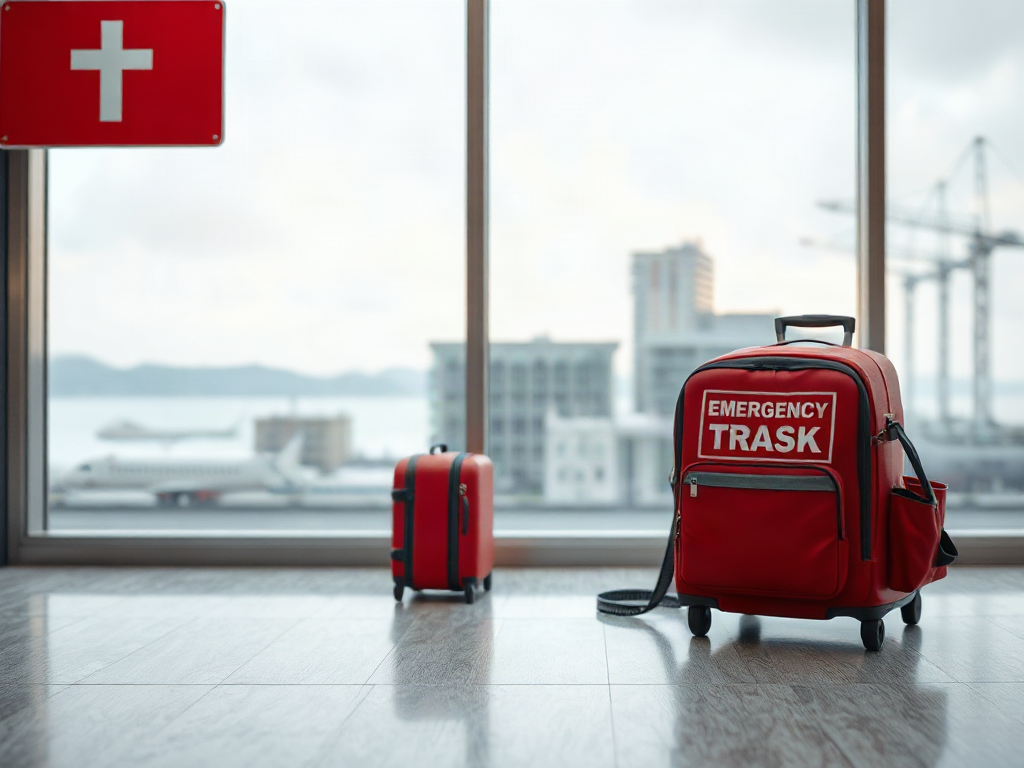
What Does Travel Emergency Assistance Actually Do?
Assistance and insurance perform related but different jobs. An assistance provider may locate an appropriate clinic, arrange an interpreter, communicate with relatives, replace a prescription where legally possible, coordinate transport, or help a traveler navigate lost documents. Insurance determines whether eligible expenses will be reimbursed or paid under the policy. Treating the assistance telephone number as a promise that every expense is covered is a costly misunderstanding.
The distinction becomes especially important during a medical event. A traveler with a serious injury may need three separate functions: clinical decisions from qualified medical personnel, logistical coordination from an assistance company, and a coverage decision from an insurer. The assistance team might identify a suitable facility and communicate with the treating hospital, but the traveler could still face a deductible, an excluded service, or a request for payment before care. Emergency medical treatment should not be delayed solely to seek administrative approval when delay would create additional danger; contact local emergency services first when immediate help is needed.
Service quality also depends on location and communications. A provider may have extensive contacts in a capital city but limited options on an island, aboard a ship, or in a remote mountain region. Weather, airfield access, local medical capacity, border rules, and aircraft availability can constrain evacuation. “Evacuation” may mean transport to the nearest facility considered capable of providing care, not a flight to the traveler’s preferred hospital or home country.
Consider a traveler who breaks an ankle in a rural area. Local responders may transport the person to a nearby clinic, while the assistance provider identifies a larger hospital and evaluates ground transport. The insurer then reviews whether the transfer meets policy terms. Calling the provider can improve coordination, but expecting an immediate private aircraft would be unrealistic unless the medical need, policy language, and operational conditions support it.
Before buying or relying on a service, decide which failure would be hardest to manage alone. A domestic road trip may place greater value on roadside help and medical-network information. International travel may make translation, hospital coordination, passport support, and medical transport more consequential. Remote travel raises the value of specialized evacuation capability, while also increasing the chance that communications and weather will limit the response.
How Do You Verify Coverage and Response Capability?
Verification requires reading the actual terms and testing the contact route, not relying on a benefit summary or a credit-card logo. Start by identifying the organization that handles emergencies. The insurer, assistance operator, tour company, card issuer, employer, and medical transport membership may be separate entities with different telephone numbers and responsibilities.
Ask the provider how a case is opened and what must happen before major arrangements are made. Some services expect notification as soon as reasonably possible; some expenses require advance authorization when circumstances permit. Confirm whether the contact center operates continuously, accepts collect calls, offers messaging or app access, and can work in the languages relevant to the destination. A successful test means reaching the correct channel and learning the procedure without opening a false claim—not merely adding a number to a phone.
Policy wording deserves close attention in areas where assumptions commonly fail. Review the trip dates and geographic area, emergency medical expense limits, evacuation destination, deductibles, direct-payment procedures, reimbursement documentation, and exclusions. Examine how the contract addresses pre-existing medical conditions, pregnancy, mental health events, intoxication, high-risk activities, civil unrest, epidemics, and travel against official warnings. Definitions control the benefit; familiar words such as “emergency,” “reasonable,” and “necessary” may have specific contractual meanings.
A compact comparison can keep different services from blurring together:
| Service | Primary role | Question to verify |
|---|---|---|
| Travel assistance | Coordinates information and logistics | Who answers, and what can they arrange? |
| Travel insurance | Applies policy terms to eligible losses | Which expenses, limits, and exclusions apply? |
| Medical transport membership | Provides specified transport benefits | Who decides when and where transport occurs? |
| Credit-card benefit | Offers defined protections tied to card use | Must the trip have been paid with the card? |
For example, a card may advertise travel support while providing referrals rather than paying medical bills. Conversely, a separate policy may reimburse eligible treatment but require records and receipts. Compare both documents before deciding that one makes the other unnecessary. If an answer affects a large financial risk, request clarification from the provider in writing and retain it with the policy. Verbal explanations may be useful, but they should not be assumed to alter contractual terms.
Build an Offline Assistance File
An offline assistance file keeps critical details usable when a phone is lost, its battery is depleted, or mobile data is unavailable. Store a concise paper copy in carry-on baggage and an encrypted digital copy that can be reached from another device. Avoid placing every identity and financial record in one unprotected folder; convenience should not create an avoidable identity-theft risk.
The file should contain information needed to identify the traveler, open a case, explain relevant health concerns, and reach the right people. Include the assistance provider’s international and domestic numbers, policy or membership number, travel dates, itinerary, emergency contact, passport identification page, and visa details where applicable. Add a medication list using generic names when known, allergies, significant medical conditions, and the contact information for a treating clinician. Prescription rules vary by jurisdiction, so a copy of a prescription or physician letter may support a request but does not guarantee that a medication can be replaced locally.
Use this departure check for the highest-priority items:
- Contact access: Save numbers in the phone, on paper, and with a trusted person at home.
- Identity recovery: Keep a passport copy separate from the original and record the nearest relevant embassy or consulate.
- Health details: Carry necessary medicines in labeled packaging, plus an accurate allergy and medication record.
- Payment resilience: Bring more than one usable payment method and keep them separately.
- Case documentation: Know how to preserve receipts, medical reports, police reports, and provider correspondence.
A couple traveling together should not keep both copies, cards, and phones in the same bag. A solo traveler should give a trusted contact enough information to assist without sending sensitive records through an exposed group message. Set clear boundaries: the contact may hold an encrypted document, for example, while receiving the password through a separate channel.
The file is working if another person can identify the provider, quote the correct reference number, and locate the itinerary within a few minutes. It is failing if access depends on one locked phone, a forgotten password, an email account protected by a code sent to the missing device, or documents stored in checked luggage. Test access before departure, then remove outdated copies after the trip to reduce unnecessary exposure.
Who Calls Whom When Travel Plans Fail?
A communication sequence prevents family, providers, and local responders from working from different assumptions. For an immediate threat to life or safety, contact local emergency services or nearby authorities first. Once the traveler is in a safer position, open a case with the assistance provider and record the case number, representative’s name, time of contact, and next promised action.
Not every disruption belongs on the emergency line. A delayed flight is normally handled first by the carrier, while a stolen passport should be reported through local police procedures when appropriate and then to the traveler’s embassy or consulate. A medical emergency belongs with local clinicians and the assistance team. A security incident may require instructions from local authorities, the accommodation provider, the tour operator, and official government travel advisories. Choosing the correct first contact reduces delay and preserves the records an insurer may later request.
Assign a home contact before leaving. That person should know the itinerary, expected check-in rhythm, provider details, and circumstances that justify escalation. “Call someone if I disappear” is too vague. A better arrangement specifies that one missed casual message is not an emergency, but failure to make contact after a defined travel leg—combined with an airline, weather, or security disruption—triggers checks with the carrier, lodging, or assistance provider. The timing should reflect the destination and activity rather than a universal rule.
Imagine a traveler loses a passport and phone during a train transfer. The immediate tasks are to secure funds and lodging, report the loss through the appropriate local channel, and contact the relevant embassy or consulate. The home contact can provide document copies and cancel exposed accounts. The assistance provider may supply directions, translation, or referral support, but it cannot issue a new passport. Clear role boundaries keep the traveler from waiting on an organization that lacks the required authority.
Record facts rather than guesses during an active case: symptoms reported, facility name, incident location, booking reference, and instructions received. Signs that coordination is working include a case number, named next step, confirmed callback method, and agreement on who is arranging transport or payment. Repeated transfers, contradictory instructions, no documented case, or requests to wait despite a worsening safety condition signal the need to escalate within the provider while continuing to use appropriate local emergency channels.
Conclusion
Useful travel emergency preparation connects coverage, contacts, documents, and decision authority before anyone needs them. Confirm which organization handles each type of incident, read the controlling terms, and test how you would reach assistance from the destination. Keep essential details available without relying on one device, while protecting passport, medical, and financial records from unnecessary exposure.
Before leaving, run a short scenario using the trip’s most credible complication: an illness, lost passport, missed connection, vehicle breakdown, or remote-area injury. Identify the first local contact, the assistance channel, the records to preserve, and the person at home who can help. Any unanswered question—especially about medical transport, exclusions, or advance authorization—should go to the provider before departure. The goal is not to predict every disruption, but to remove avoidable confusion when time, connectivity, and judgment are under pressure.
Frequently Asked Questions
Is travel assistance the same as travel insurance?
No. Assistance usually coordinates services and information, while insurance applies contract terms to eligible expenses. A company may provide both, but the functions and limits remain distinct.
Should I call the assistance provider before going to a hospital?
Call local emergency services first when immediate care is needed. If the situation allows, contact the assistance provider promptly so it can open a case and explain coordination or authorization procedures.
What travel assistance information should I keep on paper?
Carry the provider’s telephone numbers, policy or membership number, emergency contact, itinerary, key health information, and case-opening instructions. Keep the sheet separate from your passport and primary phone.
Does medical evacuation mean transport home?
Not necessarily. Coverage may provide transport to the nearest facility judged capable of treatment. The destination, medical necessity, authorization rules, and operational conditions depend on the applicable terms.
Can credit-card travel benefits replace separate coverage?
Only if the card’s actual benefit terms match the trip’s risks. Check payment requirements, covered travelers, expense limits, exclusions, claim procedures, and whether the benefit pays costs or merely provides referrals.