
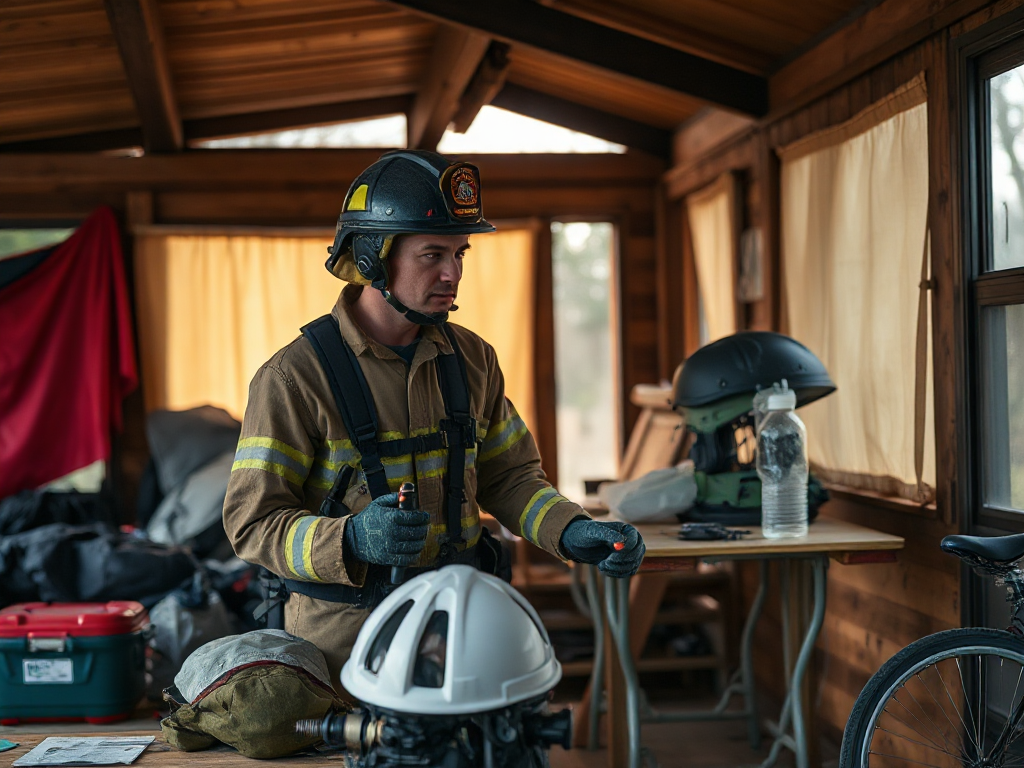
Which skills require regular preparedness practice? The highest-priority skills are emergency communication, evacuation, first aid, fire response, water treatment, navigation, power and cooking alternatives, and stress-aware decision-making. Practice matters because equipment is easy to forget, physical steps become slower under pressure, and household plans often fail when people have not assigned roles or tested assumptions. Rehearse communication when networks are limited, evacuation with mobility constraints, and water treatment using the exact tools stored at home. Short scenario drills every few months, plus a more complete household exercise at least annually, can reveal dead batteries, missing supplies, unsafe shortcuts, and unclear responsibilities before an actual disruption exposes them.
The Preparedness Skills That Need Repetition
Preparedness skills require regular practice when they involve physical steps, unfamiliar equipment, time pressure, or coordination among several people. The priority is not memorizing every possible disaster response. It is retaining the actions that protect life, preserve communication, and maintain basic function when normal services are interrupted.
Some abilities are used often enough to remain familiar. Others decay quickly. A household may own a first-aid kit but still lose time searching for gloves, opening sealed packaging, or deciding who calls for help. Someone may understand an evacuation route on paper yet discover that a locked gate, nighttime conditions, a pet, or a family member with limited mobility changes the route entirely. Practice exposes those differences.
The most practice-sensitive skills usually fall into five groups:
- Communication and coordination: contacting relatives, receiving alerts, and confirming meeting locations.
- Movement and orientation: evacuating, sheltering, using alternate routes, and navigating without a familiar digital map.
- Immediate safety: fire extinguisher use, bleeding control, basic first aid, and hazard recognition.
- Resource management: treating water, cooking without normal utilities, and managing battery power.
- Judgment under stress: deciding when to leave, when to shelter, and when a situation exceeds household capability.
Practice does not mean repeatedly staging dangerous conditions. A safer approach uses tabletop discussions, equipment checks, low-risk demonstrations, and short timed drills. Which skills require regular preparedness practice depends partly on the hazards a household faces, but the need for repetition rises whenever a mistake could cause injury or delay outside assistance.
Communication, Evacuation, and Navigation Drills
Communication and evacuation deserve frequent rehearsal because plans often depend on people completing separate actions in the correct order. A household should know how it will receive official information, contact one another, reunite, and leave if conditions change. Writing those details down is useful; testing them is more revealing.
A practical drill might ask each person to locate the emergency contact card, identify the primary meeting place, and explain what happens if that location is inaccessible. Test more than one communication method without assuming every option will work. A text message may be preferable when voice networks are congested, while a battery-powered radio or official alert source may matter when internet service fails. Children, older adults, and visitors may need instructions that do not depend on remembering a long sequence.
Evacuation practice should include the actual doors, keys, footwear, transportation, and pets that would be involved. A daytime walk may show that the route is short, but an evening exercise can reveal poor lighting or a difficult stairwell. An apartment resident faces different constraints from someone in a rural home: elevators may be unavailable in one setting, while a rural route may depend on a single bridge or fuel supply in the other.
Navigation skills need occasional testing without relying entirely on a phone. Keep a current local map and identify two destination options, but do not treat every alternate route as equally usable. Flooding, wildfire smoke, debris, road closures, or severe weather can make a familiar path unsafe. During a drill, ask participants to describe the route, identify hazards, and state the point at which they would turn back or choose another direction. A common failure is rehearsing the ideal route rather than the decision that follows when it is blocked.
Review the plan after household changes, including a new job schedule, medical need, vehicle change, school arrangement, or relocation. FEMA and Ready.gov resources can help households compare their arrangements with basic planning questions, but local authorities remain the source for hazard-specific evacuation instructions. For related planning details, see Which skills require regular preparedness practice alongside your local alert and evacuation information.
First Aid, Fire Response, Water, and Food Skills
First aid and fire response require hands-on familiarity because small mechanical details matter. A person who has never opened a bandage package with gloved hands may struggle during an injury, and a fire extinguisher stored behind clutter is not readily available. Training from a recognized provider can be appropriate for serious first-aid or fire-response instruction; household practice should reinforce safe actions rather than encourage risky experiments.
Use a first-aid kit review to check expiration dates, missing components, and packaging that has become difficult to open. Practice locating supplies and explaining the first decisions after an injury: protect yourself from hazards, assess the person, contact emergency services when needed, and provide only care within your training. The common mistake is treating a stocked kit as a substitute for skill. Supplies support a response; they do not determine whether a situation is safe to manage at home.
Fire response should focus on prevention, alarm awareness, exit choices, and knowing when to leave immediately. A household can practice sounding alarms, identifying two exits, and discussing where not to reenter. Demonstrating an extinguisher with an appropriate training device is safer than creating a live fire. An extinguisher is not a reason to approach a growing fire, and smoke conditions can change faster than an untrained person expects.
Water treatment and utility alternatives also reward repetition. If a household stores a filter, chemical treatment, or heating method, practice with the exact model and read its instructions before an outage. A filter may address some contaminants but not every water hazard; boiling requires a suitable heat source and safe handling. Test the amount of fuel, ventilation arrangement, cookware, and cooling time rather than assuming that ownership equals readiness.
Food preparation without normal utilities should be a modest, safe exercise. Cook a shelf-stable meal using the designated equipment, measure the water required, and check whether the method creates heat, smoke, or carbon-monoxide risk. Compare a no-cook option with a heated meal: the former conserves fuel, while the latter may improve morale or acceptability but demands more setup. Never use fuel-burning devices indoors unless the manufacturer specifically permits that use. The American Red Cross and official emergency agencies offer practical household safety guidance, but equipment instructions take precedence for a particular device.
Building a Practice Schedule That Exposes Weak Points
A useful schedule matches practice frequency to risk, complexity, and how quickly a skill fades. Rehearse the most consequential actions more often than low-consequence tasks. Communication contacts, alarm response, and evacuation decisions deserve attention whenever household circumstances change. Equipment-specific tasks can be practiced during routine inspections, while a broader scenario can be conducted periodically to test coordination.
Use a short cycle rather than waiting for a dramatic full-scale exercise. For example, one session might test alerts and contact methods; another might examine a night evacuation; a later session could prepare a meal without grid power. After each session, record what happened instead of relying on memory. Note whether anyone hesitated, whether supplies were reachable, whether instructions were understood, and whether the task created a new hazard.
A compact priority check can follow this order:
- Life safety: Can everyone recognize immediate danger, leave, summon help, and provide basic assistance?
- Communication: Can the household exchange essential information if one channel fails?
- Movement: Can each person use a workable route with needed medication, mobility aids, pets, or children?
- Basic services: Can the household obtain safe water, food, light, warmth, and sanitation without creating another hazard?
- Recovery information: Can members access identification, contacts, insurance details, and local instructions?
Frequency should also reflect the person performing the task. A capable adult may remember a procedure that a child or occasional caregiver does not. Practice with the person who would actually be present, not only with the household planner. Rotate roles so one individual is not the sole holder of contacts, keys, equipment knowledge, or decision authority.
Signs that practice is working include faster location of supplies, fewer conflicting instructions, clear stop points, and realistic recognition of limitations. Signs it is failing include improvised equipment, untested assumptions, unsafe shortcuts, or a drill that works only when one person leads every step. Which skills require regular preparedness practice should be answered by observed performance, not by the number of items in a storage area.
Common Practice Mistakes and Better Standards
The most common mistake is confusing discussion with performance. Talking through an evacuation plan can establish intent, but it will not show whether the exit is blocked or whether a child can operate the required lock. Another mistake is practicing only the preferred scenario: a daytime departure, a fully charged phone, a cooperative vehicle, or a household with every member present.
Better practice introduces one realistic constraint at a time. Remove the phone from a navigation exercise, assign one person to be away from home, conduct a communication check when the usual contact is unavailable, or ask how the plan changes if the first meeting place cannot be used. Do not manufacture danger; make the decision environment less convenient while keeping the exercise controlled.
Overconfidence creates its own risk. A short first-aid class does not qualify someone to manage every medical emergency, and familiarity with a fire extinguisher does not make entering a smoke-filled building reasonable. Preparedness practice should include explicit boundaries: when to evacuate, when to call emergency services, when to stop using a device, and when professional help is required.
Another weak standard is measuring success by speed alone. A fast evacuation that leaves medication behind or separates family members may be worse than a slower, coordinated departure. Evaluate accuracy, safety, accessibility, and communication alongside time. A rural household may prioritize fuel and route redundancy, while an urban household may emphasize stairs, building alarms, and public transit disruptions. The right drill reflects those conditions.
After every exercise, make one or two changes that can actually be completed. Move equipment, replace batteries, simplify instructions, label a shutoff, update a contact, or arrange formal training. Repeating a flawed drill without correcting its cause only reinforces the weakness. Official guidance from FEMA, Ready.gov, the Red Cross, and the National Weather Service can provide a starting point, but local hazard information and the capabilities of the people involved should shape the final practice.
Frequently Asked Questions
How often should preparedness skills be practiced?
Use short checks every few months and conduct a broader household exercise at least annually. Repeat sooner after a move, new household member, medical change, or equipment replacement.
Which preparedness skill should be practiced first?
Start with life-safety actions: recognizing danger, contacting help, evacuating, and identifying safe shelter. Then test communication and resource skills.
Can preparedness practice be done without creating a real emergency?
Yes. Use tabletop scenarios, equipment demonstrations, timed searches, route walks, and utility-free meal exercises. Avoid live-fire or other hazardous simulations.
Should children participate in preparedness drills?
Children can practice age-appropriate tasks such as recognizing alarms, sharing a meeting place, identifying trusted contacts, and leaving without stopping for belongings.
What shows that a preparedness drill needs improvement?
Repeated hesitation, missing supplies, unclear roles, unsafe equipment use, inaccessible routes, or dependence on one person indicate that the plan needs revision and another test.
Conclusion
Regular preparedness practice should center on skills that fail under pressure: communication, evacuation, navigation, first aid, fire awareness, water treatment, utility alternatives, and shared decision-making. The strongest household plans are not the most elaborate; they are the ones people can perform safely with the equipment, mobility, information, and time actually available.
Choose one life-safety drill and one resource-based exercise for the next few months. Test the real route, device, contact method, or cooking setup, then correct the specific weakness you observe. Include the people who may be present during an incident and define clear limits for situations requiring professional help. Repeating those focused checks keeps preparedness usable rather than merely documented.