
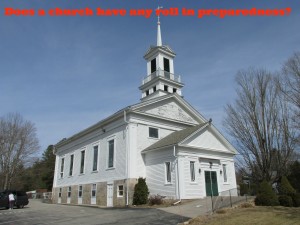
 Regardless of your own personal belief system, there are obviously church buildings, church denominations and organizations out there that are doing something about the preparedness of their own parishioners. Some denominations are more known for this than others. But as a whole, what is or should be the church’s roll in preparedness?
This topic is not posted here to be a catalyst for religious debate, denominational ‘one-up-manship’ or an attempt to proselytize anyone. This is a real question of what is or should be the roll of the church (or organized religious entities) in preparedness.
Many churches teach differing beliefs about the days ahead; they differ from the rapture of escaping before tribulation to a testing and threshing of the ‘wheat from the chaff’ (true believers tested trust) in the last days. There is still no denying that trouble, emergencies and disasters have always, and still will always beset a congregation. Regardless of theological belief taught within a denomination, a parishioner may loose his/her only income, a flood or tornado may hit the area, quarantine or mass power outages may besiege their community for an extended period of time. How are the organized religious entities in an area preparing to respond to these highly potential realities?
 As one who believes, personally that the buildings and hierarchy of the ‘church’ organization is not without flaw, if you or I are part of a church body, you or I are both part of the problem and part of the solution at the same time.
- Have you quietly prepared out of fear of being ostracized or looted?
- Have you felt it was not your place to interject because it seemed to challenge the doctrinal belief system?
- Do you perhaps just not feel that you are your ‘brother’s keeper’ after all?
I’d like to encourage you, if you belong to a church and no one within it seems to you to be prepared for much. You have the ability to help them, but only if you will.
Below are a few ideas to help empower you to open the opportunity of helping your church see the need:
- Talk to your Pastor/Father/Leader. “About what?” you may ask. I’d rather suggest what not to talk about first. Don’t have a theological debate of the rapture or God’s protection. Don’t talk about governmental, FEMA or other conspiracy theories. Remember to be as grounded in the well-being of the community/body as possible as you speak on topics of preparedness. The ideas to follow may give you some ideas of what to talk about. Listen to your community needs at large and see what your leadership is open to begin at your church.
- Start a Food Pantry that also Stocks Other Needs. This can be actually easily done and the additions of candles, toilet paper, first aid supplies etc are often not noted as panic stock but rather realistic items of need when caring for parishioners and reaching a community in an emergency.
- Offer to teach or Organize Speakers for Classes/Seminars. From home canning or scratch food preparation to fire prevention and gardening – the ‘do it yourself’ trend is on the rise everywhere – a church congregation is not immune to this new trend. Thankfully you can use this to your (and their) advantage to help them gain skills they may not ever realize are preparedness skills.
- Attend, Lead or Join a Mission Trip. Really, there are mission trips within your own country because people in need are EVERYWHERE. In my county alone, the number of homeless and starving children would astound you! We live just outside of one of the countries fastest growing, and economically stable areas – however the soup-lines and shelters are full of families who have fallen on hard times. So if foreign travel is not an option, you don’t have to take your willing congregation members far to see how life could be for them. The Mission truly may be in your own back yard. This is usually a very eye opening experience for most people. It often causes us to not only see and meet the needs of others but realize the fragility of our own situations as well.
- Connect with and Bring in Your Denomination’s Response Team. You may be surprised to know that most denominations have a branch of an Emergency Response Team. Your denomination may not call it that, your Pastor/Father/Leader may not even be aware of the roll of this team (or aware OF it) but they are there. This team is your back up. They will help to guide you in ways to involve your local congregation (and hopefully reach out to the whole community) in ways that are least offensive to the leaders of your church.
With these few ideas, and more that may spring forth from you, you will hopefully open the eyes of those around you to some preparedness needs. They may never quite see it the same way you do, but you will know they are better prepared because of their involvement.
On an author’s personal note, my belief is that a church organization is made up of flawed individuals who can as easily as anyone, become self-absorbed and miss the opportunity to serve those who do not believe as they do. But by being well prepared to serve an entire community at large, regardless of belief system, the door of outreach will be flung wide open. This Door could be The Way to the Ultimate Preparedness for something we all face, and I’m not talking about taxes.
Are your church doors wide open or shut tight?
Popular Questions
How can a church contribute to community preparedness efforts?
A church can play a vital role in community preparedness by initiating programs that address local needs. For instance, starting a food pantry that includes essential supplies like first aid kits and hygiene products can help parishioners during emergencies. Additionally, organizing workshops on skills such as gardening or canning can empower members with practical knowledge that enhances their self-sufficiency.
What steps can church leaders take to promote preparedness among their congregation?
Church leaders can promote preparedness by engaging in open discussions about the importance of being ready for emergencies. They might consider inviting speakers to share insights on disaster response or community resilience. Furthermore, connecting with their denomination's emergency response team can provide valuable resources and guidance for implementing effective preparedness strategies.
In what ways can church members get involved in preparedness initiatives?
Church members can actively participate in preparedness initiatives by volunteering to lead or join community outreach programs. They can also help organize mission trips that focus on local needs, allowing the congregation to witness and address the challenges faced by those in their own community. By fostering a culture of service and readiness, members can inspire others to take preparedness seriously.
Why is it important for churches to address preparedness in their teachings?
Addressing preparedness in church teachings is crucial because it equips congregants with the knowledge and skills needed to navigate emergencies. It also reinforces the idea that caring for one another extends beyond spiritual support to practical assistance during crises. By integrating preparedness into their message, churches can help build a more resilient community that is better prepared for unforeseen challenges.