
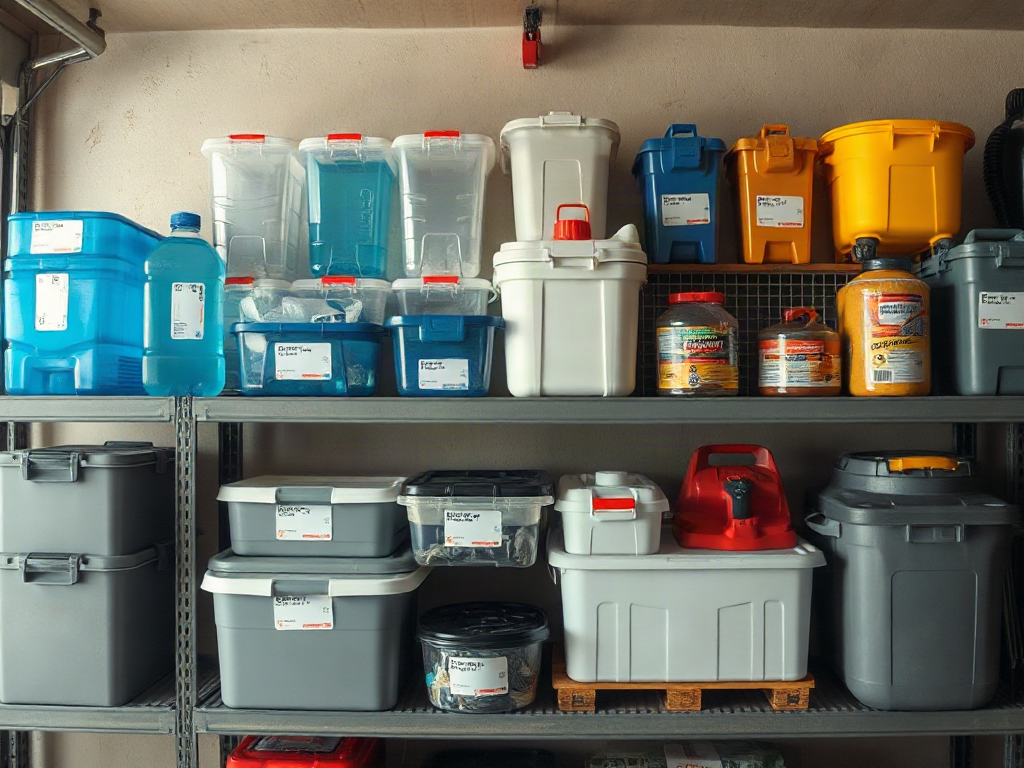
Space and capacity tradeoffs in preparedness storage determine whether supplies remain accessible, protected, and sufficient for the disruptions a household expects to face. Prioritize water, essential food, medication, lighting, sanitation, and communication before allocating room to bulky comfort items or specialized equipment. Increase usable capacity with compact packaging, vertical shelving, rotation zones, and supplies that serve more than one realistic need. A storage system is working when inventory can be counted, inspected, rotated, and retrieved without moving several unrelated containers; hidden expiration dates, blocked exits, overloaded shelves, and inaccessible essentials indicate that capacity has exceeded functional space.
What you’ll learn
This guide covers the following practical points:
- Why Capacity Is More Than Container Volume — Usable capacity is the amount of stored material a household can safely maintain and retrieve, not the maximum volume that fits behind a closed door.
- Prioritize Supplies by Consequence and Consumption — Allocate limited space according to what happens when an item is unavailable.
- Increase Capacity Without Creating Clutter — Effective density comes from reducing wasted air and improving access rather than stacking supplies indiscriminately.
- A Worked Space-Allocation Example — A simple volume budget reveals tradeoffs before money is spent.
Why Capacity Is More Than Container Volume
Usable capacity is the amount of stored material a household can safely maintain and retrieve, not the maximum volume that fits behind a closed door. A closet packed to its ceiling may hold many supplies while providing little practical capacity if reaching drinking water requires unloading tools, bedding, and unlabeled cartons.
Four constraints reduce nominal storage volume: access, shelf strength, environmental conditions, and inventory visibility. Heavy containers belong low, frequently used items need reachable positions, and temperature-sensitive goods should not occupy spaces with damaging heat or moisture. A shelf also needs enough clearance to remove each container without dismantling the row above it.
The common mistake is treating every empty cavity as equivalent storage. An attic may accept lightweight, heat-tolerant gear but be unsuitable for items harmed by temperature extremes. Space beside a furnace, electrical panel, exit path, or utility shutoff should remain clear. Under-bed space may work for shallow, labeled containers, but only if household members can pull them out without injury.
Measure the storage area before buying organizers. Record width, depth, height, doorway clearance, shelf ratings, and fixed obstructions. Then subtract access lanes and handling clearance. The remaining dimensions describe functional space more accurately than the room’s total floor area.
Prioritize Supplies by Consequence and Consumption
Allocate limited space according to what happens when an item is unavailable. Water, necessary medication, sanitation materials, basic food, lighting, and communication generally deserve room before duplicate gadgets or equipment tied to an unlikely scenario. Household needs still govern the final order: an infant, mobility limitation, medical device, pet, or severe climate can change which supplies carry the highest consequence.
Consumption rate matters as much as importance. Water occupies substantial volume and weight, so increasing its quantity quickly displaces other supplies. Rather than forcing all water into one room, a household may combine safely stored water with clean containers and an appropriate treatment method. Treatment capability does not replace stored water when the local source is unavailable or contaminated beyond the method’s limits, but it can reduce dependence on a single bulky reserve.
A practical allocation order is:
- Life-supporting needs: water, necessary medication, temperature protection, and medical or accessibility supplies.
- Short-disruption needs: food requiring little preparation, sanitation, lighting, batteries, and charging options.
- Recovery needs: tools, cleaning supplies, repair materials, documents, and protective equipment.
- Comfort and specialized items: added only after higher-consequence needs are adequately represented.
Bulk purchasing can undermine this order. A large quantity is not an advantage when the household rarely uses the product, cannot protect it from moisture or pests, or lacks a rotation habit. Depth should follow realistic use, storage life, and scenario relevance—not merely a low unit price.
Increase Capacity Without Creating Clutter
Effective density comes from reducing wasted air and improving access rather than stacking supplies indiscriminately. Adjustable shelving can capture vertical space, while uniform bins reduce unstable gaps. Clear bins offer visibility; opaque bins protect light-sensitive contents but require labels. Neither choice compensates for excessive weight or poor environmental conditions.
Package size creates another tradeoff. Large containers often use space efficiently and reduce packaging, but opening one exposes the entire quantity and makes rotation harder. Smaller packages cost more space per unit yet support portioning, evacuation, and distribution among household members. A mixed approach often works better: larger containers for routinely consumed staples and smaller units for mobile kits or products vulnerable after opening.
Multi-use supplies deserve space when every intended use is credible. A sturdy cooking pot can heat water, prepare food, and support cleanup. By contrast, a specialized device should not be counted as multifunctional merely because an improvised secondary use is imaginable. Essential functions also need some redundancy; consolidating every task into one tool creates a single point of failure.
Use zones rather than filling each location at random. Keep immediate-response items near the point of use, consumables in a rotation area, heavy reserves on low shelves, and evacuation supplies where they can leave with the household. The failure sign is repeated reshuffling: if retrieving one category regularly disturbs two others, the arrangement is too dense or poorly zoned.
A Worked Space-Allocation Example
A simple volume budget reveals tradeoffs before money is spent. Consider an illustrative shelving unit with four shelves, each offering 36 inches of width, 18 inches of depth, and 16 inches of usable height. Each shelf provides 10,368 cubic inches, so the gross capacity is 41,472 cubic inches, or 24 cubic feet.
| Allocation | Illustrative Share | Gross Volume | Purpose |
|---|---|---|---|
| Water and treatment | 35% | 8.4 cubic feet | Stored supply, containers, and treatment equipment |
| Food | 30% | 7.2 cubic feet | Frequently rotated, low-preparation foods |
| Sanitation and medical | 20% | 4.8 cubic feet | Hygiene, cleanup, first aid, and household-specific needs |
| Lighting, power, and tools | 15% | 3.6 cubic feet | Portable lights, charging, communications, and repairs |
These percentages are planning examples, not universal targets. The calculation is shelf volume multiplied by the chosen share: 24 cubic feet × 0.35 equals 8.4 cubic feet for the first category. Actual usable volume will be lower because containers leave gaps, shelf ratings may limit weight, and some items need handling clearance.
The example exposes a critical distinction between volume and load. Water may fit geometrically while exceeding a shelf’s rated capacity, so its weight must be checked independently and concentrated on lower, adequately supported surfaces. If essential supplies do not fit, reduce low-priority categories first, distribute safe storage among suitable locations, or shorten the planning period. Hiding overflow without recording its location does not solve the capacity problem.
Test and Correct the Storage System
A storage arrangement should be tested through retrieval, inventory, and rotation rather than judged by appearance. Choose an item from each priority category and retrieve it without advance preparation. Record whether labels are visible, containers can be moved safely, and the needed item can be reached without blocking a hallway or unloading unrelated supplies.
Inspect the system on a schedule tied to the stored materials rather than relying on memory. Check package condition, dates, leaks, pests, moisture, battery condition, and changes in household needs. Place recently purchased consumables behind older stock when the product allows straightforward first-in, first-out rotation. Keep a simple inventory with quantity, location, and review date; elaborate software is unnecessary if it will not be maintained.
Signs of success include clear walking paths, stable shelving, visible category labels, known quantities, and routine use of stored food before quality declines. Warning signs include bowed shelves, containers stacked above safe handling height, expired medication, duplicate purchases, unknown cartons, or supplies distributed so widely that nobody can find them.
Correct failures by removing obsolete items before adding organizers. Then separate daily-use rotation stock from long-term reserves, lower heavy loads, and restore access around exits and utilities. Buying more bins before reducing excess often preserves the underlying mistake: too much low-value inventory competing with limited functional space.
Frequently Asked Questions
Should preparedness supplies be kept in one location?
Not necessarily. Consolidation simplifies inventory, but distributing supplies among suitable locations can reduce weight concentration and preserve access if one area becomes unavailable. Each location should be documented and appropriate for its contents.
How can a small apartment hold more emergency supplies?
Use shallow under-bed containers, vertical shelving, compact packages, and furniture with accessible storage. Protect exits, ventilation, utility access, and normal living functions rather than converting every open surface into storage.
Are large containers better than small packages?
Large containers usually reduce packaging volume, while smaller packages are easier to rotate, carry, and divide. Choose according to consumption rate, conditions after opening, evacuation needs, and available shelf strength.
What should be removed when storage space is full?
Remove damaged, expired, unidentified, unused, and scenario-irrelevant items first. Then reduce excessive duplicates and bulky comfort supplies before cutting water, medication, sanitation, lighting, or household-specific necessities.
How often should stored supplies be reviewed?
Set review dates around product instructions, expiration dates, seasonal changes, and household needs. Frequently used consumables may need regular rotation, while durable equipment can be checked less often for damage, completeness, and operation.
Conclusion
Good storage preserves access and safety while supporting the household’s most consequential needs. Measure functional space, rank supplies by consequence and consumption, check both volume and weight, and assign clear zones before purchasing more inventory. Test retrieval and inspect conditions regularly. When the system becomes difficult to count, rotate, or reach, remove low-value excess and restore access rather than squeezing another container into the gap.