
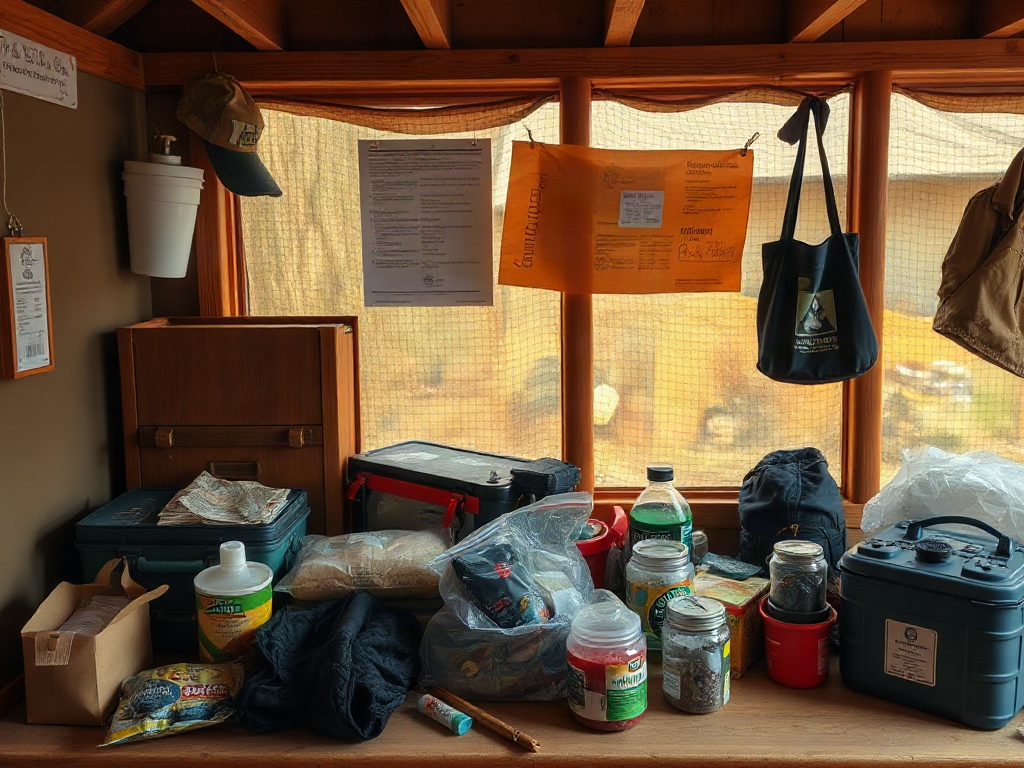
Preparedness psychology and better decisions under stress depend on reducing cognitive load before a crisis, rehearsing a few priority actions, and using simple cues when attention narrows. Stress can speed up impulsive choices, cause tunnel vision, distort risk perception, and make people cling to an outdated assumption. A workable approach uses pre-decided thresholds, short written instructions, realistic drills, and deliberate pauses for checking information. Practice should include communication failures, fatigue, uncertainty, and competing needs rather than only ideal conditions. The aim is not perfect calm; it is creating enough structure to recognize the situation, select the safest feasible option, and revise that choice when new facts appear.
Why Stress Changes Preparedness Decisions
Stress changes the conditions under which a person interprets information and chooses an action. Attention may narrow toward the loudest signal, working memory may hold fewer details, and familiar habits may take over before a careful comparison is possible. A person who normally evaluates several options may instead fixate on one threat, wait for reassurance, or act on the first instruction that sounds authoritative.
The practical issue is not whether someone feels afraid. A moderate stress response can increase alertness, while excessive or prolonged pressure may interfere with sequencing, communication, and judgment. A resident hearing an evacuation notice, for instance, may focus on gathering possessions and miss a changing route instruction. Someone sheltering during a power outage may repeatedly search for updates without deciding when to conserve phone battery or relocate.
Preparedness psychology treats those reactions as planning constraints rather than character flaws. The useful question is, “Which decision becomes difficult when attention, time, or information is limited?” That question produces better preparation than simply buying more supplies. A plan should identify the few choices that carry the greatest consequences: leaving or staying, contacting a specific person, protecting medication, shutting off a hazard, or requesting assistance.
A common mistake is assuming that knowledge automatically becomes action under pressure. Knowing the safest route does not guarantee that a person will use it while tired, separated from family, or receiving contradictory messages. Writing down the trigger, action, and fallback reduces the amount that must be remembered. The preparedness psychology and better decisions under stress connection becomes practical when emotional responses are included in the plan instead of treated as irrelevant.
Build Decision Aids Before Pressure Arrives
Decision aids work best when they convert a vague intention into a visible sequence. “Be ready to evacuate” is difficult to act on because it leaves the trigger and order of operations undefined. “If local officials direct evacuation, take the medication pouch, identification, charged phone, and mobility equipment, then use Route B if Route A is blocked” gives the household a usable starting point.
The aid should be short enough to scan while standing, moving, or helping another person. Place high-consequence actions first and separate confirmed information from assumptions. A household card might contain contact names, meeting locations, transportation limitations, utility shutoff locations, and the point at which someone outside the home should be called. It should not attempt to reproduce an entire manual.
Pre-decided thresholds are especially useful when delay is costly. Examples include leaving before roads become congested, stopping travel when visibility falls below a personally defined limit, or switching from normal communication to a designated backup channel after repeated failed calls. These thresholds are not universal rules; they are household decisions that should reflect local hazards, mobility, children, animals, work obligations, and access to transport.
A useful comparison is a detailed plan versus a compact action card. The detailed plan preserves nuance and is valuable during review. The card performs better during the first minutes of a disruptive event. Keep both, but do not force the person under stress to search the long document for the first action. Review the card after changes to vehicles, medications, phone numbers, or household membership.
- Trigger: What observable condition starts the decision?
- First move: What action protects time, safety, or communication?
- Fallback: What happens if the preferred route, person, or device is unavailable?
- Check: What information would justify changing course?
One failure mode is over-automation: treating a threshold as a command that cannot be reconsidered. A written cue should reduce hesitation, not prevent judgment. If official information changes or a route becomes unsafe, the plan must allow a documented revision.
Practice for Uncertainty, Fatigue, and Conflicting Information
Practice improves decisions when it recreates the conditions that make decisions hard. Quietly reading a plan at a desk tests recall, but it does not test communication while a child is upset, a phone is nearly empty, or two sources provide different instructions. A short scenario exercise can reveal whether the plan depends on one person, one vehicle, one address, or uninterrupted internet access.
Use graduated practice rather than beginning with an elaborate simulation. First, ask each household member to point out the first action for a defined situation. Next, test the action with a missing resource, such as an unavailable vehicle or a dead phone. Later, add a time limit or conflicting information and require participants to explain why they changed or kept their decision.
For example, a family might rehearse a nighttime departure during a power failure. One person checks the official alert, another collects the medication pouch, and a third confirms the meeting location. The exercise may show that the flashlight is stored in a bedroom, the written contact list is outdated, or one family member does not know which route avoids a regular flood area. Those discoveries are more valuable than a smooth rehearsal in ideal conditions.
Fatigue deserves specific attention because tired people may skip verification, misread times, or become less willing to revise an initial choice. Practice does not need to create unsafe exhaustion. A tabletop exercise held after an ordinary busy day can expose unclear instructions without encouraging reckless behavior. The goal is to observe friction: repeated questions, stalled handoffs, unclear authority, and steps that require too much fine motor control.
Another common mistake is rewarding speed alone. Fast action is not automatically good action if it is based on a rumor or sends people toward the hazard. Measure whether participants identified the trigger, used a reliable information source, protected high-priority needs, communicated their status, and recognized when the original plan no longer fit. Revise one or two weak points after each exercise; changing everything at once makes it difficult to tell what solved the problem.
Readers comparing preparedness psychology and better decisions under stress with conventional supply planning should see the distinction clearly: supplies extend options, while practice reveals whether people can locate and use those options under pressure.
Recognize Errors and Recover Without Escalating Them
Good decision-making includes recovery after a poor first choice. Stress can create commitment to an earlier action because admitting a mistake feels costly, especially when others are watching. A household may continue toward a blocked route because it already loaded the vehicle, or keep waiting for one contact because changing the communication plan feels like failure.
Use explicit reassessment points to interrupt that pattern. At each point, ask what is confirmed, what has changed, what remains unknown, and which option protects people if the uncertainty persists. The questions should be brief and observable rather than accusatory. “The bridge is now closed; which alternate location remains reachable?” produces better reasoning than “Why did we choose that route?”
Decision errors commonly arise from several recognizable conditions: anchoring on the first report, mistaking confidence for accuracy, underestimating travel time, assuming every household member can perform the same task, or treating a familiar location as safe because it was safe previously. A written review after practice should record the condition, the missed cue, and the plan change. It should not label a person as careless without identifying the system weakness.
Different situations call for different levels of deliberation. A rapidly developing hazard may require a simple protective action before all facts are available. A slower disruption may justify comparing transport, shelter, communication, and medical needs. The tradeoff is clear: too little checking increases the chance of acting on bad information, while too much checking can create dangerous delay. Predefined priorities help determine when speed outweighs additional analysis.
Watch for signs that an approach is working: people can state the first action without searching, disagreements become specific rather than personal, backup options are known, and participants can explain what evidence would change their decision. Signs of failure include repeated reliance on one unavailable person, vague phrases such as “we will figure it out,” or a plan that works only when everyone is calm and together.
For a deeper household review, connect these observations to preparedness psychology and better decisions under stress by asking which emotional pressure the plan must absorb: uncertainty, separation, responsibility for dependents, fear of wasting resources, or concern about making the wrong call. The answer points to the next drill and the next improvement.
For additional planning, consult local emergency-management agencies, official alert systems, and recognized public-safety organizations for hazard-specific instructions. Their guidance can help households align decision triggers, communication methods, and evacuation or shelter actions with local conditions rather than relying on generic assumptions.
Frequently Asked Questions
Why does stress make preparedness decisions harder?
Stress can narrow attention, reduce working-memory capacity, increase impulsive action, and make people cling to an initial interpretation. Short cues and rehearsed priorities reduce those demands.
What should a household decide in advance?
Decide the triggers for leaving or sheltering, first actions, communication methods, meeting locations, transportation limits, essential medical needs, and fallback options if the preferred resource fails.
How can people practice without creating unnecessary fear?
Use short tabletop scenarios, introduce one realistic complication at a time, and focus on observable tasks such as finding supplies, checking information, and communicating status.
Is the fastest decision always the best one?
No. Speed matters when delay increases danger, but a brief verification may prevent a harmful response to a rumor or outdated instruction. The appropriate balance depends on the hazard and available information.
How should a family review a decision that went wrong?
Record what was known, what changed, which cue was missed, and what plan adjustment follows. Focus on improving the system rather than assigning blame.
Conclusion
Better decisions under stress come from designing for limited attention, incomplete information, and competing responsibilities. A compact action card, clear thresholds, realistic communication backups, and gradual practice can make the first response more dependable without pretending that fear will disappear. Prioritize decisions with serious consequences, then test whether people can carry them out when a route is blocked, a device fails, or family members disagree. Review the friction you observe and change the specific cue, sequence, or fallback that caused it. Preparedness becomes more resilient when it supports revision rather than demanding perfect execution. The next useful step is a short household exercise built around one likely local disruption, followed by a written update to the plan.