
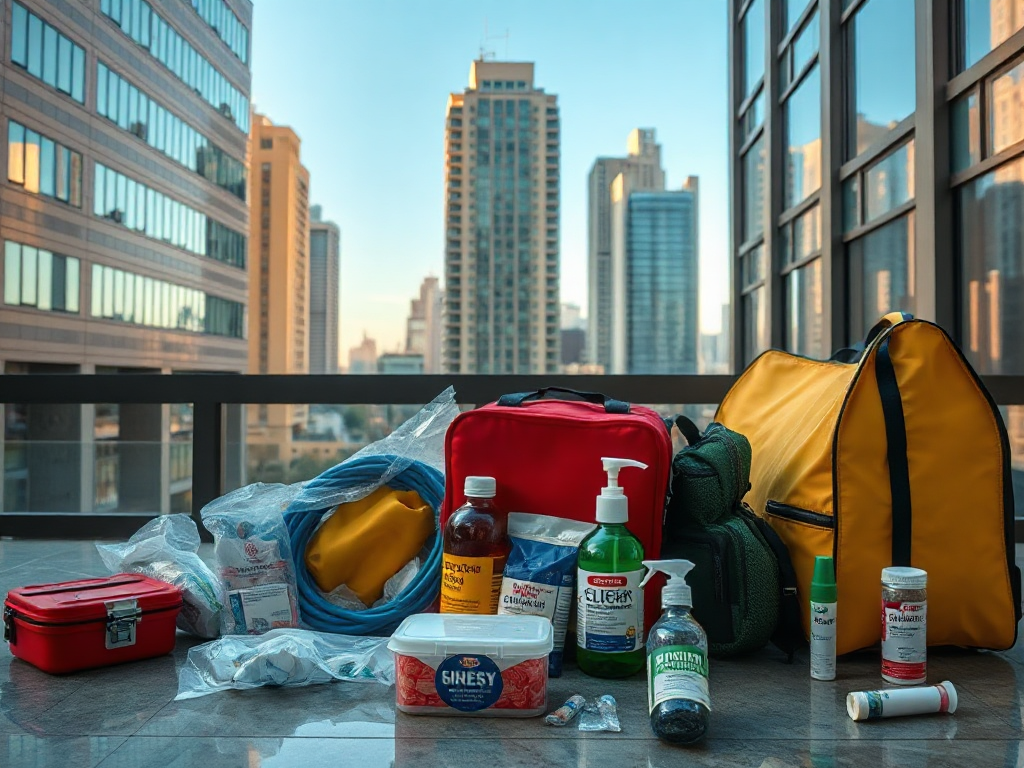
Prepare high-rise emergency supplies as a compact, portable kit that supports sheltering, evacuation, communication, and access to essential medications when elevators, power, water, or stairwells are unavailable. Store water, ready-to-eat food, a flashlight, batteries, first-aid materials, medications, phone power, masks, sturdy footwear, and copies of key information in a lightweight backpack near the exit. Keep a smaller personal kit at work or in a vehicle if you commute. Account for limited storage, long stair descents, mobility needs, and building-specific rules, then inspect expiration dates and battery condition twice a year.
Match Supplies to High-Rise Risks and Movement Limits
High-rise preparation begins with the building, not a generic shopping list. A tower resident may face a power failure, fire alarm, smoke, water interruption, severe weather, elevator shutdown, or an order to leave by stairs. Each situation changes what is useful. A large stockpile in a basement is less helpful if smoke blocks access, while a compact bag beside the apartment door can support a quick departure.
Walk through the likely decisions before buying equipment. Identify at least two stairwell routes, the location of fire extinguishers and manual doors, the building’s designated assembly area, and a safe place to wait if officials advise sheltering. Never use an elevator during a fire or when building personnel or emergency officials prohibit it. Your supplies should support movement without obstructing a stairwell or hallway.
Weight is a safety issue. Water, canned food, tools, and extra clothing become difficult to carry down many floors, especially for children, older adults, or anyone with a medical condition. Divide supplies between a primary evacuation bag and small household reserves rather than forcing one person to carry everything. A household with pets, an infant, or mobility equipment needs a different allocation than a single adult.
A common mistake is preparing only for a long stay inside the apartment. Fire, structural damage, contamination, or a building-wide instruction may make staying impossible. The opposite mistake is buying an oversized tactical pack that slows stair travel. Use a simple priority order: immediate safety and identification, communication and light, medication and basic first aid, water and food, then comfort items.
For building-specific details, ask management about alarm procedures, generator coverage, water shutoffs, accessible evacuation arrangements, and rules affecting grills, fuel, or battery storage. Link those details to How to prepare supplies for high-rise emergencies so household members can find the same instructions quickly.
Build a Lightweight Emergency Kit That Works on Stairs
A high-rise emergency kit should be wearable, reachable, and usable in low light. Choose a small backpack with comfortable shoulder straps and keep it near the apartment exit, not buried in a closet. The bag should contain items that solve immediate problems without requiring a table, wall outlet, or elevator.
Begin with a flashlight or headlamp and spare batteries stored separately to reduce accidental drain. Add a phone charging cable matched to household devices and a power bank that is maintained according to its instructions. Include a whistle, basic first-aid supplies, hand sanitizer, tissues, dust masks, work gloves, and a small amount of cash. Sturdy shoes and a long-sleeved layer may matter more than a second multitool if broken glass, wet stairs, or debris is possible.
Identification and information deserve their own waterproof pouch. Include copies of identification, emergency contacts, medication details, insurance information, building contact numbers, and a written meeting location. Do not rely solely on a phone; a damaged device, dead battery, or overloaded network can remove access to information. Mark the pouch with the household member’s name, but avoid placing unnecessary personal data on the outside.
Pack for the people who will actually use the kit. A child may need comfort items and hearing protection, while a person with asthma may need prescribed medication and a mask that does not interfere with their treatment routine. Someone using a cane, walker, or wheelchair may need a communication card, backup batteries, or a prearranged helper. Supplies should complement, not replace, an individualized evacuation arrangement.
Test the bag in the conditions it is meant for. Carry it up and down several flights if medically safe, check whether zippers open in darkness, and confirm that the flashlight can be operated with one hand. If the pack shifts, causes pain, or prevents someone from holding a railing, remove low-priority items. A common failure is treating preparedness gear as a collection rather than a load that must move with a person.
- Exit pouch: identification, keys, phone, glasses, and medication.
- Light and communication: flashlight, batteries, power bank, whistle, and written contacts.
- Protection: shoes, gloves, mask, eye protection, and a simple first-aid kit.
- Short-duration support: water, shelf-stable food, and a light layer.
Store Water, Food, Medicines, and Power Safely
High-rise storage works best when supplies are distributed across usable locations. Keep a portable amount in the exit bag, a modest reserve inside the apartment, and specialized items where they can be reached without moving heavy boxes. Do not place emergency supplies in a locked storage room, parking area, or basement if a fire or flood could cut off access.
Water is heavy, so storage requires a tradeoff between quantity and portability. Keep sealed drinking water in a cool, clean location and rotate it according to the manufacturer’s guidance. Avoid storing containers where heat, sunlight, leaks, or freezing could damage them. A countertop filter may be useful for some water interruptions, but it should not be treated as a substitute for stored drinking water when authorities issue a boil-water or do-not-use notice.
Choose foods that require little or no cooking: shelf-stable meals, nut or seed products, crackers, dried fruit, canned items with pull tabs, and foods that household members already tolerate. Cans are durable but heavy and may require an opener, so balance them with lighter packages. Keep allergies, religious restrictions, infant feeding, and medical diets in the selection. Test one item before buying a large quantity; an emergency is a poor time to discover that the food is unusable.
Medication planning needs more care than simply placing bottles in a bag. Keep prescriptions in their original labeled containers when possible, maintain a record of doses, and ask a pharmacist or clinician how to manage supply interruptions. Temperature-sensitive medicines may need an insulated solution, but improvised cooling methods can damage them. Include glasses, hearing-aid supplies, inhaler accessories, glucose-monitoring materials, or other routinely used items where relevant.
Battery devices should be checked for compatibility and storage conditions. A power bank that has not been charged, a radio with the wrong batteries, or a flashlight with corroded contacts creates false confidence. Inspect food seals, water containers, medications, batteries, and charging equipment twice each year. The common misconception is that buying supplies completes the task; rotation and functional testing determine whether the stock is dependable.
A useful household arrangement is to place the lightest frequently needed items in the exit bag, heavier reserves low and stable inside the apartment, and fragile or temperature-sensitive products in a protected cabinet. Label expiration dates on the shelf rather than relying on memory. For additional storage decisions, use How to prepare supplies for high-rise emergencies as a household reference point.
Organize Evacuation, Communication, and Replenishment
Supplies only work when residents know when to take them and where to go. Write a short household procedure for three conditions: leave immediately, shelter inside while monitoring instructions, and reunite after separation. Include a person outside the building who can relay information if local phone service is congested. Agree on a primary meeting place and a backup location outside the immediate property.
Do not assume the closest exit is always available. Smoke, water, blocked doors, or emergency operations can change the safe route. Household members should know how to follow posted exit signs and should never prop open fire doors. During an alarm, take the prepared bag only if it is immediately accessible and doing so does not delay leaving. A kit is secondary to evacuation instructions and immediate life safety.
Communication supplies should work without internet access. Keep a battery-powered or hand-crank radio if it suits the household, but verify that someone knows how to operate it. Write down building management, utility, school, workplace, and emergency contact details. Text messages may work when voice calls do not, although no communication method is guaranteed.
Rehearse the plan with realistic constraints. Time a calm stairwell walk, identify who assists a child or neighbor, and check whether pets can be moved in a carrier. Do not conduct a drill in an active alarm or obstruct residents. If one person cannot descend safely, discuss the building’s accessible evacuation process with management and local emergency services in advance rather than improvising during smoke or darkness.
Replenishment should be attached to ordinary routines. Replace used first-aid items, recharge the power bank after an outage, and move food nearing its date into regular meals. Seasonal changes may require different clothing, water protection, or cooling supplies. A common failure is leaving the kit untouched for years; another is storing it so securely that no one can reach it quickly.
Review the arrangement after a move, renovation, household change, new prescription, or building policy update. The best sign that the system works is not a full bag but a clear, practiced path from warning to action. Keep a current inventory on paper and digitally, and let trusted household members know where it is. The related checklist at How to prepare supplies for high-rise emergencies can support that review.
Frequently Asked Questions
Where should a high-rise emergency kit be stored?
Keep the primary bag near the apartment exit in a location that every household member can reach. Avoid basements, balconies exposed to weather, locked storage areas, and places that could be blocked by falling objects.
How much water should be kept in a high-rise apartment?
Store as much safe drinking water as your space, budget, and carrying limits allow, while keeping a portable amount in the evacuation bag. Rotate containers and follow local instructions if water service is interrupted.
Should emergency supplies include canned food?
Canned food can provide durable calories, but it is heavy and may require an opener. Combine selected cans with lighter, ready-to-eat foods and choose products household members already eat.
What should residents do if elevators stop working?
Follow building and emergency-official instructions, use designated stairs when evacuation is ordered, and do not use elevators during a fire unless directed by authorized responders. Residents with mobility limitations should use their prearranged assistance procedure.
How often should high-rise emergency supplies be checked?
Inspect the kit at least twice a year and after every use. Check medication dates, food seals, water containers, flashlight operation, battery condition, clothing fit, contact information, and any building-specific changes.
Conclusion
A high-rise supply system should make the next safe decision easier, whether that means leaving by stairs, waiting for instructions, or managing a short interruption inside the apartment. Build around a portable backpack, then add carefully placed water, food, medicines, light, communication tools, and personal equipment. Weight, heat, access, mobility, and building rules matter as much as the item list. Walk the exits, confirm how assistance will work, and write down contacts instead of depending on a charged phone. Test the bag on a calm day and review it twice a year. Replace what expires, remove what cannot be carried, and update the arrangement whenever the household or building changes.
Further Reading
Authoritative Sources
- High Rise Emergency Procedures
chicago.govDirect emergency evacuations and drills from their assigned floor in accordance with the plan. (d) Emergency evacuation teams shall: 1. Know the location of all ...
- Emergency Preparedness Tips for High-Rise Building Safety
aus.comMake sure exit and stairwell doors are clearly marked, remain unlocked and are free from debris and clutter that could obstruct the walkway.
- High-Rise Building Safety
nfpa.orgMake sure that you're familiar with your building's evacuation plan, which should illustrate what residents are supposed to do in the event of an emergency.
- Evacuation Procedures - Public Safety | Vanderbilt University
publicsafety.vanderbilt.eduStep 4: Assemble your emergency supplies · Food and water (3-day supply minimum) · First aid kit · Medicines and medical devices · Blankets and/or sleeping bags ...