
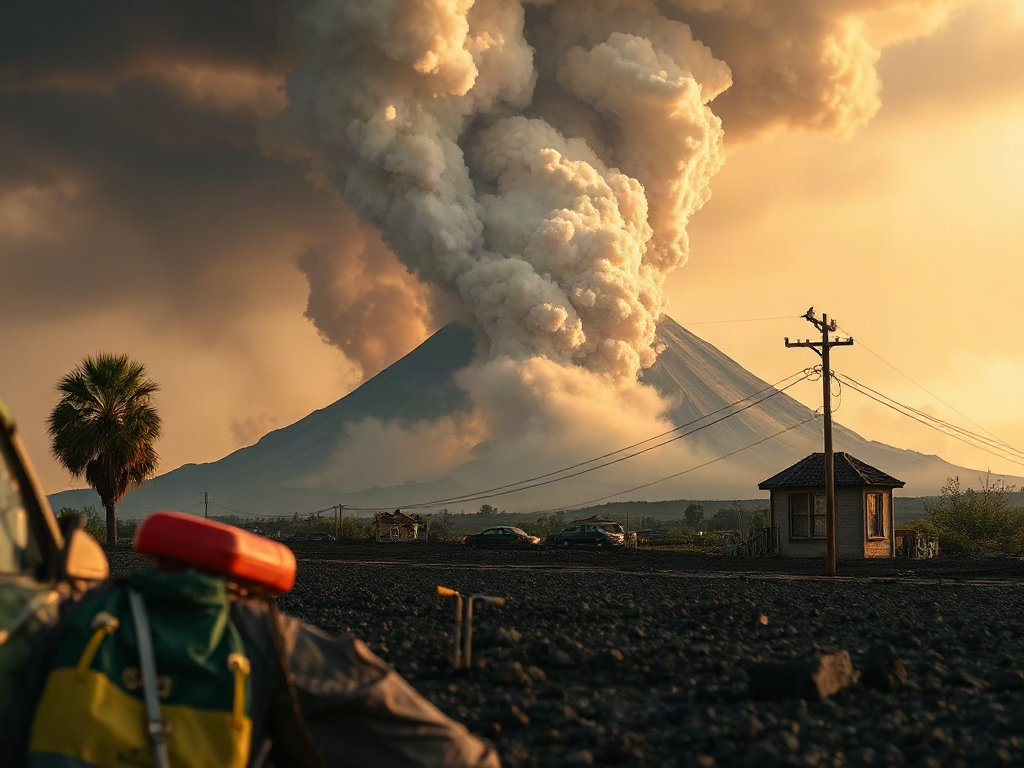
A volcano preparedness checklist for ashfall conditions should cover respiratory protection, sealed water and food, indoor air control, safe travel, and cleanup supplies before ash begins falling. Fine ash can irritate lungs and eyes, contaminate uncovered containers, clog engines and filters, reduce visibility, and become slippery or heavy when wet. Keep certified particulate respirators or well-fitting masks, goggles, spare air filters, plastic sheeting, sturdy bags, drinking water, medications, and battery-powered communication equipment accessible. Remain indoors when officials advise it, close openings, avoid unnecessary driving, and follow local instructions about evacuation and ash removal. Never sweep dry ash aggressively or wash large amounts into drains, where it may create blockages.
What Ashfall Can Disrupt First
Volcanic ash is made of tiny fragments of rock, minerals, and volcanic glass rather than soft household dust. Its effects depend on particle size, wind, moisture, the eruption material, and how long ash remains airborne. A light coating can still irritate the eyes and throat, while heavier deposits may clog ventilation equipment, overload roofs, interfere with vehicles, and reduce visibility on roads.
The first priority is information. Monitor local emergency management, the volcano observatory, weather alerts, and official evacuation notices instead of relying on a single social-media post. Ash may arrive before residents understand its density or direction, and conditions can change when wind shifts. Save alerts on a battery-powered radio or charged phone, and identify at least one contact outside the affected area.
A useful Volcano preparedness checklist for ashfall conditions separates immediate sheltering from later cleanup. During active fallout, the goal is to limit inhalation and prevent ash from entering the building. After the plume clears, the concerns shift toward roof loads, blocked drainage, contaminated surfaces, engine damage, and safe disposal.
Weak assumptions create avoidable problems. Ordinary cloth masks may reduce some larger particles but may not seal well or provide the protection of a properly fitted particulate respirator. A rainstorm does not automatically solve ash buildup; wet ash can become dense and difficult to remove. Likewise, opening windows to “clear the air” may worsen indoor exposure when outdoor ash concentrations remain high.
Respiratory, Eye, and Indoor-Air Protection
Respiratory protection works best when it is available before the plume arrives and worn correctly during exposure. Keep particulate respirators appropriate for fine particles, spare masks, sealed eye protection, and any prescribed respiratory medication in a location that can be reached without searching through contaminated rooms. People with asthma, chronic lung disease, young children, older adults, and anyone with mobility limitations may need a more deliberate sheltering arrangement.
Close windows, doors, fireplace dampers, and other openings when ash is falling. Turn off systems that bring outside air indoors unless the equipment is specifically designed and filtered for the conditions. If a heating or cooling system must operate, inspect its filter instructions and replace filters as directed; a filter loaded with ash can restrict airflow and push particles through gaps. Portable air cleaners may reduce indoor particles in a closed room, but they do not make outdoor exposure safe and require a suitable filter and electricity.
Eye protection deserves separate attention. Contact lenses can trap irritating particles against the eye, so people who wear them should have glasses available. Do not rub ash-covered eyes. Move indoors, rinse with clean water, and seek medical advice for persistent pain, vision changes, or breathing difficulty. Emergency symptoms should not be managed by waiting for the ash to settle.
A practical shelter room is one with few exterior openings, enough space for household members, and access to water, medication, a radio, chargers, and waste bags. Place masks and goggles near the entrance, but avoid leaving them exposed where ash can settle on their inner surfaces. A common mistake is to use a fan that simply redistributes contaminated air; air movement is useful only when it passes through appropriate filtration or safely exhausts air according to official guidance.
Water, Food, Medication, and Power Priorities
Protecting supplies means preventing ash from entering containers rather than trying to clean every exposed item later. Store drinking water in closed, food-safe containers and keep extra water for eye rinsing, basic cleaning, and medication needs. Cover wells, rain-catchment equipment, outdoor taps, and water-treatment components if local authorities advise doing so. Do not assume clear-looking water is suitable for drinking after ash exposure; follow local water utility instructions.
Food in sealed cans, unopened packages, and closed cupboards is generally easier to protect than food kept in open bins or outdoor storage. Wipe the outside of containers before opening them so ash does not fall onto food or utensils. Discard items whose packaging is torn, heavily contaminated, or impossible to clean safely. Ready-to-eat foods are especially useful when ash makes cooking, ventilation, or power uncertain, but a stockpile should still reflect household allergies, infant needs, and medical diets.
Medication planning should account for both supply and access. Refill prescriptions when reasonably possible, keep medicines in closed containers, and include inhalers, glasses, hearing-aid batteries, and other daily-use items. If a pharmacy, clinic, or evacuation route may be inaccessible, ask the relevant clinician or pharmacist about a lawful, safe supply plan rather than changing doses independently.
Power interruptions may follow ashfall because equipment, substations, or access routes become difficult to operate. Charge phones, battery banks, radios, lighting, and medical devices before conditions worsen. Fuel generators only outdoors and well away from doors, windows, and air intakes; ashfall does not remove carbon-monoxide risk. Keep food preparation simple and avoid burning debris or using indoor combustion appliances, since poor ventilation can compound respiratory irritation.
Use a compact priority check before shopping or packing:
- Air: particulate masks, goggles, prescribed respiratory supplies, and replacement filters.
- Water and food: sealed drinking water, covered supplies, and foods requiring little ventilation or cooking.
- Communication: charged devices, a battery radio, spare batteries, and written contacts.
- Access: medications, identification, cash or payment alternatives, and supplies for children, pets, and disability-related needs.
The common failure mode is buying cleanup tools while overlooking consumables and prescriptions. A shovel cannot replace water, and a generator cannot compensate for an empty medication container or an unfiltered air intake.
Vehicle Travel, Cleanup, and Recovery Decisions
Driving during ashfall should be treated as a last resort unless officials direct travel or an urgent need requires it. Ash reduces visibility, can make pavement slippery, and may impair engines when drawn through air-intake systems. Vehicles may also become stranded by road closures, fallen debris, or fuel shortages. If travel is unavoidable, follow official route information, use headlights as required, leave more stopping distance, and avoid unnecessary exposure with windows and outside-air ventilation closed.
Vehicle protection is a tradeoff between mobility and damage. Parking under cover can limit deposits, but a garage must not be used for an idling vehicle. If ash enters the engine system, repeated driving may pull abrasive material farther into filters and components. Check the owner’s manual or obtain qualified service advice about air filters, oil, brakes, and other inspection points before resuming normal use. Do not blast ash from surfaces with compressed air near people or open building entrances.
Cleanup should wait for official advice about roof safety, air quality, and waste handling. Dry ash can become airborne when swept, brushed, or blown, while wet ash can be heavy enough to stress roofs and clog gutters. Use appropriate respiratory and eye protection, limit the number of people in the work area, and dampen surfaces lightly when that reduces dust without sending large quantities into drains. Remove ash in manageable amounts rather than creating unstable piles on roofs or balconies.
Prioritize locations where ash creates immediate hazards: entrances and walkways, gutters and drains, air intakes, vehicle ventilation systems, and surfaces used for food or drinking water. Keep children and pets away from ash piles, and clean paws or fur before they track particles indoors. Separate ash from ordinary household waste if local authorities provide special instructions; disposal rules vary by community and by the volume involved.
Do not climb onto a roof simply because it looks coated. A professional assessment may be safer where deposits are deep, wet, uneven, or near damaged structures. The same judgment applies to trees, power lines, and blocked roads. Review the checklist again after each official update, because the appropriate action may change from sheltering to evacuation, inspection, or restricted cleanup.
A Household Ashfall Plan That Can Be Used Under Pressure
A written plan turns scattered supplies into decisions people can follow when visibility, noise, and communication are poor. Assign one person to monitor official alerts, another to check vulnerable household members, and another to secure water, food, and ventilation if staffing permits. Write down meeting places, medication details, pet arrangements, and transport options. Keep a paper copy because phones may lose power or service.
Practice the first ten minutes rather than staging a theatrical drill. Close openings, move to the selected room, put on respiratory and eye protection, bring medication and communication equipment, and account for everyone. If someone cannot use a standard mask because of age, disability, or a medical concern, obtain individualized advice in advance and identify a lower-exposure room or alternate relocation option.
Review the plan for conflicting instructions. A household may need to shelter from ash while remaining ready to evacuate because of lava, lahars, gas, wildfire, or other hazards. Do not delay an official evacuation order to protect possessions or finish sealing windows. Place shoes, outer layers, keys, documents, and pet carriers where they can be reached without crossing heavily contaminated areas.
After the event, note what failed: a mask size, an empty battery, a clogged filter, an inaccessible water container, or an unclear responsibility. Correct that specific weakness rather than buying unrelated equipment. A precise checklist is most valuable when it is tested against the actual rooms, people, vehicles, and local alerts it must serve.
For current ash advisories, evacuation zones, air-quality guidance, water notices, and cleanup instructions, consult the local emergency-management agency, public-health department, volcano observatory, and utility providers serving the affected area. Official instructions should take priority over general preparedness advice because ash characteristics and associated hazards differ by eruption.
Frequently Asked Questions
Should I stay indoors during ashfall?
Usually, yes, when local authorities advise sheltering. Close openings, limit outside-air intake, and leave only for urgent needs or an official evacuation order.
Are cloth masks enough for volcanic ash?
Cloth masks may reduce some larger particles but often provide a poor seal. Use an appropriate, well-fitting particulate respirator when available, and seek medical advice for breathing problems.
Can volcanic ash contaminate drinking water?
It can enter uncovered containers, catchment systems, and some water equipment. Keep supplies covered and follow local utility or health-department instructions before drinking questionable water.
Is it safe to drive while ash is falling?
Avoid driving unless necessary or directed. Reduced visibility, slippery roads, closures, and engine air-filter problems make travel riskier than normal.
How should ash be cleaned from a roof?
Follow local guidance and avoid climbing onto a roof that is wet, heavily coated, damaged, or structurally uncertain. Ash can become heavy when wet, so professional help may be safer.
Conclusion
Ashfall preparation is mainly an exercise in controlling exposure and preserving basic services. Put respiratory and eye protection, sealed water, medications, communication equipment, and replacement filters where they can be reached quickly. During fallout, protect indoor air and avoid unnecessary travel; afterward, treat roof loads, drains, engines, and contaminated surfaces as separate safety problems rather than one large cleanup task. Official alerts matter because ash may arrive alongside evacuation hazards that a household checklist cannot resolve. Test the plan with the people who will actually use it, including children, older adults, pets, and anyone with respiratory or mobility needs. Replace missing supplies, record local contacts, and revise the checklist after each drill or advisory.
Additional Resources
Authoritative Sources
- Volcano emergency preparedness
kingcounty.govGet goggles and disposable breathing masks. Keep skin covered to avoid irritation from contact with ashfall. Use a dust mask or hold a damp cloth. Be prepared ...