
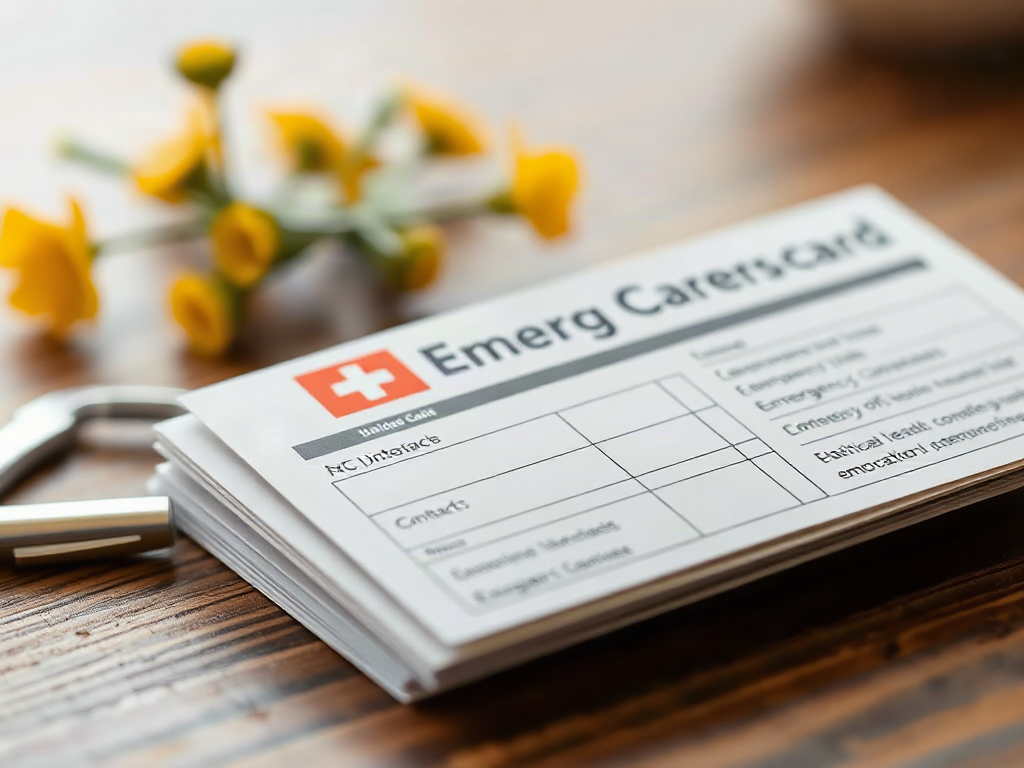
Emergency carers card information should Include emergency contacts, the dependent person’s location, urgent communication or mobility needs, and clear instructions for accessing a separate care plan without exposing unnecessary private details. Record time-sensitive risks such as missed medication, unattended children, or pets requiring scheduled care. Use durable wording, confirm that every named contact has agreed to help, and review the card whenever addresses, health needs, contact numbers, or backup arrangements change.
What Identification Details Belong on the Card?
A useful carers card must tell a responder that someone else may be at risk if the cardholder becomes ill, injured, or unable to communicate. The front should state plainly that the holder is a carer and that dependent people or animals may need prompt assistance. Subtle wording may protect privacy, but wording so vague that it resembles a membership card can delay recognition.
Include the carer’s full name and at least one dependable identifier, such as a date of birth or partial address. A full home address is not always appropriate on a wallet card, particularly if the wallet is lost. An emergency plan reference number, organization-issued card number, or contact-led verification process may provide enough confirmation without publishing the household’s location.
The card should indicate how many people rely on the holder and the nature of the caring relationship in broad terms. Examples include “one adult dependent at home,” “two children require collection,” or “adult family member needs daily support.” Avoid squeezing a complete medical history onto the card. A responder first needs to recognize the caring responsibility, identify the correct contact route, and understand whether delay could create harm.
A compact identification area can cover:
- Cardholder: full name and a practical identifier.
- Caring responsibility: who or what depends on the holder, described briefly.
- Activation instruction: whom to call and what to say.
- Plan location: where authorized contacts can find fuller instructions.
- Issue or review date: evidence that the information has been checked recently.
Consider a carer who is taken to a hospital while shopping. “I am a carer—call the contacts on the reverse” is immediately actionable. “Important information enclosed” is not. At the other extreme, listing the dependent person’s full diagnosis, address, daily routine, and access code exposes more information than a stranger needs. The better approach separates recognition information on the card from operational detail in a controlled care plan.
Test the wording by showing a draft to a trusted person who does not know the household arrangements. Ask whether they can identify the caring responsibility and the first action within a few seconds. Confusion at this stage signals that the card needs simpler language, larger type, or a clearer contact sequence.
How Should Backup Care Contacts Be Recorded?
Backup contacts should be listed in the order they are expected to respond, not by family seniority or convenience. Each named person must know that they are on the card, understand the responsibilities involved, and have enough information to make a safe first response. An unanswered number or an unaware relative can create the appearance of a plan without providing actual coverage.
For each contact, record a name, relationship or role, primary telephone number, and an alternative number when available. Labels such as “Call first,” “Second contact,” and “Service contact” remove guesswork. If a contact is only available during certain hours, state that limitation. A neighbor who can enter the home quickly may be a better first contact than a relative living several hours away, even when the relative makes longer-term decisions.
Separate immediate access from ongoing authority. Someone may be able to collect a child, feed an animal, or remain with a vulnerable adult without being authorized to make medical, financial, or legal decisions. A carers card does not create that authority. Formal arrangements, consent documents, school permissions, or service records may still be needed, depending on the situation and local requirements.
A realistic sequence might direct a responder to call a nearby sibling first, a trusted neighbor second, and a care provider’s staffed number third. The nearby sibling knows the full plan; the neighbor holds a key but does not manage medication; the provider can advise on scheduled support. Writing those limits into the separate plan prevents a willing contact from taking on tasks they are not equipped or authorized to perform.
Contact reliability should be checked rather than assumed. Call or message each person during a review, confirm that the number works, and ask whether their availability has changed. A contact who has moved, works nights, or no longer has transport may still belong in the plan, but perhaps not in the first position.
The strongest arrangement includes more than one route to help. A single contact creates a fragile chain: their phone may be muted, their battery may be flat, or they may be traveling. Two informed personal contacts plus a relevant service number usually provide better resilience than a long list of people who have not accepted a defined role. Signs of a weak contact plan include voicemail-only numbers, unexplained initials, outdated relationships, and no instruction about what the contact should do after answering.
Which Care Needs Require Priority?
Priority information should focus on what could become unsafe during the first few hours of the carer’s absence. The card is an alerting tool, while a companion care plan carries detailed routines. This distinction keeps the card readable and reduces the risk that essential action is buried beneath background information.
Time-sensitive needs may include medication that cannot simply be delayed, support with eating or drinking, supervision because a person may leave the home, communication assistance, mobility transfers, medical equipment, school collection, or animal care. State the practical consequence rather than relying only on a diagnosis. “Cannot use the telephone independently” tells a backup contact more about the immediate problem than a condition name alone.
A simple priority table can help decide what belongs on the card and what belongs elsewhere:
| Information | Card | Separate Care Plan |
|---|---|---|
| Someone depends on the carer | Yes, prominently | Repeat with fuller context |
| First and second contact numbers | Yes | Yes, with roles and availability |
| Immediate risk if support is delayed | Brief alert | Detailed response instructions |
| Medication names and schedules | Usually only a plan reference | Record accurately and review often |
| Door, alarm, or key codes | No | Store through a controlled access method |
| Daily routines and preferences | No | Yes, where they affect safe care |
Suppose an adult at home uses a powered mobility device and cannot transfer without assistance. The card might say, “Adult dependent at home; mobility assistance is time-sensitive; call first contact.” The care plan can then identify trained helpers, equipment instructions, routines, and professional numbers. Placing technical transfer directions on the wallet card would be both cramped and unsafe for an untrained reader.
Medication wording requires particular caution. Do not ask an untrained backup person to administer medicine merely because a schedule appears on the card. Record where an accurate medication list can be found and whom the contact should consult. If missed support could have serious consequences, discuss the backup process with the relevant healthcare or care professional rather than treating the card as a substitute for clinical instructions.
Review priorities from the perspective of the dependent person. Communication preferences, sensory distress, allergies, and the presence of an assistance animal may affect how help is delivered. Include only details that change the immediate response. A card is working when a responder can recognize urgency and reach informed help; it is failing when it attempts to turn an unknown finder into a fully trained replacement carer.
How to Protect Privacy and Keep Details Current
Privacy protection begins by limiting the card to information needed to trigger an appropriate response. A lost wallet can expose everything printed inside it, so full addresses, key locations, alarm codes, financial details, extensive diagnoses, and complete medication records should normally be kept off the card. The objective is controlled access to the plan, not unrestricted access to the household.
Use a layered design. The card identifies the caring role and supplies contact instructions. A separate document, secure digital record, registered service, or sealed household plan holds detailed information. The chosen method must still work during a power failure, phone loss, or internet outage. A digital-only plan may be easy to update but inaccessible when credentials are unavailable; a paper plan is resilient but can become stale or be read by the wrong person.
Ask each dependent person, where they can participate, what information they are comfortable sharing and which contacts may receive it. Consent and decision-making arrangements vary, especially when children or adults who need support are involved. When there is uncertainty about authority, confidentiality, or formal care decisions, seek advice from the relevant service or qualified local professional rather than assuming that possession of the card grants permission.
Set a review rhythm tied to real events rather than relying solely on an annual reminder. Check the card whenever someone moves, a telephone number changes, a new care provider begins, medication or equipment changes, a child changes school, or a backup contact becomes unavailable. Add a “reviewed on” date so an old card is easy to spot.
A practical review takes only a few focused steps:
- Call or message every listed contact and confirm their role.
- Check that the dependent person’s location and immediate risks remain accurate.
- Verify that the detailed care plan is accessible to authorized people.
- Replace every physical copy, including cards kept in bags, vehicles, or coat pockets.
- Destroy outdated copies so competing instructions cannot be followed.
Run a brief scenario after updating. Imagine the carer is unconscious and a responder finds only the card. Follow the contact chain without revealing any access code or private record. The arrangement is working if the first or second contact answers, understands the situation, and can locate the current plan. It needs revision if nobody can be reached, contacts disagree about responsibility, or the plan depends on information held only on the carer’s locked phone.
Frequently Asked Questions
Should a carers card include the dependent person’s full address?
Only when immediate location outweighs the privacy risk and there is no safer contact-led method. A full address on a lost card can expose a potentially vulnerable household, so many plans keep it with authorized contacts instead.
Should medication details be written on the card?
Usually, the card should point to an accurate medication record rather than reproduce a changing schedule. Note genuine urgency briefly, but keep names, doses, instructions, and professional contacts in the maintained care plan.
How many emergency contacts should be listed?
Two informed personal contacts are a practical minimum when possible, with a relevant service number added where appropriate. Reliability and clearly assigned roles matter more than a long list of unprepared names.
How often should an emergency carers card be updated?
Review it after every change to contact details, care needs, location, services, medication, or access arrangements. A scheduled check every few months can catch changes that were not recorded when they occurred.
Where should the card be carried?
Keep it somewhere responders are likely to check, such as a wallet or card holder, and consider a clearly labeled copy in a regularly used bag. Avoid creating multiple copies unless each can be replaced after an update.
Conclusion
A dependable carers card connects an unexpected incident to an already agreed backup arrangement. Prioritize unmistakable wording, reachable contacts, immediate risks, and a clear route to the fuller care plan. Keep sensitive addresses, access codes, detailed health records, and medication schedules in a more controlled location unless a specific circumstance makes limited disclosure necessary.
Draft the card with the people affected, confirm every contact’s role, and test the chain as though the carer could not explain anything. Replace all copies after a material change and record the most recent review date. The final measure is not how much information fits on the card, but whether a stranger can recognize the caring responsibility and quickly connect the dependent person with someone prepared to help.