
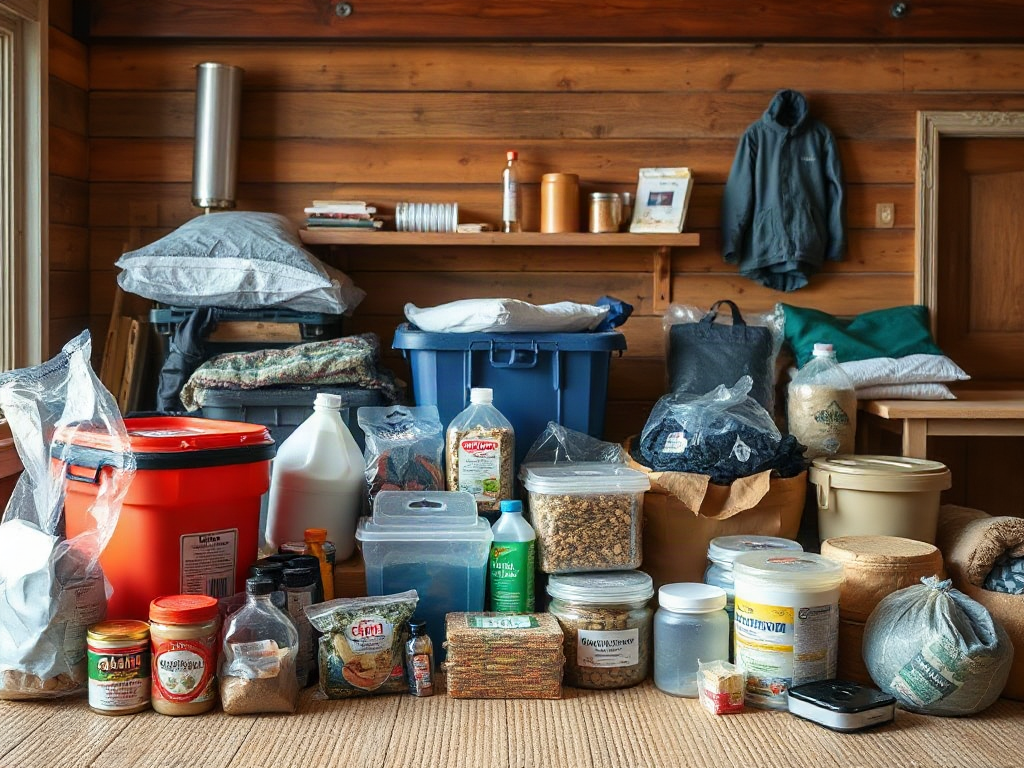
Set the Seven-Day Baseline Before Buying
A seven-day stockpile is a household operating reserve, not a pile of products selected by popularity. Begin by identifying how many people, animals, and medically necessary routines must continue if stores, taps, power, or roads are disrupted. The same quantity of supplies will serve a couple in an apartment differently from a household with a baby, a large dog, or someone who relies on refrigerated medicine.
Separate needs into three groups: supplies required for survival, supplies that preserve health and sanitation, and supplies that make decisions and daily tasks possible. Drinking water, medicines, shelf-stable calories, and a way to receive warnings belong in the first group. Soap, toilet supplies, waste bags, work gloves, and lighting prevent smaller problems from becoming larger ones. A battery radio, written contact information, spare glasses, and charging equipment reduce dependence on a working internet connection.
Storage location changes the usefulness of every item. A basement may be unsuitable during flooding, while a hot garage can damage food, batteries, and some medicines. Keep the main reserve in a cool, dry, accessible area, and place a smaller grab container near an exit. If evacuation is plausible, divide heavy water and bulky food into manageable containers rather than assuming one person can move everything.
Use the seven-day supply checklist as a planning reference, then adjust it for local hazards. A winter outage calls for blankets and cold-weather clothing; extreme heat raises the value of shade, oral rehydration supplies, and battery-powered fans. A common mistake is buying emergency food before checking whether it requires a can opener, significant water, refrigeration, or a cooking fuel that may be unavailable.
Build Water, Food, and Cooking Capacity
Water deserves first priority because people need it for drinking, food preparation, medications, and limited hygiene. Store commercially packaged water or use food-grade containers, label the fill date, and protect containers from chemicals and direct sunlight. Household guidance often uses a baseline of about one gallon per person per day for drinking and sanitation, but climate, age, activity, pregnancy, illness, and pets can change actual demand. Treat that figure as a planning floor rather than a promise that every situation will be comfortable.
Food should be familiar, calorie-dense, and usable without normal kitchen equipment. Canned beans, fish, vegetables, fruit, nut or seed butter, crackers, oats, shelf-stable milk, and ready-to-eat meals can create varied meals when combined thoughtfully. Choose lower-sodium options when practical, but do not create a supply so specialized that nobody will eat it. A household member with allergies, diabetes, swallowing limitations, or a prescribed diet needs suitable replacements before an emergency, not after it begins.
Compare foods by the resources they consume, not only by shelf life. Dry rice and beans may be inexpensive, but they require substantial water, fuel, cookware, and time. Canned foods weigh more yet can be eaten immediately and provide moisture. Freeze-dried meals reduce weight but commonly require hot water and may cost more. A balanced reserve includes no-cook foods for the first day and fuel-efficient items for later meals.
Cooking equipment must be used safely. Keep a manual can opener, sturdy utensils, disposable or washable dishes, and a method appropriate to the setting. Never use a charcoal grill, camp stove, or fuel-burning appliance indoors or in an enclosed garage because carbon monoxide can accumulate without obvious warning. Store fuel according to the product instructions and local rules. The food storage portion of the reserve should be tested by eating a sample meal: if preparation is confusing, slow, excessively thirsty, or impossible without electricity, revise the selection.
Cover Health, Sanitation, Light, and Communication
Nonfood supplies determine whether a household can remain functional after the first day. Keep at least a basic first-aid kit, a thermometer, personal protective gloves, wound-cleaning supplies, pain or fever medicines appropriate for the household, and at least a short reserve of routinely used prescriptions when legally and medically feasible. Prescription planning depends on the medication and clinician or pharmacy policies, so confirm refill options rather than assuming a universal quantity.
Sanitation needs a deliberate plan when water service or sewage systems are interrupted. Store toilet paper, hand sanitizer, soap, menstrual products, diapers, wipes, heavy-duty trash bags, disinfecting supplies, and absorbent material. A bucket-based temporary toilet may be useful in some outages, but it must be kept separate from food preparation and managed according to public-health guidance. Hygiene is not cosmetic: dirty hands, contaminated surfaces, and unmanaged waste can increase illness risk when medical access is limited.
Lighting should be distributed rather than concentrated in one powerful flashlight. Headlamps leave both hands available for stairways or repairs, while lanterns illuminate a room. Keep spare batteries in their original packaging or another way that prevents contact between terminals and metal objects. Rechargeable devices are useful when paired with a charged power bank, but they should not replace primary batteries unless the household has a dependable way to recharge them.
Communication supplies include a battery or hand-crank radio, charging cables, power banks, written phone numbers, a whistle, and a paper map. Add copies of identification, insurance information, prescriptions, emergency contacts, and property details in a water-resistant pouch; protect sensitive information from unnecessary exposure. For a household with a hearing, vision, mobility, or cognitive need, adapt alarms and instructions accordingly. One failure mode is buying equipment without testing it. Turn on the radio, charge the bank, fit the headlamp, and confirm that every adult can locate and operate the items.
Test, Rotate, and Adapt the Supply
A supply cache becomes reliable through maintenance, not its original purchase date. Schedule checks at least twice yearly and whenever household circumstances change. Inspect containers for leaks, swelling, corrosion, pest damage, and heat exposure. Review food dates, medicine instructions, battery condition, clothing sizes, pet needs, and the accessibility of the storage area.
Rotation works best when it is part of ordinary life. Place newer items behind older ones, use stored foods in routine meals, and replace them with products the household actually accepts. Do not discard every product solely because a printed date has passed; follow label instructions, inspect packaging, and apply extra caution to medicines, infant products, and damaged containers. When uncertain about safety, replace the item rather than relying on taste or appearance alone.
Run a short household test without creating unnecessary risk. Try preparing one meal without the stove, filling a water container, locating medical supplies in the dark, sending a written contact message, and moving the grab container to the vehicle or exit. Note friction points: a can opener that fails, a charger with the wrong connector, food that causes excessive thirst, or water containers too heavy for the intended carrier. Those observations are more valuable than adding another novelty gadget.
Use a priority order when money or space is limited:
- Water, essential medicines, and food that can be eaten without cooking.
- Sanitation, lighting, communication, and basic first aid.
- Power banks, cooking equipment, weather-appropriate clothing, and comfort items.
- Specialized tools selected for the household’s hazards, skills, and transportation limits.
That order is not rigid. Someone dependent on powered medical equipment may need backup electricity before adding extra meal variety, while a flood-prone household may need waterproof storage and an evacuation-ready bag sooner than a large pantry. Compare the reserve against the likely failure: a remote rural home may face longer resupply delays, whereas an urban apartment may face limited storage and stair access. Review the complete storage plan after every test and remove items that create clutter without solving a defined problem.
Frequently Asked Questions
How much water should a seven-day household reserve?
A common planning baseline is about one gallon per person per day for drinking and sanitation, with additional water for pets, heat, illness, infants, and cooking. Store more if space and finances allow.
Which emergency foods need no cooking?
Canned beans, fish, fruit, vegetables, nut butter, crackers, shelf-stable milk, and ready-to-eat meals can be used without a stove. Keep a manual can opener and check sodium, allergy, and medical-diet needs.
Should emergency supplies be stored in one place?
Keep the main reserve together for inventory control, but distribute essential items such as flashlights, shoes, medicines, and small water containers where they can be reached if one room is blocked.
How often should a seven-day supply be checked?
Inspect it at least twice a year and after major household changes. Rotate food, check batteries and chargers, review medicines, and look for water-container damage or heat exposure.
Can a camping stove be used during a power outage?
Only use a fuel-burning stove exactly as its manufacturer permits and never indoors, in a garage, or in another enclosed area. Carbon monoxide can build up rapidly; no-cook food is safer when proper ventilation is unavailable.
Conclusion
A dependable seven-day reserve begins with water, essential medicines, and food that remains usable when refrigeration and cooking fail. Sanitation, lighting, communication, first aid, and weather-appropriate supplies then protect health and preserve the household’s ability to make decisions. Tailor quantities to people, pets, medical needs, local hazards, storage conditions, and whether evacuation is possible.
Build the reserve in priority order instead of chasing specialized gear. Test one meal, one light, one charger, and one communication method before an emergency exposes their weaknesses. Rotate what expires, replace what the household will not use, and keep a small portable subset ready to move. A modest, tested supply is more useful than a large cache that is inaccessible, unfamiliar, or dependent on equipment nobody has operated.
Additional Resources
Authoritative Sources
- Build A Kit
ready.govBasic Disaster Supplies Kit · Water (one gallon per person per day for several days, for drinking and sanitation) · Food (at least a several-day ...
- A Disaster Kit for Staying at Home
content.ces.ncsu.eduTo be ready for a disaster, you will need to stock the basics: water, food, first aid supplies, clothing and bedding, emergency supplies and tools, and special ...
- Survival Kit Supplies
redcross.orgWater: one gallon per person, per day (3-day supply for evacuation, 2-week supply for home) · Food: non-perishable, easy-to-prepare items (3-day supply for ...