
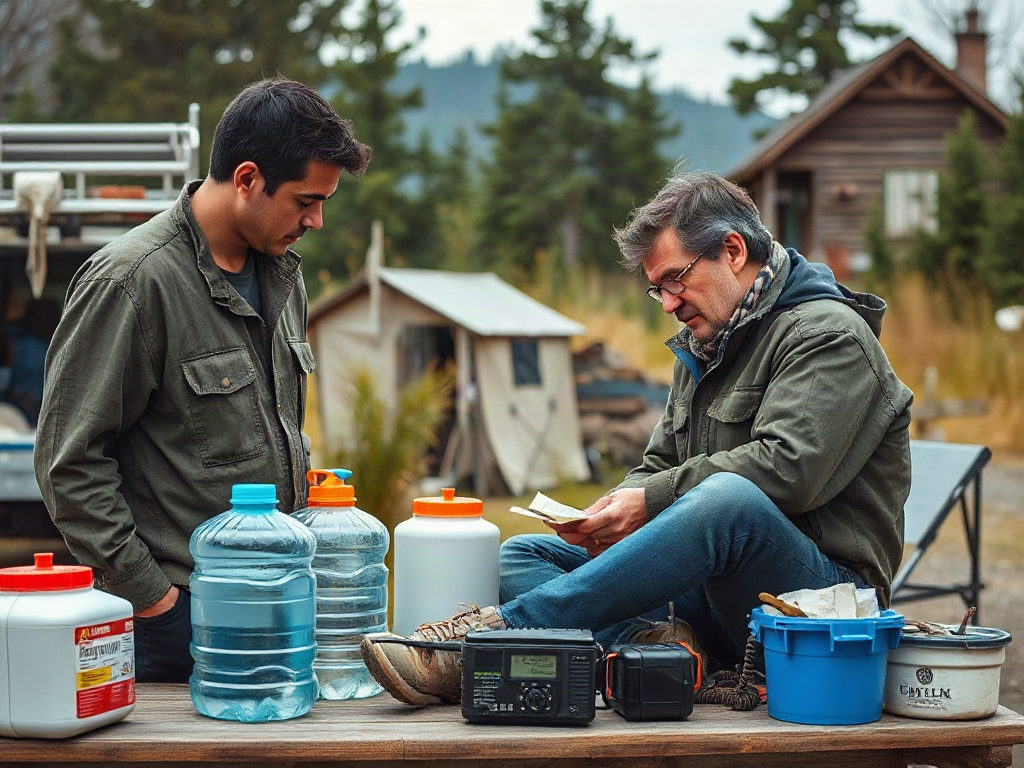
Self-reliance without unsafe isolation means building practical household capability while preserving dependable contact with neighbors, family, and local services. Store necessities and learn useful skills, but also establish check-in schedules, backup communication methods, shared-resource agreements, and clear thresholds for requesting help. Isolation becomes hazardous when injury, illness, fatigue, false information, or equipment failure goes unnoticed and no one expects contact. A resilient approach assigns responsibilities before disruption, protects personal boundaries, tests communication links, and treats mutual aid as a safeguard rather than a substitute for individual readiness.
What you’ll learn
This guide covers the following practical points:
- Balance Independence With Interdependence — Healthy self-reliance reduces avoidable dependence without pretending that one person can safely perform every task.
- Build a Personal Capability Baseline — A useful personal baseline covers ordinary needs first: water, food, sanitation, shelter, medication routines, information, transportation, and basic household safety.
- Create a Trusted Support Network — A dependable support network should be small enough to manage and varied enough to cover realistic needs.
- Set Communication and Help Thresholds — Clear communication rules turn goodwill into usable support.
Balance Independence With Interdependence
Healthy self-reliance reduces avoidable dependence without pretending that one person can safely perform every task. A household may be able to cook without grid power, manage stored water, make minor repairs, and handle several days without shopping. It may still need outside assistance for a serious injury, a structural problem, prolonged caregiving, or reliable information about changing conditions.
The distinction matters because disruptions create overlapping demands. Someone dealing with a roof leak may also need to supervise children, protect food from spoilage, monitor local alerts, and check on an older relative. Even when the required skills are available, attention and physical energy are limited. A second capable person can notice hazards, confirm information, or take over when fatigue begins to distort judgment.
Interdependence does not require surrendering privacy or sharing every resource. It means deciding which needs are better handled personally and which become safer when coordinated. A nearby household might exchange wellness checks and tool access without combining finances, food stores, or decision-making. Another arrangement might involve family members outside the area who receive scheduled updates and can call local contacts if communication stops.
A common mistake is treating contact as evidence of weakness. The stronger test is whether a plan continues working after an injury, communications failure, or several nights of poor sleep. If every essential task depends on one person remaining healthy and present, the arrangement has a single point of failure rather than true independence.
Build a Personal Capability Baseline
A useful personal baseline covers ordinary needs first: water, food, sanitation, shelter, medication routines, information, transportation, and basic household safety. The aim is not total autonomy. It is enough capacity to make deliberate decisions instead of seeking immediate help for every minor problem.
Start by identifying tasks that must continue during a disruption and the person currently responsible for each one. Then ask who can perform the task if that person is sick, away, or exhausted. Cooking equipment is of limited value if only one household member knows how to operate it safely. Stored water is less useful if containers are too heavy for the person likely to move them.
A compact capability review can expose these gaps:
- Supplies: Are necessities usable, accessible, rotated, and suitable for household members?
- Skills: Can more than one person handle shutoffs, communication devices, sanitation, and food preparation?
- Physical limits: Which tasks require lifting, climbing, driving, or sustained attention?
- Fallbacks: What happens when the primary device, route, helper, or utility is unavailable?
Consider an illustrative winter outage. One resident can run a safe alternative cooking setup outdoors and has adequate food, but a recent ankle injury makes carrying water down icy steps risky. The sensible response is not to prove independence by attempting the carry. The resident can prepare meals while a neighbor moves the containers. Each person contributes a capability, and neither becomes wholly dependent on the other.
Capability is improving when routine tasks can be completed without rushed improvisation and another person can assume critical duties. It is failing when essential work has no backup, equipment cannot be used under actual conditions, or pride repeatedly overrides physical limits.
Create a Trusted Support Network
A dependable support network should be small enough to manage and varied enough to cover realistic needs. Proximity matters for immediate checks, while distant contacts may be useful when local networks are overloaded. Relevant qualities include reliability, sound judgment, compatible expectations, and willingness to communicate clearly—not merely friendship or enthusiasm.
Begin with two or three people and discuss specific, bounded forms of cooperation. Examples include checking on each other after severe weather, sharing verified local information, moving a heavy object, caring briefly for an animal, or providing transportation if a vehicle fails. State what is not being offered as clearly as what is. Boundaries prevent an informal agreement from becoming an unlimited claim on someone’s supplies, home, or time.
Reciprocity can take different forms. A person with limited mobility may monitor messages, maintain contact lists, or coordinate family updates while another person performs outdoor tasks. Someone with repair experience might inspect a malfunction, while the other household provides charging access or prepares a meal. Equal value does not require identical contributions.
Trust should be tested through ordinary, low-stakes actions before a crisis. Exchange contact details, conduct a scheduled radio or phone check, confirm that both parties understand the meeting location, and complete one practical task together. Repeated missed check-ins, careless handling of private information, pressure to disclose inventories, or disregard for safety boundaries are signs that the arrangement needs revision.
The common failure mode is building a network around one highly capable individual. That recreates the same fragility at a larger scale. Responsibilities should be distributed, and every critical role should have an alternate where practical.
Set Communication and Help Thresholds
Clear communication rules turn goodwill into usable support. People should know when contact is expected, which channel comes first, what backup method to use, and what a missed message means. Without these details, silence may be mistaken for normal delay when it actually reflects illness, evacuation, a dead battery, or damaged service.
Use a simple communication ladder suited to local conditions. A household might try text messaging first, voice calls second, a designated out-of-area contact third, and an in-person check only when travel is safe. Written phone numbers and addresses remain useful when devices lose saved contacts or someone else must use the plan. Sensitive medical details, access codes, and inventory information should be shared only with people who genuinely need them.
| Condition | Appropriate Response | Reason |
|---|---|---|
| Routine inconvenience | Use household skills and supplies | Preserves outside help for needs the household cannot manage |
| Task exceeds physical ability | Contact a designated helper | Reduces injury risk from lifting, climbing, exposure, or overexertion |
| Scheduled check-in is missed | Try backup channels, then follow the agreed escalation step | Prevents prolonged, unnoticed distress |
| Immediate threat to life or safety | Contact appropriate emergency services when available | Mutual aid is not a replacement for urgent professional response |
Help thresholds should be decided while conditions are calm. Examples include chest pain, uncontrolled fire, suspected gas leakage, unsafe indoor temperatures, an injury that prevents walking, or a missing vulnerable household member. People should not delay urgent professional assistance merely to preserve an image of independence.
Test the arrangement periodically and after moves, phone-number changes, health changes, or shifts in household membership. A plan is working when contacts respond as expected, backups are understood, and requests remain specific. Confusion over who should act, repeated communication failures, or reluctance to report deteriorating conditions indicates that the system needs correction.
Frequently Asked Questions
Does accepting help undermine self-reliance?
No. Deliberately using help for tasks that exceed your capacity protects your health and preserves resources. Dependence becomes risky when there is no personal capability, no alternative helper, or no boundary around the assistance.
How many people should be in a support network?
There is no universal number, but two or three reliable contacts are more useful than a long untested list. Include nearby and out-of-area contacts when possible, and assign backups for critical roles.
What information should neighbors share?
Share contact methods, expected check-in times, relevant mobility or access needs, and agreed actions. Avoid disclosing detailed inventories, security information, or private medical facts unless they are necessary and the recipient is trusted.
How can someone maintain privacy while participating in mutual aid?
Define narrow commitments, disclose only task-relevant information, and ask permission before involving additional people. Cooperation can cover communication or specific chores without granting broad access to a home or stored goods.
When should professional help replace mutual aid?
Use appropriate professional or emergency services for immediate threats, serious medical concerns, fire, hazardous utility conditions, structural danger, or work requiring licensed expertise. Neighbors can assist with communication and access but should not attempt tasks beyond their competence.
Conclusion
Durable independence combines household competence with carefully chosen human connections. Strengthen the daily capabilities that reduce unnecessary reliance, then identify where injury, fatigue, specialized work, or lost communication could overwhelm the plan. Choose a few trustworthy contacts, define limited reciprocal roles, establish backup communication, and agree on escalation points. Test those arrangements during ordinary conditions; a practiced connection is far more dependable than an assumed one.