
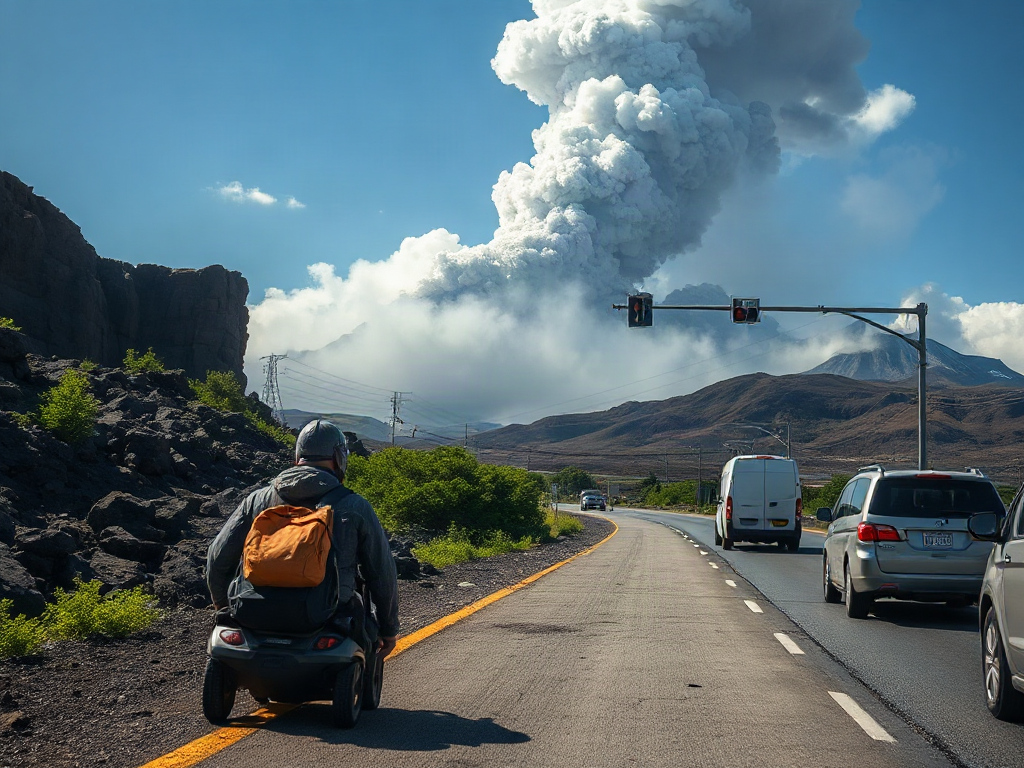
Volcano eruption preparedness for evacuation readiness depends on knowing your official hazard zones, leaving by an announced route before roads become congested, and keeping a portable kit ready for ash, poor visibility, and service interruptions. Check local alerts and evacuation maps, identify two routes away from valleys and likely lahar channels, and decide how pets, mobility needs, children, and transport will be handled. Store respiratory protection, eye protection, water, medicines, sturdy clothing, and important documents where they can be collected quickly. Do not wait for visible lava or ash to move; volcanic hazards can change rapidly, and driving through heavy ash can damage engines while reducing visibility.
Read the Hazard Map Before an Eruption
Evacuation readiness begins with location-specific information, not a generic emergency kit. A volcano may produce ashfall, lava flows, pyroclastic flows, debris avalanches, volcanic gases, or lahars—mudflows that can travel along river channels and drainages, sometimes well beyond the visible eruption area. Local emergency managers and geological agencies map these hazards differently, so a home that is outside a lava-flow zone may still be exposed to ash or a lahar route.
Find the official volcano hazard map for your community and mark your home, workplace, school, childcare location, regular travel routes, and the places where family members spend evenings. Note whether each location sits near a stream, canyon, bridge, coastline, or low-lying valley. A route that looks short on a phone may cross a channel that authorities could close first. Save an offline copy because cellular data and electricity may be unreliable during an evacuation.
Two routes are more useful than a single favorite route, but they should not simply be two versions of the same road. Choose alternatives that separate from one another early and lead away from designated hazard zones. If a bridge is the only crossing, identify a safe meeting location on both sides rather than assuming everyone can travel together.
- Record the official evacuation zones and the agency that issues orders.
- Identify routes that avoid river channels, narrow valleys, and known closures.
- Choose an out-of-area meeting place and a contact outside the immediate region.
- Ask schools, employers, and care providers how they release or relocate people.
A common mistake is treating a familiar road as automatically safe. During ashfall, visibility can drop, road surfaces may become slippery, and traffic can stop at bottlenecks. A second mistake is relying on a map without checking its date or the instructions attached to it. Review official maps and alert subscriptions periodically, especially after moving, changing jobs, or adding a new school or care obligation. The Volcano eruption preparedness for evacuation readiness process becomes much more workable when the geography is understood before an alert creates pressure.
Turn Alerts Into an Evacuation Decision
Official alerts should determine when you act; personal observation should not. Volcanic activity may escalate before residents see a dramatic plume, and hazards such as lahars can arrive with little useful warning in areas downstream. Subscribe to local emergency notifications, understand the difference between an advisory and an evacuation order, and keep a battery-powered or hand-crank way to receive information if internet service fails.
Write down the action associated with each alert level used by your local authorities. For one household, an advisory may mean checking fuel, medications, and animal transport. A warning may mean loading the vehicle and moving vulnerable people early. An evacuation order means leaving by the designated route rather than waiting to see whether conditions appear dangerous. Follow local instructions if they conflict with a preselected route, because authorities may close roads or redirect traffic based on changing conditions.
Timing involves a real tradeoff. Leaving too early may mean waiting elsewhere, missing work, or using fuel and lodging resources sooner than expected. Leaving too late can place a family in traffic, expose people to ash, and make it harder to assist someone who needs extra time. People who use oxygen, powered medical equipment, wheelchairs, or regular refrigerated medicines should build more time into the decision because their departure has additional steps.
Use a short departure sequence rather than improvising:
- Confirm the instruction through an official source, not an unverified social-media post.
- Contact household members and the designated out-of-area contact.
- Collect the ready bag, medicines, documents, protective gear, and pet supplies.
- Turn off utilities only if local authorities advise it and doing so is safe.
- Leave using the assigned route, avoiding closed roads and restricted zones.
Do not create a plan that depends on every family member returning home first. A parent may be at work, a teenager may be at school, and a caregiver may be responsible for another person. Agree on who has authority to leave, where people reunite, and what happens if communication is unavailable. The evacuation readiness plan should make the safest decision obvious when the household is separated.
Pack for Ash, Displacement, and Special Needs
A volcanic evacuation kit should support movement and several days away from home, while remaining light enough to carry. Ash is abrasive rather than ordinary dust; it can irritate eyes and airways, contaminate exposed water, and enter vehicles and buildings. Pack sealed eye protection, suitable respiratory protection recommended by local authorities, durable clothing, closed shoes, gloves, water, shelf-stable food, a flashlight, spare batteries, a first-aid kit, and chargers or battery packs.
Prescription medicines deserve special attention because evacuation delays may outlast a normal daily routine. Keep a current medication list, copies of prescriptions, identification, insurance information, and essential medical instructions in a waterproof pouch. Store supplies for infants, older adults, and people with disabilities in the same grab location, but do not assume a single bag will meet every need. A child may need comfort items; a person with hearing loss may need written alerts; a service animal may require food, identification, and equipment.
Vehicle preparation has limits. A full tank can improve flexibility, but vehicles should not be treated as sealed shelters during heavy ashfall. Ash can reduce visibility, clog filters, and damage engines and moving parts. If authorities direct people to shelter temporarily, keep windows closed and ventilation set to recirculate when appropriate; if they order evacuation, follow the route and driving instructions rather than attempting to outrun visible ash.
Keep household supplies in more than one form. Bottled water is convenient for departure, while stored water at a destination may be useful if evacuation lasts longer. Digital documents are easy to access but fail when batteries or networks fail, so retain paper copies. A compact priority list is more reliable than a huge kit:
- Water, ready-to-eat food, medications, and personal hygiene items.
- Eye and respiratory protection, sturdy clothing, and footwear.
- Identification, cash, keys, chargers, flashlight, and paper contacts.
- Pet or livestock instructions, carriers, food, and vaccination records.
The failure mode to avoid is buying protective equipment without learning how to use or fit it. Poorly fitting gear may offer less protection, and improvised coverings are not equivalent to purpose-designed equipment. Check expiration dates, replace consumed medicines and food, and practice collecting the kit in darkness. For more detail, connect these supplies to the broader volcano evacuation checklist rather than storing disconnected items with no assigned purpose.
Rehearse Routes, Transport, and Communication
A plan becomes usable when people can perform it under interruption. Conduct a short household drill: receive a mock alert, collect the bags, secure pets, check the vehicle, and travel to the meeting point without entering a restricted area. The goal is not speed for its own sake. The goal is to expose missing keys, dead batteries, unclear responsibilities, inaccessible carriers, and routes that fail for someone using a wheelchair or walking aid.
Test the plan under different conditions. One rehearsal can begin with everyone at home; another can assume a child is at school and an adult is at work. Ask each person to explain where they would go and whom they would contact. If the household has only one driver, arrange a backup with a neighbor, relative, community service, or local transportation resource before an emergency. Do not assume ride-sharing services, public transit, or fuel stations will operate normally.
Communication plans should use more than one channel. A text message may succeed when voice calls are congested, but it still depends on a charged device and network access. A printed contact card, a designated out-of-area contact, and a rule to avoid unnecessary calls can reduce confusion. Establish a simple message format that states location, condition, destination, and next check-in time.
Rehearsal also reveals competing priorities. Closing windows, protecting equipment, or photographing damage may feel urgent, but none should delay an evacuation order. Property actions are secondary and should occur only when authorities permit time and conditions are safe. If ash is falling, avoid unnecessary driving and protect air-handling systems only when doing so does not interfere with departure.
After each drill, revise one or two specific weaknesses rather than adding endless equipment. A successful plan has a known trigger, two viable routes, a transport solution for every person and animal, accessible supplies, and a fallback communication method. Repeat the exercise after a move, a medical change, a new pet, or a change in school and workplace arrangements.
Frequently Asked Questions
How early should a household leave during a volcanic eruption?
Leave when local authorities issue an evacuation instruction, or earlier if your household needs extra time for medical equipment, children, animals, or limited mobility. Do not wait for visible lava or ash.
What should go in a volcanic evacuation bag?
Pack water, food, medicines, identification, cash, chargers, a flashlight, first-aid supplies, sturdy clothing, eye protection, respiratory protection recommended by authorities, and needs for pets or dependents.
Why are two evacuation routes useful?
A second route provides an alternative if ash, traffic, flooding, road damage, or an official closure blocks the first. Choose routes that separate early and do not share the same vulnerable bridge or valley.
Should people drive during ashfall?
Follow official instructions. Driving in heavy ash can reduce visibility and damage engines, filters, and moving parts. If evacuation is ordered, leave as directed; otherwise avoid unnecessary travel and wait for guidance.
How can families prepare pets for evacuation?
Keep carriers, leashes, food, water, medicines, identification, and vaccination records ready. Confirm which shelters or accommodations accept animals and arrange a backup driver if the primary driver is unavailable.
Conclusion
Effective volcano evacuation readiness is built around decisions made before the alert: know the hazard zones, understand official messages, select independent routes, and assign responsibility for every person, pet, and essential item. A compact kit should protect against ash exposure while supporting medication, communication, and several days away from home. Rehearsals matter because they uncover practical failures that maps and shopping lists cannot reveal, including inaccessible transport, missing keys, and unclear meeting points. Review the plan whenever household circumstances change, and give official evacuation instructions priority over property protection or personal estimates of danger. The next useful step is to download the local hazard map, write down two routes and a meeting place, then test the departure sequence with the people who may need help leaving.