
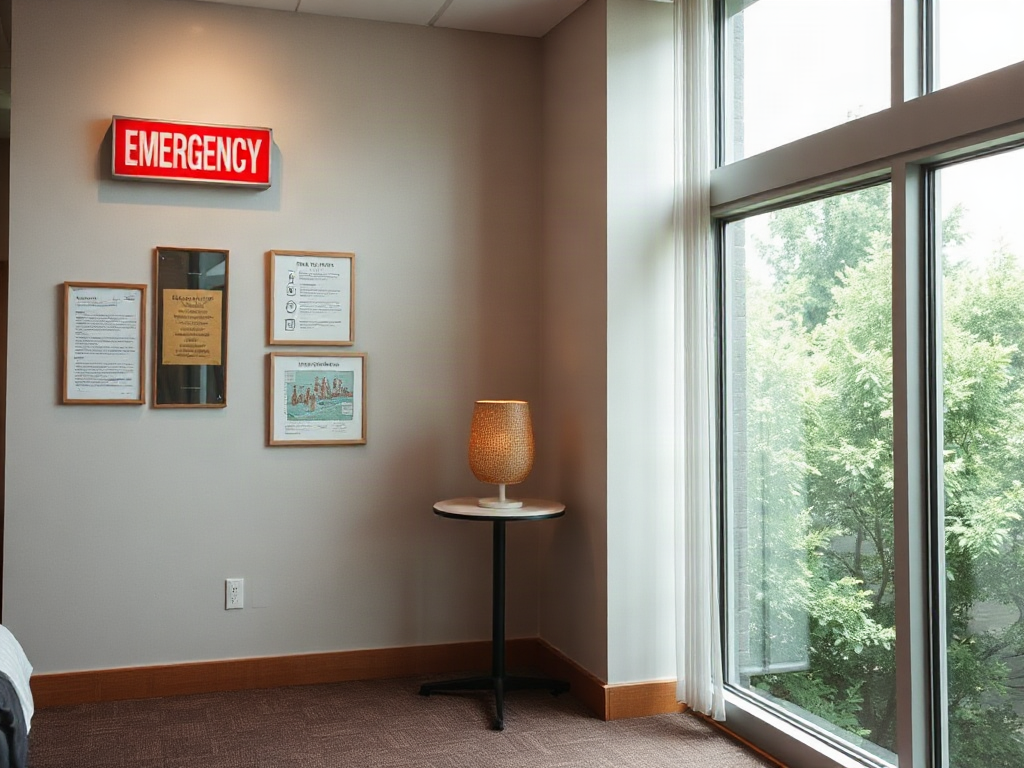
Make emergency plans understandable to guests by giving them a short, visible briefing that names the alarm signal, exit route, meeting place, communication method, and special hazards in plain language. Show rather than merely describe the route, point out backup exits, and explain what to do if power, phone service, or the primary doorway is unavailable. A one-page guest card near the entry or sleeping area can reinforce the briefing without overwhelming visitors. Avoid jargon, unlabeled keys, complicated maps, and instructions that depend on local knowledge.
Reduce the Plan to Decisions Guests Can Use
Guests do not need a household operations manual during their first few minutes in an unfamiliar home. They need to know what signal means danger, where to go first, which route is safest, and how to reconnect with the group. A useful guest briefing translates the household’s broader emergency planning into a few decisions that remain usable under stress.
Begin with the hazards that are plausible for the property and the current visit. A wildfire evacuation, a kitchen fire, a severe storm, and a medical emergency may require different actions. Telling visitors to “follow the emergency plan” is less useful than saying, “If the smoke alarm sounds, leave through the front door unless smoke blocks it; meet at the mailbox across the street.” The action, condition, and destination belong together.
Plain language matters because guests may be tired, unfamiliar with local terms, or unable to process a long explanation. Replace “egress,” “utility shutoff,” or “assembly area” with “way out,” “water valve,” or “meeting place.” If a door requires a key, code, or special release, say so directly. A locked exit that appears obvious on a floor plan can become a serious obstacle at night.
A compact briefing should cover:
- the alarm or warning cue and the first action;
- the primary and backup exits;
- the outdoor meeting point or shelter location;
- how to contact the host or household after separation;
- hazards such as pets, stairs, gates, candles, generators, or locked doors.
The common mistake is trying to cover every possible disaster equally. That produces a dense document and weak recall. Prioritize the situations that could require immediate movement, then provide additional information for visitors who need it. A guest staying overnight may need more detail about nighttime exits than someone attending a short afternoon gathering.
Show Routes, Alarms, And Meeting Places
Physical demonstration usually communicates more reliably than verbal directions alone. Walk guests from the room where they will sleep or spend time to the nearest usable exit, then show the backup route. Point out stairs, exterior gates, porch steps, low visibility areas, and doors that open differently from ordinary household doors.
For example, a visitor in a basement may hear an alarm but assume the stairs are the only option. A host who demonstrates the window exit, explains whether it can be opened from inside, and identifies the outdoor meeting point has removed several guesses at once. The same principle applies to an apartment, cabin, or guest room above a garage: the route needs to be understood from the guest’s actual location, not just from the owner’s perspective.
Maps can help, but only when they are simple and current. Use a clear “You are here” marker, arrows for movement, labels for exits, and a recognizable meeting place. Avoid relying on color alone because lighting, printing quality, and color vision vary. A photograph of a gate or mailbox may be more useful than a technically accurate diagram with tiny labels.
Explain the difference between an alarm and an information source. A smoke alarm may require immediate evacuation; a weather alert may require moving to a designated interior location; a text message may provide updates but not replace an audible warning. Guests should know who is responsible for receiving official alerts and what they should do if their phone has no signal.
Weak plans often identify a meeting point that is too close to the hazard or too vague to find. “Outside” is not a meeting place if the property has multiple doors, a busy road, or a large yard. Choose a location that is recognizable, safe from likely immediate hazards, and accessible to people with mobility limitations. Recheck it when construction, landscaping, traffic patterns, or neighboring property use changes.
Design Guest-Friendly Instructions And Backups
A guest card works best when it answers urgent questions at a glance. Place it where visitors naturally look, such as near the entry, on a bedside table, or beside a rental information folder. Keep the first side limited to immediate actions; put nonurgent details, such as utility information or extended contact instructions, on the reverse.
Use large enough type for dim rooms and avoid abbreviations that only household members understand. Write “Call 911 for a life-threatening emergency” rather than assuming every visitor knows which number the household uses. Include the property address exactly as it would be needed by an emergency dispatcher, especially when a rural road, unit number, or shared driveway could cause confusion.
Instructions should account for realistic constraints. A guest may not have a charged phone, may speak another language, may be caring for a child, or may not be able to use stairs. The plan can identify an accessible route, a backup communication method, and the person who should help a particular visitor. It should not promise assistance that has not been arranged.
Separate fixed information from changeable information. Exit locations and alarm sounds may remain stable, while host phone numbers, temporary access codes, weather conditions, and meeting points can change. Mark the date reviewed and replace outdated pages promptly. A laminated card that contains an old gate code is less useful than a plain sheet that can be revised.
Consider a layered format:
- Immediate action: what to do when the alarm or warning occurs.
- Movement: where to go and which backup route to use.
- Reconnection: where to meet and how to receive updates.
- Special circumstances: mobility, language, children, pets, or medication needs.
The tradeoff is between completeness and speed. A detailed binder may be valuable for the host, but it should not be the only source for guests. Keep operational details in the household file and give visitors the short version they can read in seconds. This approach also supports clearer preparedness planning without asking guests to study unfamiliar systems.
Test Understanding Without Making Guests Uncomfortable
Testing does not need to resemble a drill or make visitors feel examined. A brief, respectful check can reveal whether the instructions are usable. After showing the route, ask an open question such as, “If the alarm sounds while you are upstairs, which way would you go?” The answer shows whether the guest noticed the route, understood the backup, and can apply it from a different starting point.
Watch for practical signs that the plan is working. Guests should be able to identify the first action without prompting, locate the primary exit, describe the meeting place, and explain what happens if the main route is blocked. If they repeat the host’s terminology but cannot point to the door or map, the wording may have been memorized without being understood.
Run a quiet review after changes to the home. Test the briefing when a guest room moves, a lock changes, a new pet is introduced, a gate is added, or a household member becomes less mobile. Nighttime conditions deserve separate attention because a route that is obvious in daylight may be dark, cluttered, or difficult to unlock after sleeping.
Do not stage a surprise evacuation for guests. Sudden alarms can create confusion, particularly for children, older adults, people with trauma histories, or visitors unfamiliar with the building. Explain the purpose of any practice, use a calm scenario, and allow people to ask questions. The objective is not to measure obedience; it is to find unclear instructions before an emergency does.
A useful review asks:
- Could a first-time visitor act without finding the host?
- Is the backup route physically usable and clearly marked?
- Would the instructions still work during darkness or a phone outage?
- Does the meeting place avoid the likely danger?
- Can a guest understand the wording without household background?
When a guest hesitates, revise the plan rather than blaming the reader. Confusion usually points to an unlabeled door, an ambiguous destination, too many choices, or an assumption that the visitor knows the property. Official resources from Ready.gov and local emergency management agencies can help hosts align their household instructions with current hazard information.
Frequently Asked Questions
What should guests know first in an emergency?
They should know the warning signal, first action, nearest usable exit, backup route, and meeting place. Those details support immediate decisions before longer instructions are useful.
Should emergency instructions be printed or digital?
Use a printed copy for immediate access, with a digital backup for updates. Digital instructions alone may fail during a power outage, dead phone battery, or poor connectivity.
How long should a guest emergency briefing take?
It should take only a few focused minutes for ordinary visits. Longer stays, unfamiliar buildings, accessibility needs, or high-risk hazards justify a more detailed walkthrough.
How can hosts explain emergency plans to children?
Use simple action words, show the route, identify a trusted adult, and practice calmly. Avoid frightening detail while making clear that alarms and instructions must be taken seriously.
What makes an emergency plan confusing?
Common problems include jargon, too many possible actions, unclear maps, hidden backup routes, outdated contact information, and meeting places that are not specific or safe.
Conclusion
Guests can use an emergency plan when it reflects their actual experience of the property: where they sleep, which doors they can open, what warnings they will hear, and where they should regroup. Give them a short briefing, demonstrate the route, identify a backup, and provide a readable printed card with the address and contact method. Check understanding through calm questions rather than surprise drills, and review the instructions whenever the home, hazards, locks, or household needs change. The strongest plan is not the longest document. It is the set of directions a visitor can recall and follow when the host is unavailable, visibility is poor, or the expected route no longer works.