
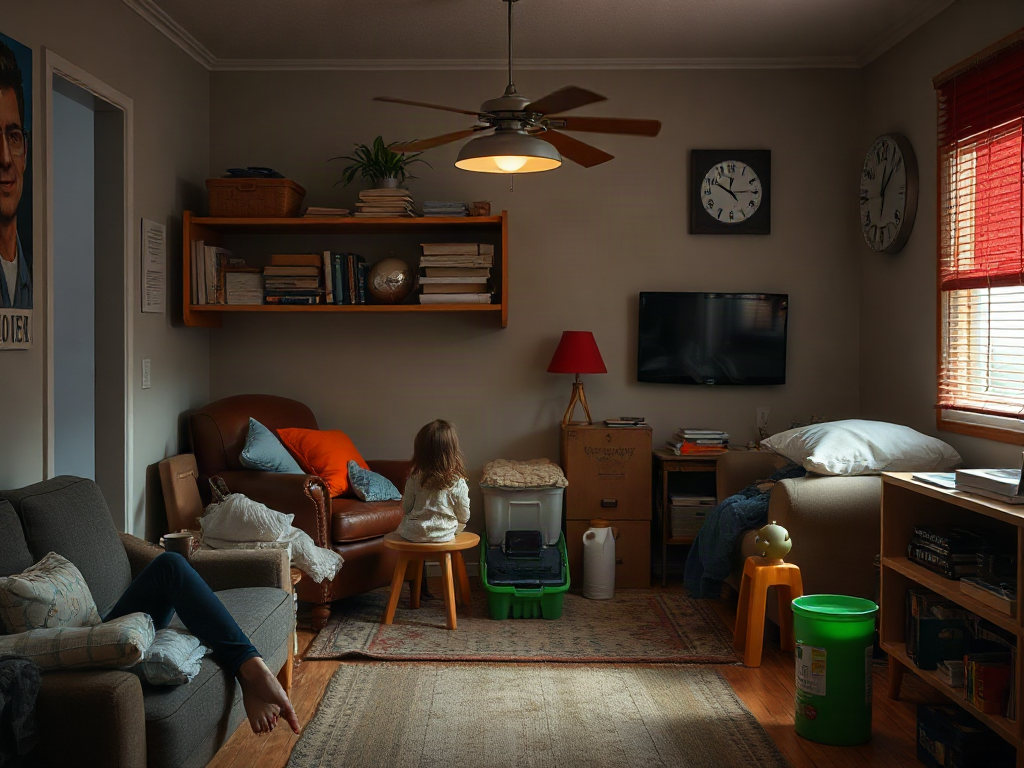
Preparedness becomes anxiety rather than planning when threat monitoring, repeated buying, and constant “what if” thinking consume more attention than a reasonable household plan requires. The shift often appears when supplies are purchased without testing, ordinary uncertainty feels like an imminent crisis, or reassurance fades as soon as one task is completed. A healthier approach is to define a limited set of plausible disruptions, assign actions to each, set a spending and review schedule, and stop when those actions are complete. If preparation interferes with sleep, work, relationships, or daily functioning, reduce triggering media and consider speaking with a qualified mental health professional.
What you’ll learn
This guide covers the following practical points:
- Planning Signals Versus Anxiety Signals — Useful preparedness produces a finite set of decisions.
- Why Preparedness Can Turn Into Reassurance-Seeking — Anxiety thrives on uncertain outcomes, and disasters provide an almost unlimited supply of uncertain details.
- Building Limits That Keep Preparation Useful — Boundaries make a preparedness plan measurable.
- When Concern Needs Additional Support — Persistent fear deserves attention when it changes functioning rather than simply motivating a reasonable task.
Planning Signals Versus Anxiety Signals
Useful preparedness produces a finite set of decisions. You identify likely disruptions, gather supplies that match them, learn the relevant skills, and review the arrangement occasionally. Anxiety-driven preparation feels different because the activity does not create a durable sense of readiness. Researching one more scenario, checking an alert repeatedly, or buying another duplicate item provides brief relief, followed by a new concern.
The distinction is not whether someone feels worried. Concern can be a sensible response to a real hazard. The more useful question is whether the behavior improves capability or merely attempts to remove uncertainty completely. A household that stores drinking water, keeps medications organized, and knows how to receive local alerts has converted concern into practical capacity. A household that repeatedly rearranges the same supplies while avoiding a simple evacuation conversation may be spending effort without improving its options.
Several signs point toward a loss of proportion:
- Preparation occupies time intended for sleep, work, family, or ordinary recreation.
- Purchases are driven by urgency rather than a written gap assessment.
- Items are duplicated but never opened, rotated, tested, or used.
- News and social media checks increase distress without changing a decision.
- Plans expand whenever a new possibility appears, with no agreed stopping point.
Context matters. A person facing a wildfire-prone location, a medical dependency, or a recent evacuation may reasonably need more detailed planning than someone addressing a short power outage. Even then, the plan should connect to actual constraints: transportation, communication, household size, pets, accessibility, and the ability to replace supplies. The goal is not identical readiness for every household. It is a proportionate response that leaves daily life functional.
A helpful test is to ask, “What specific decision will this next purchase, search, or drill change?” If there is no clear answer, pause and record the concern instead of acting immediately. That small delay separates a considered adjustment from a reassurance ritual.
Why Preparedness Can Turn Into Reassurance-Seeking
Anxiety thrives on uncertain outcomes, and disasters provide an almost unlimited supply of uncertain details. No checklist can guarantee that a particular hazard will not occur, that every family member will respond as expected, or that outside assistance will arrive on a preferred schedule. When a person treats complete certainty as the standard, ordinary planning reaches a dead end: every completed task reveals another unanswerable question.
Reassurance-seeking works through short-term relief. Reading an official alert, comparing radios, or ordering a missing item may temporarily lower tension. The brain can then learn that the uncomfortable feeling must be managed by repeating the behavior. Over time, the threshold for action becomes lower. A routine weather notice may trigger an extensive inventory, while a vague online claim may lead to an unnecessary purchase. The behavior looks like diligence, but its main output is temporary emotional relief.
Preparedness culture can intensify this cycle when content emphasizes worst-case imagery, product scarcity, or the idea that a responsible person must anticipate every failure. Fear-based messaging often collapses different levels of risk into one dramatic category. A brief outage, a regional evacuation, and a long-term infrastructure failure require different decisions; treating them as interchangeable makes priorities harder to see.
Consider a renter who has a flashlight, backup phone battery, basic food, and a way to receive building notices. After watching alarming videos, the renter begins buying specialized equipment that cannot be stored safely and spends evenings checking catastrophe forums. The added gear may be less useful than learning the building’s exit routes and confirming a contact outside the area. The problem is not interest in readiness. It is that attention has moved away from high-value actions.
Using When preparedness becomes anxiety rather than planning as a deliberate checkpoint can help readers name the shift without treating every concern as irrational. A written risk list, an evidence-based source such as Ready.gov, and a defined review date reduce the need to make a fresh judgment every time fear rises.
Building Limits That Keep Preparation Useful
Boundaries make a preparedness plan measurable. Begin with a short scenario set based on location and household needs, such as a power interruption, severe weather, temporary evacuation, or disrupted access to essential medication. For each scenario, write the first actions, the people to contact, the supplies required, and the point at which outside help or relocation becomes necessary. Avoid adding a new scenario until the existing ones are usable.
Prioritize actions that serve more than one situation. A maintained flashlight, paper contact list, charged battery bank, copies of important information, modest food supplies, and a household communication plan are generally more flexible than specialized gear bought for a rare event. Skills also deserve a practical test. A radio that has never been tuned, a generator that has never been operated safely, or a water container no one can lift may create false confidence.
A compact boundary system can include:
- Scope: choose a limited number of plausible disruptions rather than every imaginable event.
- Budget: set a monthly amount and do not treat fear as permission to exceed it.
- Time: reserve a short planning period, then return to normal activities.
- Review: inspect supplies on a calendar, not whenever anxiety demands reassurance.
- Stop rule: stop adding equipment when the next action has no defined decision benefit.
These limits should remain adjustable. A new prescription, household member, move, or local hazard may justify a revision. Adjustment is different from expansion without end: it replaces an outdated assumption with a specific improvement. For example, a family that cannot evacuate in one vehicle may need a transportation agreement, not a larger storage shelf. Someone with mobility limitations may benefit more from practicing a supported exit than from accumulating additional supplies.
Pairing the plan with normal use reduces hoarding and reveals weak assumptions. Eat stored foods before they expire, test batteries, practice contacting a relative, and check whether documents can actually be accessed. The sign that the approach is working is not constant confidence; it is fewer unresolved decisions and greater ability to carry on with ordinary routines. If every review generates more urgent buying, the review process itself needs to be shortened or paused.
When Concern Needs Additional Support
Persistent fear deserves attention when it changes functioning rather than simply motivating a reasonable task. Warning signs include losing sleep over imagined emergencies, avoiding normal travel or activities, repeated checking that cannot be resisted, conflict over spending, or distress that remains high despite practical preparations. These signs do not establish a diagnosis, but they indicate that more supplies may not address the underlying problem.
A first response can be modest and concrete. Turn off nonessential alerts, choose one dependable information source, move shopping apps or emergency feeds out of immediate view, and tell a trusted person about the boundary you are trying to keep. Schedule a brief plan review instead of responding to every anxious thought. If the thoughts remain intrusive or daily functioning is affected, a licensed mental health professional can help assess the pattern and discuss appropriate support. Seeking help is not a rejection of preparedness; it protects judgment and quality of life.
Family members should avoid two unhelpful extremes. Mocking the concern can increase shame and secrecy, while participating in endless checking can reinforce the cycle. A better conversation acknowledges the hazard, asks what decision is needed today, and separates that decision from predictions no one can verify. “We have checked the evacuation route and packed the required medications; let’s revisit the plan on Saturday” is more useful than arguing about whether a disaster is possible.
There are also practical safety limits. Anxiety can encourage unsafe improvisation, excessive generator use, unsuitable storage, or self-treatment based on alarming online claims. Official guidance from agencies such as FEMA, the National Weather Service, or the American Red Cross can clarify immediate safety actions, but official information cannot remove every uncertainty. Use it to make a decision, then stop consuming information once the decision has been made.
The related principle in When preparedness becomes anxiety rather than planning is simple: readiness should widen safe choices, not shrink everyday life. If preparation is narrowing life, professional support belongs in the plan alongside supplies, contacts, and skills.
Conclusion
Preparedness remains useful when it produces tested capabilities, clear decisions, and a reasonable stopping point. It starts to resemble anxiety when repeated research, purchasing, checking, or rehearsing mainly provides short-lived relief while sleep, finances, relationships, or ordinary activities suffer. Review a small set of plausible disruptions, close the highest-value gaps, test what you own, and place future changes on a scheduled review rather than an emotional timer. Choose reliable public guidance and avoid content that turns every possibility into an immediate command. If fear continues after practical tasks are complete, or if it is controlling daily behavior, speak with a qualified mental health professional. A sound plan should make the household more adaptable without demanding constant vigilance.
Frequently Asked Questions
Is worrying about disasters automatically a sign of anxiety?
No. Concern can support sensible planning. It becomes more concerning when checking or preparing feels uncontrollable, offers only temporary relief, or interferes with daily functioning.
How much preparedness is enough?
Enough means your household has practical responses for plausible local disruptions, accessible supplies, tested equipment, communication contacts, and a way to revisit the plan periodically.
Why do emergency purchases sometimes increase fear?
A purchase may briefly reduce uncertainty, teaching the mind to repeat buying whenever fear returns. A written gap assessment and spending limit can interrupt that pattern.
Should I stop reading preparedness information?
Not necessarily. Use a small number of reliable sources, seek information when it changes a decision, and avoid repeated exposure to alarming content that produces distress without useful action.
When should someone seek professional help?
Consider help when fear disrupts sleep, work, relationships, finances, travel, or ordinary activities, or when repeated checking cannot be reduced despite recognizing the pattern.