
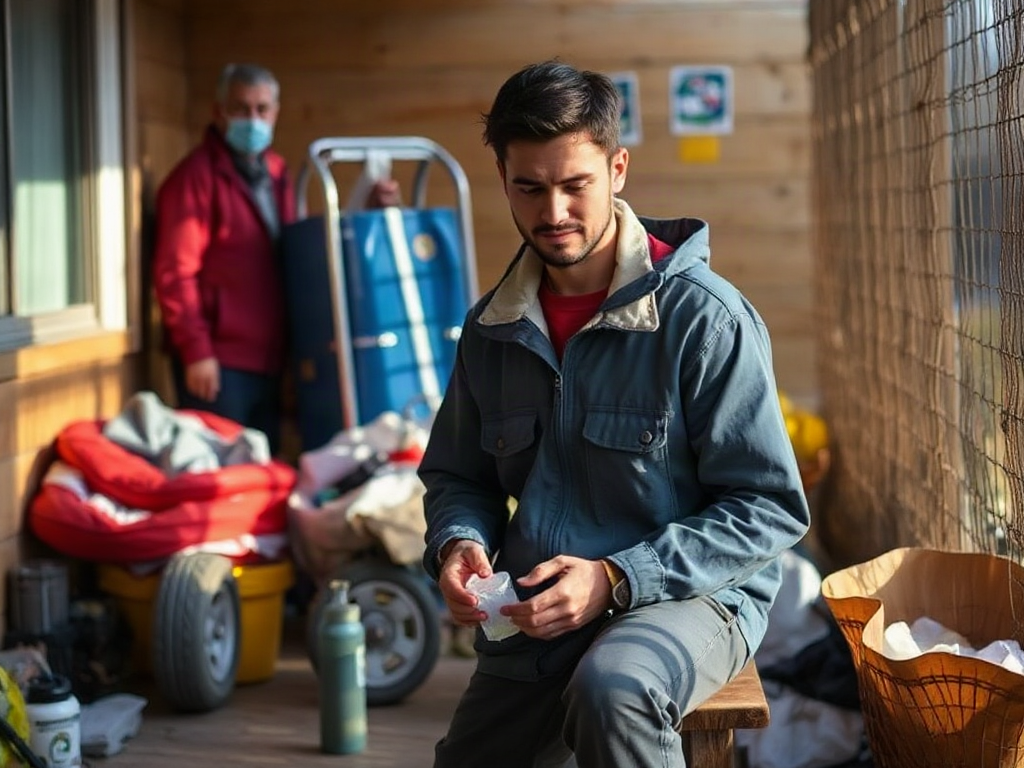
Self-sufficiency limits during prolonged emergencies usually appear when water treatment, medical care, sanitation, food production, power, or social support exceeds a household’s skills and stored supplies. A home may manage an outage for days yet struggle when fuel runs out, injuries require professional treatment, crops fail, or waste cannot be safely contained. The practical answer is not total independence; it is to identify likely failure points, extend supplies, maintain backup methods, and build reciprocal relationships with nearby people and public services. Regularly testing water, cooking, communications, hygiene, and repair systems exposes weaknesses before a long disruption makes them dangerous.
What you’ll learn
This guide covers the following practical points:
- Where Household Independence Reaches Its Limits — Household self-sufficiency is best treated as a time-limited capacity, not a permanent condition.
- The Systems That Usually Fail First — Water and sanitation often become harder before food does.
- How To Measure A Household’s Real Capacity — A realistic capacity review measures how long essential functions can continue under reduced conditions.
- Building Resilience Without Chasing Total Independence — The strongest approach combines household capability with deliberate interdependence.
Where Household Independence Reaches Its Limits
Household self-sufficiency is best treated as a time-limited capacity, not a permanent condition. A family might store water, cook without the grid, grow vegetables, and repair basic equipment, but those abilities do not replace hospitals, fuel distribution, municipal sanitation, specialized tools, or a functioning supply chain. The longer an emergency lasts, the more often one weak link affects every other system.
Short disruptions can hide these limits. A generator may run a refrigerator during a two-day outage, while a month-long interruption raises harder questions: Where will fuel come from? How will oil, filters, batteries, and spare parts be obtained? Can the generator be operated safely without disturbing neighbors or exhausting the household budget? A wood stove may provide heat, but it does not automatically provide clean cooking water, safe ventilation, or protection for someone with a respiratory condition.
Independence also depends on the people in the household. A plan built around one person’s medical knowledge, mechanical ability, or physical strength becomes fragile when that person is injured, exhausted, absent, or responsible for caregiving. Children, older adults, disabled family members, and pets add legitimate needs that cannot be reduced to extra calories or equipment.
A useful way to think about the issue is capacity versus demand. Capacity includes stored goods, skills, tools, energy, time, and physical labor. Demand includes drinking, sanitation, food preparation, medication, heating or cooling, security, repairs, and emotional support. If demand rises or capacity falls, the household reaches its limit even when shelves still contain supplies.
Linking this assessment to Self-sufficiency limits during prolonged emergencies helps reveal why a large inventory alone does not guarantee endurance. Supplies expire, skills degrade, and improvised solutions often consume more water, fuel, or labor than expected.
The Systems That Usually Fail First
Water and sanitation often become harder before food does. Stored water may cover drinking and cooking, yet handwashing, toilet use, cleaning, laundry, and wound care quickly increase consumption. A household that has planned only for bottles may resort to unsafe sources or delay hygiene. That creates risks that food storage cannot solve. Water treatment also has limits: a method suited to clear water may not remove every contaminant, and chemical disinfection does not make visibly polluted water safe in every situation.
Medical care is another boundary. Basic first-aid supplies can support minor cuts, sprains, burns, and routine discomfort, but they cannot substitute for diagnosis, surgery, blood products, dialysis, obstetric care, or emergency treatment. Prescription medication may be the decisive constraint for someone with diabetes, epilepsy, heart disease, or another ongoing condition. Plans should account for storage instructions, refill timing, power needs, and the clinician or pharmacy contacts that remain relevant during disruption.
Food production is frequently overestimated. A garden can supplement meals, but it may take a season to produce meaningful calories and depends on seeds, soil fertility, irrigation, weather, pest control, and labor. Fresh produce also lacks the dense energy supplied by grains, beans, oils, and preserved foods. Livestock introduces feed, water, veterinary, fencing, and slaughter concerns. A productive garden is valuable, but it is not equivalent to a complete food system.
Energy failures compound these problems. Electricity may be needed for refrigeration, communications, well pumps, medical devices, water treatment, and cooking. A battery bank provides quiet power but has finite capacity and charging requirements. Solar equipment can reduce fuel dependence but may be limited by weather, shading, panel damage, or inadequate storage. A fuel generator offers high output yet requires safe placement, fuel rotation, maintenance, and noise management.
Common mistakes include counting equipment without counting consumables, storing food without a preparation method, and assuming one backup can cover every load. A better comparison asks what each system needs to operate. For a well pump, that may mean a compatible inverter or generator; for dry beans, it may mean fuel and water for cooking; for sanitation, it may mean liners, absorbent material, disinfectant, and a disposal plan.
How To Measure A Household’s Real Capacity
A realistic capacity review measures how long essential functions can continue under reduced conditions. Do not begin with an ideal lifestyle. Define the minimum acceptable service for drinking, calories, hygiene, warmth, medication, communication, and waste control. A household may tolerate cold meals, limited lighting, and fewer showers, but it should not casually compromise drinking water, essential medicine, ventilation, or safe waste handling.
Use a written inventory that connects each need to its supporting resources. For example, “water” should include storage containers, treatment equipment, fuel or batteries, replacement parts, carrying capacity, and a way to identify a safer source. “Food” should include calories, dietary restrictions, cooking time, utensils, can-openers, and fuel. “Communication” should include charged devices, alternate power, contact information on paper, and a method that does not depend on a single network.
Then test the plan in controlled stages. A twelve-hour exercise can reveal whether everyone knows where supplies are and whether a stove works. A weekend without normal utilities can expose water use, bathroom problems, food-preparation fatigue, and charging conflicts. Testing should be safe and reversible; never disable medically necessary equipment or create a fire, carbon-monoxide, or sanitation hazard merely to imitate an emergency.
Record both consumption and friction. If a family expects to use four liters of water for cooking but actually uses more because of soaking, cleanup, and drinks, the inventory needs revision. If charging a phone competes with a medical device, the priority order is wrong or the power system is too small. If one person performs every repair, the household has a training and redundancy problem.
- Measure duration: Estimate how long essential supplies last at normal use and at a reduced-use level.
- Identify single points of failure: Note dependence on one pump, one fuel type, one skilled person, or one medication source.
- Set escalation triggers: Decide when to contact emergency services, neighbors, health providers, relief organizations, or local authorities.
- Review recovery needs: Include waste removal, equipment repair, replacement food, and rest after the immediate danger passes.
The most useful result is not a dramatic survival number. It is a short list of constraints that can be corrected. A family may discover that adding water containers matters more than buying another tool, or that learning safe food preservation is more valuable than expanding a garden.
Building Resilience Without Chasing Total Independence
The strongest approach combines household capability with deliberate interdependence. Neighbors, relatives, clinics, utilities, public works departments, community organizations, and emergency responders each provide functions that a private residence cannot duplicate efficiently. Accepting that reality does not weaken self-reliance; it prevents unrealistic plans from delaying necessary assistance.
Reciprocal relationships work best when they are specific. One household may have a pressure canner and food-preservation skills, another may have a chainsaw and repair experience, while a third may be able to check on an older resident. Agreements should address boundaries, accessibility, communication, fuel use, and what happens if the disruption affects everyone at once. Informal help is not a substitute for professional medical or emergency response, but it can reduce avoidable strain.
Redundancy should also be varied rather than duplicated. Two devices that require the same fuel are not two independent options. A better combination might include shelf-stable foods that need little cooking, a fuel-efficient stove, and a small reserve of ready-to-eat meals. Water resilience might pair stored water with a tested treatment method and knowledge of official advisories. Communications might combine a charged phone, written contacts, a battery-powered receiver, and a local check-in arrangement.
Tradeoffs deserve attention. More equipment can increase maintenance, clutter, theft exposure, and training demands. Large food stocks may be useless if household members will not eat them or if rotation is neglected. A sophisticated off-grid system may outperform a simple one under ideal conditions but fail harder when electronics, batteries, or specialized components break. Choose systems that match the household’s skills, climate, budget, and ability to maintain them.
Use Self-sufficiency limits during prolonged emergencies as a prompt to rank investments by consequence. Water, medication continuity, sanitation, safe cooking, and reliable information generally deserve attention before optional comfort equipment. The right question is not “Can we live without society?” but “Which services must we replace temporarily, which can we reduce, and which require outside support?”
When To Shift From Self-Reliance To Outside Help
Escalating to outside help is a preparedness skill, not a personal failure. Waiting too long can turn a manageable problem into a medical, fire, contamination, or security emergency. Immediate danger, serious bleeding, breathing difficulty, altered consciousness, suspected carbon-monoxide exposure, uncontrolled fire, and hazardous contamination require emergency services when available. Household improvisation should not delay urgent care.
Less dramatic warning signs also matter. A household is approaching its limit when water treatment becomes uncertain, essential medication is nearly exhausted, sanitation cannot be maintained, food preparation is causing unsafe fatigue, or the only working power source is being overloaded. Repeated equipment failures, worsening indoor temperatures, and inability to verify reliable information indicate that the plan is degrading rather than merely becoming inconvenient.
Prearranged thresholds make decisions clearer. For example, a family might decide that a medication problem triggers a call to a prescriber or pharmacy, a contaminated water concern triggers contact with local health authorities, and a failing heating system triggers relocation before indoor conditions become dangerous. The exact thresholds depend on the household and local resources, but they should be written while people are calm.
Relocation may be safer than extending an improvised setup. A home without a functioning well, safe heat, accessible bathroom, or adequate medical support may no longer be a suitable shelter, even if food remains. Moving to relatives, an official shelter, or another approved location involves tradeoffs, including transport, privacy, pets, and exposure to crowds. Those costs should be compared with the consequences of remaining in an unsafe environment.
Maintain a current contact sheet with emergency numbers, medical providers, utility information, nearby support, and alternate destinations. Store it on paper as well as digitally. A practical plan includes both the ability to endure a disruption and the judgment to stop doing so when the household’s margin of safety has disappeared.
For decisions about water safety, medication continuity, evacuation, sanitation, and local assistance, consult current guidance from relevant government agencies, public health departments, utility providers, and recognized emergency-management organizations. Local instructions take priority because water sources, hazards, shelter options, and available services vary by location.
Frequently Asked Questions
How long should a household expect to remain self-sufficient?
There is no universal duration. Set a minimum target for essential water, food, medication, sanitation, and power, then test it under realistic reduced-use conditions. A shorter plan that works reliably is more useful than a larger untested stockpile.
Why does water become a bigger problem than stored food?
Water supports drinking, cooking, hygiene, cleaning, and waste management. Those uses continue even when meals are simplified, so consumption can exceed estimates unless storage, treatment, and sanitation are planned together.
Can a garden make a family food-independent?
A garden can add fresh produce and useful skills, but it rarely replaces a complete calorie supply quickly. Weather, soil, seeds, pests, water, preservation, and labor all limit output, making stored staples and cooking capacity necessary complements.
What is the most dangerous self-sufficiency mistake?
Using an untested or unsafe workaround can create greater harm than the original outage. Carbon-monoxide exposure, contaminated water, spoiled food, medication interruptions, and delayed medical care deserve more attention than minor comfort losses.
How can neighbors improve prolonged-emergency resilience?
Agree on specific forms of mutual support, communication, accessibility checks, shared tools, and escalation procedures. Cooperation is strongest when responsibilities and limits are discussed before people are tired, frightened, or competing for scarce resources.
Conclusion
Self-sufficiency has a practical ceiling created by finite water, fuel, medication, labor, equipment, knowledge, and medical capability. Prolonged emergencies expose that ceiling gradually: sanitation becomes difficult, repairs accumulate, food production takes longer than expected, and a single exhausted or unavailable caregiver can disrupt the entire plan. Improve resilience by measuring actual consumption, testing essential systems, removing single points of failure, and setting clear triggers for outside assistance or relocation. Prioritize safe water, essential medicines, waste control, communication, and reliable cooking before adding specialized gear. A household does not need to duplicate every public service. It needs enough capacity to reduce immediate strain, recognize deterioration early, and connect with dependable help before a temporary disruption becomes an avoidable crisis.