
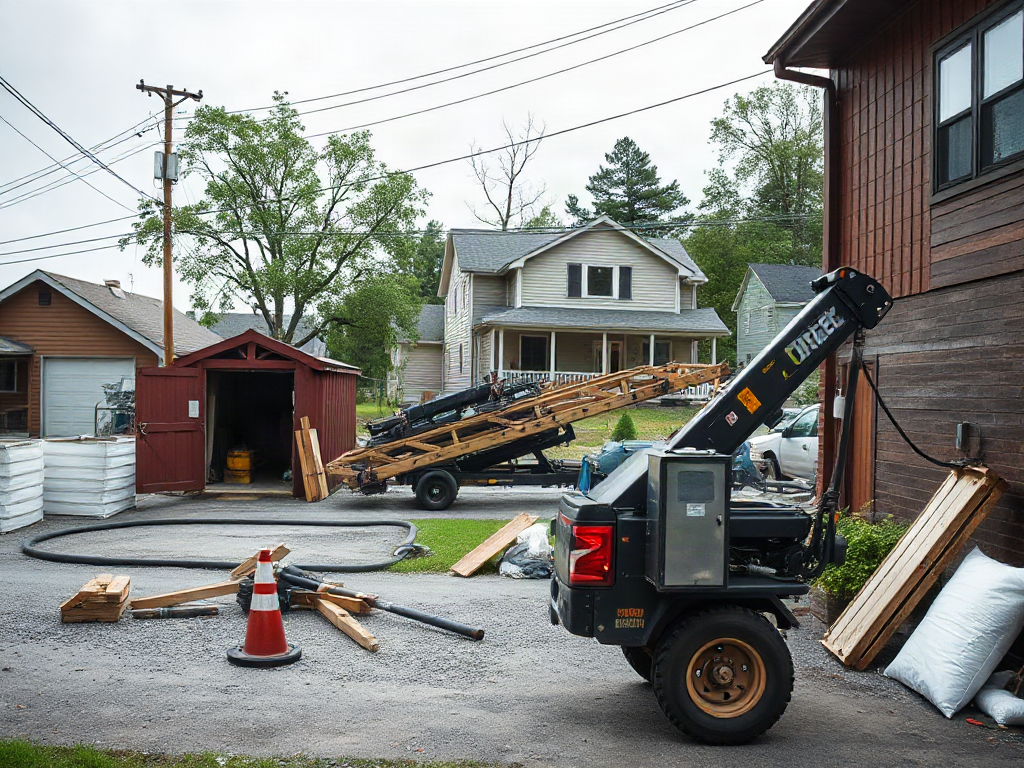
Mitigation preparedness actions that reduce future losses include elevating vulnerable equipment, improving drainage, securing roofs and utilities, protecting important records, and coordinating with local hazard plans. These measures work by reducing exposure before an event rather than relying only on response after damage occurs. A useful first step is to identify the hazards most likely to affect your location, then rank projects by potential consequence, cost, maintenance needs, and feasibility. Replacing a damaged roof may deserve priority over buying additional supplies, while flood barriers may be less useful if water can enter through unprotected utilities. Regular inspections matter because neglected mitigation features can fail when they are needed.
What you’ll learn
This guide covers the following practical points:
- How Mitigation Reduces Future Damage — Mitigation changes the conditions that turn a hazard into a loss.
- Prioritizing Property Improvements by Hazard and Consequence — Priority should go to measures that address severe consequences, repeated exposure, or a known structural weakness.
- Protecting Buildings, Utilities, and Essential Records — Building mitigation works by reducing the pathways through which wind, water, fire, cold, heat, or shaking reaches people and critical equipment.
- Community Measures, Maintenance, and Review — Individual improvements cannot remove every source of risk because roads, drainage networks, power systems, land-use decisions, and public warnings shape household outcomes.
How Mitigation Reduces Future Damage
Mitigation changes the conditions that turn a hazard into a loss. Preparedness supplies and response plans help people act during an emergency, while mitigation reduces the amount of damage that emergency action must address. A household that stores water may remain functional during a short outage, but a household that also protects its electrical panel from likely floodwater has reduced the chance of a dangerous and expensive interruption in the first place.
The most useful way to think about mitigation is as a chain: hazard, exposure, vulnerability, consequence. A storm may be unavoidable, but the location of a generator, the condition of a roof, the height of a furnace, and the availability of drainage all influence what happens next. Removing one weak link can lower the final loss. The same logic applies to wildfire embers, earthquakes, winter weather, extreme heat, and utility failures, although the appropriate action differs by location.
Risk maps, local emergency management information, insurance documentation, building records, and observations from previous events can reveal the hazards worth addressing first. Avoid treating a general national hazard list as a local diagnosis. A coastal property may need to focus on surge and saltwater corrosion, while an inland home may face basement flooding, falling trees, or extended power loss. Mitigation preparedness actions that reduce future losses become more effective when they are tied to a specific exposure rather than purchased as a generic package.
A common failure is confusing visible preparation with risk reduction. Buying sandbags without identifying where water enters, or taping windows while leaving a deteriorated roof untreated, may create a sense of action without addressing the dominant pathway to damage. The practical test is simple: can you describe the hazard pathway, the proposed intervention, and the condition that would show the intervention is working? If not, investigate before spending money.
Prioritizing Property Improvements by Hazard and Consequence
Priority should go to measures that address severe consequences, repeated exposure, or a known structural weakness. A useful assessment begins with a room-by-room and system-by-system review: roof, doors, windows, drainage, electrical equipment, heating and cooling, water lines, vehicles, outbuildings, and access routes. Record the likely hazard, the vulnerable item, the possible consequence, and the action that could reduce exposure.
Cost alone should not determine the order. A modest repair that prevents a major secondary problem can outrank a more visible upgrade. For example, clearing blocked drainage and directing downspouts away from foundations may be more valuable for a flood-prone house than purchasing a portable barrier that requires frequent deployment. In another setting, trimming branches away from the roof may reduce outage and impact risk more efficiently than replacing undamaged windows.
Use a practical ranking method based on four questions:
- Could failure threaten life safety or prevent evacuation?
- Does the problem affect a critical system such as electricity, heat, water, communication, or access?
- Is the exposure frequent, foreseeable, or already documented?
- Can the action be completed safely, maintained, and verified?
This approach also exposes tradeoffs. A major retrofit may provide stronger protection but require permits, engineering review, financing, or temporary relocation. A smaller interim measure may be sensible while a larger project is arranged, but it should not be described as equivalent. A generator placed outdoors and operated according to its instructions may support continuity; a generator used in an enclosed garage creates a serious hazard. Mitigation improves resilience only when the intervention does not introduce a new danger.
People commonly prioritize what is easy to buy rather than what is difficult to repair. The better sequence is to address life-safety hazards, prevent predictable structural or utility damage, preserve access and communication, and then improve convenience. Reassess after renovations, changes in household needs, new construction nearby, or a serious weather event. An old priority list can become inaccurate when the building, occupants, or surrounding drainage changes.
Protecting Buildings, Utilities, and Essential Records
Building mitigation works by reducing the pathways through which wind, water, fire, cold, heat, or shaking reaches people and critical equipment. The right action depends on construction and hazard conditions, so structural changes should follow applicable local requirements and qualified professional advice where necessary. Improvised work can weaken a building, void coverage, or make later repairs harder to document.
For flood exposure, inspect the lowest level first. Identify the elevation of electrical components, heating equipment, water heaters, fuel systems, and stored chemicals. Keeping valuable materials off the floor may reduce loss, but it does not substitute for properly designed elevation, barriers, backflow protection, drainage improvements, or relocation of equipment. A homeowner should also understand where water can enter: floor drains, window wells, foundation cracks, doors, and damaged grading each require a different response.
Wind mitigation often involves roof condition, roof-to-wall connections, openings, exterior attachments, and nearby trees. Replacing loose shingles is not the same as addressing a broader roof-system weakness. Patio furniture, propane cylinders, signs, and unsecured sheds can become projectiles, so an inspection should include items outside the main structure. During a storm warning, there may be no safe time or access to complete repairs; mitigation must be done during ordinary conditions.
Wildfire-related measures may include managing combustible material near structures, keeping vents and openings appropriately protected, maintaining roof and gutter condition, and selecting exterior materials suited to local guidance. These actions can reduce exposure to embers, but no household measure guarantees survival under every fire behavior or evacuation condition. Leaving early when authorities direct evacuation remains separate from property hardening.
Utility and information protection deserve equal attention. Label shutoffs, keep access clear, use approved protective devices, and photograph major systems for insurance and repair documentation. Store identity records, medication information, property inventories, and contact details in a secure location that remains reachable if the home is inaccessible. Digital copies need more than a cloud account: maintain current access credentials, a backup method, and a way to retrieve essential information during an internet or power outage.
A frequent mistake is focusing on the building envelope while ignoring the contents that make recovery difficult. A low-cost inventory, labeled photographs, and a list of serial numbers may not prevent damage, but they can reduce delays and disputes afterward. Reviewing those details alongside physical improvements creates a more complete loss-reduction system.
Community Measures, Maintenance, and Review
Individual improvements cannot remove every source of risk because roads, drainage networks, power systems, land-use decisions, and public warnings shape household outcomes. Community-level mitigation includes maintaining clear access routes, improving stormwater systems, enforcing sound construction standards, managing vegetation, protecting critical facilities, and using hazard information in development decisions. Residents can support these measures by reporting blocked drainage, participating in local planning, and asking how proposed changes may affect runoff, access, or emergency operations.
Coordination is particularly valuable when one property’s solution affects another. A wall that redirects water toward a neighboring lot may protect one structure while increasing losses elsewhere. Clearing a private driveway does not solve a blocked public road. A neighborhood discussion can identify shared needs such as vulnerable residents, alternate routes, equipment access, or locations where floodwater repeatedly concentrates.
Maintenance determines whether a mitigation action remains dependable. Gutters fill, seals deteriorate, batteries age, trees grow, pumps seize, records become outdated, and stored materials shift back onto the floor. Create a recurring inspection schedule tied to seasons and known hazards rather than waiting for an alert. After each review, record what was checked, what failed, who is responsible, and when the correction will be completed.
Signs that a measure is working include water being directed away from the structure, equipment remaining above the expected exposure level, access routes staying usable, and household members knowing how to operate or avoid the protected system. Signs of failure include repeated moisture, unexplained corrosion, blocked shutoffs, unclear responsibilities, or a measure that depends on a person who may not be present. Testing should be safe and should follow manufacturer instructions; do not activate fuel-burning equipment indoors or experiment with electrical systems.
Keep a short improvement plan with three time horizons: actions to complete this month, projects requiring funding or professional review, and community issues requiring outside coordination. This prevents an expensive long-term project from crowding out a simple repair that can be completed now. It also makes progress visible without treating a checklist as proof that risk has disappeared.
The strongest approach combines mitigation with response readiness. Seal or elevate vulnerable systems, but still know how to shut off utilities, receive warnings, leave safely, and account for household members. Use the mitigation review as part of the wider preparedness plan, then revisit it after every significant change in the property or local hazard picture.
Frequently Asked Questions
What is the first mitigation action a household should take?
Identify the most likely local hazard and the building system whose failure would create the greatest safety or recovery problem. Confirm that priority through local hazard information before buying equipment.
How is mitigation different from emergency preparedness?
Mitigation reduces likely damage before an event, such as elevating equipment or improving drainage. Preparedness also includes supplies, warnings, communication, evacuation, and actions taken during an emergency.
Are inexpensive measures still worthwhile?
They may be worthwhile when they address a known exposure, such as securing outdoor objects or moving records above a flood-prone floor. Their limits should be clear, especially when they cannot replace structural work.
When should a professional inspect a property?
Seek qualified help for structural changes, electrical modifications, major roof work, fuel systems, foundation concerns, and projects affected by permits or local construction requirements.
How often should mitigation measures be reviewed?
Review them seasonally and after severe weather, renovations, changes in occupancy, landscaping growth, or changes to nearby roads and drainage. Repair deterioration rather than assuming the original installation remains effective.
Conclusion
Loss reduction begins with a clear connection between a local hazard and a specific vulnerability. Inspect the roof, drainage, openings, utilities, outdoor equipment, records, and access routes; then rank corrections by life-safety consequence, critical-system impact, recurrence, cost, and feasibility. A drainage repair, secured utility, elevated appliance, or documented inventory may be more valuable than another general supply purchase when it addresses the actual damage pathway. Larger retrofits deserve professional review, while temporary measures should be labeled as limited protection rather than complete solutions. Schedule maintenance, record unresolved risks, and coordinate issues that cross property boundaries. Mitigation does not replace evacuation or emergency communication, but it can reduce the damage those response actions must overcome and shorten the path toward recovery.