
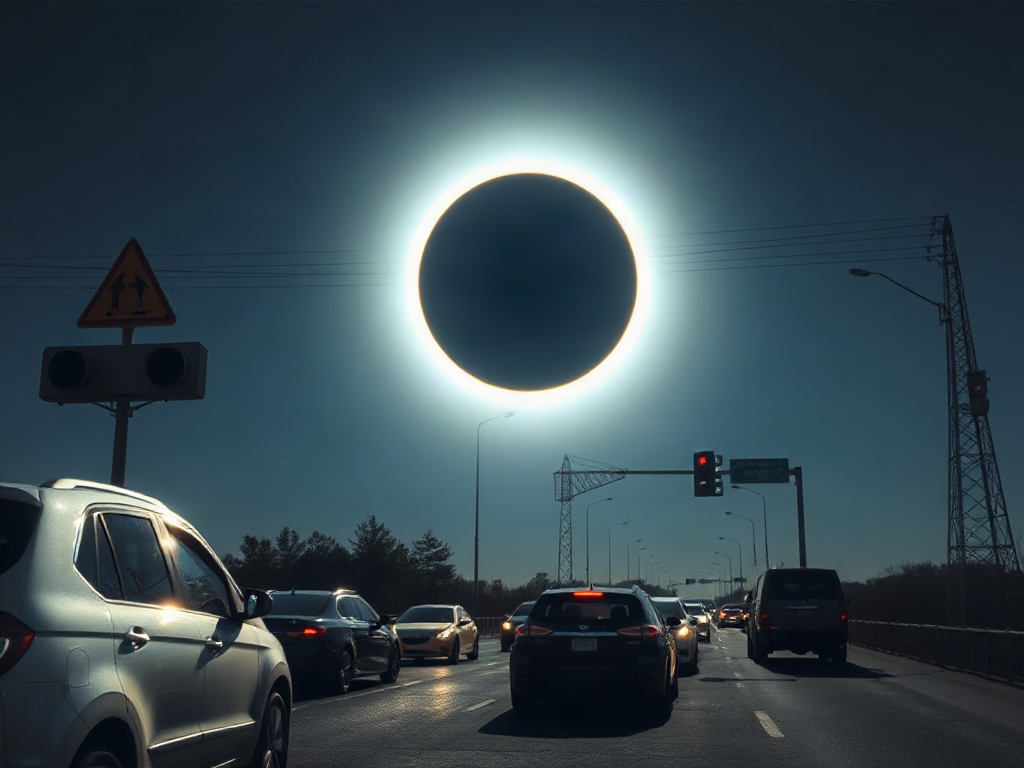
Eclipse preparedness for temporary travel disruptions means planning around unusual traffic, limited parking, crowded services, changing road access, and unreliable mobile connectivity before travel begins. Check official transportation and public-safety updates, arrive with fuel, water, food, medications, eclipse-safe viewing equipment, and an offline route, then choose a departure window that avoids the largest crowds. Share your itinerary and a meeting point with companions rather than relying on live location sharing. The common mistake is treating the eclipse as a short viewing event instead of a daylong regional travel surge that can delay emergency access, lodging check-in, fuel stops, and the trip home.
Why Eclipse Travel Becomes Unpredictable
Temporary travel disruption during an eclipse is driven by concentrated demand rather than by the celestial event itself. Visitors may arrive in the same small communities, seek roadside viewing locations, leave at similar times, and compete for fuel, food, parking, and lodging. A route that normally takes an hour can become difficult when shoulders are occupied, intersections are managed differently, or a minor collision blocks a key road.
The timing of disruption matters. Congestion can build before the eclipse, remain severe during the viewing period, and intensify afterward when large groups try to depart simultaneously. Rural destinations may have fewer alternate roads, limited cellular capacity, and long distances between service stations. A navigation application may show a delay but still fail to identify a closed entrance, a full parking area, or a road restricted by local officials.
Consider the difference between a local outing and a destination trip. Someone traveling from home with a full tank and a nearby backup location has more flexibility than a family driving several hours to a reserved campsite. The second traveler must account for check-in times, children’s needs, medication schedules, weather changes, and a safe place to wait if the return route becomes impractical. A successful outing is not necessarily the one with the shortest drive; it is the one with enough margin to absorb an unexpected hold.
Use Eclipse preparedness for temporary travel disruptions as a planning lens: identify what could become scarce, what information could disappear, and which decision you will make if the original itinerary no longer works. That approach is more reliable than assuming a published event schedule predicts local road conditions.
Build a Route That Still Works When Traffic Stops
A resilient eclipse route has a primary destination, a realistic alternate viewing area, and a clear point at which you will turn around. Mark fuel stations, restrooms, food sources, medical facilities, and safe stopping locations before leaving. Download maps for the entire route and keep a paper map or written directions available. Offline navigation does not replace current road information, but it remains useful when data service is overloaded or a phone battery fails.
Do not treat every apparent shortcut as a valid contingency. A narrow rural road may lack shoulders, have poor visibility, or pass through private land. Parking on a highway shoulder can expose travelers to moving traffic and may obstruct emergency vehicles. Choose alternatives that are legal, publicly accessible, and suitable for your vehicle. If an event organizer or local authority provides designated access points, verify opening times and capacity rather than relying on an old social-media post.
Departure timing deserves more attention than route length. Leaving very early may reduce congestion but can create fatigue, cold exposure, or a long wait without services. Leaving immediately after totality or another major viewing moment may place you in the heaviest outbound wave. A later departure can be more comfortable if you have water, food, shade, and a safe place to wait. The best option depends on lodging, road restrictions, weather, and the needs of everyone in the vehicle.
Before departure, write down three triggers:
- Continue: traffic is moving, fuel is adequate, and the destination remains accessible.
- Pause: the route is slowing, services are crowded, or weather and fatigue are becoming concerns.
- Abort or reroute: officials close access, fuel becomes uncertain, a passenger needs care, or the route creates an unsafe exposure.
This simple threshold system prevents a common failure mode: continuing toward a full destination because time and money have already been spent. Reversing early is usually easier than attempting to leave a packed viewing area after roads have reached their worst conditions. For additional planning context, review Eclipse preparedness for temporary travel disruptions alongside the official transportation notices for the counties you will enter.
Pack for Delays, Service Gaps, and Changing Conditions
Travel supplies should cover a longer day than the itinerary suggests. Pack drinking water, shelf-stable food, required medications, a first-aid kit, hand sanitizer, toilet paper, sun protection, weather-appropriate layers, and a charged power bank. Bring enough food for passengers who cannot easily eat whatever is available at a crowded fuel station. People with dietary restrictions should be especially cautious about assuming that a remote event site will have suitable options.
Vehicle preparation is equally practical. Check fuel, tire condition, fluids, lights, and windshield visibility before entering a congested area. A full tank is not a guarantee of uninterrupted travel, but it reduces dependence on the next open station. Keep the vehicle’s emergency supplies accessible rather than buried under luggage. If you use an electric vehicle, confirm charging locations, connector compatibility, and whether the planned chargers are near the actual route rather than merely within the same region.
Viewing equipment requires its own safety check. Use eclipse viewers that meet recognized safety requirements and follow the manufacturer’s instructions. Ordinary sunglasses, camera filters not designed for solar viewing, and improvised materials are not substitutes. Keep children close enough to supervise, and do not let the excitement of finding a roadside stopping place override safe parking or visibility. During a partial phase, unfiltered direct viewing remains hazardous; darkness alone does not make ordinary eyewear safe.
Pack for communication failure, not just poor reception. Write down lodging details, reservation numbers, emergency contacts, and the vehicle description. Carry a physical payment option where appropriate, since a crowded network or dead phone can make digital access unreliable. A compact travel kit might include:
- Water and food for the expected trip plus a substantial delay
- Medications and personal care supplies that cannot be replaced easily
- Phone chargers, a power bank, and printed directions
- Sun, heat, cold, rain, and visibility protection suited to the forecast
- Basic vehicle and roadside safety items
The tradeoff is weight and space. Carrying every possible item can obstruct the driver’s view or complicate evacuation from the vehicle. Prioritize items tied to time, health, hydration, communication, and safe transport. A large entertainment kit is less useful than water, medication, and a working way to contact the person waiting for you.
Coordinate People, Information, and the Return Trip
Group coordination should not depend on continuous phone service. Agree on a meeting point, a departure window, and a message that means “I am safe but delayed.” Share the itinerary with someone who is not traveling, including the planned route, lodging address, vehicle details, and a reasonable check-in time. If the group separates at a crowded location, each person should know the fallback meeting place and who is responsible for children or vulnerable travelers.
Use several information channels. Check official state or local transportation agencies, public-safety alerts, event-organizer notices, weather information, and lodging updates. Social media can reveal local conditions quickly, but it may mix old posts, speculation, and reports from another access point. Confirm a claim before changing route or entering an unfamiliar area. Printed information matters when a phone is lost, a battery is empty, or networks are overloaded.
The return trip deserves a separate plan. Identify whether you will leave immediately, wait for traffic to thin, or stay overnight. Waiting is not automatically safer if you lack water, shelter, medication, or a lawful place to remain. Leaving immediately is not automatically efficient if the access road is gridlocked. Ask what the vehicle, passengers, and destination can tolerate rather than copying the choice of nearby drivers.
One realistic scenario is a family whose reserved lodging is 40 minutes from the viewing site. If the road home becomes stationary, the family may choose to return to lodging, remain at an approved location, or leave after a meal and rest period. That decision is easier when the reservation, route, fuel level, and meeting plan are known in advance. It becomes harder when everyone is tired and the only information source is a phone showing an uncertain arrival time.
Include Eclipse preparedness for temporary travel disruptions in your final household or group briefing, but make the briefing specific: who checks alerts, who carries the documents, where the group meets, and which conditions cancel the next leg of travel.
A Practical Eclipse-Day Decision Sequence
A short decision sequence keeps preparation usable under pressure. The evening before travel, confirm access rules, weather, lodging, fuel or charging options, and the latest transportation notices. On departure morning, check the vehicle, load supplies where they can be reached, and send the itinerary to your contact. At each major stop, reassess time, fuel, weather, passenger condition, and the next reliable service point.
Do not measure success solely by reaching the original viewing site. If the site is full, the road is unsafe, or a passenger becomes unwell, a controlled change of plan is a sound outcome. An alternate location may offer a less complete experience but a safer parking arrangement and a simpler exit. The eclipse is temporary; a rushed driving decision can have consequences long after traffic clears.
Use this priority order when conditions deteriorate:
- Protect people: address medical needs, fatigue, heat, cold, and unsafe roadside exposure.
- Preserve mobility: maintain fuel or charge and avoid parking where departure is blocked.
- Verify information: use official updates and confirm that an alternate route is accessible.
- Communicate: send a concise status message and use the agreed meeting plan.
- Choose the least complicated safe option: wait, reroute, return, or stay overnight.
A frequent mistake is making a new decision every few minutes while following a crowd. Set review points instead, unless an immediate hazard requires action. Signs the plan is working include adequate supplies, a known exit, functioning communication alternatives, and passengers who remain comfortable enough to make decisions. Signs it is failing include dwindling fuel, missed medication timing, worsening weather, blocked access, rising fatigue, or uncertainty about where the vehicle can legally stop. Those signals justify changing course before the situation becomes urgent.
Frequently Asked Questions
How early should I leave for an eclipse viewing location?
Use the event’s access guidance, lodging location, and local transportation alerts rather than a universal hour estimate. Build extra time for parking, walking, rest stops, and a delayed departure.
Should I leave immediately after the eclipse?
Not necessarily. Immediate departure may place you in the largest outbound traffic wave. If you have a safe, legal place to wait with water and supplies, delaying may be more manageable.
What should I do if mobile service becomes unreliable?
Use downloaded maps, printed directions, written contacts, and a prearranged meeting point. Send short status messages when service returns instead of relying on continuous location sharing.
Are regular sunglasses safe for watching an eclipse?
No. Regular sunglasses are not designed for direct solar viewing. Use appropriate eclipse-viewing equipment according to its instructions and supervise children closely.
What is the most important vehicle preparation?
Confirm fuel or charge, tire condition, fluids, lights, and a clear windshield before entering a crowded area. Keep emergency supplies accessible and avoid relying on a single service stop.
Conclusion
A well-managed eclipse trip accounts for the hours around the viewing event, when traffic, parking, fuel access, communications, and local services may be under unusual pressure. Check official updates, preserve vehicle range, carry food and water, protect medications and viewing safety, and give every traveler a clear fallback arrangement. The most useful safeguard is decision margin: enough time and supplies to pause rather than force a bad route, enough information to recognize when access has changed, and enough communication planning to find one another without a live signal. Review the route the day before, brief the group, and decide in advance when waiting, rerouting, or returning is the safer choice.
Additional Resources
Authoritative Sources
- Solar Eclipses: Planning Resources
files.asprtracie.hhs.govThis press release outlines how state and local emergency preparedness agencies are planning for the event and includes travel and eclipse- ...