
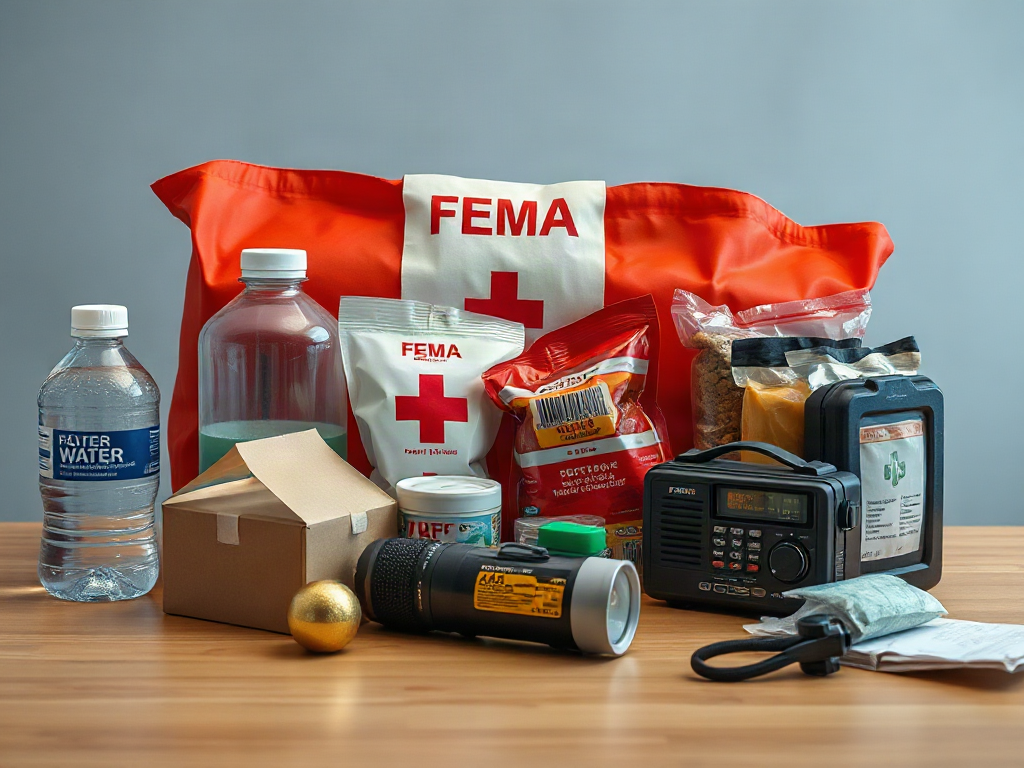
FEMA emergency kit recommendations establish a practical baseline for sustaining a household when utilities, stores, transportation, or emergency services are disrupted. The core supplies include water, nonperishable food, medications, first aid materials, lighting, communication tools, sanitation items, and copies of critical information. Water and essential medicines deserve first priority because shortages can become urgent faster than missing comfort items. Build for each person and pet, account for local hazards and medical needs, then separate portable evacuation supplies from heavier home reserves and inspect both on a regular schedule.
What you’ll learn
This guide covers the following practical points:
- What FEMA’s Baseline Supply List Covers — FEMA’s recommended supply list is a starting point for disruptions that may leave a household without safe water, electricity, working stores, or immediate outside assistance.
- How to Prioritize Water, Food, Medicine, and Communication — Water, essential medicine, and a dependable way to receive instructions should be funded and packed before convenience equipment.
- How to Tailor the Kit to Your Household — A usable emergency kit mirrors the household’s daily dependencies.
- Home Supplies Versus an Evacuation Kit — Home reserves and evacuation supplies solve different weight and access problems.
What FEMA’s Baseline Supply List Covers
FEMA’s recommended supply list is a starting point for disruptions that may leave a household without safe water, electricity, working stores, or immediate outside assistance. The list is organized around basic functions rather than a particular disaster: hydration, calories, medical needs, light, information, sanitation, signaling, and simple repairs.
Common baseline items include water, nonperishable food, a battery-powered or hand-crank radio, a flashlight, spare batteries, a first aid kit, a whistle, dust masks, moist towelettes, garbage bags, a manual can opener, local maps, phone charging equipment, and tools for safely shutting off utilities when appropriate. Household members should know how to use any tool before an emergency; placing a wrench beside a utility valve is not a substitute for instructions from the utility provider.
The most common mistake is treating the official list as a finished shopping list. A generic kit cannot account for prescription medicine, infant feeding, mobility equipment, pet care, climate, evacuation routes, or the hazards near a particular home. Use FEMA’s categories to identify missing functions, then adapt quantities and equipment to the people who will rely on them.
How to Prioritize Water, Food, Medicine, and Communication
Water, essential medicine, and a dependable way to receive instructions should be funded and packed before convenience equipment. FEMA’s public preparedness guidance uses one gallon of water per person per day for drinking and sanitation and advises storing enough for several days. Actual needs may be higher in hot conditions or for people who are pregnant, ill, or physically active.
| Priority | What to Include | Planning Check |
|---|---|---|
| Water | Commercially bottled water or water stored in suitable containers | Count every person and allow for pets and higher heat-related demand |
| Medicine | Prescriptions, necessary medical supplies, and a written medication record | Follow refill rules and storage-temperature requirements |
| Food | Ready-to-eat, shelf-stable foods requiring little water or preparation | Match allergies, dietary needs, and the available can opener or utensils |
| Information | Radio, alerts, contact details, maps, and charging options | Do not rely on one phone, one network, or household power |
Food selection should reflect the conditions in which it may be eaten. Canned beans, fish, fruit, nut or seed butter, crackers, and shelf-stable meals can work, but some choices require water, heating, or refrigeration after opening. Very salty foods can also increase thirst. Pack foods the household already tolerates and include a manual opener for cans without pull tabs.
A useful calculation makes the recommendation concrete. For an illustrative household of three planning for three days, the baseline water amount is 3 people × 3 days × 1 gallon, or 9 gallons, before adding pet water or an allowance for extreme heat. The calculation exposes a practical constraint: water is heavy. If nine gallons cannot travel with the household, keep a larger home reserve and a smaller portable supply, while planning where additional safe water may be obtained.
How to Tailor the Kit to Your Household
A usable emergency kit mirrors the household’s daily dependencies. Review what each person consumes, wears, operates, or must access during an ordinary 24-hour period, then identify which needs would become difficult during a power outage or evacuation.
Prescription medicines require more thought than adding a bottle to a bag. Discuss feasible emergency refills with a pharmacist or healthcare professional, retain an updated medication and dosage list, and note any temperature controls or powered devices. Batteries for hearing aids, backup power for mobility or respiratory equipment, spare glasses, menstrual supplies, and durable gloves may be more important to a particular household than a multipurpose gadget.
Children need age-appropriate food, clothing, hygiene supplies, and a familiar comfort item. Pets need water, food, medication, leashes or carriers, waste supplies, identification, and vaccination or veterinary records where relevant. A carrier stored in the garage is not useful if an indoor pet cannot be placed in it quickly, so practice calmly before an evacuation is necessary.
Local hazards change the final layer. Cold climates call for insulation and spare dry clothing; wildfire-prone areas place greater value on rapid evacuation documents and suitable respiratory protection; flood exposure makes waterproof packaging especially useful. A frequent failure is buying specialized gear without checking fit, training, or maintenance. Equipment that no one can operate under poor lighting should not be treated as a dependable capability.
Home Supplies Versus an Evacuation Kit
Home reserves and evacuation supplies solve different weight and access problems. A stay-at-home supply can hold more water, food, bedding, sanitation materials, and backup power. A portable kit must be light enough for the intended person to carry and positioned where it can leave with the household quickly.
For a practical division, keep bulk water and food at home, then place immediate essentials in a backpack or small rolling bag: some water, ready-to-eat food, medicines, first aid items, a flashlight, radio, charging cable and power bank, contact information, copies of key documents, cash in small denominations, hygiene supplies, and weather-appropriate clothing. Original documents can remain secured while protected copies travel, depending on the document and household risk.
Vehicle supplies can provide a useful third layer, but a car is a harsh storage environment. Heat and freezing conditions may damage food, water containers, batteries, and medication. Never make a temperature-sensitive prescription depend solely on a vehicle kit. Check seasonal clothing and remove anything unsafe to store in a hot or cold car.
The warning sign of a poorly designed evacuation bag is simple: it cannot be lifted, carried, or located quickly. Test it on a short walk, confirm that straps and wheels work, and assign responsibility for children, pets, medical equipment, and documents. Reducing duplicate tools is usually wiser than removing water, necessary medicine, or communication equipment.
Storage, Inspection, and Replacement
An emergency kit remains dependable only when its contents are accessible and serviceable. Store supplies in a cool, dry location when possible, protect documents and vulnerable items from moisture, and avoid hiding everything behind furniture or seasonal storage.
Inspect kits on a recurring household schedule and after any use. A twice-yearly review is easy to pair with a seasonal task, but manufacturer dates and medication instructions control when individual products should be replaced. During each check, test flashlights and radios, charge power banks, examine containers for leakage or damage, rotate food the household will eat, update clothing sizes, and revise contact and medical information.
Do not store loose batteries in contact with metal objects, and remove batteries from devices if their instructions recommend separate long-term storage. Fuel-burning stoves, grills, or generators must never be used indoors or in other enclosed spaces because of carbon monoxide danger. Follow manufacturer directions for storage, ventilation, and operation.
A kit is working when household members know where it is, can carry their assigned supplies, and can operate the radio, lighting, and charging equipment. It is failing when water is missing, medicine records are obsolete, food requires unavailable preparation, batteries have leaked, or critical items are split among unknown locations. Correct those functional failures before adding optional equipment.
Conclusion
FEMA’s recommendations are most useful as a functional baseline, not a one-size-fits-all package. Secure water, essential medicine, suitable food, light, and reliable information first. Add household-specific medical, child, pet, climate, and evacuation needs next. Separate portable supplies from bulk reserves, test what must be carried or operated, and schedule recurring inspections so the kit remains usable rather than merely stored.
Frequently Asked Questions
Should prescription medicine go in the kit?
Include an emergency supply when legally and medically feasible, plus a current medicine and dosage list. Ask a pharmacist or healthcare professional about refills, expiration, and temperature-sensitive storage.
Is one emergency kit enough for both home and evacuation?
Usually not. Bulk home supplies can support a longer disruption, while an evacuation bag should contain the highest-priority items at a weight the assigned person can actually move.
How often should emergency supplies be checked?
Review them on a recurring schedule, such as twice yearly, and after every use. Replace individual products according to their dates, condition, storage requirements, and manufacturer instructions.
Additional Resources
Authoritative Sources
- FEMA National Preparedness
fema.govFederal preparedness, mitigation, response, and community-resilience resources.