
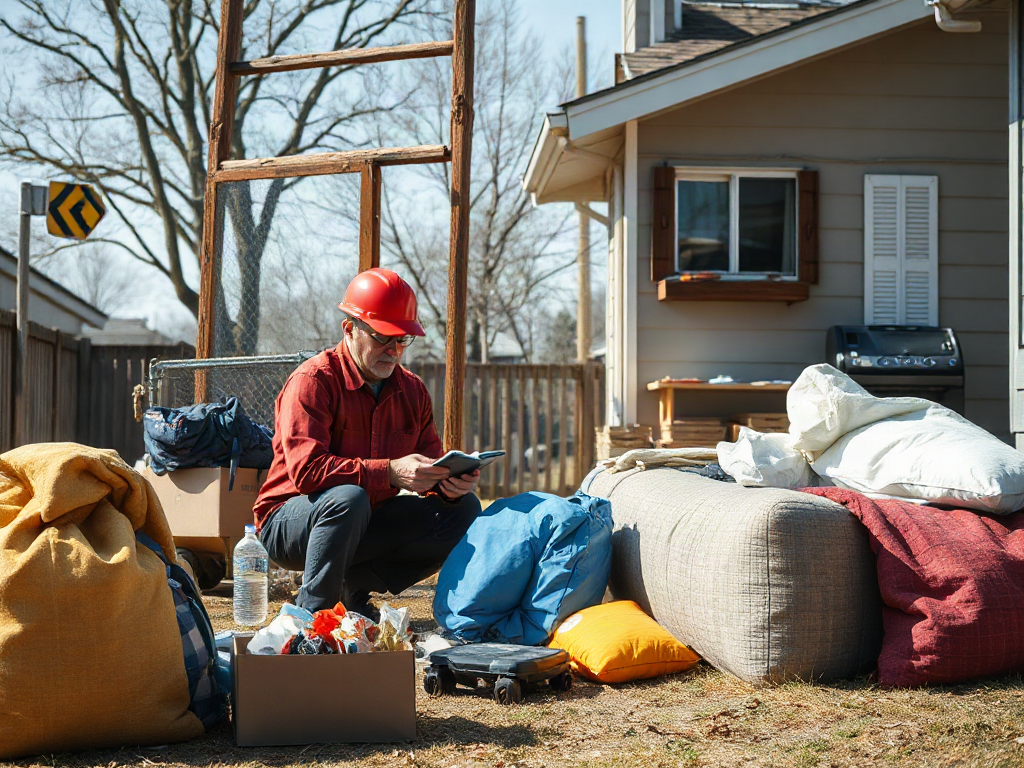
Disaster preparedness questions for household review should test whether everyone can communicate, shelter safely, evacuate, manage essential supplies, and meet medical or mobility needs without relying on untested assumptions. Ask who will receive alerts, where household members will reunite, which routes remain usable, and who is responsible for children, pets, medications, and utility shutoffs. Confirm that water, food, lighting, sanitation items, documents, and backup power match the household’s actual size and needs. A useful review ends with assigned tasks and a scheduled drill, because unanswered questions, expired supplies, inaccessible equipment, and plans known by only one person are practical warning signs.
Questions That Reveal the Household’s Most Serious Gaps
A productive household review examines capabilities rather than asking whether the family is simply “prepared.” Broad yes-or-no questions tend to produce reassuring but unreliable answers. A better discussion identifies the hazards most likely to affect the home, the decisions those hazards would force, and the resources household members could actually use under pressure.
Begin with local conditions. Ask which events could make the home unsafe, interrupt power or water, block roads, contaminate outdoor air, or separate household members. The answers may include severe weather, wildfire smoke, flooding, earthquakes, extended utility failures, or a nearby hazardous-material incident. Avoid treating every hazard as identical. A power outage may favor staying home, while rising water or an evacuation order may require an early departure. The household should know which conditions change the decision.
Next, test the plan against inconvenient timing. What happens if adults are at work, children are at school, a vehicle is unavailable, or cellular service is congested? Who can make decisions if the usual organizer cannot be reached? Does another person know where documents, medication lists, carriers, keys, and shutoff tools are stored? A plan controlled by one knowledgeable adult has a single point of failure.
A compact review should resolve questions in priority order:
- Immediate danger: What warning would trigger sheltering, evacuation, or a call for emergency assistance?
- Accountability: How will everyone report their location and condition?
- Essential needs: Who requires medication, powered medical equipment, mobility assistance, infant supplies, or pet care?
- Continuity: How will the household manage water, food, sanitation, lighting, information, and charging during an interruption?
- Recovery: Which records and contacts are needed to document damage, obtain help, or arrange temporary lodging?
The review is working when each important answer names a person, location, trigger, or action. “We would contact each other” is weak; “each person texts the out-of-area contact and reports location, condition, and destination” is testable. Use a written set of Disaster preparedness questions for household review to record unresolved items rather than allowing uncertain answers to disappear after the conversation.
A common mistake is buying more equipment before identifying the household’s operational gaps. Additional gear will not fix an unknown meeting place, an inaccessible medication supply, or a child who does not know which trusted adult may collect them. Resolve life-safety decisions and responsibilities first, then purchase supplies that support those decisions.
Communication, Alerts, and Reunification Questions
Communication planning should assume that household members may be apart and that their preferred channel may fail. Ask how each person receives official warnings at home, work, school, and overnight. Phones should be configured for relevant public alerts, but the household also needs another way to obtain information, such as a battery-powered or hand-crank radio. Social posts can provide local observations, yet they should not replace instructions from public safety agencies.
Question the contact process in detail. Which local person should be called first? Is there an out-of-area contact who can collect status reports when local calls are difficult? Does everyone have important numbers on paper, or are they available only inside locked phones? Young children may need a card in a backpack, while adults can keep copies in a wallet, vehicle, and household document kit. Contact information should include schools, caregivers, medical providers, utilities, insurers, and a trusted neighbor where appropriate.
Reunification requires more than one meeting place. Choose a location immediately outside the home for a sudden event such as a fire, another within the neighborhood if the property cannot be approached, and a destination outside the immediate area if officials direct an evacuation. Ask who may pick up children and what identification or authorization the school or care provider requires. Household plans should complement institutional procedures rather than assume a parent can enter a closed or evacuated campus.
Consider a weekday storm that closes roads while one adult is commuting and a child remains at an after-school program. Driving toward the same destination may increase exposure and congestion. A better plan could direct the child to remain under the program’s supervision, the nearby adult to follow the designated pickup procedure, and the distant adult to check in with the out-of-area contact. The correct arrangement depends on local geography and care policies, but it must be decided before emotions narrow judgment.
Practice message discipline during a drill. A useful check-in gives the sender’s name, current location, condition, intended destination, and next update time. Text messages may go through when voice calls do not, but no channel is guaranteed. Decide how long to wait before using an alternate contact or proceeding to a meeting location. Success means participants can complete the process without being prompted by the household organizer.
The usual failure mode is storing a detailed plan where nobody can reach it. Keep copies in practical locations and review them whenever phone numbers, schools, workplaces, caregivers, or addresses change. The communication portion of Disaster preparedness questions for household review should be treated as a living directory, not a document completed once and forgotten.
Shelter, Evacuation, and Utility Decisions
Sheltering and evacuation are different responses to different hazards, so the household needs decision triggers for both. Ask which room offers the best protection for severe weather, which interior area could be used when outdoor air is hazardous, and which exits remain available if smoke, water, debris, or structural damage blocks the usual route. Local official instructions take priority because conditions outside the home may not be visible from the property.
Walk through every exit rather than discussing routes at a table. Can windows and doors open without special knowledge? Can children operate them if appropriate? Would a mobility device fit? Are stairs, gates, and hallways clear at night? Identify two ways out where the building permits, then establish an outdoor meeting point far enough from likely hazards. Never plan to reenter a burning or structurally unsafe building to collect possessions or pets.
Evacuation questions should cover transport and timing. Which vehicle is most likely to be available, and who keeps its fuel level adequate for local conditions? What happens if roads are closed or no driver is home? Where could the household go if relatives, hotels, or public shelters cannot accept pets? A go-bag is useful only if it can be lifted, fits in the available vehicle, and contains items that match the expected destination. Bulky stockpiles belong at home; portable medication, water, clothing, chargers, identification, and care supplies belong near an exit.
Utility knowledge can reduce secondary damage, but shutoffs should not become automatic reactions. Ask where the electrical panel, water valve, and gas controls are located, who can access them, and under what circumstances the relevant utility or local authorities advise action. Turning a service off may create additional risks, and some systems should be restored only by qualified personnel. Keep suitable tools accessible without improvising technical procedures during a crisis.
Imagine a fast-moving wildfire warning received late at night. Searching for pet carriers, paper records, and vehicle keys could consume the time intended for departure. Staging those items together may reduce delay. By contrast, during a winter outage with safe indoor conditions, leaving immediately could expose the household to dangerous roads. The hazard, official direction, indoor temperature, health needs, and available destination should drive the choice—not a single response applied to every event.
A practical test is to time a departure drill without creating panic or violating local rules. Participants should collect people, essential medication, pets, bags, and documents, then account for everyone at the meeting point. A failed drill is useful evidence: overloaded bags, missing keys, confused routes, or a pet that cannot be secured show exactly what to correct.
Supplies, Health Needs, and Recovery Readiness
Household supplies should be evaluated by function, accessibility, and actual users rather than by item count. Ask how the family would drink, eat, see, communicate, maintain hygiene, and manage temperature if normal services stopped. Then check whether the stored materials are usable without tap water, grid power, internet access, or a fully functioning kitchen.
Water deserves early attention because it supports drinking, food preparation, hygiene, and some medical routines. Confirm that containers are intact, appropriately stored, and manageable for the people expected to move them. Food should reflect allergies, dietary restrictions, and realistic preparation options. Shelf-stable meals that require substantial water or cooking may be a poor match for an outage. Include a manual can opener when canned food is stored, and rotate ordinary foods into meals before quality declines.
Health questions must be specific to the household. Who depends on prescription medication, refrigerated products, oxygen, mobility aids, hearing devices, glasses, or electrically powered equipment? What written information would a caregiver or clinician need if the usual decision-maker were unavailable? Discuss refill flexibility and backup-power needs with the relevant pharmacist, clinician, equipment provider, or utility rather than making medical or electrical assumptions. A battery pack suitable for phones should not be assumed capable of safely operating medical equipment.
Pets and service animals require their own transport, food, water, medication, identification, waste supplies, and destination planning. Ask whether every animal can be caught and placed in a carrier quickly. An anxious animal that hides during alarms can delay departure, so routine carrier practice may be more valuable than adding another accessory to a bag.
Recovery materials matter after immediate danger passes. Keep protected copies of identification, insurance information, property records, household contacts, medication details, and photographs or inventories useful for documenting losses. Digital copies improve portability, while paper copies remain accessible when devices are unavailable; using both avoids choosing between convenience and resilience. Protect sensitive records against unauthorized access and do not carry unnecessary originals.
Assign inspection dates rather than trusting memory. Review expiration dates, battery condition, seasonal clothing, children’s sizes, pet supplies, document changes, and equipment operation. Signs of failure include corroded batteries, food nobody can eat, bags too heavy to carry, unlabeled containers, and critical items hidden behind stored belongings. Signs of readiness include another household member locating supplies unaided, equipment functioning during a test, and replacement dates being recorded.
Finish the Disaster preparedness questions for household review by assigning each correction to a named person and a realistic deadline. Separate urgent gaps—such as missing medication information or no child pickup arrangement—from lower-priority upgrades. That distinction keeps a limited budget focused on consequences rather than attractive but marginal gear.
Frequently Asked Questions
How often should a household review disaster preparations?
Review them at least once a year and whenever someone moves, contact details change, a child changes schools, medical needs develop, or local hazards shift. Test perishable supplies, alerts, and communication procedures more frequently.
Who should participate in the household review?
Include everyone at a level appropriate to their age and abilities, along with caregivers or nearby support people who have assigned duties. Children should know how to seek help, where to meet, and which trusted adults may collect them.
What question should a household answer first?
Start by asking which local hazards could require immediate sheltering or evacuation and what warning would trigger that decision. Supplies and routes can then be matched to credible situations rather than vague fears.
How can a family tell whether its disaster plan works?
Run a calm drill in which members receive a test alert, check in, locate equipment, secure pets, and reach the designated meeting point. Confusion, inaccessible items, excessive delays, or reliance on one person indicate revisions are needed.
Should disaster preparations focus on staying home or evacuating?
Prepare for both. Some outages are safer to manage at home, while fire, flooding, structural danger, or official orders may require departure. Define the conditions, destinations, transport options, and portable supplies for each choice.
Conclusion
A household review is valuable only when it exposes uncertain decisions and turns them into workable arrangements. Prioritize warning triggers, family accountability, medical and mobility needs, safe shelter or departure choices, and supplies that remain usable when utilities are unavailable. Test the arrangements under realistic conditions: a missing adult, a blocked route, an unavailable vehicle, or a phone that cannot connect.
Record every gap, rank it by consequence, and assign the correction to someone with a deadline. Resolve missing contacts, medication details, pickup permissions, and exit problems before spending money on optional equipment. Repeat a short drill after making changes. If every household member can explain where to go, whom to contact, what to take, and when to change course, the review has produced a plan that can function beyond the page.