
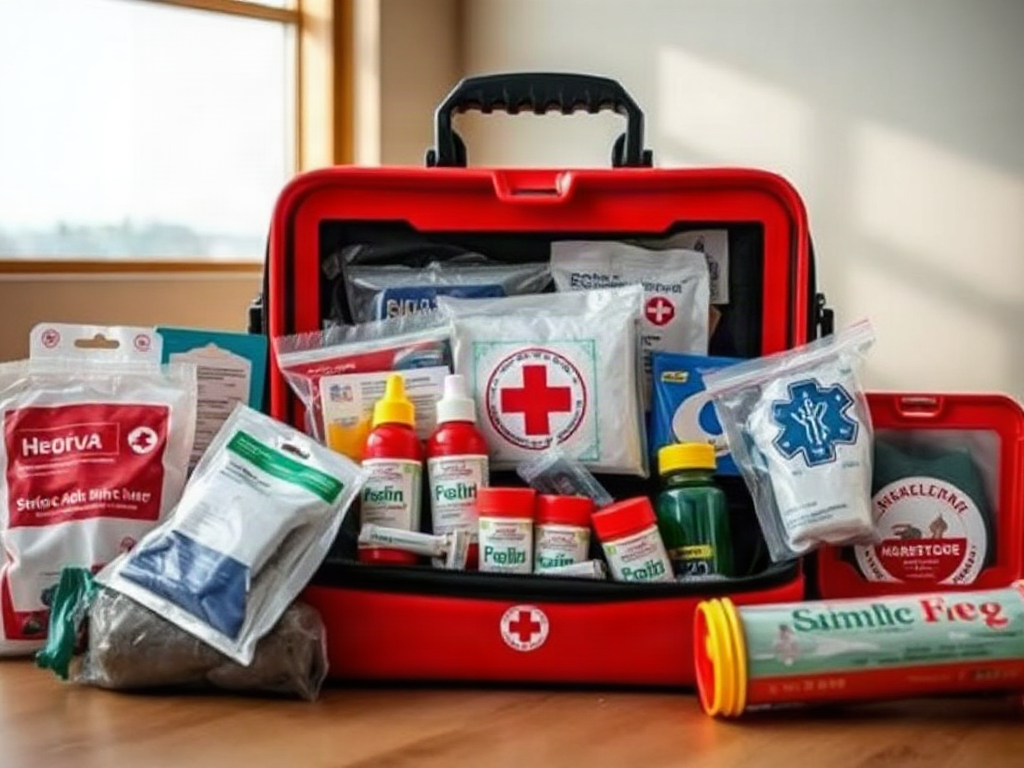
Medical emergency kit contents should change by scenario: a home kit can hold broader wound-care and monitoring supplies, a vehicle kit must tolerate heat and vibration, an evacuation kit must remain light, and a remote-care kit needs added capacity for delayed assistance. Every version should include bleeding-control materials, protective gloves, basic wound dressings, essential personal medicines, and clear emergency information. Add items only when someone knows how and when to use them, because unfamiliar equipment can delay appropriate care. Inspect medicines, sterile packaging, batteries, and temperature-sensitive products regularly, and treat the kit as support for immediate care rather than a substitute for emergency services or medical training.
Build a Reliable Core Before Adding Scenario-Specific Supplies
A useful medical kit begins with the injuries and health problems a household can reasonably manage while professional help is being contacted or reached. The core should address external bleeding, minor wounds, burns, sprains, exposure to bodily fluids, and essential personal medical needs. Specialized additions then reflect where the kit will be stored, how far it may travel, and how long outside assistance could take.
For bleeding and wound care, stock assorted adhesive bandages, sterile gauze pads, rolled gauze, medical tape, and at least one absorbent trauma dressing. Include disposable nitrile gloves in multiple pairs so a helper can replace contaminated or torn gloves. Antiseptic wipes can clean intact surrounding skin, while clean water or commercially packaged wound-wash solution is more appropriate for flushing debris from many minor wounds. Trauma shears, tweezers, and a disposable cold pack add practical capability without requiring complex interpretation.
A compact baseline should also contain a CPR face shield, an elastic wrap, triangular bandage, burn dressing or sterile non-adherent pads, hand sanitizer, and a simple first-aid reference. A digital thermometer may be useful at home, although it is less valuable in a small evacuation pouch where weight and battery condition matter. A tourniquet can be appropriate for life-threatening extremity bleeding when the user has received suitable instruction; an unfamiliar tourniquet buried beneath routine supplies is not a complete bleeding plan.
Personal needs often matter more than another generic bandage. Add prescribed rescue medicines, allergy supplies, glucose sources or testing items when applicable, spare eyeglasses, and a written list of medicines, allergies, diagnoses, clinicians, and emergency contacts. Prescription products should remain in properly labeled containers and be rotated according to storage instructions. Access to replacement prescriptions may be limited by local rules, insurance practices, and clinician authorization.
Use a short priority test before adding an item:
- Likely problem: Does it address an injury or condition plausible in this setting?
- Usable skill: Can a household member identify when and how to use it?
- Storage fit: Will heat, freezing, moisture, or crushing damage it?
- Replacement plan: Can it be inspected and replaced before failure?
The common mistake is counting pieces instead of capabilities. A large preassembled kit may contain dozens of tiny adhesive bandages but too little gauze for sustained pressure. Reviewing Medical emergency kit contents by scenario as a capability problem produces a smaller, clearer, and more usable loadout.
Home and Shelter-in-Place Kit Contents
A home medical kit can carry more depth because it does not need to be worn or moved quickly. Use that capacity for extra consumables, organized personal medicines, and supplies that support several people rather than filling the container with advanced devices. Keep the primary kit accessible to responsible adults but secured from young children.
Home wound-care depth should include several sizes of sterile gauze, non-adherent pads, rolled gauze, tape that adheres reliably, adhesive closures intended for minor superficial wounds, and multiple glove pairs. Add a basin or another practical way to access clean running water for irrigation; a kit does not need to contain all the water if a dependable household supply exists. Soap, clean towels, and waste bags should be nearby because infection control depends as much on clean hands and disposal as on the dressing itself.
Households managing asthma, severe allergies, diabetes, seizures, or other known conditions need a personalized module placed within or beside the general kit. That module might contain prescribed rescue medicine, administration accessories, monitoring supplies, and a concise action plan provided by the treating clinician. Do not pool prescription medicines or assume that one person’s device or dose is suitable for another. A current medication list is especially useful when stress, an evacuation, or an unfamiliar responder makes verbal recall unreliable.
Consider how a prolonged power or water interruption changes the kit. Battery-dependent medical devices need a manufacturer-compatible power plan. Refrigerated medicine requires condition-specific advice from a pharmacist or manufacturer rather than an improvised assumption that it remains safe after warming. People who use mobility, hearing, or vision aids may need spare batteries, communication cards, or backup accessories stored with their medical information.
For example, a family sheltering after a severe storm may face glass cuts, minor burns from cooking, missed routine doses, and difficulty reaching a pharmacy. Extra dressings and a documented medication plan are more useful in that situation than a surgical instrument set. A home kit is still not a substitute for calling emergency services when there is severe bleeding, breathing difficulty, chest pressure, altered consciousness, suspected stroke, major burns, or another time-critical condition.
Separate supplies into labeled pouches such as bleeding, minor wounds, medications, and protective equipment. The failure signal is simple: if a helper must empty the entire container to find gloves or gauze, the organization is not working. Place instructions and emergency information where they can be seen before any zipper compartments are opened.
Vehicle and Evacuation Kit Contents
Vehicle and evacuation kits serve different movement problems, even when they share supplies. A vehicle kit can be somewhat larger and should emphasize roadside trauma, visibility, and environmental exposure. An evacuation kit must remain light enough to carry with water, documents, clothing, and other necessities; excessive weight makes abandonment more likely.
For a vehicle, prioritize gloves, substantial gauze, a trauma dressing, medical tape, a trained-user tourniquet, a CPR barrier, a triangular bandage, an elastic wrap, and trauma shears. A reflective vest, flashlight, and emergency signaling equipment belong nearby even though they are not medical supplies. Scene visibility and traffic awareness can prevent a helper from becoming another casualty. Keep the medical pouch reachable without unloading the trunk, and avoid placing it under heavy tools that may crush sterile packaging.
Cabin and trunk temperatures create a major constraint. Adhesives may deteriorate, ointments may separate, batteries may discharge, and some medicines can be damaged by heat or freezing. The glove compartment is convenient but often unsuitable for temperature-sensitive prescriptions. Follow each product’s labeled storage limits, carry essential medicines with the person when appropriate, and replace compromised products rather than judging them solely by appearance.
An evacuation kit should retain the core bleeding and wound supplies but reduce bulky duplicates. A practical personal pouch might hold two glove pairs, compressed or folded gauze, tape, several sterile pads, adhesive bandages, a triangular bandage, a compact elastic wrap, trauma shears, a CPR shield, personal medicines, and a waterproof medical-information card. Pack enough supplies for the expected group, but divide critical items between capable adults so one lost bag does not remove every medicine or dressing.
Imagine leaving home on foot after roads close. A rigid, oversized medical case that occupies half a backpack competes directly with drinking water and weather protection. A compact modular pouch is the better choice unless the group has unusual medical requirements or trained responders carrying group equipment. Conversely, a tiny pocket kit may be inadequate for a multi-person road trip far from immediate services.
Compare and revise both setups using the Medical emergency kit contents by scenario approach rather than duplicating the home cabinet. A vehicle kit is succeeding when it remains accessible, intact, and understandable after months of travel. Faded labels, melted adhesive, missing gloves, or medicines left beyond approved storage conditions indicate that the system has failed before an incident occurs.
Remote Travel and Delayed-Help Kit Contents
A remote-care kit needs enough capacity to stabilize common injuries and protect a patient while help is delayed, but distance does not justify carrying equipment beyond the group’s competence. Route difficulty, weather, party size, communication coverage, evacuation time, and individual medical conditions should drive the contents. A day hike near a busy trailhead does not call for the same load as a multi-day trip without reliable cellular service.
Increase supplies that are consumed quickly: gloves, gauze, tape, non-adherent pads, blister care, elastic wraps, and irrigation capability. Add an emergency blanket or other exposure protection, because an injured person may cool rapidly while stationary. A headlamp leaves both hands available for care. A pencil and waterproof paper can record symptoms, medicine use, allergies, injury time, and changes in condition for rescuers.
Remote groups also need communication and extraction tools outside the medical pouch. A satellite communicator or personal locator beacon may do more to improve access to definitive care than another advanced medical device, provided it is registered, charged, tested, and understood. Navigation tools, shelter, water treatment, and insulation affect medical outcomes by reducing exposure and preventing a manageable delay from becoming a second emergency.
Consider an ankle injury several miles from a trailhead. An elastic wrap may provide support, but it does not determine whether walking is safe. Severe deformity, loss of sensation, worsening swelling, inability to bear weight, or impaired circulation calls for a more cautious evacuation decision. Improvised splinting may be useful when trained users can protect circulation and check sensation, yet a rigid splint applied badly can increase pressure or hide deterioration.
Medicines require equally careful judgment. Pack only products suitable for the individual, clearly labeled, and understood by the user. Avoid creating an informal pharmacy for a group without considering allergies, interactions, health conditions, dosing, and legal constraints. Prescription drugs should be managed with the relevant clinician or pharmacist before departure.
The most common remote-kit mistake is substituting inventory for planning. No collection of dressings fixes a missing turnaround time, an unshared itinerary, or an uncharged communicator. Review Medical emergency kit contents by scenario alongside the trip plan, then remove items with no credible use and add supplies tied to specific route hazards. The final kit should be light enough to carry all day and organized so essential bleeding or exposure supplies can be reached immediately.
Storage, Inspection, and Safe Use
A medical kit remains dependable only when inspection is treated as part of ownership. Check it on a regular household schedule and after every use, trip, vehicle season change, or major change in a family member’s health. Inventory lists should record quantities and, where relevant, expiration dates or replacement dates without implying that every non-drug item fails on the printed date.
Inspect sealed packages for tears, water damage, discoloration, broken seals, or crushed contents. Test flashlights and other powered equipment, replace leaking batteries, and verify that scissors and zippers operate. Adhesive products deserve special attention because heat and age can make them unreliable before the wrapper looks damaged. Follow manufacturer directions for medicines, sterile products, diagnostic supplies, and devices rather than applying one blanket rule.
Organization should match urgency. Gloves and major bleeding supplies belong at the top or in a clearly marked external compartment. Routine bandages can sit deeper. Personal medicines need labels identifying the intended person, while emergency information should be readable without unlocking a phone. If privacy is a concern, use a sealed envelope that responders can locate quickly rather than hiding the information.
Practice reveals failures that visual inspection misses. Without opening sterile products, have household members locate gloves, gauze, tape, and the first-aid reference. Confirm that they know how to call for help, state the location, and recognize problems beyond basic first aid. Formal first-aid, CPR, and bleeding-control instruction gives context that an equipment list cannot provide.
More equipment is not automatically safer. Advanced airways, suturing materials, injectable drugs, and diagnostic devices can create false confidence or cause harm when used without appropriate qualifications. A well-maintained basic kit paired with prompt emergency activation is generally more practical for a household than a poorly understood clinical-style bag. Working contents are accessible, current, clearly labeled, and matched to actual users; failing contents are expired, heat-damaged, incomplete, or impossible to identify under pressure.
Frequently Asked Questions
Should every medical emergency kit contain the same supplies?
No. Keep a common core for bleeding, minor wounds, gloves, and personal needs, then adjust quantities and additions for home storage, vehicle temperatures, evacuation weight, or delayed rescue.
Where should prescription medicines be kept?
Keep them in properly labeled containers under the stated storage conditions and where the intended person can access them. Ask a clinician or pharmacist about emergency refills, refrigeration, and travel constraints.
Does a first-aid kit need a tourniquet?
A recognized commercial tourniquet may be appropriate for life-threatening extremity bleeding when users have suitable training. It does not replace emergency activation, direct-pressure supplies, or hands-on instruction.
How often should a medical kit be inspected?
Inspect it on a recurring schedule, after each use, before major trips, and after severe heat, freezing, moisture, or physical damage. Replace used, compromised, or improperly stored contents promptly.
What should not be placed in a household medical kit?
Avoid unlabeled pills, damaged sterile products, unfamiliar advanced devices, and medicines intended for someone else. Equipment that exceeds the users’ training can distract from calling for appropriate help.
Conclusion
Build each kit around its operating environment rather than buying one oversized collection for every location. The home setup can hold deeper reserves and personalized care modules; the vehicle version must survive temperature swings and remain reachable; the evacuation pouch must earn its weight; and the remote kit must account for exposure, communication, and delayed rescue. Start by organizing gloves, bleeding-control materials, wound dressings, medical information, and essential personal medicines. Then test whether household members can find and use those items without emptying the bag. Review labeled storage requirements, replace compromised supplies, and arrange appropriate first-aid training. The next practical step is to inspect one existing kit against its actual scenario, remove unusable clutter, and document the specific gaps that need replacement.