
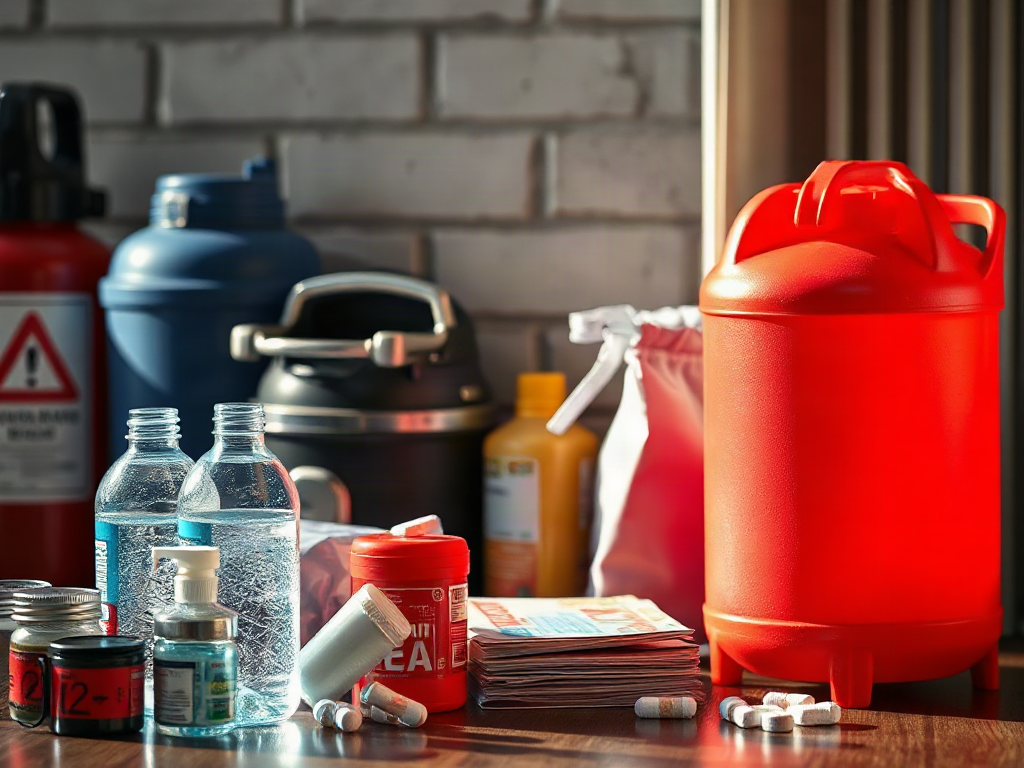
Household emergency preparedness priorities by risk should rank water, medications, communication, power, shelter, and evacuation around the hazards most likely to affect your home. Begin with life-safety needs that fail quickly, such as drinking water, essential prescriptions, first aid, and a way to receive official alerts. Add battery lighting, backup charging, sanitation supplies, shelf-stable food, and cash before buying specialized equipment. Wildfire and flood plans may require rapid evacuation, while winter storms and outages place more emphasis on heat, lighting, and food storage. Review the plan with every household member, account for mobility or medical needs, and test supplies before an actual emergency exposes missing batteries, expired food, or unusable routes.
Rank Risks Before Buying Supplies
Preparedness priorities become clearer when a household ranks hazards by likelihood, warning time, duration, and consequences rather than collecting unrelated gear. A short power outage, a nearby wildfire, a winter storm, and a flood can all disrupt normal routines, but they do not create the same decisions. A family in a flood-prone area may need waterproof document protection and an evacuation route, while a rural household facing winter isolation may need heating alternatives, animal provisions, and a longer food reserve.
Use a simple risk screen for each credible hazard. Ask how quickly conditions could become dangerous, whether leaving is safer than sheltering, which utilities may fail, and which household member needs special support. A hazard with little warning deserves a ready-to-carry kit and practiced actions. A slow-building event may justify monitoring official alerts, moving vehicles, protecting outdoor equipment, or arranging transportation before roads become unsafe.
Likelihood alone should not control the ranking. A rare event with severe consequences can deserve attention if the preparation is inexpensive and useful elsewhere. Smoke masks suitable for the occupants, for instance, may have a place in a wildfire plan, but working smoke alarms, medication access, and a reliable way to receive warnings usually deserve attention first because they affect several emergencies.
A practical priority order is:
- Immediate survival: water, essential medication, first aid, safe shelter, and a way to detect or receive warnings.
- Short-term independence: lighting, charging, sanitation, food, cash, and basic tools.
- Hazard-specific protection: evacuation supplies, flood documents, cold-weather equipment, or smoke reduction measures.
- Recovery support: insurance information, household records, repair contacts, and replacement planning.
The common mistake is treating a large supply inventory as proof of readiness. Supplies do not solve an unknown meeting place, an inaccessible medication, or a route that becomes unusable. A short household discussion can reveal more urgent gaps than another online purchase. Record the risks that apply locally, identify the first action for each, and link every purchase to a specific problem.
Build the Universal Household Base
Every home benefits from a basic layer that works across multiple hazards. Drinking water, prescription access, basic first aid, sanitation, lighting, communication, and ready-to-eat food support both sheltering and evacuation. The goal is not to predict the exact disaster; it is to keep a household functional while instructions, utilities, transportation, or commercial services are disrupted.
Water should be easy to locate, protected from contamination, and managed with attention to storage conditions and replacement dates. Food should match the household’s actual diet and equipment. Shelf-stable items that require a can opener, refrigeration, or lengthy cooking are less useful during a power failure unless the needed tools and fuel are also available. Include foods that children will eat, allergy-safe choices where necessary, and a manual can opener if canned goods are part of the reserve.
Medical planning requires more than a first-aid box. Keep a current medication list, copies of prescriptions or treatment instructions, and a practical method for carrying temperature-sensitive or mobility-related supplies. Ask a clinician or pharmacist about continuity options rather than improvising with medication changes during a crisis. The same principle applies to vision aids, hearing devices, oxygen equipment, and durable medical equipment: a plan should account for charging, transport, maintenance, and backup access.
Lighting and communication often determine whether a household can act safely after dark. Store flashlights or lanterns where people can reach them without crossing a dark room, and keep spare batteries matched to the devices. A battery or hand-crank radio may provide useful official information when internet service fails, but it should complement—not replace—local alert enrollment and a charged mobile phone. A portable charger is useful only if it is maintained and compatible with the household’s devices.
Keep one compact bag for rapid departure and a separate home reserve for sheltering. This avoids the false choice between carrying every supply and leaving essential items behind. Label the bags, check them on a schedule, and rotate food, batteries, and personal items. Readers comparing broader Household emergency preparedness priorities by risk should judge each item by its failure mode: what happens if it is missing, inaccessible, expired, or impossible to use without electricity?
Match Supplies to Specific Hazards
Hazard-specific preparation changes the balance between staying and leaving. Wildfire planning emphasizes warning awareness, quick evacuation, clean-air decisions, and protection from smoke. Flood planning emphasizes moving to safer ground, avoiding contaminated water, protecting records, and never assuming a familiar road remains passable. Winter weather shifts attention toward warmth, safe indoor lighting, food, water, and transportation limits during prolonged outages.
For wildfire or fast-moving smoke, keep shoes, identification, medications, chargers, and pet carriers near an exit. Know at least two routes if local geography permits, but do not treat a printed route as a guarantee; closures and changing conditions can invalidate it. Follow official evacuation instructions and avoid delaying departure to gather possessions. Smoke-related equipment should be selected carefully, fit the user, and never be treated as permission to remain in an unsafe area.
Flood preparation is often weakened by an assumption that a vehicle provides a safe escape. Water can conceal road damage, debris, or electrical hazards, and a route that looks clear may become dangerous quickly. Store important records in waterproof protection, identify higher ground, and plan for household members who cannot move quickly. Do not rely on a basement as a default shelter when rising water is a concern. Water storage and sanitation also deserve special attention because municipal service may be interrupted or unsafe.
For winter storms and extended outages, warmth is the central constraint. Extra blankets, layered clothing, safe lighting, and food that needs little cooking may matter more than a large collection of general tools. Never use outdoor combustion equipment indoors or in an enclosed space because of carbon monoxide risk. If a medical device, furnace, or well pump depends on electricity, determine its backup requirement before the storm rather than discovering it after the outage begins.
Earthquakes and severe wind events create a different problem: supplies may be available but difficult to reach because shelves, glass, or debris block access. Secure heavy objects, keep sturdy footwear and gloves accessible, and avoid storing the emergency kit where it could be buried. A household that shelters in place needs water, sanitation, first aid, and communication; a household ordered to evacuate needs identification, medication, transportation, and a destination. Generic advice fails when it ignores that difference.
Turn Supplies Into a Working Household Plan
A preparedness plan works when each person knows what to do without waiting for one organizer to make every decision. Assign practical roles, but keep backups because the usual caregiver may be away, injured, or unable to communicate. Decide how household members will receive alerts, where they will meet if separated, who collects children or pets, and which out-of-area contact can relay information.
Practice the decisions that are hardest under stress. A brief drill might involve leaving through an alternate exit, locating medications in low light, turning off a utility only when it is safe and appropriate, or contacting a family member without relying on one phone number. The purpose is not theatrical repetition. It is to expose friction: a carrier does not fit the pet, a child cannot open the food container, a charger is missing its cable, or a meeting location is inside a likely evacuation zone.
Review the plan seasonally and after household changes. New prescriptions, a vehicle change, a move, a new pet, pregnancy, disability, or an aging relative can alter priorities. Check official local emergency management information for evacuation zones, alert systems, shelter rules, and hazard-specific instructions. A national checklist can provide a useful foundation, but local geography and building conditions determine which details require emphasis. The American Red Cross guidance linked below is a useful starting point for household supply and safety checks; local authorities should control event-specific instructions.
Budget constraints make prioritization especially valuable. Buy or assemble the universal base first, then direct remaining money toward the most consequential local hazard. A hand tool with several plausible uses may be more useful than a specialized device that depends on training, fuel, or maintenance. On the other hand, a household with a generator, oxygen concentrator, well pump, or refrigerated medicine may need specialized backup planning earlier than another family. The right comparison is not cheap versus expensive; it is essential failure versus optional convenience.
Use this review question for every major item: can the household identify it, operate it, maintain it, and transport it when conditions are difficult? If the answer is no, the item belongs in a training or replacement decision, not merely on a shopping list. That approach makes Household emergency preparedness priorities by risk a living system rather than a one-time purchase.
Frequently Asked Questions
Which household supplies should come first?
Prioritize drinking water, essential medications, first aid, lighting, communication, sanitation, and food that can be used without normal utilities. Add hazard-specific supplies after these basics are accessible and maintained.
How should a family prepare for both evacuation and sheltering?
Keep a portable departure bag separate from a home reserve. The bag should support rapid movement, while the reserve should cover water, food, sanitation, lighting, and medical needs during an outage or temporary shelter period.
How often should emergency supplies be checked?
Review them at least seasonally and whenever prescriptions, household members, pets, vehicles, or local risks change. Rotate food, inspect batteries, recharge power banks, and replace clothing or documents that no longer fit the household.
What changes for households with medical or mobility needs?
Plan for medication continuity, device charging, transportation, accessible exits, mobility aids, and backup caregivers. Confirm specialized requirements with the relevant clinician, pharmacist, equipment provider, or local emergency service.
Should households buy a generator before other equipment?
Not automatically. A generator may be valuable when critical equipment depends on electricity, but it requires safe placement, fuel management, maintenance, and proper operation. Basic water, medication, lighting, communication, and sanitation needs generally come first.
Conclusion
Effective household preparedness is a ranking exercise, not a contest to accumulate equipment. Put immediate life-safety needs first, then build the ability to function without power, water service, communications, or easy transportation. Let local hazards determine the next layer: evacuation and smoke decisions for wildfire, higher-ground routes for floods, warmth and safe outage practices for winter weather, and accessible supplies after earthquakes or severe wind. Keep departure bags separate from home reserves, include the needs of pets and medically vulnerable people, and practice the actions that could fail under pressure. A seasonal review should confirm that supplies are usable, routes remain relevant, and every household member knows the first move for the risks most likely to affect the home.