
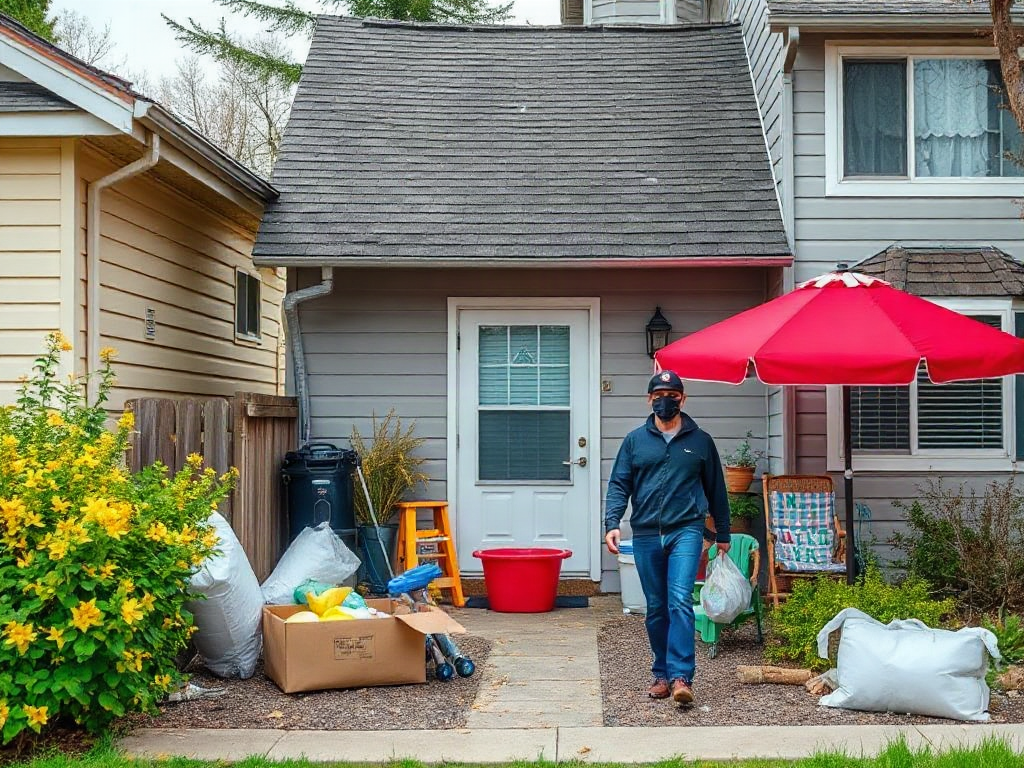
Disaster resilience versus preparedness for households comes down to readiness before an event and the ability to adapt, recover, and improve afterward. Preparedness covers supplies, alerts, evacuation routes, communication plans, backup power, and practice; resilience also depends on safe housing, financial flexibility, social connections, accessible transportation, and recovery decisions. A household with a stocked kit but no way to receive warnings or replace lost income may be prepared in a narrow sense but remain vulnerable. Build preparedness around the hazards and needs of your household, then strengthen resilience by reducing property risks, sharing responsibilities, protecting important records, and reviewing what failed after each disruption.
What you’ll learn
This guide covers the following practical points:
- Preparedness and Resilience Solve Different Problems — Household preparedness is the deliberate work done before a hazard: learning local warnings, storing water and food, maintaining medication supplies, deciding where to go, and knowing how family members will communicate.
- How Preparedness Becomes Household Resilience — Preparedness strengthens resilience when it is connected to real household decisions rather than treated as a shopping exercise.
- Household Weak Points That Supplies Cannot Fix — Resilience often depends on conditions outside an emergency kit.
- A Practical Way to Build and Test Both — The most useful household assessment ranks consequences, not possessions.
Preparedness and Resilience Solve Different Problems
Household preparedness is the deliberate work done before a hazard: learning local warnings, storing water and food, maintaining medication supplies, deciding where to go, and knowing how family members will communicate. Disaster resilience is broader. It describes how well a household can absorb disruption, continue essential functions, recover, and adapt after conditions change. The two ideas overlap, but neither replaces the other.
A useful comparison is a winter power outage. Preparedness may give a household flashlights, charged battery banks, blankets, shelf-stable meals, and a plan for checking on relatives. Resilience also asks whether the home can remain safely heated, whether a resident depends on powered medical equipment, whether an older neighbor can travel, and whether the family can afford hotel costs if the outage lasts several days. The kit addresses immediate capability; resilience addresses the household’s wider capacity and choices.
Confusing the terms produces predictable gaps. A family may buy emergency supplies without learning how to shut off water or gas, while another may have strong neighbor relationships but no evacuation documents or prescription plan. Neither position is complete. Use Disaster resilience versus preparedness for households as a decision lens: preparedness asks, “What must we do and have before the event?” Resilience asks, “How will we function if the event exceeds our assumptions?”
Preparedness is usually easier to measure because it produces visible items and actions. Resilience is tested by dependencies, duration, and unequal impacts. A household that works well for a three-hour interruption may struggle during a week without transportation or communications. The practical goal is not to predict every disaster. It is to identify the few disruptions most likely to affect the household and build enough flexibility to manage them without creating new hazards.
How Preparedness Becomes Household Resilience
Preparedness strengthens resilience when it is connected to real household decisions rather than treated as a shopping exercise. Begin with essential functions: safe shelter, drinking water, food, temperature control, medication, sanitation, information, transportation, and contact with dependents. For each function, identify a primary method and a workable backup. A battery radio matters more when the household has decided which official channel to monitor and how warnings will change its actions.
Plans become more durable when they include people, not just equipment. Assign who collects children, who carries documents, who checks the shutoff valves, and who contacts an out-of-area relative. Write the plan in plain language and keep a paper copy because phones can be lost, damaged, or uncharged. Include mobility, sensory, language, and animal-care needs. A plan that assumes every adult can drive, hear an alert, or lift a heavy container may fail at the moment it is needed.
Consider a household facing a fast-moving wildfire. Supplies support sheltering briefly, but an evacuation decision may need to occur before smoke is nearby. Resilience improves when the family has two departure routes, fuel or transportation arrangements, a destination that accepts pets, and a way to respond if one member is away. The tradeoff is effort: maintaining multiple routes and contacts takes time, but it is more useful than buying specialized gear without practicing departure.
Use a short household review to connect preparation with adaptation:
- Identify dependencies: note services or devices that require electricity, internet, fuel, refrigeration, or outside assistance.
- Set priorities: protect life safety and medical needs before convenience items or comfort upgrades.
- Test the plan: conduct a small drill, such as leaving within a set period or preparing without running water.
- Record failures: replace dead batteries, revise confusing instructions, and correct storage problems immediately.
The common mistake is treating a completed checklist as proof of readiness. A supply may be expired, inaccessible, unfamiliar, or unsuitable for the people who must use it. Preparedness becomes resilience only when the household can use its resources under stress and adjust when the original plan no longer fits.
Household Weak Points That Supplies Cannot Fix
Resilience often depends on conditions outside an emergency kit. Housing quality, income stability, health, transportation, neighborhood relationships, and access to reliable information shape how quickly a household can respond and recover. These factors do not need to be solved all at once, but ignoring them can make a well-stocked pantry less useful.
Property risk is one example. A household in a flood-prone area may store food on an upper level, keep documents in waterproof containers, and know its evacuation route. Those actions reduce exposure, but they do not remove the risk of repeated damage. Resilience may call for improving drainage where feasible, moving valuable equipment, reviewing insurance terms, or identifying temporary housing. Each option has cost and limits; renters may need to focus on contents, communication with the landlord, and a relocation plan rather than structural changes.
Financial resilience deserves similar attention. Recovery can involve transportation, replacement clothing, temporary lodging, repairs, deductibles, or missed work. A household cannot always build a large reserve, so practical steps might include keeping essential documents accessible, knowing which bills and accounts require attention, maintaining a small emergency cash option where safe, and listing local assistance contacts. These measures do not guarantee a rapid recovery, but they can reduce delays caused by missing information.
Social connections are another form of capacity. A neighbor may notice an absent resident, share information, or provide transportation when roads remain open but normal services do not. Reciprocity works better when discussed before the emergency: identify who needs medication refrigeration, who has a generator, who can check animals, and how assistance will be requested. Do not assume that one person can permanently support several households; shared arrangements need limits and alternatives.
A weak assumption is that resilience means self-sufficiency. Households are often safer when they use accurate public warnings, coordinated shelters, utility guidance, medical services, and trusted community networks. Individual preparation should make those systems easier to use, not encourage risky improvisation or refusal of evacuation instructions.
A Practical Way to Build and Test Both
The most useful household assessment ranks consequences, not possessions. List the hazards relevant to the location and season, then ask what would happen if power, water, roads, communications, or access to stores failed. Estimate which needs become urgent first. A person who relies on refrigerated medicine, for example, may need a specific temperature and transport discussion with a clinician or pharmacist; a generic cooler is not automatically an adequate solution.
Build a layered system. The first layer covers immediate movement and communication: shoes, identification, keys, basic first aid, phones, chargers, and a way to receive official alerts. The second supports several days of sheltering: water, food that household members will actually eat, sanitation supplies, lighting, and medication. The third supports recovery: copies of records, household inventories, insurance information, repair contacts, and a method for documenting damage. Layering prevents the common error of putting every resource in one container that may be inaccessible after structural damage.
Practice one realistic scenario at a time. Turn off ordinary conveniences briefly and see whether the family can locate supplies, prepare food, use the communication plan, and care for vulnerable members. Practice should reveal friction rather than perform perfection. If the radio has no batteries, the evacuation bag is too heavy, or children do not know the meeting place, the exercise has produced useful information.
Review the results using three questions: What worked without explanation? What depended on a service that was unavailable? What single change would reduce the greatest risk? Prioritize fixes that protect life, improve warning and movement, or preserve essential medical and communication functions. Buying more equipment may rank below labeling valves, arranging transportation, or correcting an outdated contact list.
Use household resilience and preparedness comparisons when deciding where to spend limited money. A renter, a rural household, and an apartment resident will need different solutions. A generator may be inappropriate without safe placement, fuel storage, and operating knowledge; rechargeable lights and a neighbor check-in may provide more dependable value for another household.
Recovery, Adaptation, and the Next Emergency
Resilience is visible after the immediate danger passes. Recovery includes restoring shelter and utilities, replacing essential items, managing documentation, supporting emotional needs, and deciding whether the household should return, relocate temporarily, or change its routines. The right choice depends on safety information, damage, health, finances, and available support. Returning quickly is not automatically better if hazards remain or basic services are unavailable.
Keep a simple record of damage, expenses, contacts, and decisions while details are fresh. Follow instructions from local emergency management, utilities, insurers, and relevant health authorities rather than relying on unverified social posts. Documentation can also reveal recurring exposure: repeated basement flooding, unsafe storage, missed medication, or a communication failure between caregivers. Those patterns are more valuable than a vague conclusion that the household “needs to prepare better.”
After a disruption, distinguish a plan failure from a condition that the plan could not control. A route may be blocked by an unexpected closure, but the response may still improve by adding an alternate route and a departure trigger. A food reserve may be adequate, yet cooking may fail because the household lacks safe water or fuel. Resilience grows through specific corrections, not through simply expanding the supply list.
Make reviews routine after drills, moves, new medical diagnoses, changes in employment, new pets, or major weather events. Replace items before expiration, update contacts, and ensure every responsible adult knows the essentials. Disaster resilience resources for households should complement local official guidance, which determines alerts, evacuation areas, shelter information, and recovery assistance for a particular community.
For hazard-specific decisions, consult your local emergency management agency, public health department, utility providers, and official evacuation or shelter information. Federal guidance from Ready.gov and the Federal Emergency Management Agency can help households compare preparedness actions with mitigation and recovery needs, while local agencies provide the details that a national checklist cannot.
Frequently Asked Questions
Is preparedness the same as disaster resilience?
No. Preparedness focuses mainly on actions and resources assembled before an event, while resilience includes response, recovery, adaptation, housing conditions, finances, health needs, and social support.
Can a household be prepared but not resilient?
Yes. A household may own supplies but lack safe housing, transportation, accessible information, income flexibility, or a workable plan for extended disruption.
What should households prioritize first?
Prioritize life safety, warnings, evacuation or shelter decisions, medication and medical equipment, water, sanitation, communication, and the needs of children, older adults, disabled people, and animals.
How can renters improve resilience?
Renters can document belongings, keep records accessible, learn building evacuation procedures, store portable supplies, identify temporary housing, discuss hazards with property management, and build local support contacts.
How often should a household review its plan?
Review it after drills, major household changes, severe events, moves, or changes in medical and transportation needs; check supplies and contact information at regular intervals as well.
Conclusion
Preparedness gives a household tools and decisions for the period before and during a disruption; resilience determines how well those preparations hold up when the event lasts longer, affects essential services, or creates new problems. Start by identifying the household’s most consequential dependencies, then connect supplies to warnings, transportation, medical needs, communication, and recovery documents. Test one realistic scenario and correct the failures it exposes. Strengthen the conditions that kits cannot solve, including housing risks, financial records, neighbor support, and backup arrangements for vulnerable people. Revisit the system after every major change. The strongest household approach is not the largest inventory; it is a tested, adaptable set of people, information, resources, and decisions that remains usable when the original plan changes.
Additional Resources
Authoritative Sources
- American Red Cross Emergency Preparedness
redcross.orgPractical emergency preparation, safety, and supply guidance for households.