
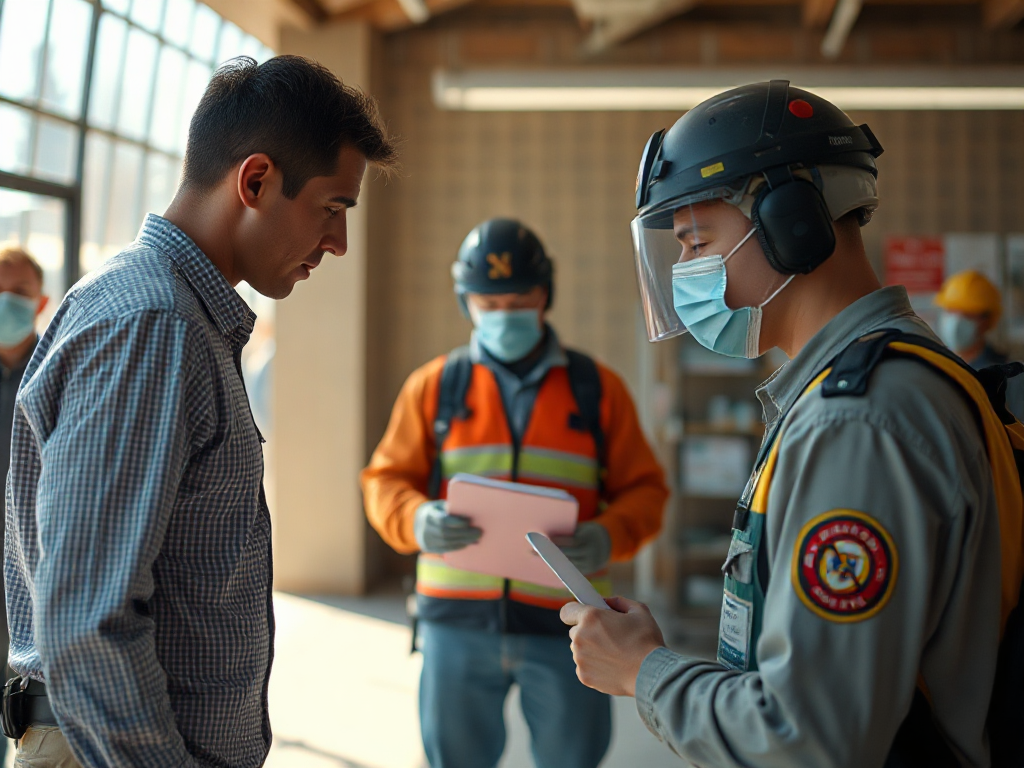
Test plans without creating unnecessary risk by rehearsing one decision or task at a time in a controlled setting, using reversible actions, clear stop rules, and a review immediately afterward. Begin with a tabletop discussion or walk-through before attempting a live drill, then test only the part that could fail, such as communication, evacuation timing, water access, or a backup power changeover. Keep people away from hazards, avoid disabling essential services, and assign someone to observe rather than participate. Treat confusion, near misses, unexpected delays, and equipment damage as reasons to pause and revise the plan, not as failures to conceal.
Choose a Safe Test Before Running a Live Drill
A plan should first be tested through discussion and observation, not through the most dramatic version of the emergency it describes. A tabletop test lets everyone explain what they would do, in what order, with which tools, without blocking exits, shutting off utilities, or creating a real hazard. It exposes missing information cheaply: a person may not know where the shutoff key is, a contact list may contain an old number, or two family members may assume the other will collect an essential item.
Use a staged progression. First, read the plan aloud and identify decisions. Next, walk the route or locate the equipment without activating anything dangerous. Only then should you conduct a limited live exercise. For instance, a household evacuation plan can begin with a timed walk from bedrooms to the meeting point while carrying ordinary clothing, rather than simulating smoke, darkness, or a blocked staircase. A power-outage plan can test flashlight locations and battery checks without disconnecting the refrigerator or medical equipment.
The safest test is usually the one that answers a narrow question. “Can everyone leave safely through the chosen route?” is testable. “Can we handle any disaster?” is too broad to produce useful evidence. A paper exercise may be enough for a low-risk communication question, while a physical movement drill may be needed to reveal that a doorway is obstructed. The common mistake is treating realism as the same thing as quality. Added realism can create noise, stress, and injury without improving the decision being examined.
Before starting, identify what must remain operational. Do not test by removing access to prescribed medication, disabling a required alarm, tampering with fuel, or creating heat, smoke, traffic, or water hazards. Link the exercise to a specific page or section of How to test plans without creating unnecessary risk so the household can record what was actually examined rather than relying on memory.
Set Boundaries, Stop Rules, and Observation Measures
A controlled test needs boundaries that are agreed upon before anyone begins. Define the location, duration, participants, prohibited actions, and the condition that ends the exercise. A stop rule might be an injury, a fall, a frightened child, a blocked exit, loss of communication, a medical concern, or any situation that requires normal household attention. Stopping is not cheating; it prevents an exercise from becoming the emergency it was meant to prepare for.
Assign separate roles when possible. Participants follow the plan, an observer records what happens, and a safety lead watches for hazards and can halt the activity. In a small household, the observer may use a simple notebook rather than a phone, especially if the test concerns communications or power. Record elapsed time, unanswered questions, misplaced equipment, repeated instructions, and points where someone had to improvise. Do not score people as though they are being examined. The purpose is to improve the system, including labels, storage locations, instructions, and responsibilities.
Choose measures that match the plan’s purpose. A communication test might check whether each person receives the same message and knows the meeting location. A shelter-in-place test might examine whether ventilation choices, water, lighting, and sanitation supplies can be managed without entering a hazardous area. A vehicle evacuation test might focus on loading order and whether mobility limitations were considered. Counting speed alone can hide serious weaknesses; a fast departure that leaves medication or a dependent person behind is not a successful result.
Write the boundaries in plain language before the exercise:
- What single question is being tested?
- Which actions are simulated rather than performed?
- Who can stop the test, and what signals a stop?
- What normal services, safety devices, or care routines cannot be interrupted?
- What observations will show that the plan worked or failed?
A frequent failure mode is allowing competitive pressure to override safety. If participants begin rushing, hiding mistakes, or inventing conditions that were not agreed upon, pause and reset. A modest, observable test produces better information than a theatrical drill that nobody can safely repeat.
Test One Failure Point Under Realistic Constraints
After a low-risk walk-through, test one vulnerable link rather than the entire plan at once. Plans often fail at handoffs: who notices the warning, who contacts relatives, who brings water, who checks on a neighbor, or who confirms that everyone has reached the meeting point. Isolating one link makes the result easier to interpret and reduces the chance that a complicated exercise will overwhelm participants.
Use a scenario that resembles the household’s actual constraints without reproducing dangerous conditions. If the plan assumes a power outage at night, conduct a daylight inventory of lights and then a brief indoor route exercise with safe, approved lighting; do not create darkness on stairs. If the plan assumes roads may be unavailable, identify two walking routes and verify access from the property rather than driving toward a closed road. If severe weather could separate family members, test the communication tree with a clearly labeled practice message, not a deceptive alert that could cause someone to leave work or school unnecessarily.
Compare the written assumption with observed behavior. A plan may say “take the emergency bag,” but the bag may be too heavy for the person assigned to carry it, stored behind clutter, or missing items needed by a child or pet. The remedy may be to divide the load, move it closer to an exit, or change the assignment—not simply to demand faster performance. An alternative approach is to test every component simultaneously, but that makes it difficult to tell whether the problem was a missing item, unclear authority, poor route design, or communication delay.
Use a small test record with four fields: expected action, observed action, reason for the difference, and proposed change. The reason matters. If someone skipped a step because the instruction was ambiguous, adding more training may not solve the problem. If equipment was inaccessible, a storage change may be more effective. If the task depended on a person who was absent, the plan needs a backup rather than a reminder.
Keep the exercise reversible. Do not open unknown containers, operate unfamiliar generators indoors, enter damaged structures, handle suspected contamination, or practice medical procedures beyond the participant’s training. For higher-consequence tasks, use qualified instruction or an established community training program instead of improvising a home simulation. The testing process should reveal weaknesses while preserving the people, equipment, and services the plan is supposed to protect.
Review Results and Escalate Testing Carefully
The review is where a drill becomes a plan improvement. Hold it soon after the test while details are fresh, and ask what was clear, what was difficult, what became unsafe, and what assumption proved false. Start with observable events rather than blame: “the contact number was outdated” is more useful than “someone failed to prepare.” Separate urgent hazards from inconveniences so the household fixes the most consequential weakness first.
Prioritize changes that remove hazards, clarify authority, improve access, or provide a workable backup. A mislabeled shutoff valve may deserve attention before a slower-than-expected packing time. A meeting place that becomes inaccessible during flooding may require replacement before a minor equipment upgrade. Assign each change to a person and set a modest review date. If the fix is moving supplies, update the written plan and tell everyone; otherwise the next test may expose a new location problem.
Repeat the same narrow test after making a change. Improvement should be visible in the measure that originally revealed the weakness, while new risks should not appear elsewhere. For example, moving an emergency bag beside an exit may improve access but create a trip hazard; the revised location must be checked from both directions. This is why a short after-action review should include unintended consequences, not just whether the original target was met.
Escalate only when the lower-risk method no longer answers the question. A tabletop discussion can precede a walk-through; a walk-through can precede a supervised live exercise; specialized or hazardous activities can be left to trained professionals. Weather, illness, fatigue, young children, pets, visitors, and accessibility needs may all justify postponing a physical test. A plan that cannot be tested safely in one setting may need a safer substitute, not a more aggressive drill.
For ongoing maintenance, schedule brief seasonal checks tied to real changes: a new address, a medication change, a different vehicle, altered mobility, new household members, or construction that affects exits. Use documented observations and stop rules each time. The goal is not perfect performance under staged pressure; it is a plan that remains understandable, accessible, and safe enough to use when conditions are genuinely difficult.
Frequently Asked Questions
What is the safest first test for a household plan?
Use a tabletop discussion that traces decisions and responsibilities without activating hazardous equipment or interrupting essential services.
How realistic should a preparedness drill be?
Make it realistic enough to test the target decision, but simulate dangerous conditions such as smoke, darkness, traffic disruption, or contaminated water.
Who should observe the test?
A person who is not carrying out the task can record delays, confusion, missing supplies, and unsafe actions while the safety lead retains authority to stop the exercise.
What should make you stop a drill?
Stop for injury, distress, a blocked route, a medical concern, equipment damage, loss of control, or any condition that requires normal emergency action.
How often should plans be tested?
Review them after major household changes and use brief periodic checks for contacts, routes, supplies, and responsibilities rather than relying on one large annual exercise.
Conclusion
Safe plan testing is a controlled learning process, not a contest to recreate the worst possible conditions. Select one question, begin with a discussion or walk-through, protect essential services, and define stop rules before anyone starts. Observe access, communication, handoffs, and accessibility—not just speed. When a test reveals a problem, identify whether the cause is an unclear instruction, unsuitable equipment, poor storage, or a missing backup, then change the system and repeat the narrow test. Escalate to supervised or professional training when the activity involves fire, fuel, structural damage, medical care, contamination, or other hazards beyond household control. A small, repeatable exercise often provides more useful evidence than a dramatic drill that introduces the very risk the plan is meant to reduce.