
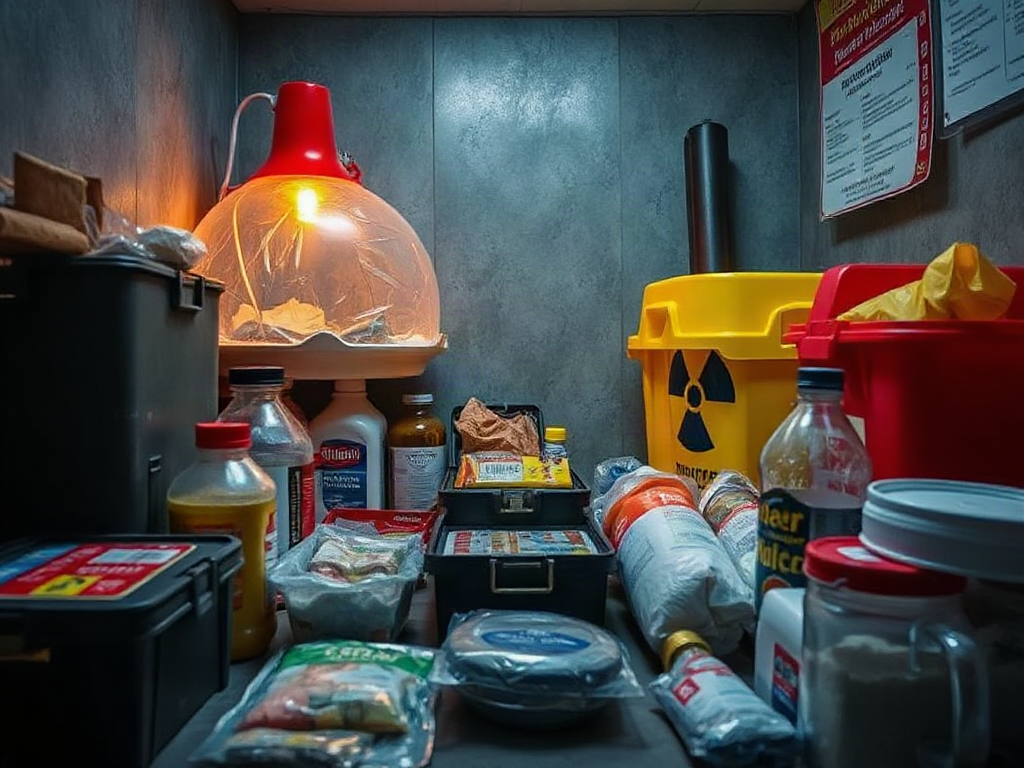
Nuclear preparedness kit items for fallout sheltering should cover water, sealed food, sanitation, medical needs, lighting, battery-powered information, protective clothing, and waste containment for at least the initial shelter period. Store supplies inside the most shielded part of a building, away from windows and exterior walls, because fallout exposure is reduced by distance and dense material between people and contaminated dust. Keep drinking water in sealed containers, choose food that needs little preparation, and include a hand-crank or battery radio for official instructions. Respirators and plastic sheeting have limited uses and should not replace sheltering. Rotate water, batteries, medicines, and food, and make sure every household member can reach the shelter quickly.
What you’ll learn
This guide covers the following practical points:
- What a Fallout Shelter Kit Must Accomplish — A useful fallout shelter kit supports three immediate needs: staying inside a well-shielded location, meeting basic bodily needs, and receiving reliable instructions.
- Water, Food, and Sanitation Supplies — Water deserves the first storage decision because thirst, medication needs, food preparation, and hygiene quickly compete for the same supply.
- Medical, Light, and Communication Equipment — Medical supplies should keep routine conditions from forcing an unnecessary trip outside.
- Shelter Placement, Clothing, and Contamination Control — Fallout sheltering works best when supplies are already near the most protected part of the building.
What a Fallout Shelter Kit Must Accomplish
A useful fallout shelter kit supports three immediate needs: staying inside a well-shielded location, meeting basic bodily needs, and receiving reliable instructions. The supplies matter because people may need to remain sheltered while outdoor radiation levels decline and authorities assess roads, buildings, utilities, and food or water safety. A kit is not a substitute for a suitable shelter. A basement, underground area, or central room with substantial walls and few windows generally offers better protection than a vehicle, porch, or room beside exterior glass.
Radiation protection depends on time, distance, and shielding. A kit improves the first factor by reducing the urge to leave for water, food, medication, or information. Dense materials such as concrete, brick, and earth provide more shielding than thin interior partitions. A central basement corner may therefore be preferable to a finished room above ground, although flooding, structural damage, fire, and access to ventilation must be considered.
The most common planning error is buying specialized equipment before solving ordinary logistical problems. A radiation meter may provide information, but it does not create shielding or replace official instructions. Similarly, a disposable mask may limit inhalation of some dust during a brief movement, yet it cannot make an unsafe outdoor trip safe. Prioritize items that remain useful during a power outage and that household members can operate without extensive training.
Use the Nuclear preparedness kit items for fallout sheltering as a household inventory, then adapt quantities to residents, pets, disabilities, climate, and available shelter space. Store the kit where it can be reached quickly, but avoid placing it in a garage or shed if the intended shelter is elsewhere.
Water, Food, and Sanitation Supplies
Water deserves the first storage decision because thirst, medication needs, food preparation, and hygiene quickly compete for the same supply. Keep commercially bottled water or filled, food-safe containers in the shelter area when possible. Containers should be sealed, protected from heat and chemicals, and labeled with storage or replacement dates. A filter can be useful for later water treatment, but it should not be treated as proof that an unknown source is safe from radioactive contamination; filtration capabilities vary, and some contaminants require different treatment.
Choose foods that are shelf-stable, familiar, and ready to eat or simple to prepare. Canned fish, meat, beans, fruit, vegetables, nut butters, crackers, cereal, shelf-stable milk, and energy-dense snack foods can work when rotated through normal meals. Include a manual can opener, disposable or washable utensils, and a small cooking option only if its use is safe and permitted in the shelter. Never burn fuel, charcoal, or candles in an enclosed room because carbon monoxide and fire can create a faster danger than hunger.
Sanitation supplies often determine whether a shelter remains usable. Pack toilet paper, heavy-duty bags, smaller waste bags, absorbent material, soap, hand sanitizer, disinfecting wipes, menstrual products, diapers, gloves, and a sealable container for contaminated or unpleasant waste. A lined bucket with a secure lid can serve as an emergency toilet, but it should be placed away from food and drinking water. Do not assume a functioning toilet, running water, or working sewage system will be available.
A compact priority list is more useful than an oversized shopping cart:
- Sealed drinking water and a method for measuring household use.
- Foods that require no refrigeration, plus a manual opener.
- Toilet and hand-cleaning supplies, including bags and gloves.
- Special foods, infant supplies, pet food, and prescription needs.
Food variety is a worthwhile tradeoff, but extra packaging can consume shelter space. Choose items residents already tolerate, especially if stress or limited ventilation may make strong odors, cooking smoke, or unfamiliar textures difficult.
Medical, Light, and Communication Equipment
Medical supplies should keep routine conditions from forcing an unnecessary trip outside. Store prescription medicines according to pharmacy guidance, along with a written medication list, basic first-aid materials, spare eyeglasses, hearing-aid batteries, and commonly used personal-care products. Include bandages, gauze, adhesive tape, antiseptic supplies, tweezers, disposable gloves, and any medically necessary devices. A first-aid kit will not treat radiation injury, but it can address ordinary cuts, blisters, headaches, or minor burns while professional help is limited.
Lighting must be dependable without creating combustion hazards. Battery lanterns and flashlights are preferable to open flames in a crowded enclosed shelter. Pack spare batteries in their original packaging or another way that prevents contact between terminals. Headlamps can free both hands for sanitation or medical tasks, while a small lantern provides shared room lighting. Test switches and batteries periodically; an untested flashlight is a container, not a working tool.
Information is another practical supply. A battery-powered or hand-crank radio can receive public instructions when internet and cellular service are unavailable. Add charging cables, a backup power bank kept charged, paper, pencils, and a battery-operated clock. Write down household contacts, emergency meeting information, medication details, and local authorities’ contact channels. Do not rely exclusively on social media posts or forwarded messages, which may omit shelter orders, water advisories, or changing access restrictions.
Consider a smoke alarm, fire extinguisher, and carbon-monoxide alarm if the shelter space and building layout make them appropriate. These tools address hazards created by damaged utilities or improvised heating. The failure mode to avoid is confusing measurement with protection: a dosimeter or radiation detector may help interpret official information, but an inexpensive unverified device can create false confidence. Choose one only if you understand its limits, battery requirements, and reading units.
The kit inventory should be checked against real household conditions. Someone who uses refrigerated medicine, mobility equipment, oxygen, or powered communication devices needs a power and care plan, not merely extra canned food.
Shelter Placement, Clothing, and Contamination Control
Fallout sheltering works best when supplies are already near the most protected part of the building. Moving through a contaminated outdoor area to retrieve a kit defeats part of its purpose. Place water, food, sanitation materials, and medical supplies inside or immediately beside the selected shelter room, while keeping exits accessible. Avoid blocking doors, vents, stairways, or equipment needed for safe building evacuation if fire or structural damage occurs.
Clothing and cleaning items are intended for limited contamination control, not radiation blocking. Keep sturdy shoes, work gloves, spare clothing, a washable outer layer, soap, towels, and sealable bags available. If someone has been outdoors after fallout arrived, official public-health guidance should determine whether and how to remove an outer layer, bag it, and wash exposed skin. Vigorous scrubbing can irritate skin, and bleach or household chemicals should not be applied to the body.
Plastic sheeting and duct tape are frequently overinterpreted. They may help reduce drafts or keep dust away from selected surfaces, but sealing every opening can interfere with safe ventilation and produce heat or indoor-air problems. Do not cover vents or operate fuel-burning devices in an attempt to create a sealed room. A structurally sound, shielded interior location is usually more valuable than an improvised plastic enclosure.
A realistic scenario illustrates the tradeoff: a family living in a two-story house may choose the basement, but only after checking flood risk, stair access, stored chemicals, and the ability to hear a radio. A household in an apartment may have no basement and instead use an interior room or designated building shelter, adding water containers and sanitation supplies because the building’s facilities could be inaccessible. The best location is not the one with the largest kit; it is the one that combines shielding, safe access, ventilation, and enough room for occupants.
Building and Maintaining a Practical Kit
Build the kit in layers rather than attempting to purchase everything at once. The first layer covers water, ready-to-eat food, medicines, sanitation, lighting, and official information. The second adds comfort and continuity items such as blankets, spare clothing, books or quiet activities, pet supplies, and hygiene products. A third layer can address specialized equipment, but only after the basic supplies are usable and stored in the right location.
Quantity decisions should reflect the number of people and the likely duration of sheltering instructions, not an arbitrary container size. Keep a written inventory showing expiration dates, battery types, medicine replacement dates, and the location of backup items. Rotate foods into ordinary meals and replace them with fresh stock. Check water containers for leaks, inspect bags and gloves for deterioration, and test radios and lights on a schedule that fits household routines.
Practice the movement that matters: reaching the shelter room, bringing only nearby essentials, accounting for children and pets, and turning on the radio. A short household drill may reveal that the kit is too heavy, the flashlight batteries are missing, or the chosen room cannot accommodate a wheelchair. Those findings are more valuable than adding another specialty product. Keep printed instructions simple enough for a guest or older child to follow.
Do not leave the shelter because rumors suggest the danger has passed. Follow instructions from local emergency management, public-health agencies, and other official channels. If authorities direct evacuation, use the route and timing they provide rather than improvising. Conversely, do not remain in a damaged, burning, flooding, or carbon-monoxide-threatened space merely because it offers shielding; immediate building hazards can override the shelter plan.
Review fallout sheltering supplies whenever the household changes, the shelter room changes, or seasonal conditions alter heating, cooling, and water needs. A modest, maintained kit in a reachable location is more dependable than a large collection stored somewhere inaccessible.
Frequently Asked Questions
How much water should a fallout shelter kit contain?
Store as much sealed drinking water as the household can safely maintain, with additional consideration for medicines, children, pets, and sanitation. Official instructions should guide longer-term use.
Do I need a radiation suit or gas mask?
These items are not substitutes for indoor shielding. Ordinary clothing, careful decontamination, and official directions are generally more practical for household planning than relying on unverified protective gear.
What foods work best inside a fallout shelter?
Use familiar shelf-stable foods that need little or no cooking, such as canned meals, beans, fruit, crackers, nut butter, and shelf-stable milk, alongside a manual can opener.
Should windows and vents be sealed with plastic?
Plastic may limit dust on selected surfaces, but fully sealing a room can create ventilation and indoor-air hazards. Do not block required vents or use fuel-burning equipment indoors.
When can people leave the shelter?
Leave when official authorities provide instructions, or immediately if the building has an urgent threat such as fire, collapse, flooding, or carbon monoxide. Do not rely on rumor or visual conditions alone.
Conclusion
A fallout shelter kit should reduce the reasons to leave a protected location, not encourage risky improvisation. Put sealed water, simple food, sanitation supplies, medicines, lighting, and a reliable radio where occupants can reach them quickly. Then improve the plan with clothing, waste containment, pet or infant supplies, and household-specific medical or power needs. The shelter itself remains the primary protective measure: choose the most shielded safe area available, keep it accessible, and avoid creating fire or ventilation hazards while trying to seal it. Rotate consumables, test equipment, and rehearse the move indoors. After an incident, follow official instructions and treat urgent structural or air-quality dangers seriously. A maintained, location-specific kit gives the household practical staying power while better information becomes available.